Livonia homeowners often notice a water heater only when hot water becomes inconsistent, recovery slows, or a maintenance question turns into a repair concern. Flushing is not a universal chore with one identical procedure for every home. Tank design, fuel type, manufacturer requirements, water conditions, and the condition of safety components all shape the appropriate service plan.
Learning how to flush a water heater in Livonia starts with understanding that sediment management and equipment inspection belong together. A qualified plumber can evaluate the heater, follow manufacturer-directed requirements, and determine whether flushing, repair, replacement, or another maintenance service is appropriate.
That distinction matters because a storage heater moves incoming cold water through the bottom of the tank while hot water leaves from the top. This tank design influences how maintenance is handled. The next section explains what flushing is intended to do and why that context matters in Livonia homes.
Request water-heater service in Livonia from Mr. Pipey.
What Does Water-Heater Flushing Do for Livonia Homes?
Flushing is a maintenance service intended to remove accumulated sediment and loosened particles from the water-heater tank. In a conventional storage unit, heated water leaves through the top while incoming cold water enters at the bottom. That flow pattern helps explain why material settling in the lower portion of the tank can affect how the equipment operates over time. Montana State University Extension describes this basic tank operation for both gas and electric storage water heaters.
The purpose is not to treat every water-heater concern as a flushing problem. A professional assessment considers the unit’s age, design, condition, symptoms, and manufacturer requirements. A tank that is making unusual sounds or delivering less hot water may need more than routine maintenance. A visible leak can point to a separate repair or replacement decision. For background on sediment-related concerns, see these signs of water heater sediment.
Maintenance supports more than hot-water availability. The U.S. Environmental Protection Agency recommends maintaining household systems so fixtures and equipment perform well, conserve water, and help control utility costs. It also recommends checking regularly for leaks, since leaks can waste water and damage a home. The Department of Energy’s Federal Energy Management Program similarly explains that water-equipment operations and maintenance support reliability, safety, and water efficiency. Inadequate maintenance can contribute to unnecessary leaks and premature equipment failure. See the Montana State University Extension guidance, EPA home-maintenance guidance, and DOE water-equipment guidance.
For Livonia homeowners, the practical question is whether the heater is a suitable candidate for flushing and what other issues should be addressed at the same visit. Because equipment varies, DOE guidance says general maintenance information does not replace manufacturer specifications. Mr. Pipey provides water heater repair, replacement, and maintenance for conventional tank and tankless models, with service focused on accurate diagnosis and appropriate next steps.
Why Might a Livonia Water Heater Need Professional Attention?
What should a Livonia homeowner make of a water heater that is behaving differently? A change in performance is a reason to arrange an assessment, not proof of one specific failure. Reduced hot-water output, slower heating, or unusual banging, rumbling, or popping sounds can have more than one possible cause. A licensed plumber can evaluate the equipment and explain whether maintenance, repair, or replacement is the appropriate next step.
Visible rust in the water or moisture around the tank also deserves prompt professional attention. The EPA recommends regularly checking a home for leaks and addressing identified leaks as soon as possible. It notes that leaks can waste water and cause serious home damage. A significantly higher water bill than the same month in the prior year may indicate an unidentified leak. These observations help describe what is happening, but they do not diagnose the source. EPA home-maintenance guidance provides broader leak-awareness information.
Why can sediment and equipment age change the service decision?
Sediment-related symptoms may be one reason a technician looks more closely at a conventional tank, especially when performance or operating sounds have changed. For context, review these signs of water heater sediment, then let the condition of the actual unit guide the service recommendation. An older heater, a tank with visible leakage, or a system with an uncertain maintenance history may need more than a routine flush.
Professional attention is particularly important when the unit is tankless, gas-fired, or otherwise covered by equipment-specific safety and manufacturer requirements. The Department of Energy advises maintaining water equipment according to manufacturer guidance and explains that maintenance supports reliability and safety. Mr. Pipey services conventional tank and tankless systems, with water heater repair, replacement, and maintenance available for Livonia homeowners. The goal is an accurate assessment and clear options, not a one-size-fits-all procedure.
How Can You Tell Your Water Heater Needs Service?
Water-heater symptoms can appear gradually, and one sign may have several possible causes. A change in performance does not confirm that sediment, a heating component, a connection, or the tank itself is at fault. These observations are useful information for a professional assessment, not a diagnosis.
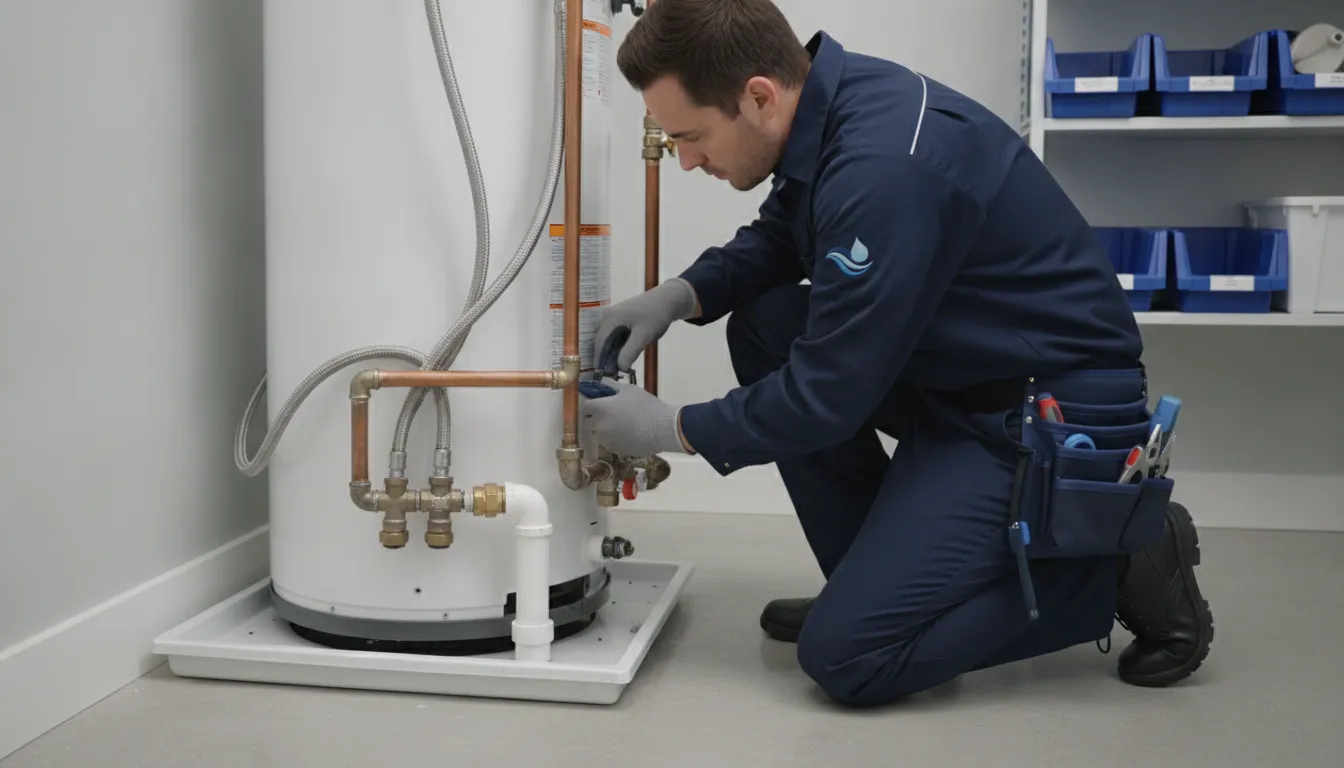
Arrange water-heater service when you notice one or more of the following.
- Less hot water than usual: A household may run out of hot water sooner, or the unit may take longer to heat between uses. Reduced output and slow heating are possible signs that the system needs evaluation, but they do not identify the failed part by themselves.
- Banging, rumbling, or popping sounds: Unusual tank noises deserve attention, especially when they recur during heating. Sediment is one possible contributor, although equipment age and other operating conditions can also matter.
- Rust-colored water: Visible rust in hot water can point to corrosion somewhere in the water-heating system. The location and significance of that corrosion require inspection rather than assumption.
- Moisture or a visible leak: Water around the tank, fittings, or nearby connections should be assessed promptly. The EPA recommends regularly checking a home for leaks because leaks can waste water and cause property damage: EPA WaterSense home-maintenance guidance.
- A noticeable change in water use: A significantly higher water bill than the same month the prior year may indicate an unidentified leak, according to the EPA. That change is a reason to investigate the plumbing system, not proof that the water heater is the source.
When you are researching how to flush a water heater in Livonia, start with the equipment’s model, age, and symptoms. Manufacturer guidance and a professional inspection help determine whether flushing, repair, maintenance, or replacement is the appropriate service.
Tank vs. Tankless: How Does Maintenance Differ?
Conventional tank and tankless water heaters both need maintenance, but the work is not interchangeable. A storage heater holds heated water in a tank, while a tankless unit heats water as it moves through the system. That difference affects which components a plumber evaluates and how the service plan is set.
| Maintenance area | Conventional tank water heater | Tankless water heater |
|---|---|---|
| System components | Service may involve the storage tank, heating elements or burner, connections, and the temperature/pressure relief valve. Gas models use a pilot light and flue, while electric models have upper and lower heating elements. | Service centers on the unit’s flow path, heating components, connections, and other model-specific parts. The maintenance needs are more specialized than those of a conventional storage heater. |
| Flushing and buildup | A professional assessment can determine whether flushing is appropriate and whether sediment or another condition is affecting performance. There is no single schedule that applies to every home or model. | Mr. Pipey’s customer guidance describes annual professional checkups and flushing, with more frequent attention when hard water contributes to mineral buildup. Service may also include descaling and component inspections. |
| Safety review | The temperature/pressure relief valve is near the top of the tank. Montana State University Extension recommends checking this valve annually, but service should follow safe, model-appropriate procedures. | The inspection plan depends on the model, installation, condition, and manufacturer requirements. A professional can identify which components need attention without assuming every tankless unit is serviced the same way. |
| Best service plan | Maintenance timing should account for the heater’s age, condition, fuel type, water quality, and manufacturer guidance. | Maintenance timing should account for the model and installation, water hardness, usage, and manufacturer guidance. See tankless water heater maintenance for the service focus. |
Manufacturer instructions and the heater’s actual condition control the final service plan. Federal water-equipment maintenance guidance likewise does not replace the manufacturer’s specifications: DOE maintenance guidance recommends using those requirements as part of equipment care. Mr. Pipey services both conventional tank and tankless models, so a Livonia homeowner can have the equipment identified and the appropriate maintenance approach explained before work begins.
How to Flush a Water Heater in Livonia Safely
A professional flush begins with an assessment, not a universal sequence. The technician identifies whether the unit is a conventional gas or electric storage heater, a tankless model, or equipment with unusual controls. That distinction matters because gas units use a pilot light and flue, while electric units contain upper and lower heating elements. Both conventional designs also include a temperature and pressure relief valve near the top of the tank. Montana State University Extension explains these equipment differences, which is why the manufacturer’s service requirements should guide the work.
- Inspect the heater and surrounding conditions. The service visit starts with the model, age, fuel type, connections, visible corrosion, relief-valve condition, and signs of moisture. The temperature and pressure valve should be checked annually to confirm that it is operating properly, according to the same Montana State University Extension guidance. A technician also considers whether sediment symptoms or an existing leak call for repair or replacement before flushing. If the unit is not a good candidate for routine maintenance, flushing is not forced simply because it was requested.
- Confirm the manufacturer’s shutdown and flushing requirements. Safe service decisions depend on the specific heater. Gas ignition and combustion components require different considerations from electric heating elements, and tankless equipment follows a separate maintenance approach. The U.S. Department of Energy states that general maintenance guidance does not replace manufacturer specifications and recommends operating and maintaining equipment according to those instructions. The technician uses the appropriate shutdown, isolation, and flushing method for the model rather than applying a generic homeowner procedure.
- Flush according to the equipment’s design and condition. The objective is controlled removal of accumulated material while protecting the tank, valves, connections, and nearby finishes. A conventional tank and a tankless unit are not serviced identically. Tankless systems may need annual professional checkups and flushing, with more frequent attention where hard water is a concern, along with descaling and component inspections. For broader service needs, see Mr. Pipey’s water heater repair, replacement, and maintenance options or the dedicated tankless water heater maintenance service.
- Restore operation and check for leaks. After flushing, the technician follows the manufacturer’s restart requirements, confirms normal heating behavior, and examines drain points, valves, fittings, and supply connections for moisture. The EPA recommends checking regularly for leaks and addressing identified leaks promptly. DOE FEMP likewise notes that inadequate maintenance can contribute to unnecessary leaks and premature equipment failure. These checks are part of completing the service, not optional extras.
- Read back the findings and next service decision. A clear readback records what was inspected, what the flush revealed, whether the relief valve and connections appeared sound, and whether the equipment needs repair, replacement, or future maintenance. Mr. Pipey serves Livonia and provides licensed, insured plumbing service for conventional and tankless water heaters. This professional workflow keeps the decision tied to the actual equipment and its manufacturer requirements, rather than relying on a one-size-fits-all flushing schedule.
DOE describes proper operations and maintenance as supporting reliability, safety, and water efficiency. For a Livonia water heater that needs evaluation, maintenance, or a related repair, a qualified service visit provides the equipment-specific review that general online instructions cannot.
What Should You Ask About Water-Heater Maintenance?
A productive maintenance conversation starts with the equipment itself. Ask the plumber to identify whether your Livonia home has a conventional storage tank or a tankless unit, and whether it is gas or electric. Those details affect the inspection, safety considerations, and service recommendations. For storage heaters, ask which model and capacity you have, where the temperature and pressure relief valve is located, and which maintenance items the manufacturer specifies.
What symptoms should I describe?
Share specific changes rather than trying to diagnose the cause. Mention inconsistent hot water, unusual sounds, discoloration, reduced performance, or moisture around the unit. Also note when the symptom began and whether it occurs at particular fixtures or throughout the home. Ask whether the condition is consistent with sediment, a component issue, a connection problem, or another concern that requires further assessment. A professional should explain what is known, what is uncertain, and which findings support the recommendation.
How do water quality and service history affect maintenance?
Ask whether local water conditions, mineral content, or hard water may affect the maintenance needs of your equipment. Tankless systems can require specialized professional attention, including descaling and component inspection. Mr. Pipey’s guidance describes annual professional checkups and flushing for tankless heaters, with more frequent attention where hard water is a concern. Also provide any prior service records, installation information, warranty documents, and details about repairs or replacements. The Department of Energy emphasizes that general maintenance guidance does not replace manufacturer specifications, so the service plan should be matched to your model: review manufacturer-directed maintenance requirements.
What should the inspection include?
Ask the professional to check for visible leaks, examine relevant connections and safety components, and explain whether maintenance, repair, or replacement is the most appropriate next step. EPA WaterSense recommends regular leak checks because leaks can waste water and damage a home. If the unit is nearing the end of its practical service life, ask about professional water heater installation and water heater replacement planning without assuming replacement is necessary. A clear explanation should leave you with documented findings, realistic options, and a better understanding of what happens next.
When Should Livonia Homeowners Contact Mr. Pipey?
For Livonia homeowners, contacting a professional does not have to wait until a water heater stops working. Routine maintenance is a practical time to review the equipment’s condition, confirm what the manufacturer recommends, and plan service around the home’s needs. Mr. Pipey provides water heater repair, replacement, and maintenance for both conventional tank and tankless models.
A leak, a noticeable loss of hot water, or a water heater that is no longer meeting household demand deserves prompt professional assessment. These symptoms do not establish one guaranteed cause, and different equipment designs require different service approaches. A qualified plumber can evaluate the system, explain the available options, and determine whether repair, maintenance, or replacement is the most appropriate next step. This is especially useful when a homeowner is unsure whether the issue is related to the tank, controls, connections, or another part of the installation.
Tankless systems also have specialized maintenance requirements. The customer guidance describes annual professional checkups and flushing, with more frequent attention where hard water affects the equipment, along with descaling and component inspections. Livonia homeowners with a tankless unit can review tankless water heater maintenance and request service rather than applying a one-size-fits-all procedure.
Mr. Pipey serves Livonia and is a licensed and insured Michigan plumbing contractor. When you are ready to discuss a water heater concern or plan maintenance, contact Mr. Pipey online for a customer-focused assessment and clear service options.
Frequently Asked Questions
Are you supposed to flush a hot water heater?
Flushing can be part of routine maintenance for a storage water heater, but the appropriate service depends on the equipment, its condition, and the manufacturer’s instructions. A professional can assess sediment, valves, connections, and overall operation before recommending maintenance.
How do you flush a water heater in Livonia?
The process is equipment-specific and involves controlling the water and energy sources, managing discharge safely, and confirming proper operation afterward. Because a tank may contain very hot, pressurized water and gas or electrical components, Mr. Pipey handles the service rather than turning a general online procedure into a homeowner project.
How long does it take to flush a 40-gallon water heater?
There is no reliable single time for every 40-gallon unit. The condition of the tank, sediment load, access, water flow, and follow-up inspection all affect the appointment. A technician can provide a clearer expectation after evaluating the installation.
When should a Livonia homeowner call a plumber about water-heater flushing?
Call for professional service when hot-water performance changes, sediment is suspected, the tank or connections show moisture, or you are unsure whether the unit can be serviced safely. Mr. Pipey provides water-heater maintenance, repair, and replacement options for Livonia homeowners.
Contact Us About Water-Heater Service
Regular attention can help keep your water heater working reliably and clarify whether maintenance or repair is the right next step for your Livonia home. If you have questions about flushing, sediment, temperature, or unusual performance, request water-heater service from Mr. Pipey through the contact form. Share what you have observed and, when available, your heater’s make and model so the team can discuss an appropriate professional evaluation.