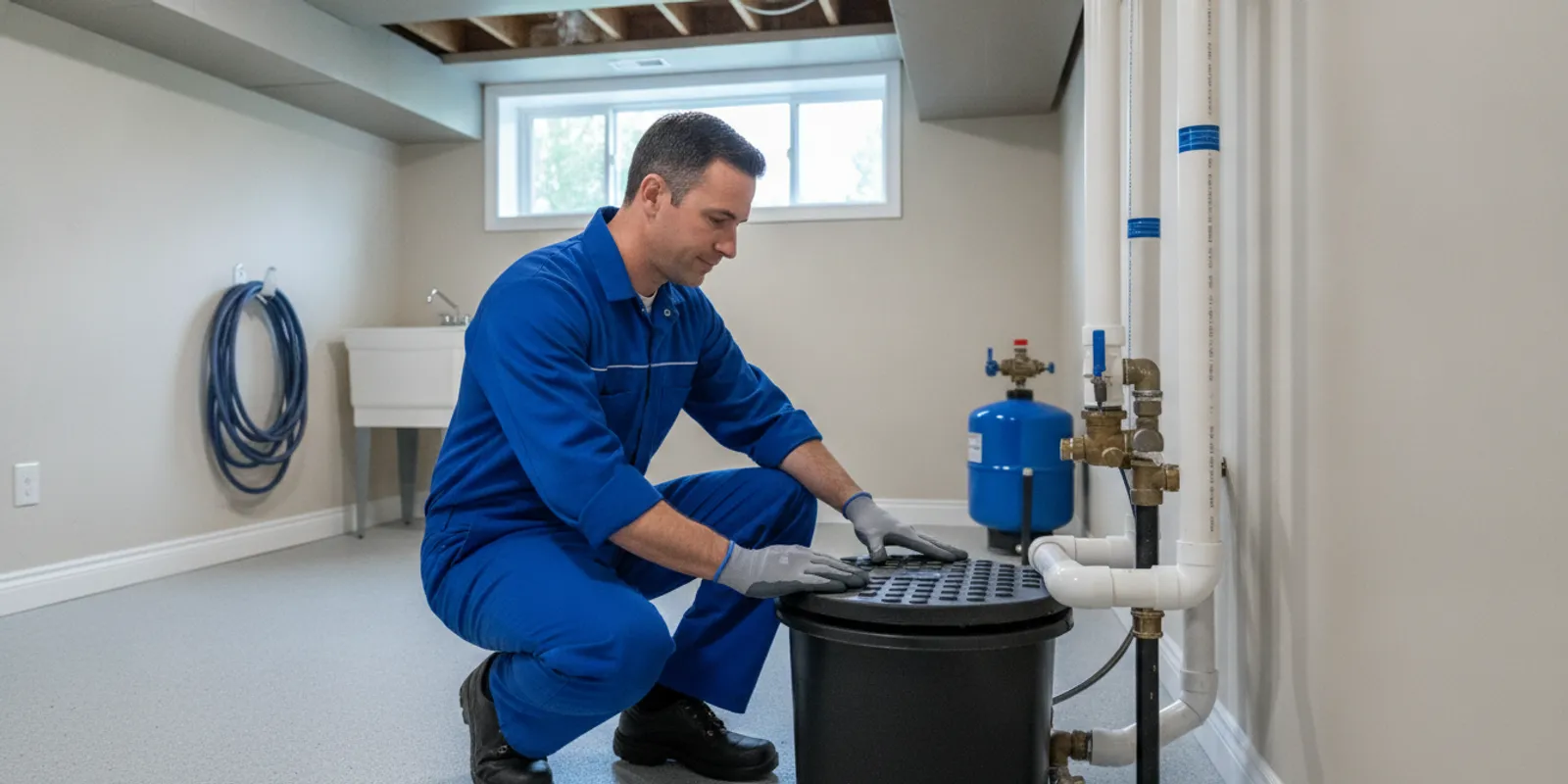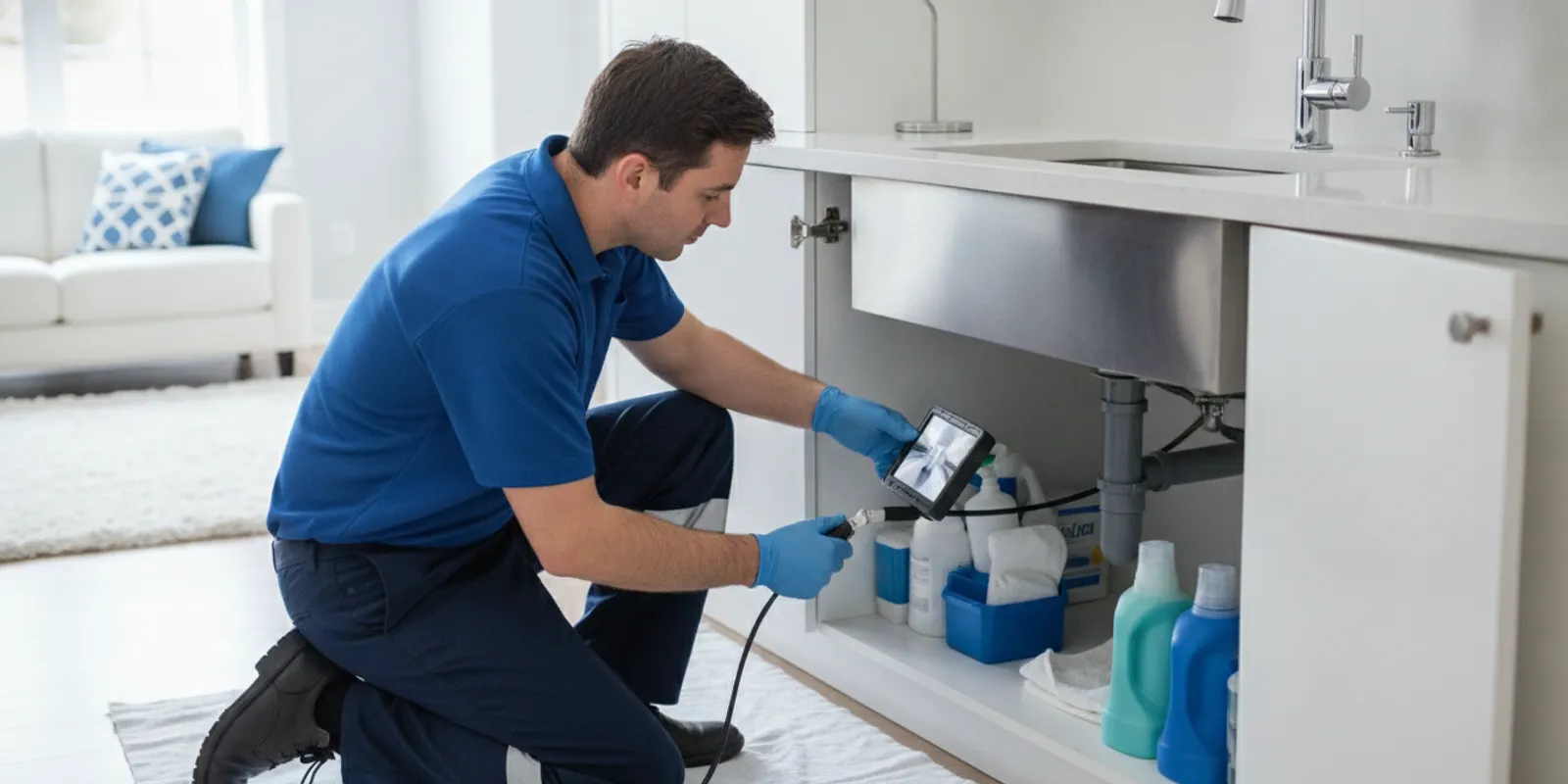

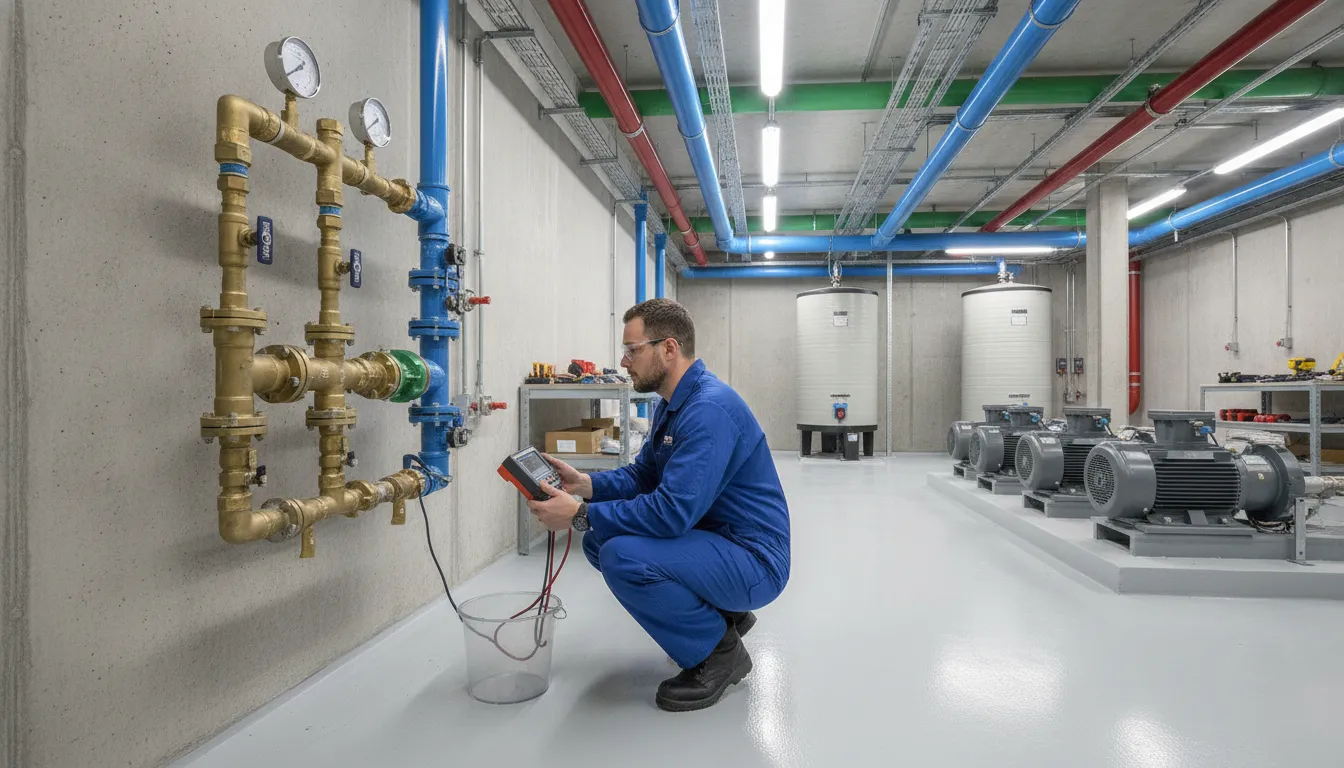
Michigan law requires annual testing for every commercial backflow preventer to stop toxic waste from entering the public tap. Property managers who skip these checks face heavy penalties and the risk of polluting the local drinking water.
Schedule commercial backflow testing with Mr. Pipey.
Commercial backflow testing Detroit regulations mandate that all businesses inspect their backflow prevention devices at least once every calendar year. According to the Michigan state government, these tests must be performed by a licensed plumber. To be legally recognized, the tester must also hold a valid ASSE 5110 certification. The process involves using tools to check that internal valves are holding pressure and preventing reverse water flow into the public system. This annual requirement ensures that toxic chemicals, fertilizers, or waste from equipment cannot siphon back into the clean drinking water supply. Business owners who skip these tests risk losing their water service and facing large legal fines from local water authorities in Wayne, Oakland, or Macomb counties.
Handling these local codes can feel hard for busy property managers who need to keep safety high without stopping daily work. We made the process easy by providing a clear look at Commercial backflow testing Detroit requirements at a glance. Knowing what your local water provider expects will help you avoid fines and keep your plumbing system legal, and the key details include.
Commercial backflow testing Detroit requirements at a glance
Commercial backflow testing Detroit rules help keep our city water safe. In Detroit, every big building has a special valve to stop dirty water from moving back into the main pipes. This plan helps stop cross-connection risks. State and city laws say these parts must work well at all times. If a valve fails, old water or waste could mix with the clean water we drink every day. This risk makes steady checks a top goal for any site manager in the area.
State and city plumbing rules
Michigan law says that testing backflow parts is a job for a licensed plumber. The state group known as EGLE sets these rules for all public water systems. In Detroit, you must follow these rules to stay in good standing with the local water board. These rules exist to stop dirty water from flowing the wrong way through your pipes. Local water teams check your records to make sure you follow the law. This helps protect the whole town from water that might carry germs or chemicals.
Yearly tests for business owners
Most water suppliers in Metro Detroit ask for a test once every year. Property managers and business owners are in charge of this task. This work is a key part of keeping a safe and legal building. If you miss a test date, you might face big fines or have your water service cut off by the city. It is smart to check the commercial backflow testing cost early so you can plan your budget. Yearly checks ensure your valves stay in top shape and meet all local safety laws.
A yearly check finds small issues before they turn into big repairs. These tests show if the inner seals and springs in your valves are still strong. Over time, mineral build-up or wear can make a valve stick or leak. Keeping a clear log of all past tests will help you if the city ever asks for proof of your safety checks.
Rules for picking a trained tester
You must hire the right person to check your backflow valves in Detroit. A tester must have a valid ASSE 5110 card and a state plumber license to do this work. Using a pro who knows the code ensures your test report is valid and good. To stay in line with the law, your tester should have:
- A valid Michigan state plumber license.
- An ASSE 5110 card for backflow testing.
- Tools set right to meet city rules.
These backflow testing services in Metro Detroit cover everything from the first check to any needed fixes. A trained crew will handle the forms for you and send them to the city water team. This takes the stress off your back and lets you focus on your business.
How often must a commercial backflow preventer be tested?
Most business owners in Michigan must test their backflow devices once per year. This yearly check keeps the public water supply safe from harmful chemicals and waste. If you manage a building, you must follow the rules set by your local water department. Skipping a test can lead to fines or even losing your water service. For commercial backflow testing detroit teams use city-grade tools to ensure every valve works as it should.
The standard for annual testing
Local water firms and state rules often require you to test your device every 12 months. The Michigan Department of Environment, Great Lakes, and Energy (EGLE) runs these cross-connection control programs. They make sure that all public water stays clean and free from cross-contamination. Most cities will send you a notice in the mail when your next test is due. It is your job to hire a licensed plumber to do the work and send in the results.
Staying on top of this task helps you avoid last-minute stress. When you plan ahead, you can find a good price for the work. You can learn more about the commercial backflow testing cost to help with your yearly budget. Frequent testing also finds small leaks before they turn into big, costly breaks. This smart step protects both your property and the local area.
Local rules and deadlines
While the state has broad rules, each city in Metro Detroit may have its own set dates. For instance, Detroit, Livonia, and Troy might set different deadlines based on your street address or business type. Some towns split their testing schedule into quarters to keep the workload even for experts. Always check the papers sent by your local water office to find your exact due date. If you lose your letter, you can call the water department to ask for your deadline.
Failing to meet these deadlines can cause big problems for your business. Many water departments will shut off your water if you do not provide proof of a passed test. This can stop your work and cost you a lot of money in lost sales. Licensed plumbers in Michigan must have legal papers to perform these tests. They will fill out the proper forms and submit them to the city for you. This ensures your building stays in good standing with local laws.
The role of risk and device type
The type of business you run can also change how often you need to test. Buildings with a high risk of backflow might need more frequent checks. For example, a car wash or a plant often deals with more chemicals than a small shop. Your local expert will look at your setup and tell you how often you need a check. Most devices still only need a yearly test, but high-risk sites must be more careful. Using expert backflow testing services in Metro Detroit ensures your high-risk system stays safe.
Book a licensed Metro Detroit backflow tester before your due date.
Device type also matters when it comes to testing and repair. Some valves are more complex and require more time to check. A licensed plumber will know how to handle each type of preventer. They will look for signs of wear and tear on the inside seals and springs. If a part fails, it must be fixed right away to meet state code. Keeping your device in top shape means you will pass your test every year without any issues.
What happens during a commercial backflow test?
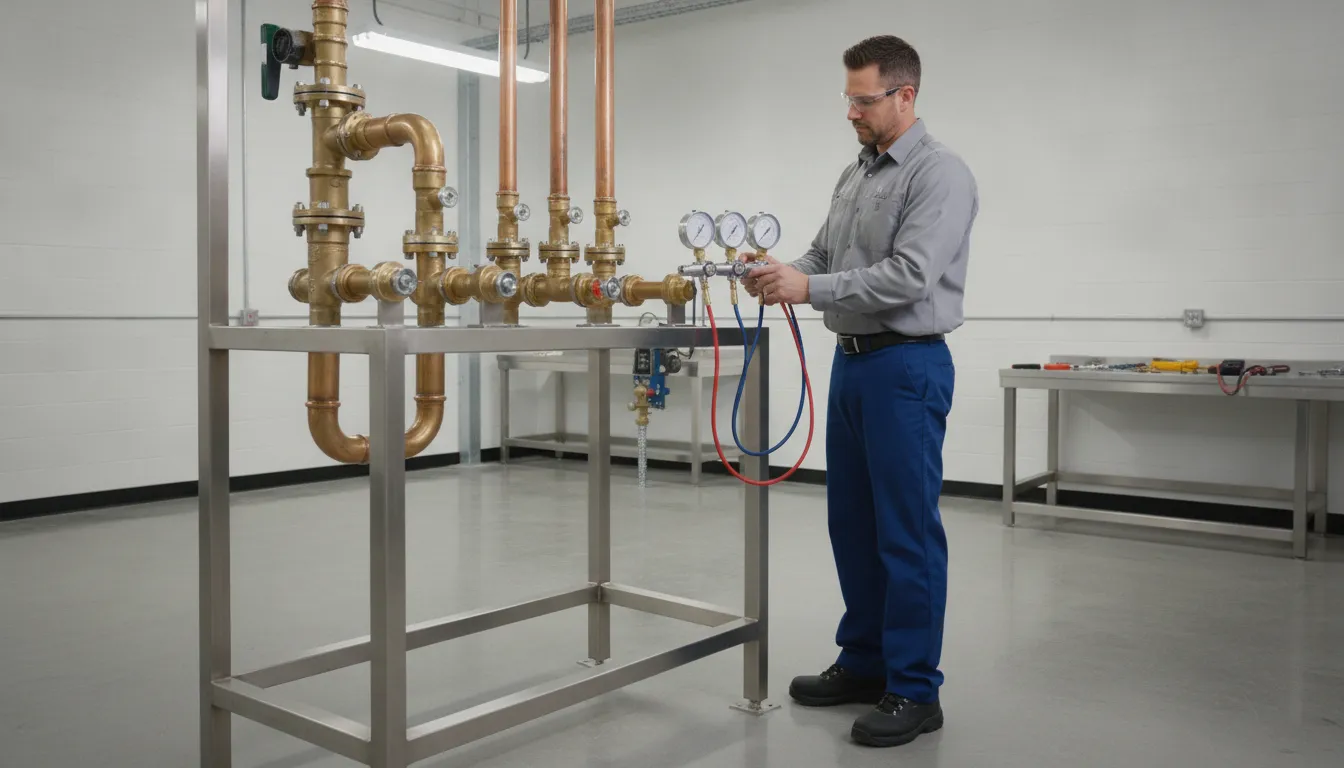
An expert test keeps your site safe and follows the law. Most business owners worry about work stops during a plumbing visit. But a skilled team can do the job with very little downtime. When you book commercial backflow testing detroit, you get a clear path to safety.
Preparing for the check
Before the test starts, the plumber will find all the backflow valves in your building. They check the area around each device for leaks or rust. The team also lets you know if they need to shut off the water for a short time. Most tests take less than an hour per device. This helps your staff stay on task while we check the pipes.
The step-by-step testing sequence
Every test follows a strict set of rules to ensure the water flows in only one way. This keeps clean city water from mixing with waste. We use high-tech gauges to check the pressure inside the valves. This ensures that every part works the way it should under real stress.
- The plumber shuts off the main water valve to stop the flow through the device.
- We attach a test kit with calibrated gauges to the test cocks on the valve.
- Our team opens the test cocks one by one to clear any air or debris from the line.
- We check each check valve to see if it holds tight against backpressure.
- The plumber tests the relief valve to make sure it opens at the right pressure level.
- After the check, we turn the water back on and watch for any new leaks.
Post-test reporting and safety
Once the real test is done, the forms begin. In Michigan, the tester must be a licensed plumber with special training. This ensures the results are legal and safe. We record all the pressure readings from our gauges on a formal report. This file goes to the local water department to prove your site is safe.
If a valve fails the test, you’ll need a quick fix. Our experts can often do repairs on the spot to save you time. We use top-tier tools for all backflow testing services in Metro Detroit. Keeping your records up to date avoids fines and keeps your water clean. You can also read our backflow testing procedure guide to learn more about the rules.
Which backflow device does your Metro Detroit property use?
Every business site in Metro Detroit needs to protect its water. Backflow valves are the tool for this job. These units stop dirty water from mixing with the clean supply to your taps. The type of valve you need depends on your building. It is vital to know your device type before your next test.
Common backflow valve types
There are three main types of valves used for backflow testing services in Metro Detroit. Each one works in a clear way to protect your water. Some are for high-risk zones. Others handle simple tasks like lawn watering.
The Reduced Pressure (RP) assembly is the most secure valve. It has two check valves and a relief valve in the middle. If one part fails, the relief valve dumps the water out. This stops any backflow from reaching the city line. It is the top choice for high-risk sites.
Sites like car washes or health clinics use RP valves. These places have a high risk of backflow from chemicals or waste. Our team at Mr. Pipey provides expert testing for these complex units. We check every part to make sure your building stays safe and follows the law.
A Double Check (DC) valve uses two spring-loaded checks to stop flow. It works well for low-risk sites where the water is not toxic. Fire lines are a common place to find a DC valve. They are often small and can fit in tight spots. This makes them a great pick for many owners.
Pressure Vacuum Breakers (PVB) are simpler units. They use a float and a spring to stop back-suction. They are the top choice for outdoor watering systems. For large commercial backflow testing detroit jobs, knowing your valve type helps our team bring the right tools. This saves you time and keeps your work on track.
| Device Type | Risk Level | Common Uses | Protection Type |
|---|---|---|---|
| RP Assembly | High | Labs, Car Washes | Pressure & Suction |
| Double Check | Low | Fire Lines, HVAC | Pressure & Suction |
| PVB | Medium | Lawn Sprinklers | Suction Only |
Device types differ.
How businesses use these units
Most firms use these valves for exact tasks. Diners often need them for dishwashers and soda machines. Large office blocks use them for cooling towers and boilers. These systems can hold germs if backflow happens. A working valve keeps these fluids out of your drinking water.
Factory sites have even more needs. They may use water to cool big machines. This water can become very dirty over time. That is why the commercial backflow testing cost is a small price to pay for safety. Regular tests ensure these valves do their job every day for your firm.
Michigan testing and compliance
Michigan law says that plumbing includes testing these valves. Based on Michigan EGLE rules, all valves must work right to keep water safe. Most cities in Wayne and Oakland counties require yearly checks. This keeps the public water supply free of chemicals or waste.
You must hire a licensed plumber for your commercial backflow testing detroit. The plumber must have an ASSE 5110 card to sign your test papers. Our team at Mr. Pipey holds the right license for this work. We help you stay up to code and avoid costly fines from the city.
What if your backflow preventer fails the test?
When a backflow preventer fails its annual check, it means the internal parts no longer seal well. These valves stop dirty water from flowing back into the clean water supply. If they fail, your building is at risk. A failed test for commercial backflow testing detroit is more than a plumbing issue. It is a safety risk for your staff and the public.
Why backflow devices fail
Most failures happen from normal wear on the rubber seals and springs. Over time, rust from the pipes can get stuck in the device. This stops the check valves from closing all the way. In some cases, high water pressure can damage the parts. Because these valves stay under pressure, parts will wear out and need care.
Here are a few common signs that a device might fail soon:
- Dripping from the relief valve.
- A drop in water pressure in the building.
- Strange sounds like humming when water runs.
- Dirty or dark water coming from the taps.
The repair and retest workflow
If your device fails, you must have it fixed by a licensed plumber. In Michigan, only a plumber with a special license can by law do these tests and repairs. Most repairs involve taking the valve apart to replace the worn rubber kits or springs. After the parts are replaced, the plumber must do a second test. This confirms the device works as it should. This ensures the system meets the rules set by the Michigan Department of Environment, Great Lakes, and Energy (EGLE).
Once the device passes the retest, the plumber will fill out the papers for your city. It is vital to use backflow testing services in Metro Detroit that know the local rules. Proper filing stops your business from getting fines. Most repairs are simple and can be done during the same visit as the test to save you time and money.
Risks of skipping a failed test
Waiting to fix a failed test creates big risks for your site. Local water groups in Metro Detroit can shut off water to buildings that do not follow the rules. You may also face heavy fines from the city. Beyond the law, a faulty valve puts everyone in your building at risk of drinking bad water. This could lead to legal issues that cost far more than the commercial backflow testing cost for a quick repair.
Keep a copy of all test results and repair records on-site for at least three years. City teams may ask to see these papers during a visit. Having your records ready shows you take water safety and code rules with care. If you have questions about your system, an expert can help you find the best way to keep your water safe and your business open.
How to keep your building ready for each test
Staying on top of your water safety plan is key for any business. It helps you avoid big fines from the city. It also keeps your water safe and clean for your staff and guests. A simple routine can make commercial backflow testing detroit a stress-free task each year. Taking a few easy steps will keep your site in good shape and help you stay within the law.
Track your annual due dates
Most water boards in Metro Detroit need a test once per year. You should know the exact month your next report is due. If you wait until the last minute, you might not find an open spot with a plumber. This could lead to late fees or even a water shut-off. Put your test date on an online list. Set a note for one month before the due date. This gives you time to call for backflow testing services in Metro Detroit and get on their books. Staying ahead of the date shows you care a lot about safety. It also keeps your building in good standing with the local water office. Your water board sends out a letter to remind you of the test. But these letters can get lost in the mail or buried on a desk. Do not rely on them alone. A smart manager keeps their own list of all valves on the site. Note the size and type of each unit. This helps you give the right facts when you call to book your test.
Keep neat test reports
You must keep a paper trail of every test your building has. The state of Michigan has strict rules about water safety. Local water boards manage these cross connection control programs to stop dirty water from mixing with clean water. Your plumber will send the final report to the city for you. But you should also keep your own copy in a safe file. If a city checker visits your site, you can show them your records right away. This proof helps you pass checks without any stress. It also helps you track the health of your units over many years. You will know if a valve is starting to wear out before it fails a big test.
Plan for repairs and clear access
The backflow valve must be easy to reach on the day of the test. Plumbers need space to work with their tools. Move any heavy boxes or gear that block the area. If the valve is behind a locked door, make sure the plumber has the key. If a unit fails the test, you must fix it fast. Most local codes give you a short window to make repairs. It is best to use a plumber who can fix the parts right then. This keeps you in line with the backflow testing procedure and saves you from a second visit. Clear access and a quick fix plan are the best ways to keep your building ready for any check. Knowing what to expect makes the whole process move much faster for you and the plumber.
Choosing a Metro Detroit backflow testing provider
When you pick a plumbing team for your business, you need more than just a quick check. Local water authorities have strict rules for who can test your systems. In Michigan, the law says that testing backflow devices is part of the practice of plumbing. This means the person you hire must be a licensed plumber to stay in line with state codes.
Check for the right credentials
A license alone is not enough for most city water officials. To get your results accepted, the tester must hold a valid ASSE 5110 certification. They also must be a master or journey plumber. This dual requirement ensures the person knows how to both test the device and fix it if it fails. Hiring a team that lacks these marks can lead to rejected reports and fines from your city or county.
Mr. Pipey provides backflow testing services in Metro Detroit using city inspector-grade tools. Our staff stays current on all state rules. This helps commercial property managers keep their buildings safe and legal without extra stress. We focus on providing clear results that your local water supplier can trust.
Look for experience with commercial systems
Large buildings often have complex plumbing setups that differ from home systems. You should find a provider that handles commercial plumbing on a daily basis. These experts understand the needs of industrial sites and large offices. They know how to schedule work so it does not stop your business flow or leave your facility without water for too long.
Experienced teams also offer more than just a pass or fail grade. If your device has a leak or a worn part, a skilled plumber can find the issue right away. They can often perform the needed repairs during the same visit. This saves you from having to pay for two service calls and keeps your annual test on track.
Ask about report handling and repairs
The job is not done until the water authority has your paperwork. A good provider will handle the report for you. They should send the results to the right local office and give you a copy for your files. This step is vital for staying in line with annual testing requirements in Metro Detroit. It ensures your business remains in good standing with the public water supply.
You also want a team that is upfront about costs. Some companies charge extra for weekend or night work. Mr. Pipey uses flat-rate pricing with no overtime charges, even for 24/7 service. This transparency helps you plan your budget while getting the high-quality care your facility needs.
Frequently Asked Questions
How much does a new commercial backflow valve cost?
The cost of a new commercial backflow valve often ranges from $300 to over $1,000. This price depends on the size of the pipes and the type of valve your building needs. Small units for simple lines are less expensive. Large valves for main water lines or fire systems cost much more. You also need to plan for the cost of professional installation by a licensed plumber. Getting an upfront quote will help you find the best unit for your business budget.
Does backflow testing require the water to be turned off?
Yes, your plumber will need to shut off the water for a short time to perform the test. This stop usually lasts about 15 to 30 minutes for each device on your site. The tester needs to close the valves to check if the internal parts can hold pressure as they should. If your business must have water at all times, you can plan the check for a slow time or a weekend. Most experts in Detroit are happy to work around your schedule.
Is annual backflow testing required for lawn sprinkler systems?
Yes, commercial lawn sprinkler systems must have their backflow valves tested every year. These systems are a high risk because they can pull lawn chemicals or dirty water back into your pipes. According to local codes in Metro Detroit, you must have these units checked when you turn the water on for the spring. A certified pro will check the valve and send the report to the city for you. This simple step keeps your water safe and avoids city fines.
Who regulates backflow testing and water safety in Michigan?
In our state, the Michigan Department of Environment, Great Lakes, and Energy (EGLE) is in charge of water safety. They run the cross-connection control programs that keep our public water systems clean. This group sets the rules for how often valves must be checked and what kind of training a tester needs. Following these rules helps every business owner in Metro Detroit stay in line with the state plumbing code. It also keeps your facility safe for everyone.
Ready to schedule commercial backflow testing?
Failing to test your backflow system can lead to heavy city fines or a water shut-off that halts your business work for days. You must protect your Metro Detroit building today to avoid high repair costs and stay in line with all of the local plumbing codes. Our team helps you meet every rule right now so you do not have to worry about any legal issues or safety risks this year.
Are you ready to schedule commercial backflow testing? Call (313) 896-8874 to book your test with our local team. We will help you keep your water safe. Our staff will make sure your business stays in line with all local city rules starting right now.