
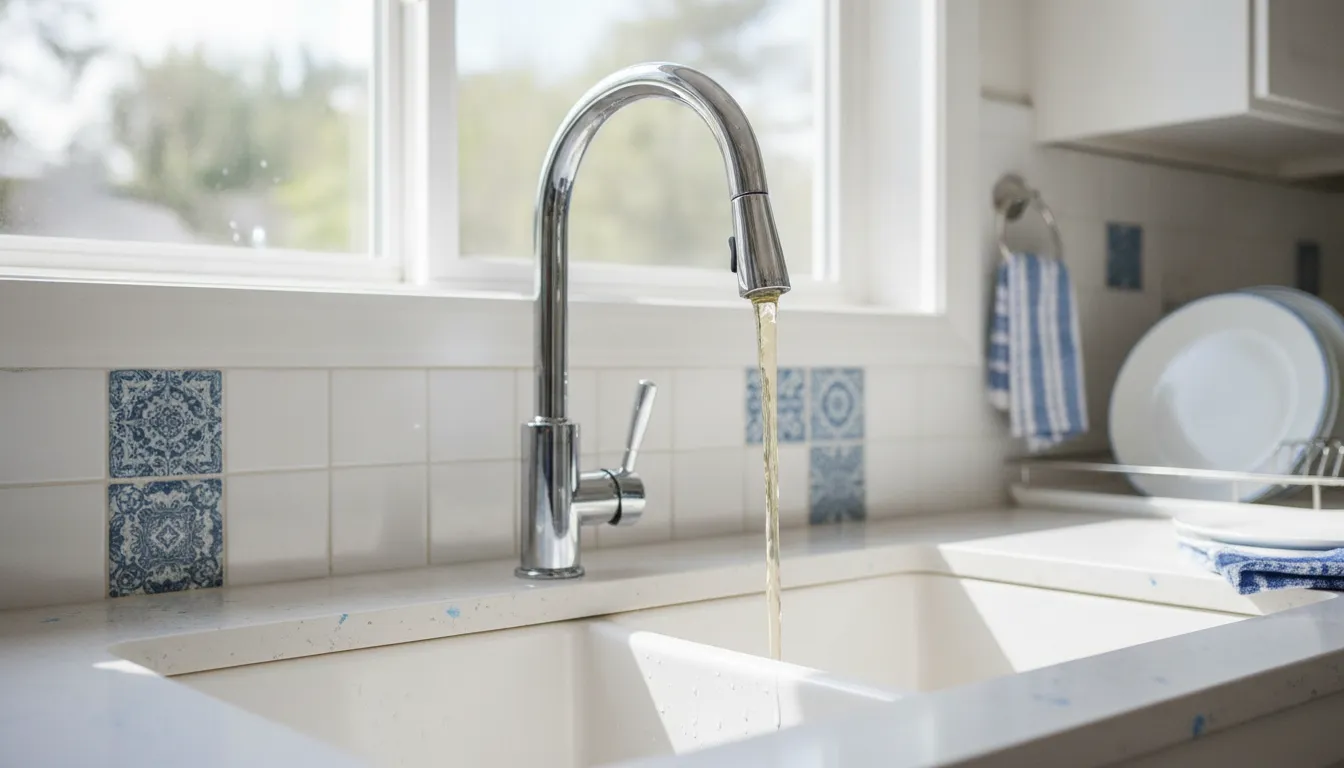
You open one hot handle and the stream looks yellow. The bathroom down the hall runs clear. Cold water from the same spout looks normal. That is the yellow hot water one faucet pattern, and it is narrower than a heater problem that shows up at every hot tap in the house.
The color is a location clue. Water that already passed through the heater and still looks clear at other outlets is not picking up that tint in the tank. Something between the shared hot line and this one spout is adding it. A licensed plumber can separate that local path from a shared hot-water problem.
Mr. Pipey Plumbing is a family-owned Metro Detroit company based at 12660 Burt Rd in Detroit. We repair faucets and both tank and tankless water heaters, with emergency plumbing when a valve will not close. The work carries a 100% satisfaction guarantee, and after-hours calls do not add overtime or double-time charges.
Call (313) 900-0700 about yellow hot water at one faucet
Why Does Yellow Hot Water One Faucet Stay Local?
Hot water leaves the heater on a shared line. It only becomes “this faucet” after a branch, a shutoff, a short supply tube, and the faucet body. If every other hot outlet is clear, the tint is joining the water on that last stretch.
A pale yellow that fades in a few seconds often means material was sitting still in that branch. A tint that holds for a full minute, or that returns every morning at the same handle, points to a part that keeps shedding or trapping color. Either way, the other rooms are your control. They show what the heater water looks like before it reaches this spout.
Write down the room, whether only the hot handle is tinted, and whether the color fades. Those three notes keep a visit on one fixture. Our hot water color guide covers yellow, orange, or brown water at several fixtures. This page does not.
Older Metro Detroit baths often hide the problem at an angle stop that has not moved in years. Newer kitchens more often show it at a cartridge or a clogged spout tip. The house age matters less than the clear taps next to the yellow one.
A single yellow handle is also easy to misread after a city flush or a shutoff elsewhere in the house. Those events can loosen iron scale in shared lines, but they usually mark more than one faucet. If you recently had water off for a repair in one room only, say so. That history fits a local branch better than a heater fault.
What Can Tint Just That Hot Handle?
A few local parts can color one stream. You do not need to buy parts or open the faucet to understand the clues. The plumber confirms which part is actually involved.
- Spout tip and screen. The screen catches fine grit. Iron-colored particles can tint the first burst of hot water and leave the cold side clearer when hot flow stirs them more.
- Cartridge or washer. A worn internal piece can hold a small pocket of discolored water that only that handle releases. The other faucets never touch that part.
- Local shutoff and riser. An older angle stop or a short corroded supply tube sits between the wall and the spout. Rust there colors only this outlet.
- One branch line. If a single bathroom is affected and the kitchen is clear, the branch to that room is more likely than the heater.
- Not the tank, unless a second tap matches. A failing dip tube or rusty tank usually reaches every hot outlet. One yellow handle with clear hot water elsewhere is a weak tank clue.
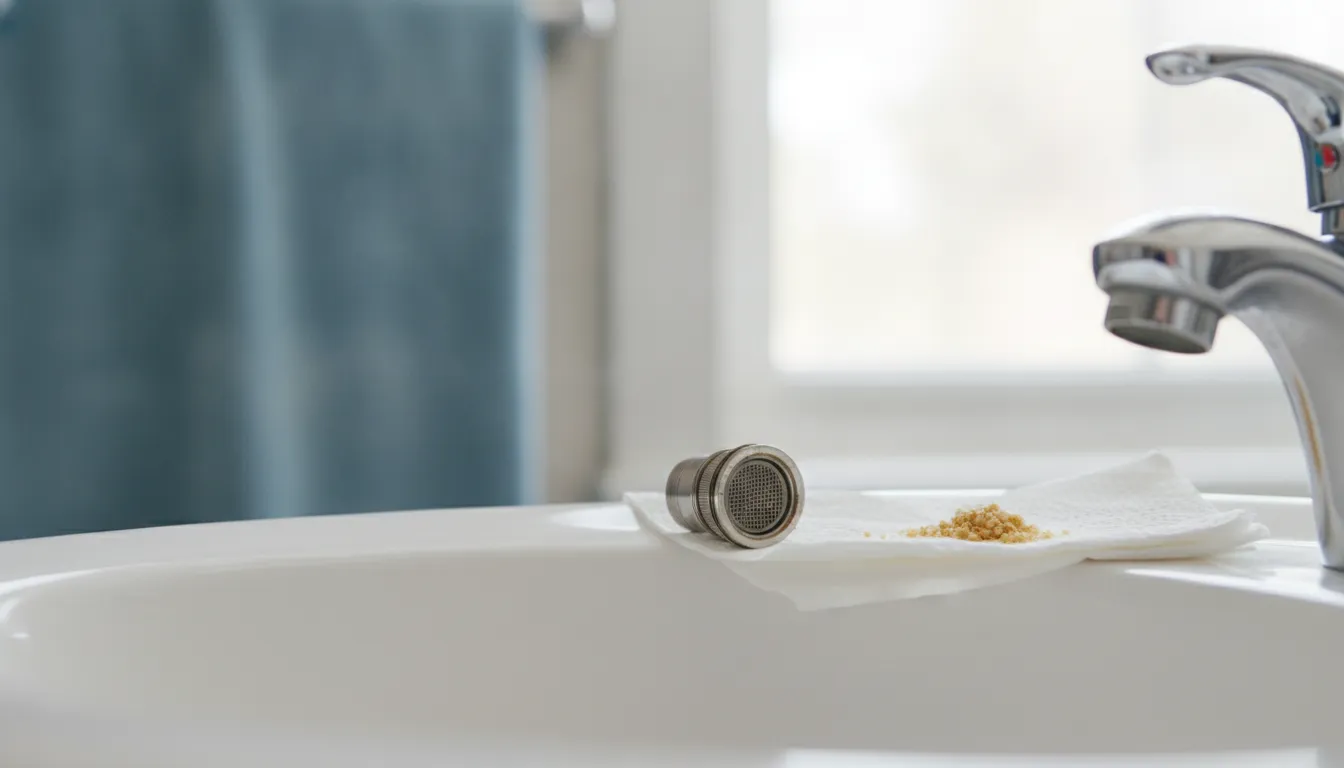
The U.S. Geological Survey notes that iron can add a rusty, reddish-brown, or sometimes yellow color to drinking water. Iron and manganese can stain fixtures and laundry. They are not known to cause health problems. Color still does not name the metal. The single-fixture pattern comes first. Testing comes later if the tint spreads.
Minnesota’s health department makes a similar point about iron in water. It can stain dishes and plumbing fixtures yellow, red, or brown, and it does not usually present a health risk. That guidance is about iron in the water supply. It is not a reason to ignore a spout that keeps turning yellow while the rest of the house stays clear.
How Do You Separate One Faucet From the Heater?
Compare outlets before anyone talks about the tank. Run hot water at the yellow faucet. Then run hot water at a faucet on another floor or at the far end of the house. Then run cold at the problem spout. The mix of results tells you whether the color is trapped at that fixture.
Use the table below as a quick sort. Each row is one pattern, not a diagnosis.
| What you see | What it suggests | Next step |
|---|---|---|
| Only one hot handle is yellow. | Spout, cartridge, or short branch. | Inspect that faucet. |
| The tint fades in seconds. | Debris sat in that branch. | Note how often it returns. |
| Two hot taps match. | A shared hot-water path. | Check the heater, not one spout. |
| Hot and cold both look yellow. | Supply piping or street water. | Review more than one faucet. |
| A milky glass clears from the bottom. | Air, not rust. | Do not treat it as yellow iron. |
Read each row on its own.
The Alabama Department of Environmental Management describes the air check in plain terms. Fill a clear glass and watch it for two or three minutes. If the haze is air, the water clears from the bottom upward. Yellow or rusty color that does not clear that way is a different complaint. A single hot faucet still points back to that fixture first.
Do not use a one-spout tint to plan a tank flush or a new heater. Those choices belong to symptoms that show up at more than one hot outlet. If the second hot tap is clear today, keep the visit on the faucet and the branch that feeds it.
A slow hot side at the same spout is a related clue, not a second project. Low flow plus a yellow tint often means the screen or the cartridge is catching debris. Clear, strong flow at the other hot taps supports that reading. Weak hot water in every room is a different problem, covered in our hot water pressure guide.
When Should You Call About One Yellow Faucet?
Call when the tint comes back after a normal day of use, when it stains the basin, or when a second hot tap starts to match. Also call if that spout is noisy, dripping, or slow on the hot side. Those extras often travel with a worn cartridge or a stiff shutoff. They are easier to fix before the valve seizes.
A same-day visit makes sense if the color shows up with a new metallic taste, or if that faucet is the only hot water a bathroom has. Skip store-shelf cleaners. Skip taking the spout tip off as a project. A plumber can see whether grit is stuck in the tip or coming from the branch behind it.
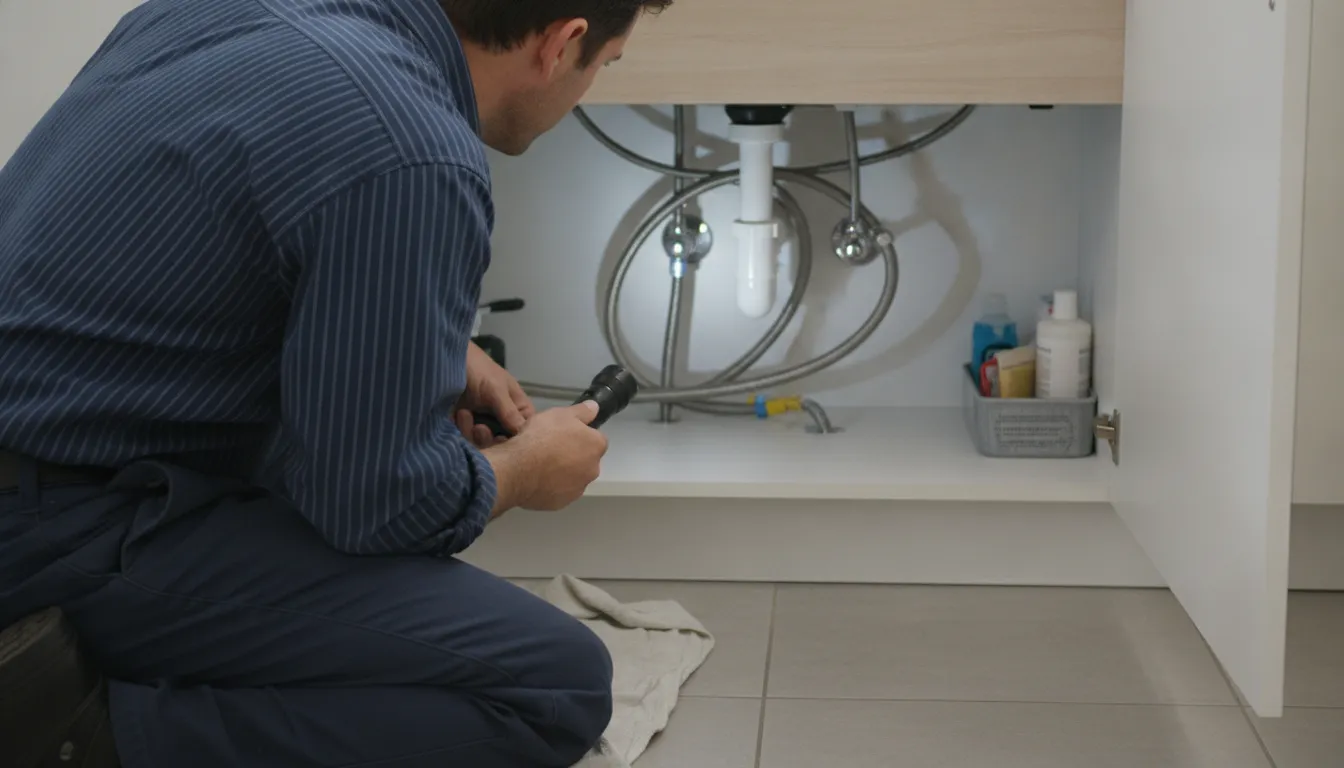
Mr. Pipey handles faucet repair for kitchen, bath, and utility spouts. We also service tank and tankless heaters when the comparison shows the color is not local. Emergency plumbing is available if a stop will not shut or a supply line weeps during the check. A stiff angle stop is a water valve issue, not a reason to open the heater. Office hours run Monday through Saturday, 8:00 AM to 8:00 PM, and Sunday, 8:00 AM to 6:00 PM. You can write the fixture and the timing on our contact form if you would rather not call first.
We see this single-spout pattern in Detroit, Troy, Southfield, Farmington Hills, Novi, Birmingham, and other Oakland County homes. A 1990s hall bath and a newer kitchen can show the same clue. The clear hot taps are what matter.
Stains on a white basin are useful, not decorative. A faint ring that wipes away once is different from a yellow cast that returns on the porcelain after each use. Tell the plumber which one you have. It changes how far back from the spout the inspection starts.
What Will the Plumber Check First?
The visit starts with your notes and a side-by-side comparison. We run the problem spout and a second hot outlet, then the cold side, so the scope stays honest. If only one handle is yellow, the fixture and its stops are next.
- Confirm which handle is tinted and whether another hot tap matches it that day.
- Look at the spout tip and the flow for grit that only that outlet catches.
- Check the local shutoffs and the short supply lines for corrosion or a partly closed valve.
- Inspect the cartridge or faucet body if the tint tracks the hot handle only.
- Widen the check only if a second hot fixture turns yellow during the visit.
That last step protects you from a faucet repair that cannot fix a shared hot-water problem. If the heater needs service, we say so and move to water heater repair instead of treating one spout as the whole story. You get a clear recommendation, and the work we perform carries the satisfaction guarantee.
We do not hand you a parts list or a weekend project. Faucet bodies, cartridges, and shutoffs differ by brand, and forcing the wrong one can crack a stop that still shuts. The inspection is the work. The repair follows only after the comparison says the color is local.
If the second tap turns yellow while we are there, we stop the faucet-only plan. Shared hot-water symptoms belong in a heater evaluation, which is a different visit scope and a different explanation. You should hear that change before any parts are discussed.
What Should You Tell the Plumber Before the Visit?
A short note saves time and keeps the job on the right fixture. You do not need brand names or pipe sizes. You need the pattern.
- Name the room and the handle. “Hall bath, hot side only” is enough.
- Say whether other hot taps were clear the same day. Name one you checked.
- Say whether cold water at that spout was clear.
- Note if the yellow fades in seconds or stays while the water runs.
- Mention stains, drips, noise, or weak flow at that spout only.
- Mention any recent faucet swap, shutoff use, or plumbing work in that room.
Recent work in one room matters. A new faucet, a replaced supply line, or a shutoff that was closed for a repair can loosen grit in that branch alone. The rest of the house would still run clear. That history belongs in the first conversation, not after a heater is already on the table.
Photos of the water in a clear glass help if the tint is faint. Take one at the start of the flow and one after it has run for half a minute. Skip filters and close-ups that change the color. The glass test is only a record. It is not a treatment step.
Call (313) 900-0700 to schedule the faucet check
Frequently Asked Questions
Why is yellow hot water at one faucet only?
Other clear hot taps mean the shared heater water is still clear. The yellow tint is likely coming from that spout, its cartridge, the shutoff, or the short branch to that fixture.
Does one yellow tap mean the heater is rusting?
Not by itself. A rusting tank usually colors more than one hot outlet. One yellow handle with clear hot water elsewhere points to a local part.
Is yellow hot water from iron dangerous?
The U.S. Geological Survey says iron can color water yellow or reddish-brown and can stain fixtures. It is not known to cause health problems. Color alone still does not prove the cause. Keep using the clear taps, and have the yellow one checked if it returns.
Should I remove the spout tip myself?
No. Taking the tip off can show grit, but it can also nick the spout or hide whether the color comes from farther back. A plumber can check the tip and the valve in one visit.
What if a second hot faucet turns yellow tomorrow?
Treat that as a new pattern. Two hot outlets with the same color move the question off this page and toward the shared hot-water system. Our discoloration guide already covers that broader case.
Get That One Faucet Checked
If one hot tap stays yellow and the rest of the house runs clear, start with a local inspection. Call Mr. Pipey at (313) 900-0700 or send the room and the timing through our contact page. We will compare taps, check the spout and shutoffs, and tell you whether the repair stays at that faucet.