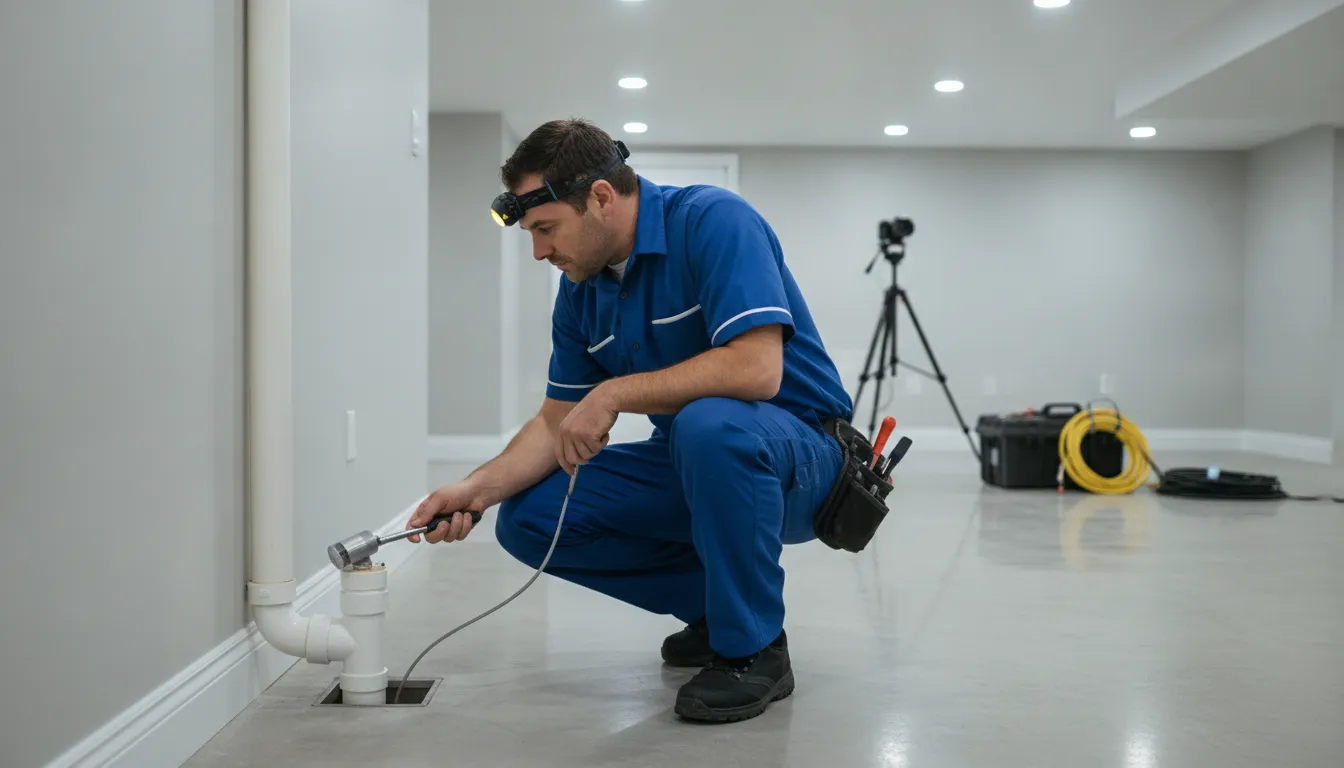

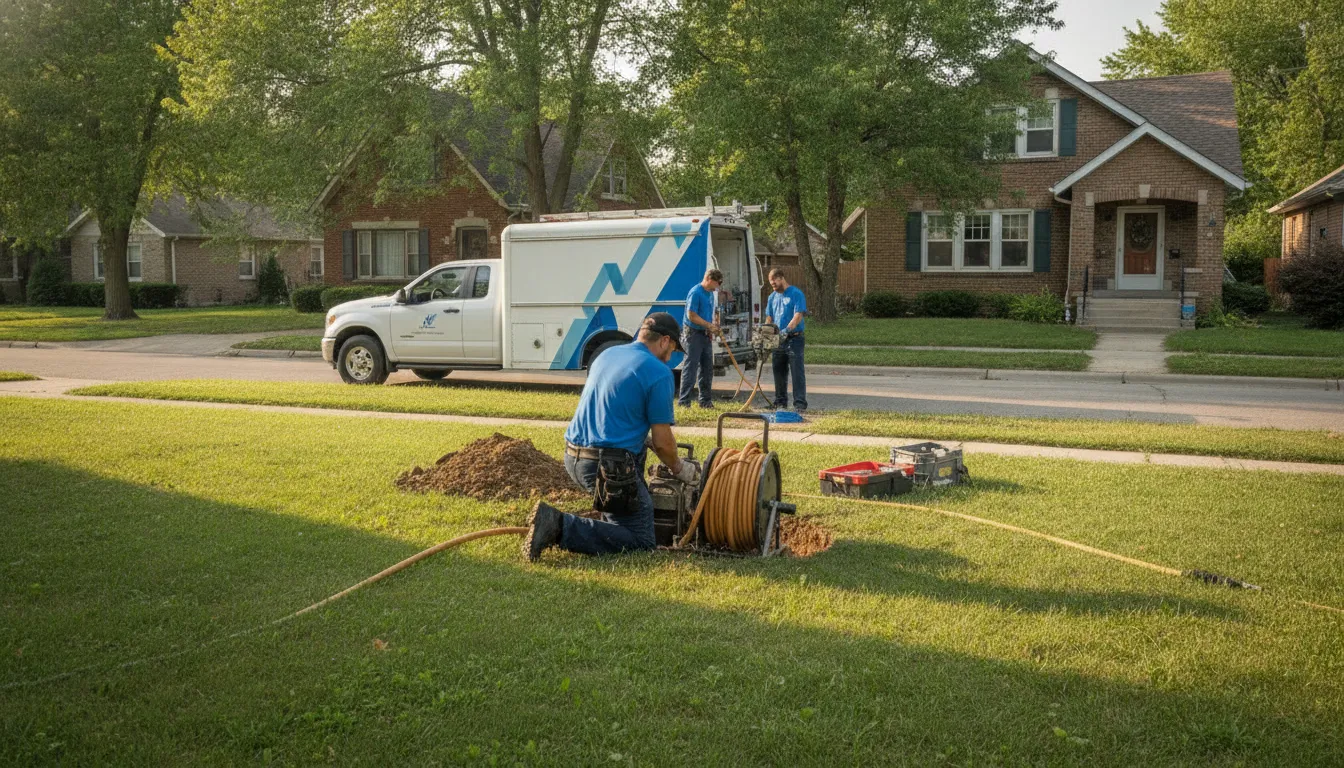
A sewer line problem can raise immediate questions for a Metro Detroit homeowner: Will the yard need to be excavated. How long will the repair take, and what will happen to driveways, landscaping, or other finished surfaces? The right answer depends on the pipe’s condition, its location, and the access available on the property. A professional camera inspection helps identify those details before a repair method is recommended.
For many qualifying properties, trenchless sewer line repair Detroit homeowners request can restore the line through targeted access points rather than extensive excavation. Methods such as pipe lining or pipe bursting may reduce surface disruption while addressing structural damage, but a licensed technician must determine which option fits the existing pipe.
Mr. Pipey provides camera inspections, trenchless sewer line repair, and free estimates for major work across Metro Detroit. Understanding how these methods work makes it easier to compare the available solutions and determine what your home requires.
Trenchless Sewer Line Repair Detroit: What Is Trenchless Sewer Line Repair and How Does It Work?
When a sewer line beneath a Detroit driveway, sidewalk, or landscaped yard needs attention, homeowners may assume the entire route must be excavated. Trenchless rehabilitation offers another approach. According to the U.S. Environmental Protection Agency, trenchless methods use the existing pipe as a host for a new pipe or liner, avoiding extensive digging along the full length of the line. The exact solution depends on the pipe’s condition, layout, material, and access points.
For a professional evaluation of your property’s sewer line, review Mr. Pipey’s sewer line repair services. A camera inspection helps identify whether the line needs a structural liner, a complete replacement, or another repair strategy.
Cured-in-place pipe lining
Cured-in-place pipe, commonly called CIPP, rehabilitates an existing line from the inside. A trained technician prepares the host pipe, positions a resin-saturated liner within it, and cures the material so it hardens against the interior wall. The result is a new pipe within the old one. Research from the University of South Florida describes CIPP as a seamless, jointless, corrosion-resistant pipe that is formed inside the original pipe. That continuous structure can seal cracks and reduce pathways for leaking and root intrusion when the existing alignment and structure are suitable.
CIPP is generally considered when the host pipe remains structurally capable of supporting the installation but has defects such as cracks or leaking joints. It can also follow bends and turns, although an inspection is necessary to determine whether lining is appropriate. A sag, severe collapse, or other structural condition may require additional work before a liner can be installed.
Contact Mr. Pipey at (313) 900-0700 to schedule a sewer camera inspection. A licensed technician can explain which approach fits the pipe’s condition and your home’s needs before any work is planned.
Pipe bursting replacement
Pipe bursting replaces the old line rather than lining it. A bursting head is pulled through the existing pipe, fracturing the host material as a new pipe follows behind it. The EPA identifies pipe bursting, CIPP, and sliplining among recognized trenchless sewer rehabilitation methods. Because pipe bursting can install a new pipe that is the same size or larger, it may also increase flow capacity when site conditions and local requirements allow.
Neither method is a universal fit. Older clay or concrete lines may be candidates for bursting, while a suitable, mostly continuous host pipe may favor CIPP. Licensed sewer professionals review the inspection findings and property conditions before recommending the least disruptive repair that provides reliable structural support.
Trenchless vs. Traditional Sewer Repair: What Detroit Homeowners Should Know
Both trenchless repair and traditional excavation can restore a damaged sewer line. The right choice depends on the pipe’s condition, its location, and access to the work area. A professional camera inspection helps determine whether the existing line can serve as a host for a liner or whether full replacement is the more appropriate solution. The practical difference is how much of your property must be opened to reach the pipe.
| Factor | Trenchless Repair | Traditional Excavation |
|---|---|---|
| Yard disruption | Uses limited access points instead of digging along the full pipe route. The EPA reports that trenchless rehabilitation causes less surface disturbance and requires less restoration than dig-and-replace methods. Read the EPA guidance on trenchless rehabilitation. | Requires a trench over much or all of the sewer line. The work can affect lawns, gardens, walkways, driveways, and other surface features above the pipe. |
| Timeline | Often moves faster because technicians work through access pits rather than excavating the entire route. Some trenchless repairs can be completed in a single day, although the actual schedule depends on inspection findings and the selected method. | Usually takes longer because excavation, pipe removal, installation, backfilling, and surface restoration are separate stages. Soil conditions, depth, weather, and utility conflicts can extend the schedule. |
| Restoration costs | Can reduce the expense of replacing landscaping, pavement, concrete, or other property features. Research notes that total repair pricing may be similar in some cases, but trenchless work can reduce restoration costs substantially. Review the research on trenchless sewer rehabilitation. | May add restoration work after the pipe is repaired. The final cost can include replacing soil, sod, plantings, hardscape, or sections of a driveway in addition to the sewer work itself. |
| Property impact | Rehabilitates the existing route with a new pipe or liner while preserving more of the surrounding property. This can be especially valuable when the sewer runs beneath established landscaping or hard-to-replace surfaces. | Provides direct access to the pipe and may be necessary when the line has collapsed, shifted substantially, or cannot support a trenchless method. It creates more temporary disturbance but can address conditions that lining or bursting cannot. |
Why the inspection determines the better option
Trenchless is not a universal substitute for excavation. Cured-in-place lining generally requires a pipe with enough structural integrity to accept the liner, while pipe bursting has its own material and access requirements. A severely collapsed line, difficult connection, or problem outside the eligible repair area may call for traditional excavation. The inspection also identifies the repair limits, so the recommendation reflects your actual sewer line rather than a generic method preference.
For a clearer picture of the inspection, diagnosis, and repair recommendation, review what to expect during a sewer repair service visit. Understanding the property impact, expected timeline, and restoration scope allows you to compare options with confidence before work begins.
How Much Does Trenchless Sewer Line Repair Cost in Detroit?
Every sewer line has a different repair profile, so a reliable estimate starts with seeing the condition and location of the pipe. For Detroit-area homeowners, the first step is a professional camera inspection. Mr. Pipey’s team can use the inspection findings to explain the available repair method and provide a free estimate based on the actual work required.
What factors affect the estimate?
Pipe length is one of the basic cost factors. A longer section requires more materials, preparation, and installation time than a short repair. The severity and type of damage also matter. Cracks, separated joints, root intrusion, a collapsed section, and a pipe that has lost its structural integrity may call for different solutions. Deteriorating infrastructure and root intrusion are especially important in older systems because cracks, settling, and roots can increase inflow and infiltration, particularly during wet weather, according to the EPA’s sewer rehabilitation guidance.
The method selected can change the scope of work as well. Cured-in-place pipe, or CIPP, may be appropriate when the existing line can serve as a host for a seamless liner. Pipe bursting may be considered when the old pipe needs replacement and site conditions support pulling a new pipe through the existing path. The inspection helps determine whether either approach is suitable.
How does access affect trenchless sewer repair cost?
Access conditions influence labor, equipment placement, and preparation. A line beneath a driveway, finished landscaping, concrete, or another difficult-to-reach area may require more planning than a line with straightforward access. These conditions should be evaluated before work begins, not guessed from symptoms alone.
Trenchless work can have a higher upfront cost than traditional excavation in some situations. However, it typically requires far less digging, which can reduce the expense of replacing lawns, driveways, walkways, and landscaping. The overall value may be more favorable when restoration is included. For additional context, review this sewer line repair cost breakdown.
The Trenchless Sewer Repair Process: Step by Step
A professional evaluation keeps the repair focused on the actual condition of the sewer line. The work typically follows a sequence that confirms the diagnosis, prepares the pipe, completes the rehabilitation or replacement, and verifies the result before the service is finished.
-
Sewer camera inspection identifies the problem
The process begins with a CCTV sewer camera inspection. The technician guides a camera through the line to locate cracks, root intrusion, collapsed sections, separated joints, obstructions, or other defects. This visual information also shows the pipe’s material, alignment, and overall structural condition. A camera inspection is essential before choosing a trenchless method because a liner and a replacement pipe solve different types of problems. A sag or severely collapsed section, for example, may require additional structural work rather than lining alone. The inspection findings provide the basis for a clear repair recommendation.
-
Strategic access points are created
Instead of excavating the full length of the sewer line, the crew creates one or more carefully selected access points. These are small openings positioned to reach the damaged section and bring in the equipment, liner, or replacement pipe. The exact location depends on the camera findings, the line’s depth and direction, and conditions around the home. Limiting excavation to strategic access points helps protect lawns, driveways, walkways, and established landscaping while still providing the access needed to complete the repair correctly.
-
The pipe is cleaned and prepared
Before rehabilitation, the inside of the line must be prepared. Professional hydro-jetting removes built-up debris, grease, mineral deposits, and root material that could interfere with the repair. Cleaning also gives the technician a clearer view of the host pipe and helps ensure that the new liner or replacement pipe can be installed smoothly. The crew then confirms that the line is ready for the selected repair method.
-
CIPP lining or pipe bursting completes the repair
The inspection determines which trenchless path fits the pipe. With cured-in-place pipe, or CIPP, a resin-saturated fabric tube is inserted into the existing line and cured in place. It forms a seamless, jointless, corrosion-resistant pipe within the original host pipe, sealing defects without requiring a full excavation. Review trenchless sewer line repair options to understand how this approach may fit a residential sewer line.
When the existing pipe needs replacement, pipe bursting may be appropriate. In this method, a new pipe is pulled through the old one while simultaneously fracturing the host pipe. The old material is displaced into the surrounding soil as the new line takes its place. Pipe bursting is not suitable for every layout or pipe condition. So the camera findings and site assessment guide the decision between bursting, CIPP, or another recognized trenchless rehabilitation method.
-
Final inspection and testing verify the result
After the repair is complete, the line is inspected again and tested for proper flow. This final review confirms that the new liner or replacement pipe is positioned correctly, connections are open, and wastewater can move through the system as intended. The access points can then be restored according to the property’s needs. A documented final inspection gives the homeowner a clear record of what was repaired and helps establish the condition of the line going forward.
How Long Does Trenchless Sewer Repair Last?
When a sewer line problem affects your Detroit-area home, durability matters as much as the immediate repair. Mr. Pipey offers a 100-year pipe lifespan on trenchless installations, giving homeowners a long-term solution rather than a short-term patch. The actual service life depends on the pipe material, installation conditions, soil movement, and the method selected after a professional inspection.
CIPP lining creates a seamless barrier
Cured-in-place pipe, or CIPP, is designed for sewer lines that can be rehabilitated from within. A resin-saturated liner is positioned inside the existing line and cured in place. The result is a seamless, jointless, corrosion-resistant pipe within the original pipe, as described in research from the University of South Florida. Eliminating joints also reduces pathways where leaks and root intrusion can develop.
EPA documentation explains that trenchless rehabilitation uses the existing pipe as a host for a new pipe or liner. Allowing the line to be renewed without excavating its entire length. That approach can extend the useful life of an aging sewer line while preserving more of your yard, driveway, or hardscaping. CIPP liners are often designed for a service life exceeding 50 years, while Mr. Pipey’s trenchless installations carry a 100-year pipe lifespan offering.
Pipe bursting installs a new pipe
Pipe bursting takes a different approach. The process fractures the old pipe while pulling a new pipe through its path. This replaces the failed line rather than simply lining it. New HDPE pipe resists root intrusion and provides a durable replacement for older, brittle sewer materials. Because the old pipe is not left as the operating pathway. Pipe bursting can be a strong option when the existing line has extensive structural damage, provided the site and surrounding utilities are suitable.
A camera inspection helps determine whether CIPP, pipe bursting, or another approach is appropriate. For a closer look at trenchless sewer replacement cost factors, review the factors that affect planning and installation. With the right method and professional installation, trenchless sewer line repair Detroit homes can depend on provides durable results for decades.
Is Trenchless Sewer Repair Right for Your Detroit Home?
For many Detroit homeowners, the answer depends less on the age of the problem than on the condition and path of the existing sewer line. A trenchless solution can be a strong fit when the pipe is accessible for rehabilitation, the surrounding property is difficult to excavate, or preserving established landscaping matters. It is not automatically the right choice for every failure, however. A professional evaluation should guide the decision.
What condition is the pipe in?
Trenchless lining generally requires enough of the existing pipe to serve as a stable host. A camera inspection can show whether the line has cracks, leaking joints, root intrusion, severe corrosion, or a major collapse. Cured-in-place lining may suit a pipe that remains structurally sound but has localized defects. If the pipe has failed extensively, pipe bursting or a conventional replacement may be more appropriate. A significant sag can also require additional structural work because lining alone does not correct the pipe’s underlying grade.
Detroit’s housing stock makes this inspection especially important. Many area homes have sewer lines installed decades ago, including systems dating from the 1920s through the 1960s. Over time, aging materials and joints can become vulnerable to cracking and root penetration. The U.S. Environmental Protection Agency identifies cracks, settling, and tree root intrusion as conditions that deteriorate sewer lines and increase inflow and infiltration, particularly during wet weather (EPA sewer rehabilitation guidance). Root intrusion is a common reason older residential lines need careful evaluation before a repair method is selected.
How do access, property, and timing affect the choice?
Access conditions often influence the practical value of trenchless sewer line repair Detroit homeowners consider. A driveway, mature tree, finished basement, paved walkway, or tightly positioned home can make open excavation more disruptive and increase restoration requirements. Property type and age matter as well. Older homes may have unusual pipe materials, connections, or layouts that cannot be confirmed from the surface.
Budget and timeline should be assessed together, not as separate promises. Trenchless work may reduce excavation and restoration, but the suitable method, pipe length, access points, and severity of damage all affect the estimate. For more detail on the factors that shape the investment, review our guide to trenchless sewer replacement cost in Detroit.
Why a camera inspection is the deciding step
A camera inspection is the definitive way to determine whether trenchless repair can address the actual failure. It lets a licensed technician evaluate the entire line, identify the source of the damage, and recommend lining, bursting, or another repair based on evidence rather than assumptions. That assessment gives you a clearer plan for protecting your property, meeting the home’s needs, and choosing a durable sewer solution.
Call Mr. Pipey at (313) 900-0700 for a free sewer line camera inspection and estimate. Our licensed team serves Metro Detroit homeowners with professional trenchless sewer repair solutions.
Frequently Asked Questions
Will trenchless sewer repair damage my lawn or landscaping?
Trenchless methods are designed to limit surface disruption because they use existing access points or small access pits instead of excavating the full length of the sewer line. Some digging may still be necessary, depending on pipe location, access, and the selected repair method. The EPA notes that trenchless rehabilitation generally requires less restoration than traditional dig-and-replace work: EPA trenchless rehabilitation guidance.
Is trenchless sewer repair suitable for older Detroit homes?
It can be, particularly when an inspection shows that the existing line has a usable path for rehabilitation or replacement. Older Metro Detroit properties may have clay or concrete sewer pipes, mature tree roots, cracks, or settling. Pipe bursting is commonly used with brittle materials such as clay or concrete, while other conditions may call for lining. A professional camera inspection should guide the recommendation.
How does trenchless pipe lining work?
A technician cleans and prepares the existing line, inserts a resin-saturated liner, and cures it in place. The result is a seamless, jointless, corrosion-resistant pipe within the original pipe. CIPP lining is generally considered when the host pipe remains structurally sound but has defects such as cracks or leaking joints. Source: University of South Florida research.
Is trenchless sewer repair more expensive than traditional methods?
The repair price depends on pipe length, condition, access, and the method required. Trenchless work may have a similar upfront cost to excavation in some cases, but it can reduce restoration expenses for lawns, driveways, landscaping, and other surfaces. An inspection and site-specific estimate are needed to compare the complete project cost.
How long does trenchless sewer repair last?
Longevity depends on the pipe material, installation quality, soil conditions, and ongoing maintenance. A properly installed liner or replacement pipe is intended as a durable, long-term solution. Mr. Pipey offers trenchless systems with a 100-year pipe lifespan, subject to the selected method and project conditions.
Ready to Explore Trenchless Sewer Repair?
A professional camera inspection can clarify your sewer line’s condition and help determine whether a trenchless solution fits your Metro Detroit home. Schedule your free sewer line camera inspection and estimate today by calling (313) 900-0700. Mr. Pipey’s team can explain the available repair options and recommend a practical next step based on what the inspection shows.