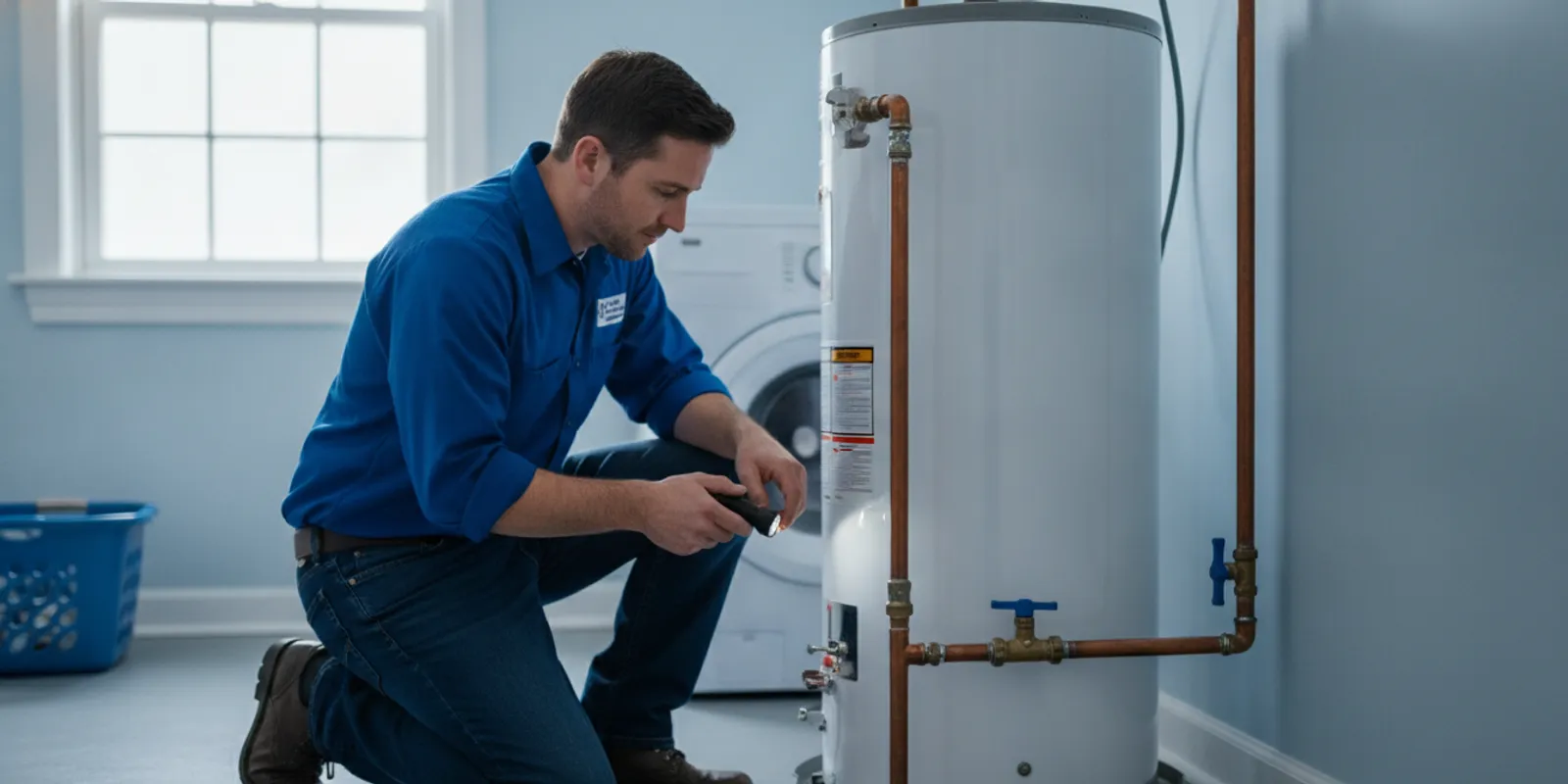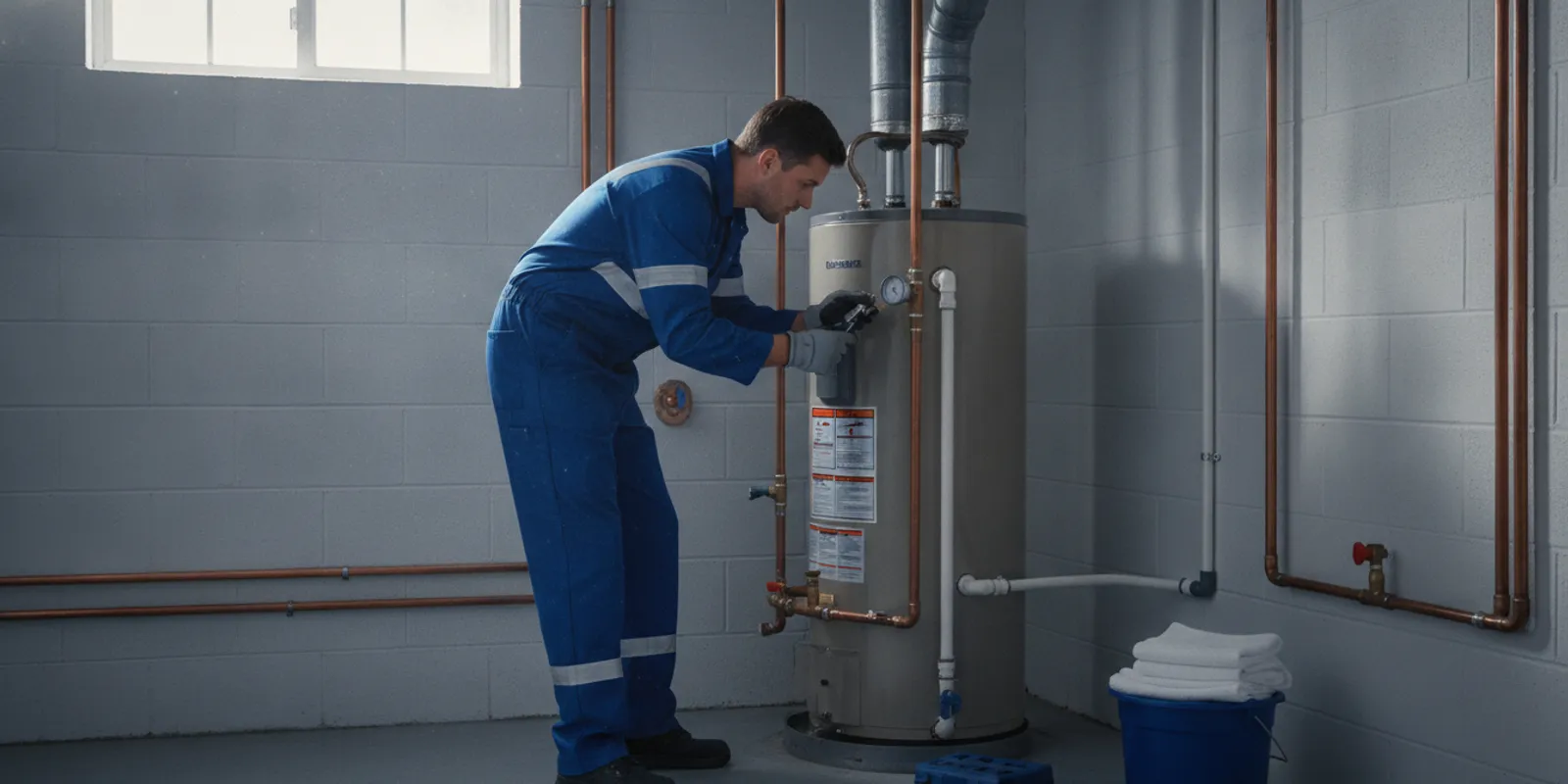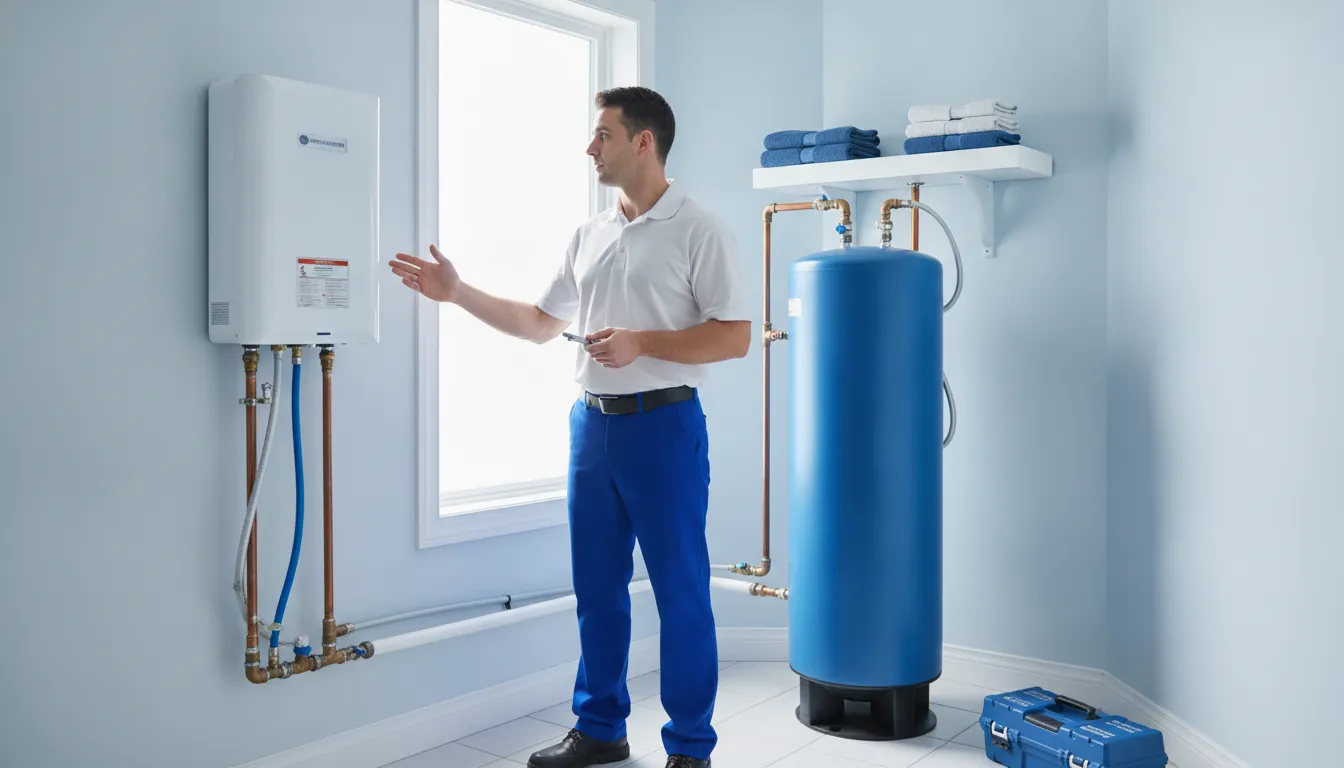
Choosing a water heater is less about finding a universally better technology and more about matching the system to your Ann Arbor home’s routines. Household size, simultaneous hot-water demand, available space, and the home’s existing fuel or electrical setup can all shape the right decision.
Contact Mr. Pipey for professional water heater guidance in Ann Arbor.
For a tankless vs tank water heater Ann Arbor decision, a tank model offers a stored reserve of hot water. A tankless model heats domestic water on demand and avoids standby losses associated with storage. A professional assessment can show which tradeoffs fit your home.
Before comparing capacity, space, maintenance, and installation requirements, it helps to understand how each system delivers hot water in the first place.
How Do Tank and Tankless Water Heaters Work?
Traditional tank water heaters keep a reserve of heated water in a storage tank. That stored supply is available when a household opens a hot-water fixture. This makes the tank a familiar approach for homes that need a substantial volume of hot water over a short period. The system continually maintains the temperature of the water in its reservoir, so hot water is ready before the next shower, load of laundry, or dishwashing cycle.
The tradeoff is that stored water can lose heat while it waits in the tank. This is commonly described as standby loss. The heater may use energy to maintain the reserve even when no fixture is running. A tank system therefore bases its operation on keeping a supply ready for use, rather than heating each volume of water only at the moment it is needed.
A tankless water heater uses a different sequence. When a household turns on a hot-water tap, incoming water flows through the unit. In the described gas-fired system, a sensor detects that flow and activates a heating device, which raises the water temperature to a preset level. A gas tankless unit includes components such as a burner, fan, and heat exchanger that support this process.
When the fixture stops drawing water, the heating element shuts off. Because the system heats domestic water on demand instead of holding a heated reserve, it does not have the standby losses associated with tank storage. The cited educational resource also describes tankless units as compact, which can matter when available utility space is limited.
On-demand heating does not mean that every tankless unit supplies unlimited hot water under every condition. The same resource notes that high-efficiency tankless heaters can provide hot water at a rate of 2 to 5 gallons per minute. Actual performance depends on the unit and the demand placed on it, which is why household routines matter when a professional evaluates a replacement or upgrade.
In practical terms, a tank system prioritizes a ready reserve, while a tankless system prioritizes heating water as it flows. Understanding that distinction provides the foundation for comparing capacity, space, standby operation, and the service requirements of each system.
What Affects a Tankless vs Tank Water Heater Ann Arbor Choice?
The right system depends on how your household uses hot water, how much room is available for equipment, and whether the home’s existing infrastructure supports the replacement. A tank heater keeps a reserve available in a storage vessel, while a tankless unit heats domestic water as it flows through the system. Neither option is automatically better for every Ann Arbor home.
Tank and tankless water heater considerations
| Consideration | Tank water heater | Tankless water heater |
|---|---|---|
| Capacity | Stores a fixed reserve that can supply a large volume of hot water over a short period. | Heats water on demand. High-efficiency units described by the U.S. Department of Energy resource can provide about 2 to 5 gallons per minute, so sizing must reflect simultaneous household demand. |
| Space | Requires floor space for a comparatively large storage tank and access around the equipment. | Uses a compact form factor, often making a wall-mounted installation practical where the existing layout allows it. |
| Standby operation | Maintains stored water at temperature, which can result in standby heat loss. | Turns on when hot-water flow is detected and does not have the same storage-related standby losses. |
| Infrastructure | May align more closely with an existing replacement setup, subject to professional inspection. | Conversion may require plumbing or electrical modifications, depending on the unit and the home’s existing service. |
| Maintenance | Requires ongoing attention appropriate to a storage appliance, including evaluation of the tank and connections. | Requires model-specific professional service and inspection of the heating components, connections, and venting where applicable. |
| Decision fit | Often suits households that value a readily available reserve and a familiar replacement approach. | May suit households prioritizing compact equipment and on-demand operation, provided capacity and infrastructure are appropriate. |
The U.S. Department of Energy explains that tankless water heaters provide on-demand heated domestic water without the standby losses associated with tank storage: Building Science Education water heater guidance. That does not remove the need for correct sizing. A home with several fixtures used at once may need a system selected around its actual flow demands rather than the equipment’s compact size alone.
Maintenance and infrastructure should be part of the decision, not an afterthought. A tankless conversion may involve plumbing or electrical changes and a higher upfront investment.
- Infrastructure: Review the home’s plumbing, electrical capacity, fuel supply, venting, and installation location.
- Existing equipment: Compare the condition of the current system with the work required for a replacement or conversion.
- Household fit: Match the recommendation to the home’s hot-water routines rather than choosing from equipment size alone.
A professional assessment can clarify whether a tank replacement or tankless upgrade better fits the home’s routines and service needs.
What Are the Benefits of a Traditional Tank Water Heater?
A traditional tank water heater keeps a reserve of heated water in a storage tank, making hot water available when household fixtures call for it. The stored supply can be useful for homes with predictable routines, such as morning showers, laundry, and evening dishwashing. Because the system’s operating model is familiar, it can also make replacement planning more straightforward when an existing tank reaches the end of its serviceable condition.
Reserve capacity is the central benefit. A tank system holds a fixed quantity of hot water. This gives the home an available supply rather than heating every gallon as it moves through the equipment. That approach can fit households that prefer a conventional system and want a water heater configuration that is easy to recognize during a professional evaluation. The appropriate capacity still depends on household demand, fixture use, and the home’s existing plumbing and fuel setup.
Why does familiar replacement logic matter?
Replacing one traditional tank with another is often a clear comparison for a plumbing professional. The assessment can focus on the current unit’s condition, the home’s hot-water demand, the available installation space, and whether the existing connections and venting support the proposed replacement. This does not mean every tank replacement is identical, or that a tank is automatically the right choice. It means the decision can begin with a known system and a direct review of what the home already uses.
Traditional tanks do have a different operating profile from on-demand equipment. Water stored in the tank is maintained at temperature, while a tankless unit heats domestic water as needed. The U.S. Department of Energy’s Building Science Education resource explains that tankless systems avoid the standby losses associated with tank storage, so efficiency is only one part of the comparison. A professional recommendation should also account for capacity, household routines, available infrastructure, and the homeowner’s priorities rather than treating one design as universally better.
For homeowners who value a familiar configuration and an available reserve, a traditional tank may remain a practical fit. A qualified evaluation can confirm whether the existing system should be replaced with another tank model or whether a different approach better matches the home’s long-term needs.
When Does a Tankless Water Heater Make Sense in Ann Arbor?
A tankless system can be a strong fit for an Ann Arbor home when space, household routines, and hot-water demand all point in the same direction. Unlike a storage tank, it heats domestic water as it is needed, which avoids the standby losses associated with keeping stored water hot. The U.S. Department of Energy’s Building Science Education resource describes tankless units as compact and capable of on-demand operation: learn more about gas-fired tankless water heaters.
Compact size is especially useful when a homeowner wants to reclaim floor or utility-room space. A tankless unit can also suit households that prefer hot water produced during use rather than maintained in a reservoir. That does not make it automatically better for every home. The system still has a practical flow limit, and the right choice depends on how much hot water the household may need at the same time.
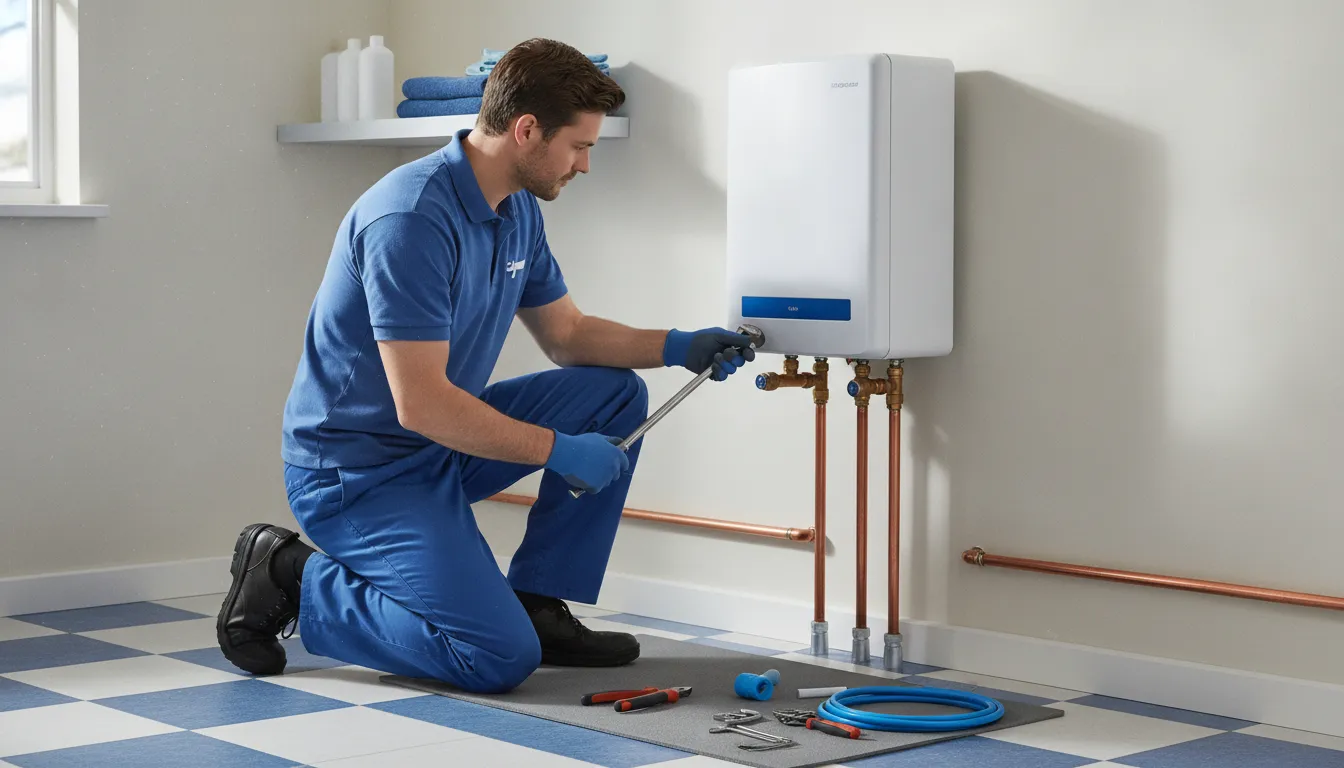
Capacity is one of the most important parts of the evaluation. The cited educational resource notes that high-efficiency tankless heaters may provide hot water at approximately 2 to 5 gallons per minute. Multiple showers, fixtures, or appliances operating together can therefore affect which system size is appropriate. A professional assessment should consider household routines and peak demand rather than selecting a unit by physical size alone.
Maintenance should also be part of the decision. Tankless equipment has components that need appropriate service attention, and its long-term performance depends on correct installation and ongoing care. A homeowner considering the change should review tankless water heater maintenance as part of the ownership conversation, not as an afterthought.
Professional sizing matters because a conversion may require changes to plumbing or electrical infrastructure. The existing fuel supply, electrical capacity, venting, installation location, and expected flow all deserve review before a recommendation is made. Mr. Pipey’s team can help an Ann Arbor homeowner compare those requirements with the home’s actual needs. The team can then present clear options without assuming that tankless is the right answer in every situation.
What Should Ann Arbor Homeowners Ask Before Replacing a Water Heater?
A replacement decision should begin with how your household uses hot water and what your home can support. These questions help organize a professional evaluation, whether you are comparing tankless vs tank water heater Ann Arbor options or deciding whether replacement is necessary at all.
- What is our household’s peak hot-water demand? Consider the times when showers, laundry, dishwashing, and other fixtures may overlap. A system should be evaluated against real household routines, not just the number of people in the home. Household needs are a central factor in comparing water-heating systems.
- Does the existing fuel or electrical service support the proposed equipment? Ask whether the current gas, electrical, plumbing, and utility arrangements are appropriate for the selected system. A tankless conversion may require modifications to the plumbing or electrical setup, so the evaluation should identify those requirements before work begins.
- Will the existing venting and installation location work? Ask the professional to assess venting, clearances, connections, drainage, and the physical location of the current heater. A replacement is not simply a matter of choosing a unit that fits the tank’s footprint. The equipment and its surrounding installation conditions must be considered together.
- What maintenance will this system require? Ask how the recommended equipment should be serviced and what maintenance schedule supports reliable operation. Maintenance expectations can differ between a storage tank and an on-demand system, so they should be part of the comparison rather than an afterthought.
- Is repair or replacement the more appropriate decision? Ask whether the current problem can be addressed reliably, how the condition of the existing heater affects that decision, and what replacement options would improve the home’s service. A clear explanation and transparent options are especially important when the heater has failed or the household needs a prompt response.
Ann Arbor homeowners are within Mr. Pipey’s documented Washtenaw County service footprint. A licensed and insured Michigan plumbing contractor can review the home, explain the tradeoffs, and connect the recommendation to your priorities. For a broader overview, review these water heater replacement options before scheduling an assessment.
How Can a Tankless vs Tank Water Heater Ann Arbor Evaluation Help?
Choosing between a tank and tankless water heater is easier when the decision starts with your home rather than a sales pitch. A professional assessment looks at how your household uses hot water, the condition of the existing system, and whether the home’s current plumbing, fuel, electrical, and venting infrastructure can support the replacement you are considering.
That assessment also helps separate a true system choice from an installation constraint. A tankless unit may suit a household seeking a compact, on-demand design, while a traditional tank may align better with an existing setup and established hot-water routines. The right recommendation depends on the home’s demand and the practical work required to install and service each option. Reviewing professional water heater installation can help explain why those infrastructure questions matter.
What should a service visit clarify?
A useful visit should give you clear answers, not just a model name. The plumber can evaluate the current water heater, discuss whether repair or replacement is appropriate, and explain how each system would fit the household. The conversation should cover expected maintenance, access for future service, and any changes that may be needed before installation. For homeowners comparing long-term ownership considerations, this guide to tankless water heater maintenance provides a relevant starting point.
Mr. Pipey serves residential properties in Ann Arbor as part of its documented Washtenaw County service footprint. The company is a licensed and insured Michigan plumbing contractor that provides residential plumbing repairs and service calls. Its approach is built around reliable service, transparent options, and licensed professionals, so homeowners can understand the available paths before authorizing work.
If an existing water heater fails and the decision becomes urgent, water heater failures are handled through the company’s emergency plumbing service. That does not eliminate the need for a careful system assessment, but it provides a service path when hot water is suddenly unavailable. Learn more about emergency plumbing service and discuss the options with a qualified professional.
Frequently Asked Questions
Which type of water heater lasts longer?
Tankless units are described as having a longer life expectancy than traditional tank systems, but actual service life depends on equipment quality, water conditions, usage, and maintenance. A professional evaluation can help determine whether an aging system needs repair or replacement.
Can a tankless water heater handle multiple fixtures at once?
It can, provided the system is properly sized for the home’s simultaneous demand. High-efficiency tankless units are described as delivering about 2 to 5 gallons per minute. The home’s fixture flow and expected usage should be reviewed before choosing a unit. The U.S. Department of Energy resource explains tankless flow rates and operation.
Is a tankless water heater always more efficient?
No. Tankless systems avoid the standby losses associated with storing hot water and use energy while operating, but efficiency is only one part of the decision. Available fuel or electrical capacity, household demand, installation requirements, maintenance, and the home’s layout also affect whether the system is a good fit.
Should I repair or replace an old tank water heater?
Consider the condition and age of the equipment, the nature of the problem, repair history, household hot-water needs, and whether replacement would better support your home. A licensed professional can assess the existing system and explain repair and replacement options. The evaluation should help you choose without pressure.
Get Professional Water Heater Guidance in Ann Arbor
Choosing between a tank and tankless water heater depends on your household demand, available space, system capacity, and long-term service needs. A professional assessment can help you compare practical replacement options with clear expectations for maintenance and performance. To discuss the right fit for your home, contact Mr. Pipey for professional water heater guidance and replacement options in Ann Arbor.