
Metro Detroit basements rarely wait for a convenient time to take on water. A reliable sump pump is an investment in avoiding the far larger cost and stress of a flooded basement.
Sump pump installation cost in Metro Detroit depends on whether you are replacing a pump or building a complete drainage setup. A straightforward replacement usually costs less because the pit, power supply, and discharge line may already be ready to use.
A first-time installation can cost more when the job requires excavation, a new pit liner, electrical work, or rerouted discharge piping. Pump type also matters. Your home may need a submersible unit, battery backup, combination system, or higher-capacity model.
Because every basement and water problem differs, a professional inspection is the safest way to get an accurate, upfront quote. That quote should cover the system and work your basement requires.
Before choosing a system, compare more than the pump’s shelf price; labor, drainage conditions, and backup protection shape the final bill. We will answer What does sump pump installation cost in Metro Detroit? by separating common price drivers from the work your home may actually need. Here is how.
What does sump pump installation cost in Metro Detroit?
A practical starting range for sump pump installation cost is $500 to $4,000. Across national cost research, the average is about $1,400. Metro Detroit quotes may fall above or below that mark based on the home and project scope.
That wide range is useful for early planning, not as a fixed price. A contractor must inspect the space before confirming the work and total cost. Homeowners can first review what goes into a professional sump pump installation.
Typical cost breakdown
A basic job uses a standard pump where the pit, power supply, and discharge line are already suitable. A new setup costs more when the crew must cut concrete, dig a pit, or add drainage work.
| Cost item | Typical planning range | What can change the price |
|---|---|---|
| Sump pump unit | $150 to $1,500 | Pump type, capacity, and backup features |
| Professional labor | $300 to $800 | Access, setup time, and local conditions |
| Pit liner, pipe, and fittings | $100 to $300 | Existing pit and discharge route |
| Complex installation work | $1,000 to $2,500 | Concrete cutting, digging, and added drainage |
| Total project | $500 to $4,000 | Full scope and basement conditions |
These figures show why two homes can receive different estimates for the same pump model. One may need only a simple replacement. Another may need a new pit, longer piping, and repair work around a finished floor.
Metro Detroit quote factors
Local homes differ in age, foundation type, basement finish, and access. These details affect labor time and the safest place for the pit and discharge pipe. A finished basement may also need careful removal and repair around the work area.
Soil and lot drainage also shape the quote. The crew may need a longer discharge path to move water away from the foundation. If basement drainage is part of the problem, basement drain service may be part of the full scope.
Power needs can also affect the system choice. A backup option can keep the pump working during an outage. Homeowners can use FEMA’s sump pump guidance to understand why backup power and routine care matter.
What an estimate should include
A clear estimate should name the pump type, pit work, fittings, check valve, discharge piping, labor, cleanup, and any backup option. It should also state whether electrical work or drainage repairs are separate. Ask how the proposed system fits the home’s water load and basement conditions.
The lowest quote may leave out work needed for a dependable setup. Compare the full scope instead of only the total. Installation difficulty and drainage conditions can change the price, so an on-site inspection gives the soundest local answer.
What factors change the final installation price?
The final sump pump installation cost depends on the work required around the pump, not just the pump itself. An onsite inspection shows whether the job is a simple replacement or a full new installation. That distinction shapes the labor, materials, and time needed in a Metro Detroit basement.
Labor and site preparation
Labor rises when a crew must cut concrete, excavate a new pit, install a liner, and restore the floor. A replacement in a sound, usable pit often requires less work. Yet the existing pit, check valve, and nearby piping still need inspection before they can be reused.
Access also affects the scope. Tight stairs, finished rooms, low crawl spaces, and stored items can slow the safe movement of tools and materials. Homeowners can review this guide to professional sump pump installation for a closer look at the work involved.
The condition of the basement matters as well. Water, damaged concrete, blocked drains, or an unstable pit may require added work before installation begins. Clear access and a dry work area can help the crew focus on the pump system itself.
Pump sizing, routing, and electrical work
Pump capacity should match the amount of water entering the pit and the height the pump must lift it. A larger or more complex system may need different piping, valves, or power. Choosing capacity by price alone can leave the system poorly suited to the home.
The discharge route can be another major cost factor. A short, clear path outdoors is simpler than a long route through walls, joists, or finished space. The installer must also plan an outlet that moves water away from the foundation without creating a new drainage issue.
Electrical work may be needed when the pit lacks a suitable outlet or the planned pump has added power needs. That work should be included in the scope rather than treated as an afterthought. Permit and inspection needs can also vary with the work and local rules.
Backup systems and estimate details
Backup systems add equipment and setup work, but they serve a separate role during an outage or primary-pump failure. The CDC advises homeowners in flood-prone areas to install sump pumps with backup power. Options include battery backup, combination, and water-powered systems.
A useful estimate separates the pump, labor, pit work, discharge piping, electrical work, permits, and backup equipment. It should also state whether old equipment removal and floor repair are included. This detail makes it easier to compare scopes instead of comparing one bottom-line number.
- Confirm whether the quote covers a new pit or replacement in the existing pit.
- Ask where the discharge line will run and which repairs are included.
- Check whether electrical, permit, and backup system work appear as separate items.
Because each basement has different access, drainage, and power conditions, a site review is the sound basis for a final quote. It also helps uncover work that a phone estimate may miss. The result is a clearer plan with fewer surprises during installation.
What happens during professional sump pump installation?
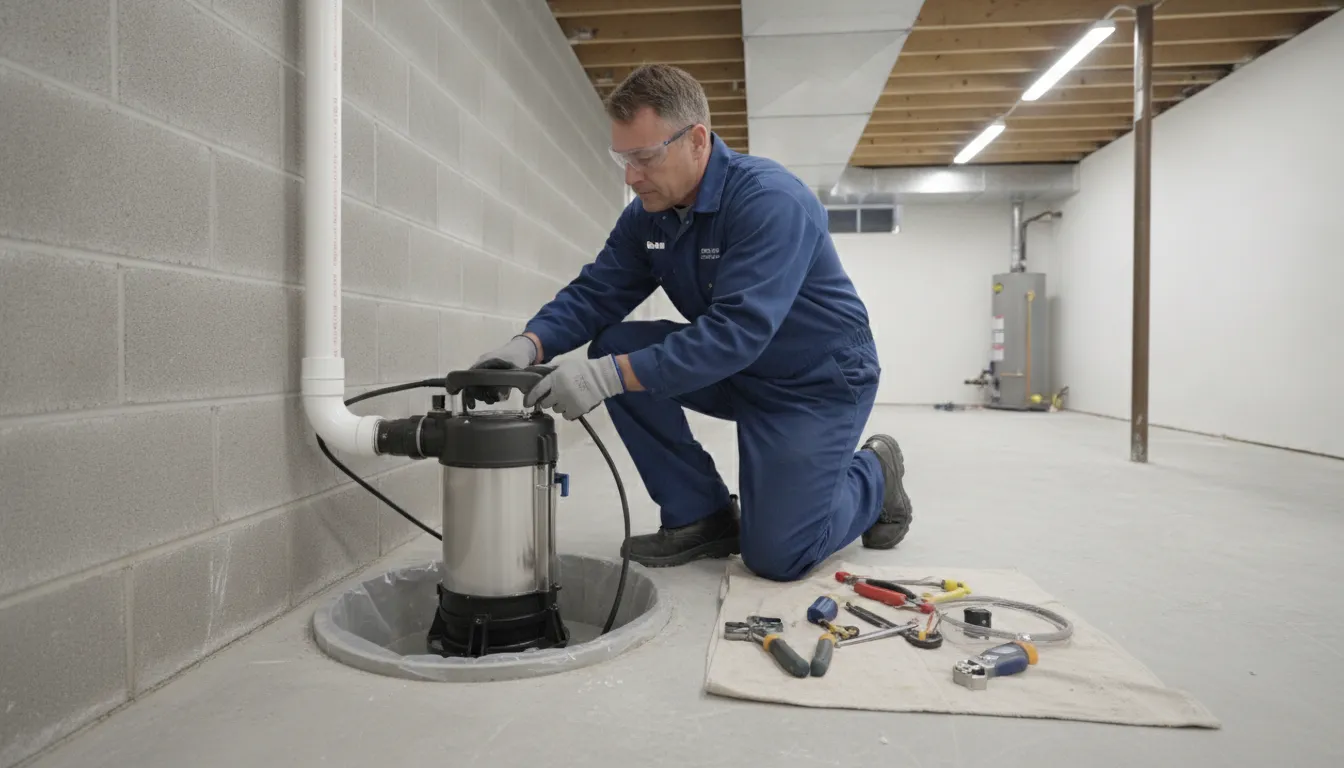
A professional installation starts with a close look at the basement, water entry points, and the current drainage setup. This first check helps the plumber choose the right pump and plan a safe discharge route. It also shows which site conditions may affect the sump pump installation cost.
Inspection and system planning
The plumber checks where water collects and how often the space gets wet. They also check whether an old pit or discharge line can be reused. Next, they review the available power source and local drainage needs. This planning helps prevent a pump from being too small or poorly placed.
A clear quote should explain the selected pump, needed materials, discharge route, labor, and any work on the floor. Homeowners who want more detail can review this guide to professional sump pump installation before the visit.
Pit, pump, and discharge work
- The plumber marks a low point where groundwater can reach the basin without crossing utility lines. If a usable pit exists, they inspect and clean it first.
- For a new pit, the crew opens the floor and removes enough soil for the basin. They set the basin level and secure it in place.
- The pump goes inside the basin on a stable base. The plumber positions the float so it can move freely and switch the pump on.
- A discharge pipe carries pumped water away from the basin. The plumber adds a check valve, which keeps discharged water from flowing back into the pit.
- The crew routes the discharge line outdoors. They seal wall openings and support the pipe to reduce leaks, movement, and noise.
- The plumber connects the pump to a suitable power source and reviews backup options. They also make sure the cord and outlet stay dry.
- The crew pours water into the pit and watches a full pump cycle. They confirm the float, check valve, discharge line, and power connection work as planned.
Site access can change the work involved. For example, installing sump pumps in crawlspaces may require a different pit location and a tighter discharge route. Those details should appear in the estimate before work begins.
Testing, cleanup, and homeowner handoff
After testing, the crew clears debris and restores the work area as closely as the job allows. The plumber should show the homeowner how the system sounds during a cycle. They should also explain where the line exits and how to test the pump.
Good moisture control matters beyond the pump itself. The EPA guide to mold and moisture explains why keeping indoor areas dry helps limit mold growth. A sump pump supports that goal, but it cannot fix every source of basement water.
The final handoff should cover basic care, warning signs, warranty terms, and the recommended test schedule. Homeowners should know who to call if the pump runs nonstop, fails to start, or leaves water in the pit.
Which sump pump setup is right for your basement?
The right setup depends on your sump pit, basement layout, power risks, and how often water enters the pit. Pump choice also affects the sump pump installation cost. A plumber should inspect the discharge route, electrical supply, check valve, and pit before recommending a system.
Pedestal or submersible pump
A pedestal pump has its motor above the pit, while its intake sits below the water. This design can suit a narrow pit where a submersible unit will not fit. Since the motor stays exposed, it is easier to reach for service. It can also be more noticeable when it runs.
A submersible pump sits inside the pit and operates below the water line. It usually keeps the motor and moving parts out of the way. The pit must have enough room for the pump and float to move freely. A fitted cover can also help keep debris out of the pit.
Neither style is the right choice for every Metro Detroit basement. A shallow or tight pit may limit the available options. An older pit may need changes before a new unit can work as planned. Our guide to professional sump pump installation explains the main parts of a complete setup.
Primary pump or battery backup
A primary-only setup uses one pump connected to household power. It may fit a basement with light water entry and a low risk of outages. Yet it cannot run if power fails. It also leaves no second pump if the main unit stops during a storm.
A battery backup adds another layer of protection when the primary pump cannot run. The backup needs proper sizing, sound connections, and regular testing. It is not a reason to ignore the main pump. Both units need clear intake paths and working floats.
Backup equipment adds parts and labor, so it can raise the initial installation cost. That added cost should be weighed against the basement’s contents and past water issues. Keeping water under control matters because the EPA links moisture control with mold control.
What should guide the choice?
Start with how water reaches the pit and how quickly the level rises. Then review pit size, discharge piping, available power, and nearby basement drains. Frequent outages or a finished basement may make backup protection more useful.
- Pit fit: The pump and float need room to work without catching the wall or lid.
- Water load: The system must handle the basement’s actual inflow, not a guess based only on pump size.
- Discharge route: The pipe must carry water away without sending it back toward the foundation.
- Service needs: Choose a setup that can be tested, cleaned, and reached for repairs.
Metro Detroit homes vary in age, drainage, and basement layout. Those details often matter more than the pump’s shelf price. A clear quote should separate the pump, backup equipment, pit work, piping, and electrical needs. That makes it easier to compare setups on equal terms.
Do you need a new sump pump or a replacement?
The right choice depends on what is already in your basement and how well it works. A replacement swaps out a failing pump while using the existing pit and discharge route. A new installation adds a full system where no working setup exists.
Warning signs that point to replacement
Start by watching the pump during wet weather. Grinding, rattling, or harsh vibration can point to worn parts or debris in the unit. A pump that runs but does not lower the water level may also be failing.
Frequent cycling is another warning sign. The cause may be a stuck float, a valve issue, or a pump that does not match the pit. Maintenance can include float adjustment, valve testing, pit cleaning, and clog clearing. An inspection can show whether repair or replacement makes sense.
- The pump does not start when water rises.
- The motor runs for long periods without clearing the pit.
- Noise or vibration has become loud or uneven.
- The unit cycles on and off during dry weather.
- Past repairs have not stopped the same problem.
Replacement is often the practical path when the pit and discharge line still work but the pump cannot be trusted. If water is rising fast, use an emergency plumbing service instead of waiting for the next storm.
When a new installation makes sense
A new system may be needed when recurring water enters a basement that has no sump pump. It may also fit a home with a poor pit location or an unsafe discharge route. These jobs require more planning than a simple pump swap.
The work may include choosing a pit location, creating a discharge path, and matching the pump to the expected water flow. A professional sump pump installation guide can help homeowners understand the main parts before requesting an onsite quote.
Sump pump installation cost also depends on the condition of the current setup. Reusing a sound pit and discharge line can limit the work. Building a full system requires more labor and materials, so an inspection is the clearest way to compare options.
Power outages and recurring water
A working pump still needs power during a storm. The CDC advises homeowners to install sump pumps with backup power to help protect homes from flooding. A battery backup or another suitable backup option can keep the system ready when utility power fails.
Recurring water also calls for a closer look at the whole drainage setup. The pump may be doing its job while foundation drainage or the discharge route sends water back toward the home. A plumber can check the pump, pit, valve, and outlet before recommending replacement or a new system.
How can you get the best value from a sump pump installation?
The lowest quote does not always create the lowest long-term sump pump installation cost. A good installation matches the pump to the pit, water load, and discharge route. It also reduces avoidable failures that can lead to basement water damage.
Know where DIY work reaches its limit
A simple replacement may look manageable when the pit, outlet, and discharge pipe are already in place. A new system is different. It may require cutting concrete, setting a basin, routing pipe, adding a check valve, and confirming safe electrical service.
Professional help has more value when the basement has frequent water entry, a tight crawlspace, or no clear discharge path. A plumber can also check local code needs before work begins. Mr. Pipey’s guide explains what goes into a professional sump pump installation.
Compare complete plans, not pump prices
Ask each installer to explain the pump size, basin work, discharge route, electrical needs, and warranty in the quote. The right pump must handle expected water flow without cycling too often. The discharge line should move water away from the foundation without creating a new drainage problem.
Backup power may add to the first quote, but it can protect the home when a storm cuts electricity. The CDC advises homeowners to install sump pumps with backup power as part of flood preparation. Compare battery age, alarm features, and test steps before choosing a backup system.
- Request an itemized quote that covers labor, materials, cleanup, permits, and any electrical work.
- Confirm that the installer will test the float, check valve, alarm, backup, and discharge flow.
- Ask how the system can be reached for future cleaning, testing, and repairs.
- Keep the model details, warranty, and service records in one place.
Protect the value after installation
A well-installed pump still needs routine checks. Pour water into the pit to confirm that the float starts the pump and the basin drains. Check for odd sounds, blocked discharge points, loose connections, and debris around the float.
Schedule service if the pump runs nonstop, starts and stops often, or fails a test. Mr. Pipey’s sump pump maintenance includes float adjustment, valve testing, pit cleaning, and clog clearing. Related basement drain service can also help when poor drainage adds water near the sump system.
Get an onsite estimate before a crisis, since each basement and discharge route presents different work. Clear scope, proper testing, and planned upkeep usually provide more value than buying the cheapest pump alone.
Frequently Asked Questions
What is the average cost to install a sump pump?
National estimates vary because every home has different drainage conditions and installation needs. One common estimate puts the average at $1,347, with most projects between $642 and $2,097. For Metro Detroit homes, the final price depends on pump type, labor, pit excavation, discharge piping, and electrical work. An onsite inspection provides the most reliable quote.
How much does it cost to install a sump pump in a crawl space?
Crawl space sump pump installation can cost up to $3,900 when limited access makes excavation, piping, and electrical work more difficult. The pump itself is only one part of the total. According to this installation cost breakdown, sump pit liners, discharge pipes, and fittings may add $100 to $300 before added labor or site preparation.
How much does a basement sump pump installation cost?
A basement sump pump installation typically costs between $650 and $1,900. The lower end may cover a straightforward replacement using an existing pit and discharge line. A new installation usually costs more because it may require concrete removal, excavation, piping, electrical work, or drainage changes. Metro Detroit homeowners should request an onsite estimate based on their basement and water conditions.
Does a sump pump need backup power?
A sump pump can run without backup power, but it will stop during an outage unless another power source is available. That creates added flood risk because severe storms can cause both outages and heavy water flow. The CDC recommends buying and installing sump pumps with backup power to help protect homes from flooding.
Ready to Plan Your Metro Detroit Sump Pump?
Waiting until water reaches your basement can turn a planned sump pump project into a stressful emergency with added cleanup and repairs. Starting now gives you time to compare pump options, understand the installation scope, and choose a system suited to your property. A professional estimate also helps you set a clear budget before the next heavy storm puts your basement at risk.
Ready to protect your home and plan the work on your schedule? Request a sump pump installation estimate to review your needs and get clear pricing. Choose the right next step with a licensed plumber before seasonal rain tests your basement and a drainage concern becomes an urgent, costly problem.