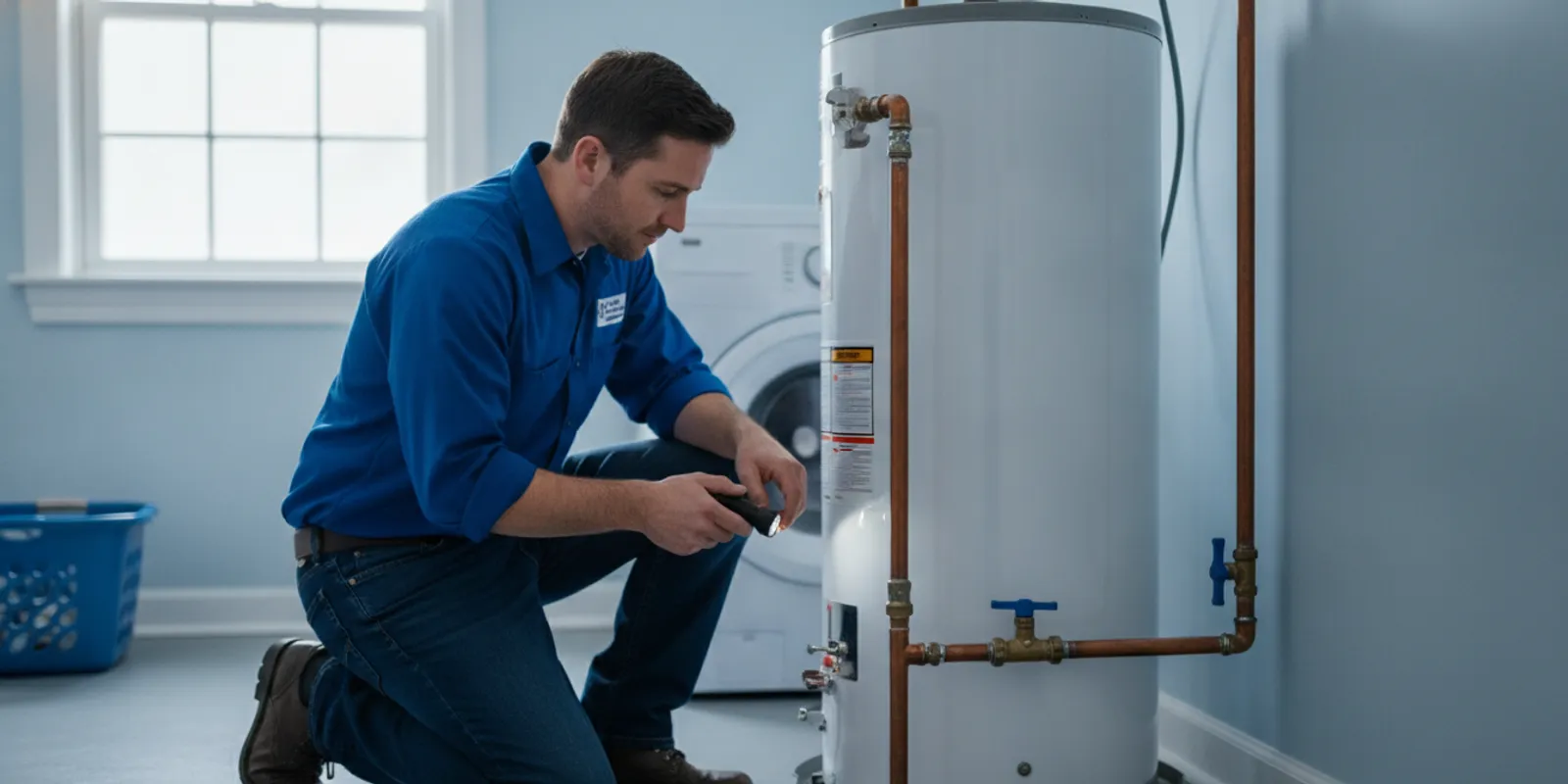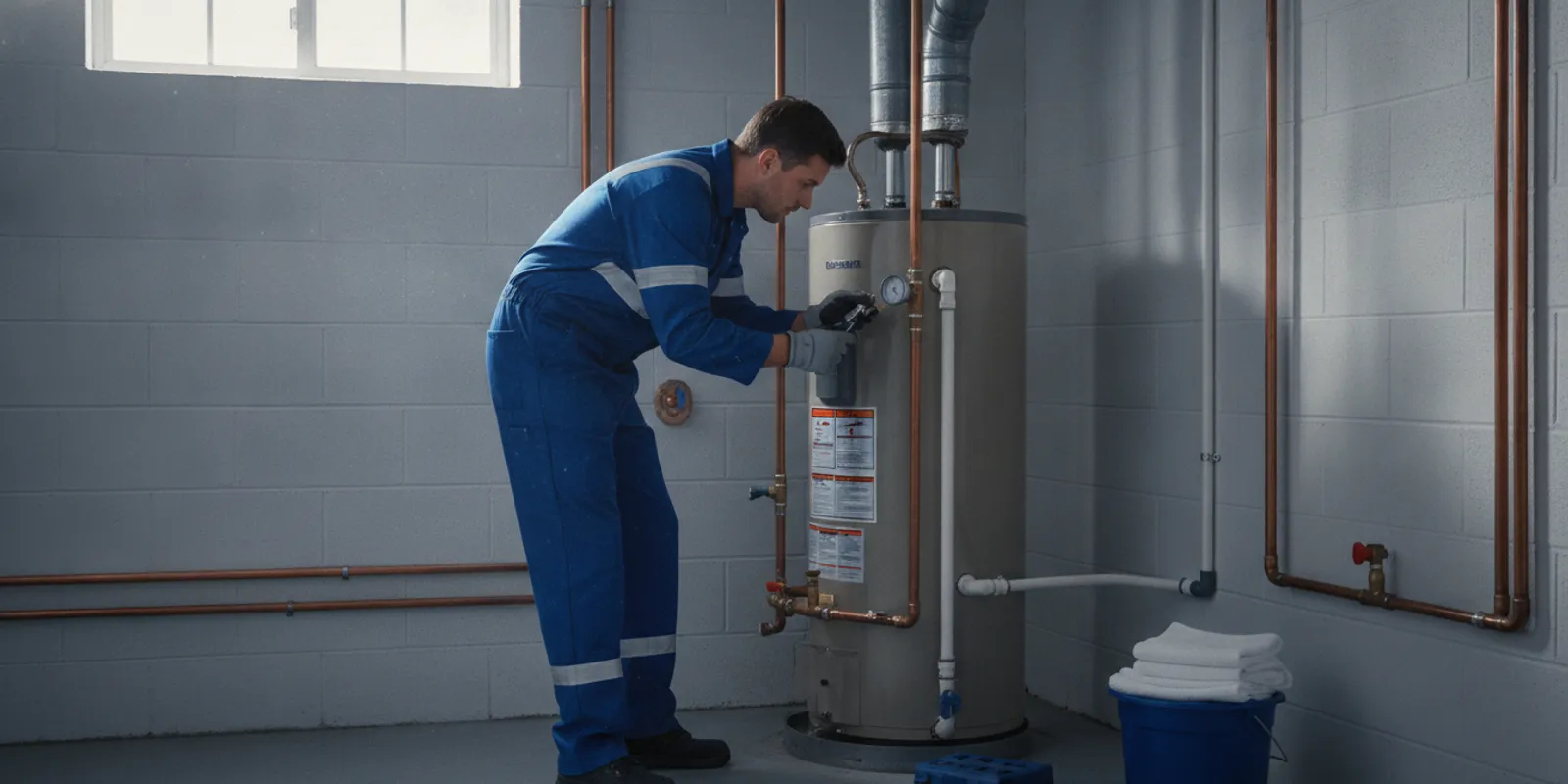

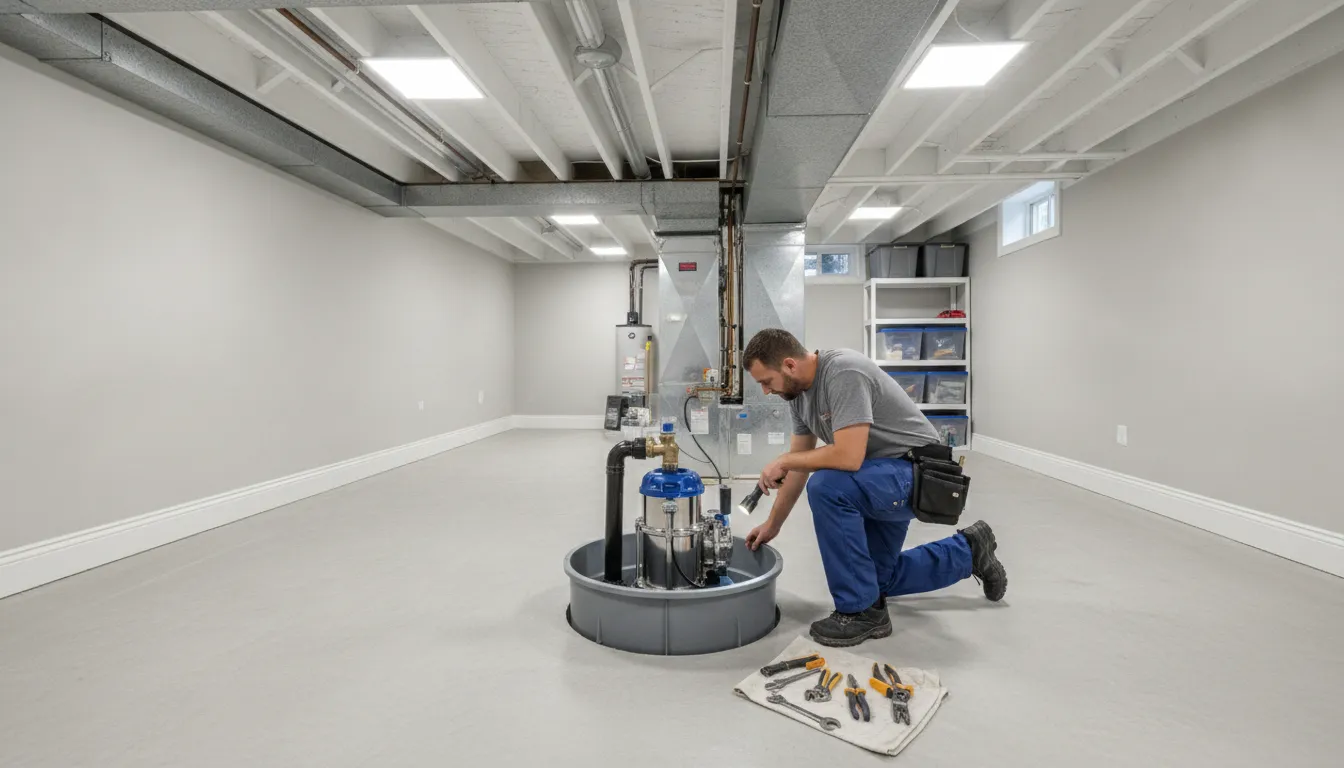
A dry Metro Detroit basement can depend on one hardworking pump. When heavy rain or snowmelt raises the groundwater around your foundation, a correctly sized sump pump moves that water away before it reaches the floor. For many homeowners, the cost to install sump pump equipment falls between $1,100 and $1,400 for a standard professional setup, but the final quote depends on the pit, pump, discharge route, power supply, and backup protection.
Request a sump pump installation estimate from Mr. Pipey
The cost to install sump pump equipment often ranges from $500 to $3,000. A basic pedestal pump may cost about $150, while a high-quality submersible pump can cost more than $900 before installation. Professional labor commonly adds $300 to $800, depending on whether the basement already has a usable pit, outlet, and discharge line. Complex digging, finished-floor protection, and battery backup equipment can push the project above $2,500.
National averages provide a useful starting point, but an onsite assessment is the best way to budget accurately. The sections below explain what changes the price, how installers build a reliable system, and which safeguards are worth considering for a Metro Detroit home.
What is the typical cost to install sump pump equipment?
The total cost to install a new sump pump often falls between $500 and $3,000. Most homeowners pay about $1,100 to $1,400 for a pro to do the job. This range includes both the unit and the work needed to set it up. At Mr. Pipey, we offer flat-rate pricing so you know the cost upfront. We also have a no overtime charge policy to help keep your project on budget.
Replacement vs new setup
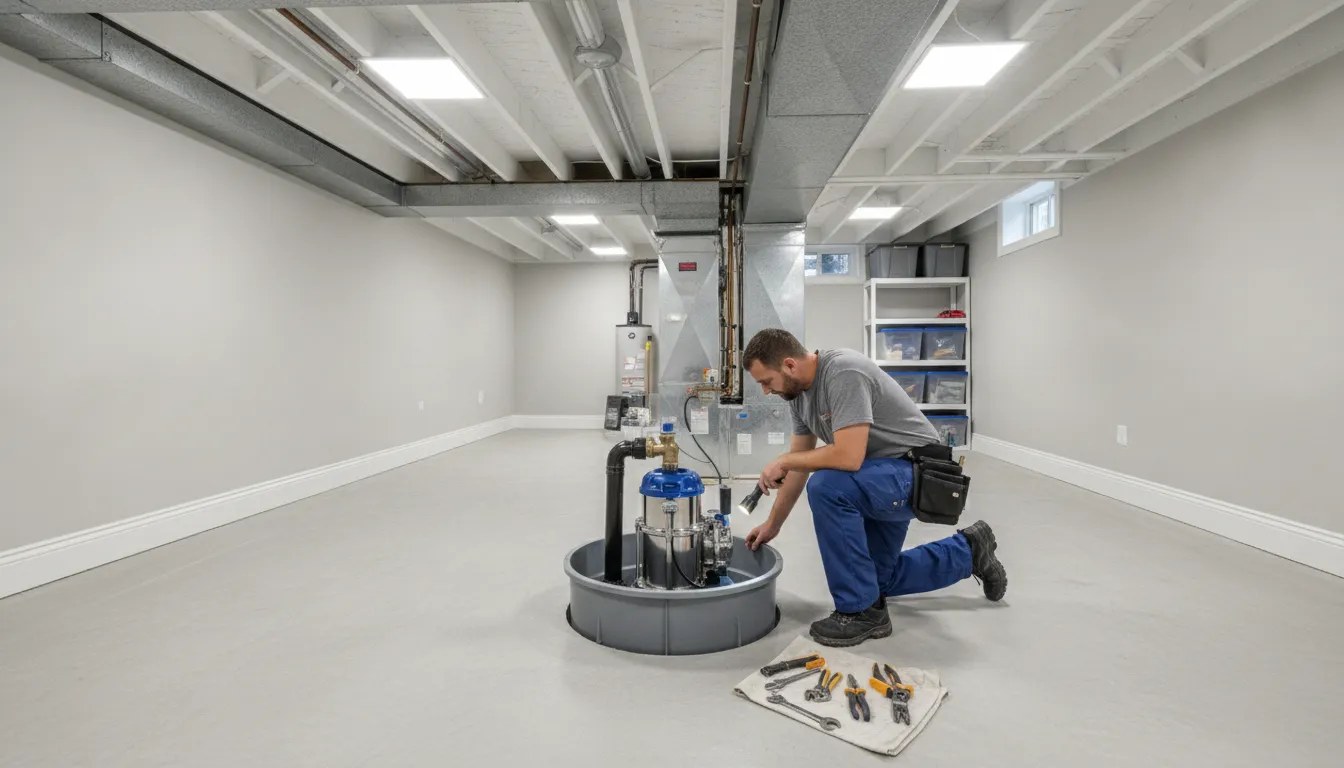
Swapping an old pump for a new one is often the most low-cost path. This task usually takes less time because the pit and pipes are already in place. A brand-new setup costs more since it needs a new hole in your floor. A pro must dig the pit, line it, and set up the discharge pipe with a check valve to keep water moving out. These extra steps add to the final price but are needed to keep your basement dry.
Costs by pump type
The type of pump you pick is a big part of the total bill. Submersible pumps sit inside the pit and stay out of sight. They are quiet and strong but cost more than pedestal units. Pedestal pumps sit above the pit and are easier to reach for repairs. If you live in an area prone to storms, we suggest adding a battery backup. This extra unit keeps your home safe even if the power goes out. You can learn more about our sump pump services to find the best fit for your home.
| Job Type | Estimated Cost | Key Factors |
|---|---|---|
| Simple Replacement | $400 – $900 | Uses existing pit and lines. |
| Full New Install | $1,500 – $3,000 | Includes digging and new lines. |
| Backup System | $600 – $1,200 | Adds a second pump for safety. |
| Finished Basement | $1,000 – $2,500 | Needs extra care for floors. |
Why onsite quotes matter
A national average can give you a starting point, but it may not match your local needs. Every home in Metro Detroit is different. Factors like your floor type and pipe length change the work required. Our team looks at your basement drainage needs and provides a clear plan. An onsite check ensures the pump size is right for your basement and local water levels.
What factors change a sump pump installation quote?
The cost to install sump pump units can vary based on several key factors. Every home has a unique layout and water table level. A simple fix often costs less than a fresh setup. On average, a new job can range from $500 to $3,000 based on the work needed. Most experts look at your basement floor and your home’s power needs before they give a final price. At Mr. Pipey, we offer upfront pricing so you know what to expect from our sump pump installation options. We treat every job with care and offer a 100% satisfaction guarantee.
Pump type and horsepower
The unit you choose is a major cost driver. Submersible pumps sit inside the pit and stay underwater. They are quiet and strong but can cost between $300 and $900. Pedestal pumps sit above the pit on a tall pole. They are easier to reach and often cost between $150 and $400. You also need to pick the right power level. High horsepower units move more water but come with a higher price tag. Choosing a unit with the right size ensures your basement stays dry during heavy Michigan storms. A pro can help you find the best fit for your home’s water flow.
Digging and pit prep
The state of your basement floor changes the quote. If you already have a pit, the job is much faster. If the pro must dig a new hole, the labor cost goes up. Digging through thick concrete takes time and special tools. A finished basement also adds to the cost. The team must work with care to avoid damage to your floors or walls. A properly installed sump pit must be in the lowest part of the floor to work best. Liners and seals also add a small cost but keep out soil gases like radon.
Power needs and backup systems
Your new pump needs a reliable power source to work well. Most pumps plug into a standard outlet. But some homes need a special power line to handle the load. This work by an expert can add to the total project price. Many people in Metro Detroit also add a battery backup system. This system keeps the pump running if the power goes out during a storm. Adding a backup can increase the total cost by about $1,200. While it adds to the first cost, it provides peace of mind when the rain is heavy.
Pipes and discharge lines
Where the water goes is a big deal for your home’s base. The discharge pipe must carry water far away from your house. Long pipes or complex routes through walls will increase the cost. You also need a check valve to keep water from flowing back into the pit. This part adds a small amount to the list. Some cities have strict rules about where you can drain the water. Following these local codes may need extra parts or city permits. Our team ensures your setup meets all local rules without hidden fees or overtime charges.
Choosing the right sump pump system
The type of pump you pick is a big part of the cost to install sump pump systems. Your basement setup and local water levels will guide this choice. Most units fall into two main groups: pedestal and submersible pumps. While one costs less at first, the other offers more power and runs with less noise.
Comparing pedestal and submersible pumps
Pedestal pumps have a motor that sits on a tall shaft above the water line. These units are easy to reach for service and often last a long time. Some models can work for 25 to 30 years if you take care of them. They usually cost between $150 and $400 for the unit alone. But they are louder than other types and take up more space in your pit.
Submersible pumps sit inside the basin and stay under the water. This design helps keep the motor cool and dampens the sound. These pumps are more powerful and handle high water levels better during heavy rain. The unit price for these models often ranges from $300 to $900. When you hire a professional sump pump assessment, a pro can help you size the pump for your home.
The role of battery backup systems
A standard pump needs a wall outlet to work. If a storm knocks out your power, the pump will stop. A battery backup system is a second pump that runs on a large battery when the power fails. Adding one of these systems can add about $1,200 to your total project. While it costs more now, it can save you from a flooded basement later.
Backups also kick in if your main pump has a part that breaks. This extra layer gives you peace of mind when you are away from home. You should also ensure your pit has a tight cover to keep soil gases like radon from getting into your air. From the Pacific Northwest National Laboratory, a gasketed cover also helps manage water vapor in the basement.
Secondary and water-powered options
For homes with a high risk of floods, a second pump is a smart move. This second unit sits slightly higher in the pit than the main pump. It only starts if the first pump cannot keep up with the water flow. Some owners choose water-powered pumps that use your home’s water pressure to pull water out of the basin.
Water-powered backup pumps offer clear gains for the right home:
- They do not need a battery or a plug to work.
- They can run as long as your main water line stays on.
- They have very few moving parts to keep up over time.
Choosing the best system depends on your goals for home protection. Spending more on a high-grade pump or a backup system adds to the first price. But these steps reduce the risk of costly water damage in the future. Always check that your discharge pipe has a check valve and points water away from your foundation.
Explore the right sump pump system for your Metro Detroit basement
How does professional sump pump installation work?
A new sump pump is a key tool for keeping your home dry. While some owners may try to do this work themselves, a pro ensures the system is set up right. A careful professional installation helps prevent basement flooding.
We follow a clear set of steps to make sure your basement stays safe from water damage. Our family-owned team treats every house like our own to give you peace of mind.
Checking your basement needs
Every home has its own water issues. Our team starts by looking at where water builds up in your basement. We find the lowest spot on the floor to place the pump. This helps the pump catch water before it can spread.
We also check your power needs and pipe layout. Since the cost to install sump pump units varies, we help you pick the best model for your budget. We often suggest submersible pumps because they are strong and quiet. These pumps work well during the heavy rains we see in Metro Detroit.
Step-by-step setup process
Once we have a plan, we get to work on the setup. This involves digging, pipe work, and power tasks. We make sure the outlet pipe is set to carry water far from your house walls. This stops water from just recycling back into the ground near your home.
According to government building standards, proper drainage is vital for a dry basement. Our experts ensure all pipes are at the right angle for the best flow.
- Dig the pit: We dig a hole in the lowest part of the floor for the sump basin.
- Set the basin: We place a liner in the hole and wrap it with stone to keep it steady.
- Install the pump: The pump goes into the basin and we check the float switch for clear movement.
- Route the pipes: We run outlet pipes out of the house to a safe drainage spot far from the walls.
- Add the check valve: This valve stops water in the pipe from flowing back into the pit when the pump stops.
- Test the system: We fill the pit with water to make sure the pump starts and stops as it should.
Finishing with a secure seal
The last step is to seal the pit. A tight lid is not just for looks. It keeps dirt and trash out of the pump so it does not clog. More importantly, it helps keep soil gases like radon out of your living space.
We use a gasket to make the lid airtight. This keeps your air clean and your pump quiet. Once the work is done, we clean up the area so your basement looks as good as new.
We offer a 100% satisfaction guarantee on all our work. Plus, we never charge extra for night or weekend jobs. Regular sump pump maintenance and care will keep this system running for many years.
Metro Detroit considerations for sump pump installation
Homeowners in Metro Detroit face specific water risks due to local soil and weather. Our region has heavy clay soil that holds water for a long time. During large storms or fast snow melts, this water puts huge pressure on basement walls. If you do not have a working pump, this water can seep into your home. The total cost to install sump pump units is a key step to keep your home safe and dry.
Local weather and soil risks
Heavy rain and melting snow are the main causes of basement leaks in Michigan. The clay soil around many local homes does not drain quickly. Instead, it traps water near your foundation and pushes against the floor. A sump pump collects this water in a pit and moves it away before it can enter. This process helps to prevent flooding and mold growth in your living space. We see these issues often in older homes with porous walls.
Winter thaws also create a risk for local basements. When the ground is frozen, melting snow has nowhere to go but down into the soil near your home. This sudden surge of water can overwhelm a small or old pump. Choosing a pump with the right power for your site is vital. A quiet submersible pump is often the best choice for homes with high water levels.
The value of backup power
Storms in our area often lead to power outages. If the power goes out, a standard pump will stop working. This usually happens right when the rain is heaviest and the risk is high. Adding a battery backup is a smart move for local homes. These systems keep the pump running even when the main power is down. A professional can help you choose backup protection for your basement before the next storm.
A backup system also acts as a safety net if your main pump fails. Pump parts can wear out over time. Having a second pump in the pit gives you peace of mind. It ensures that your basement stays dry even if the main unit has a fluke issue. Our team can help you pick a system that fits your pit and your budget.
Proper water discharge and safety
You must be careful about where your pump sends the water it collects. Most cities have strict codes for water discharge. The pipe must move water far enough away so it does not flow back toward your home. If the water stays near the walls, it can recycle back into the foundation through the drainage system. This loop can lead to more work for your pump and higher energy bills.
Safety is also a factor when you set up a new pit. You should use an airtight lid on your sump pit. This cover keeps out moisture and stops soil gases like radon from entering your home. A good lid also keeps debris from falling into the pit and clogging the pump. These small steps make your system more reliable and keep your family safe.
Local experts know how to set up these pipes to meet city rules. They make sure the water goes to a storm sewer or a dry well. At Mr. Pipey, we offer clear flat-rate pricing for these checks. We never charge overtime fees, so you get the help you need when you need it. Our 100% satisfaction guarantee means we treat your home like our own.
Should you install a sump pump yourself?
Many homeowners in Metro Detroit look at a DIY sump pump project to save money. If you already have a sump pit and just need to swap an old pump for a new one, you might find the task simple. But a fresh setup is a much bigger job. The cost to install sump pump systems often changes based on how much work your basement needs before the pump even goes in.
The work of a new setup
Setting up a new sump pump from scratch is not just about plugging in a machine. You have to dig a deep hole in your basement floor. This pit needs a liner and a thick, airtight lid. If your basement is finished, the work gets even harder and can cost more. Most pros charge between $300 and $800 for the labor alone. The total project can range from $500 to $3,000 based on the pump type.
You also have to think about where the water goes. You must set up pipes that lead the water far from your house. If you place the pipes too close, the water will just soak back through the soil and into your basement again. Experts suggest hiring help for digging and the final pipe links to ensure your home stays dry. When you look for a pro, ask about their work with local soil. For a full list of tips, check out our guide on sump pump maintenance and care.
Safety and local codes
Your sump pit must have an airtight cover to protect your family’s health. Without a good seal, the pit can let soil gases like radon or methane into your home. These gases are a risk to your health and can lower the air quality in your basement. A tight fitting, gasketed cover that is fastened down is the best way to keep these gases out.
Local rules also matter. Many towns have strict codes about where you can pump water. You often cannot just send it into the street or a local sewer. A licensed pro knows these rules and can help you avoid fines. They will also make sure the pump has the right power for your soil type and home size.
Power and backup needs
Sump pumps need a steady power source to work during a storm. If you are not an expert at power work, setting up a new outlet or a backup system can be risky. Most pros suggest a battery backup so the pump keeps running if the power goes out. A battery backup can add about $1,200 to the total cost, but it is a smart move for peace of mind. Without it, a simple power out could lead to a flooded basement in minutes.
At Mr. Pipey, we install sump pump systems for Metro Detroit homeowners. We treat every home like our own and offer flat-rate pricing with no overtime charges to keep your project on budget.
Frequently Asked Questions
How much does it cost to install a sump pump?
On average, a new sump pump setup costs between $500 and $3,000 in Michigan. Most Metro Detroit homeowners pay around $1,100 to $1,400 for a pro job that includes the unit. According to Mr. Handyman, the price varies based on the pump type and how hard the work is. Complex jobs with extra digging can cost more than basic replacements. At Mr. Pipey, we use flat rates to help you plan your budget without hidden fees.
Do I need a battery backup for my sump pump?
A battery backup is a wise choice for Metro Detroit homes because standard pumps need power to work. If a storm knocks out your power, your basement could flood without a backup system. This upgrade usually adds about $1,200 to the total project cost. According to experts, this peace of mind is vital for storm-prone areas. It helps prevent costly water damage and the growth of mold in your basement during outages.
What factors influence the cost of sump pump installation?
Several factors change the final price of your project, with the type of pump and its power being the biggest drivers. Digging a new pit or adding a liner can add $100 to $300 to your bill. Hard pipe work and wiring needs also raise labor costs a lot in finished basements. In some areas, high local rates can increase the total by 30 percent. For a fair quote, Mr. Pipey recommends a pro check to see your specific needs.
Can I install a sump pump myself?
You can put in a pump yourself if you have plumbing skills, but the job is rarely easy for homeowners. Pros ensure the unit is the right size and sealed well to protect your home from soil gases like radon. According to government safety guides, an airtight cover is vital for your health. Hiring a pro also ensures the pipe follows local codes. While DIY might save money now, a small mistake can lead to a flood later.
Ready to request a sump pump installation estimate?
A flooded basement often leads to very costly repairs and health risks from mold. These issues usually grow much worse the longer you wait to fix them. You can protect your home and your family by taking action to secure your space right now. Getting a professional estimate today helps you plan for the work before the rainy season arrives. Metro Detroit storms can be hard to guess, but a reliable pump keeps your basement dry and safe. Do not wait for a flood to find out that your old pump has failed. Acting early saves you money and stress when the heavy rains finally come. Our team is here to help you find the right system for your budget.
Ready to protect your basement? Call +1 (313) 896-8874 to request a sump pump installation estimate.