For many Detroit homeowners, the garbage disposal handles the small food residue left after dinner, but it is not a substitute for the trash bin. What goes down the drain, how much enters at once, and how the unit is rinsed can all affect whether the disposal keeps working smoothly.
For dependable garbage disposal repair, Detroit homeowners should rely on a licensed professional when the unit repeatedly clogs, hums without grinding, or stops working. Everyday care means using cold water, feeding small amounts of suitable food waste, and keeping grease, hard objects, and nonfood items out.
A sound routine starts with knowing which common kitchen scraps create residue or blockages rather than breaking down cleanly. The choices that seem minor, including fibrous peelings, cooking grease, and expandable dry foods, deserve particular attention before they reach the disposal.
What NOT to Put Down Your Garbage Disposal
A garbage disposal is built for small amounts of soft, biodegradable food residue, not as a substitute for the trash can. Scraping plates first and feeding the unit gradually helps protect the disposal and the connected drain line. The following items are better kept out of the sink.
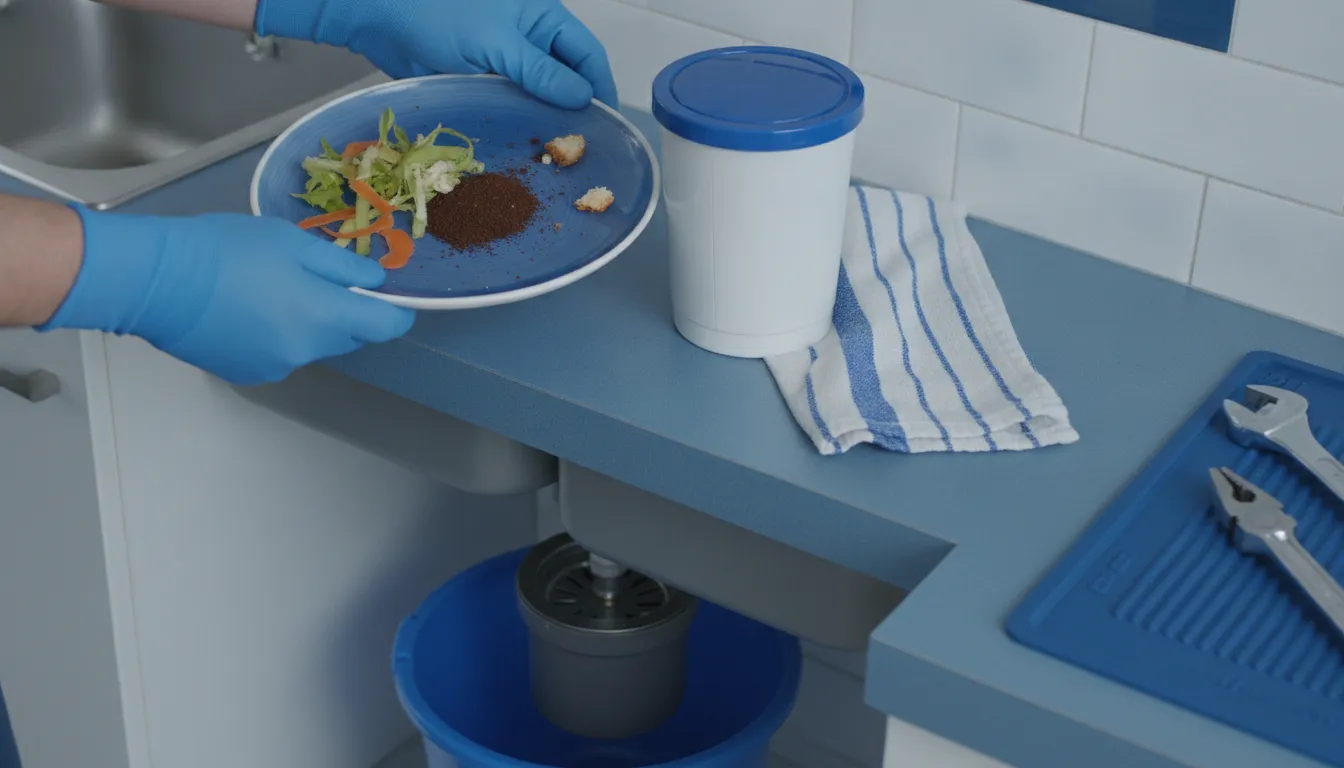
Grease, fibrous foods, and expanding ingredients
Fats, oils, and grease should never go into the disposal. They can cling to plumbing surfaces and contribute to clogs as they move through the drain. The same rule applies to cooking grease left in pans. Let it cool and place it in the appropriate household waste instead. Oklahoma State University specifically advises against putting fats, oil, and grease in a sink or garbage disposal: garbage disposal best practices.
Fibrous vegetables are another common problem. Celery strings, onion skins, potato peelings, broccoli stems, lettuce, and similar materials can wrap around internal components or remain in the drain rather than breaking down efficiently. Put these scraps in the trash or compost according to your household’s disposal options.
Uncooked pasta and rice also belong in the trash. They expand when they come into contact with water, increasing the chance of a blockage in the disposal or drain line. Coffee grounds can create a different issue: they accumulate in the drain trap and may contribute to a backup.
Hard objects and non-food materials
Do not grind large bones, eggshells, fruit pits, or other hard items. They can damage internal components or remain lodged in the plumbing. Glass, metal, plastic, paper, utensils, and other non-food objects should never enter the disposal. The unit is intended for biodegradable food waste only, and a foreign object can create a mechanical problem that requires professional attention.
Too much food or harsh chemicals
Large amounts of food at once can overwhelm the disposal and contribute to a clog. Scrape substantial portions into the trash, then allow only small remnants to enter gradually. If the drain slows, avoid pouring harsh chemical drain cleaner into the disposal. Chemical products can damage the unit’s internal components and may create additional hazards during service. A recurring clog or disposal problem is best evaluated by a qualified plumber rather than treated with increasingly strong chemicals.
Can You Put Citrus Peels in a Garbage Disposal?
Small pieces of citrus peel can usually go into a garbage disposal in moderation. A few thin strips of lemon or orange peel may help freshen the disposal with their natural oils and scent. The key is portion size. A disposal is designed to process small bits of food left on dishes, not large scraps or handfuls of produce.
Large citrus peels and thick rinds are a different matter. Their tough, fibrous texture can wrap around internal grinding components, interfere with normal operation, or leave material behind in the drain. Fibrous food waste, including items such as celery, onion skins, and potato peelings, is generally better placed in the trash rather than sent through the disposal. This guidance is documented by Oklahoma State University’s garbage disposal best practices: fibrous food scraps should go in the trash.
How much citrus peel is reasonable?
If you choose to use citrus peel, keep the pieces small and limit the amount. Avoid putting a whole lemon, orange, grapefruit rind, or a large cluster of peels into the unit at once. Scrape larger pieces into the trash instead. This approach reduces the chance of fibrous material winding around the mechanism or contributing to a drain problem.
What is better for cleaning a disposal?
Ice cubes are a more appropriate maintenance option than relying on citrus rinds. An apartment maintenance guide from the University of Utah recommends occasionally grinding ice to help clean the blades and inside of the disposal chamber: garbage disposal cleaning guidance. Use normal operating precautions and avoid reaching into the disposal. If the unit begins humming without grinding, develops recurring drainage issues, or stops working after food waste is cleared, contact a professional for an inspection rather than forcing it to run.
How to Clean and Maintain Your Garbage Disposal
A garbage disposal works best when it is cleaned routinely and used with enough water to carry food particles through the drain. A few minutes of regular care can reduce residue, limit odors, and help the unit serve you reliably for longer. It can also reduce avoidable strain that may lead to garbage disposal repair in Detroit. Follow this simple maintenance routine:
- Start with cold water. Turn on the cold-water faucet before switching on the disposal. Keep the water running while the unit grinds, rather than relying on a brief splash. Oklahoma State University recommends running cold water for 20 to 30 seconds before grinding food waste, and cold water should continue during and after use to help move particles through the pipes. Review these garbage disposal best practices for additional guidance.
- Use ice occasionally for routine cleaning. With cold water running, add a small amount of ice cubes to the disposal and operate it briefly. Ice can help clean the inside of the disposal chamber and sharpen the grinding components, according to the University of Utah’s maintenance guide. This is a maintenance step, not a substitute for professional inspection if the unit hums, leaks, or fails to grind.
- Clean with dish soap once a month. Place a small amount of ordinary dish soap in the disposal, turn on the cold water, and run the unit for about 20 to 30 seconds. This monthly rinse helps keep the disposal fresh and clear of residue. Avoid harsh chemical drain cleaners, which can damage internal components.
- Finish every cycle with a full flush. Keep the disposal running until the grinding noise stops and the food particles have been processed. Then let cold water run for several additional seconds. The extra flush helps carry remaining debris away from the disposal and drain line instead of leaving it near the opening.
- Make maintenance consistent. Regular care is more effective than waiting for an odor, slow drain, or unusual sound to appear. Use the disposal for small food remnants, avoid overloading it, and schedule professional service when cleaning no longer restores normal operation. Consistent maintenance supports the unit’s useful life and helps identify developing problems before they require more extensive garbage disposal repair in Detroit.
If the disposal begins humming without grinding, leaks, or repeatedly struggles after routine cleaning, stop using it and have a qualified plumber evaluate the unit. Maintenance should preserve safe operation, not replace professional repair when a mechanical or plumbing issue is present.
Signs You Need Garbage Disposal Repair Detroit Homeowners Can Trust
A garbage disposal can show a few different symptoms when it is no longer operating normally. Some signs point to a limited electrical interruption or an overloaded unit, while others indicate mechanical wear or a blockage that needs professional attention. Knowing the difference helps you avoid repeatedly resetting a disposal that requires a proper inspection.
The disposal hums but does not grind
A humming sound with no grinding action usually indicates a mechanical blockage. The motor is receiving power, but the internal grinding components cannot turn as intended. Continuing to run the switch in this condition can place additional strain on the unit. Turn the disposal off and arrange for a plumber to inspect it rather than reaching into the chamber or attempting to force the mechanism.
The unit is completely silent
A disposal that makes no sound at all when the switch is turned on may have overloaded and tripped its internal breaker. Many units include a small reset button on the bottom for troubleshooting electrical interruptions. That button is a reset, not a repair. If the disposal remains silent after the appropriate reset, the home’s circuit breaker panel should also be checked for a tripped switch. Persistent silence can point to an electrical fault, a failed switch, or a problem inside the disposal that requires diagnosis.
Grinding performance has declined
Blades can dull over time, making it harder for the disposal to process food waste efficiently. You may notice food remaining in the basin, slower draining, unusual sounds, or recurring clogs. Recurring clogs are especially important to address because they can involve more than the disposal itself. A professional can determine whether the issue is worn internal equipment, an obstruction, or a connected drain-line problem.
Minor troubleshooting can help identify whether a reset or tripped breaker is involved, but it should not be confused with a repair. Avoid putting the unit back into service when it hums, repeatedly loses power, leaks, or continues to clog. A licensed plumber can safely inspect the disposal and recommend repair or replacement based on its actual condition. For planning purposes, review this guide to garbage disposal repair pricing before scheduling service.
When Should You Call a Professional Plumber for Garbage Disposal Repair?
A garbage disposal that still hums, leaks, or refuses to grind after basic troubleshooting needs more than repeated resets. If the problem does not resolve, stop operating the unit and arrange an inspection. A professional plumber can safely disassemble and inspect the disposal to identify internal damage, a mechanical blockage, or a connection problem without turning a frustrating kitchen issue into a larger repair.
Recurring clogs are another clear reason to schedule service. One isolated clog may follow an accidental misuse or an unusually heavy load. Clogs that return after the drain has been cleared suggest that food residue, a damaged component, or a restriction farther along the line may be contributing to the problem. Continuing to run the disposal can push debris deeper into the plumbing and make the issue harder to diagnose. Knowing when to call a professional helps Detroit homeowners respond before a manageable disposal concern affects the rest of the sink plumbing.
It is also reasonable to call for help when you are not comfortable with plumbing or electrical work. A disposal combines water connections, moving components, and electrical power. You do not need to risk an injury or damage to the unit to prove that you can handle the repair yourself. Mr. Pipey’s team can assess the disposal, explain the recommended repair, and identify whether replacement is more practical.
Prompt attention matters when a disposal problem is connected to a clogged plumbing line. Guidance from the University of Utah notes that clearing a clogged plumbing line can be costly in time and parts, while also creating inconvenience for everyone affected: source guidance. Addressing slow drainage, standing water, or repeated backups early may help limit the scope of the work.
For dependable garbage disposal repair in Detroit, contact Mr. Pipey. Local experience helps our plumbers evaluate the disposal and connected drain lines with the needs of Detroit-area homes in mind.
Frequently Asked Questions
What foods should never go into a garbage disposal?
Keep fats, oils, grease, fibrous scraps such as celery and onion skins, uncooked rice or pasta, coffee grounds, large bones, eggshells, fruit pits, and non-food items out of the disposal. These materials can collect, expand, damage components, or contribute to clogs. Scrape larger portions into the trash and use the disposal only for small amounts of biodegradable food waste. Oklahoma State University guidance provides additional disposal best practices.
Should I use hot or cold water with my garbage disposal?
Use cold water before, during, and after grinding. Cold water helps move food waste through the drain and keeps fats and oils more likely to remain solid instead of coating the plumbing. Continue running the water briefly after the grinding sound stops so remaining particles can flush through the line. University of Colorado guidance recommends cold water during disposal use.
Why does my garbage disposal hum but not grind?
A humming motor that does not grind commonly indicates a mechanical blockage. A disposal that is completely silent may instead have an electrical issue, such as an overloaded unit or tripped internal breaker. Do not reach into the chamber or continue operating the switch. A plumber can safely inspect the unit and determine whether repair or replacement is appropriate.
When should I call for garbage disposal repair in Detroit?
Call a professional when clogs keep returning, the disposal leaks, unusual noise continues, the motor hums without grinding, or the unit remains silent after basic electrical checks. Recurring clogs can indicate a broader drainage problem, while dull blades can make grinding less effective over time. Professional plumbers can safely disassemble and inspect the unit without asking you to perform electrical or plumbing repairs yourself. Learn more about garbage disposal repair in Detroit.
Ready to Schedule Garbage Disposal Repair in Detroit?
If your disposal is no longer working as it should, professional service can help identify the issue and restore dependable kitchen drainage. Contact Mr. Pipey at (313) 900-0700 to schedule your garbage disposal repair in Detroit. Mr. Pipey can assess the problem and explain the appropriate next step for your home.