
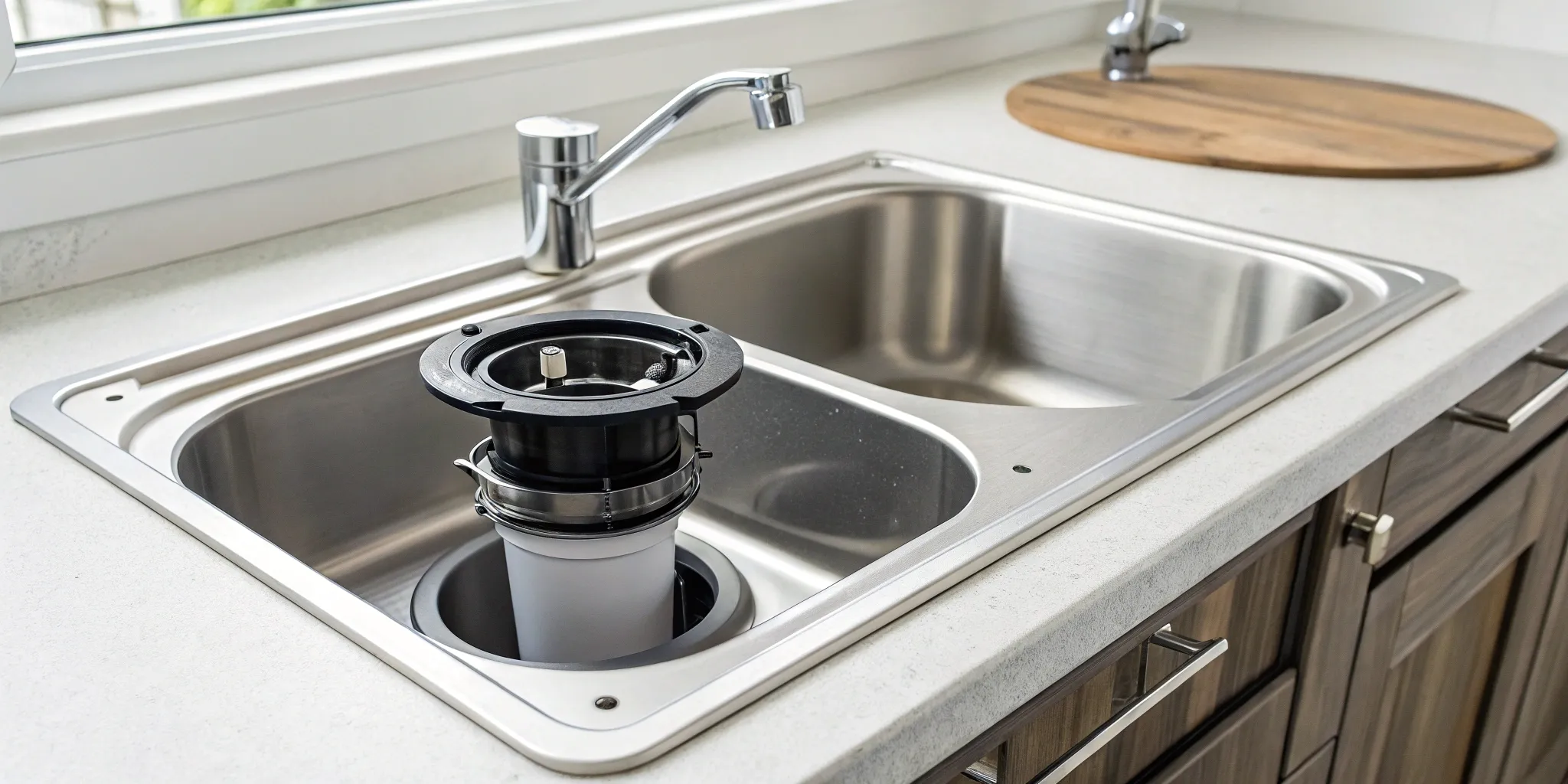
That frustrating hum from your sink probably has you thinking about expensive repairs or a full replacement. But I have some good news. A garbage disposal humming is actually a sign that the motor is working. Power is getting to the unit, but something is physically blocking the blades from spinning. It’s a simple jam. This could be anything from tough food scraps to a stray bottle cap. Don’t call a plumber just yet. I’ll walk you through how to safely find the culprit and get your disposal running again.
Key Takeaways
- Always Cut the Power First: Before attempting any fix, unplug the unit or flip the circuit breaker. Use tools like pliers or tongs, never your hands, to clear anything from the grinding chamber.
- Try the Easiest Fixes Before Calling for Help: A humming disposal often signals an overloaded motor. Try pressing the reset button on the bottom of the unit and using a hex wrench to manually turn the blades from below to dislodge the jam.
- Be Mindful of What You Grind: Prevent future jams by always running cold water, feeding waste in gradually, and avoiding fibrous foods like celery, hard items like bones, and starchy scraps like potato peels.
Why Is Your Garbage Disposal Humming?
That low, persistent hum coming from your kitchen sink is a classic sign of a garbage disposal in distress. While it might sound alarming, it’s usually a straightforward problem you can often fix yourself. The humming noise tells you one important thing: your disposal is getting power. The motor wants to work, but something is physically stopping the blades from spinning. It’s like trying to pedal a bike when the chain is jammed—you can push as hard as you want, but you’re not going anywhere. This is actually good news, as it means the motor itself probably isn’t dead.
Most of the time, this issue is caused by a simple jam from food waste or a foreign object that accidentally found its way down the drain. Before you start thinking about a costly replacement, let’s walk through the most common reasons for that hum and what they mean. Understanding the cause is the first step to getting your kitchen back to normal and avoiding future jams. Of course, if the problem seems too complex or you’re not comfortable troubleshooting it yourself, remember that our team is always ready to handle any emergency plumbing situation you might face in Metro Detroit.
Stuck Flywheel vs. Seized Motor
When your disposal hums, the two most likely culprits are a stuck flywheel or a seized motor. A stuck flywheel is the most common issue and, thankfully, the easiest to fix. It simply means something—like a chunk of fibrous vegetable waste or a stray bottle cap—has wedged itself in the grinding chamber, physically stopping the blades from turning. The motor is trying its best, which is why you hear the hum, but it’s stuck in place. This is a mechanical jam, not an electrical failure, which is good news for a potential DIY fix.
On the other hand, a seized motor is a more serious problem. This isn’t about a simple obstruction; it’s an internal failure where the motor’s bearings have worn out or rusted shut. If you’ve checked for a jam and the flywheel still won’t budge even with a wrench, you’re likely dealing with a seized motor. Unfortunately, this isn’t something that can be repaired, and the entire unit will need to be replaced. If you’re not sure which problem you have, our team can quickly diagnose the issue and handle any necessary plumbing repairs or replacements.
Your Motor Might Be Stuck
The humming sound you hear is the disposal’s motor trying its best to spin. It has electricity and is ready to go, but it’s stuck in place. This usually happens when the grinding chamber is overloaded with food waste, creating a jam that’s too dense for the blades to move. Think about the last things you put down the drain—was it a large amount of potato peels or fibrous celery stalks? These materials can quickly compact and bind the blades, preventing the motor from turning. The motor will continue to hum as long as it has power, but it won’t be able to do its job until the obstruction is cleared and it can move freely again.
Something’s Jamming the Blades
More often than not, a stuck motor is caused by a physical object lodged in the grinding chamber. It’s surprisingly easy for things to fall into the disposal unnoticed, from a stray spoon or bottle cap to a fruit pit or chicken bone. These hard objects can wedge themselves between the impeller blades and the wall of the grinding chamber, creating a blockage that brings everything to a halt. The motor will hum in protest because it can’t overcome the obstruction. Before you do anything, it’s crucial to turn off the power to the unit. Finding and removing the culprit is key to fixing the problem, and it’s one of the many plumbing solutions we handle for homeowners across Metro Detroit.
Common Causes of a Humming Garbage Disposal
That low, angry hum from your kitchen sink is a classic sign of a garbage disposal in distress. The good news is that the humming sound usually means the motor is still getting power. The bad news is that something is stopping the blades from doing their job. Let’s walk through the most common culprits behind that frustrating noise.
Stubborn Food Jams
More often than not, a simple jam is the reason your disposal is humming instead of grinding. This happens when tough food scraps get wedged between the blades and the grinder wall. Think fibrous vegetables like celery stalks, potato peels, or corn husks, which can wrap around the blades. Bones and fruit pits are also common offenders. The motor tries to spin, but the jam holds it in place, creating that distinct humming sound. Clearing this kind of blockage is often straightforward, but it’s important to do it safely.
Oops! Something Fell In
We’ve all been there—a spoon, a bottle cap, or a twist tie accidentally slips down the drain. When these non-food items find their way into your garbage disposal, they can stop the blades in their tracks. Because these objects are hard and not meant to be ground, they create a solid blockage that the motor can’t overcome. Even small things like a piece of a plastic bag or a rubber band can cause a serious jam. If you suspect a foreign object is the cause and you can’t easily retrieve it, it’s one of those plumbing problems best left to a professional.
Is Your Motor Overheating?
Sometimes, the problem isn’t a jam but an overworked motor. If you’ve been running your disposal for a long time or tried to grind too much waste at once, the motor can overheat. As a safety measure, many disposals have an internal breaker that trips to prevent the motor from burning out. When this happens, the unit will stop working and may just hum. In this case, the best first step is to simply give it a break. Letting the motor cool down for 15-20 minutes before hitting the reset button can often solve the problem.
Aging or Worn-Out Parts
If you’ve ruled out jams and overheating, the humming might point to a more serious internal issue. Over time, the moving parts inside your garbage disposal can wear out. A seized motor bearing or other failing components can prevent the flywheel from spinning, resulting in that familiar hum. This is especially common in older units that have seen years of heavy use. Unfortunately, this isn’t a simple fix and often means it’s time to consider a repair or replacement from a professional. Continuing to run it could cause more damage.
Your Safe Troubleshooting Checklist
A humming garbage disposal usually means the motor has power, but something is stopping the blades from spinning. In most cases, it’s a simple jam you can probably fix on your own. Before you get started, though, safety has to be your top priority. Garbage disposals are powerful, so you should never work on one while it’s connected to power. These troubleshooting steps will help you figure out the problem and solve it safely. If you feel unsure at any point or the jam seems stubborn, it’s always best to call a professional for your plumbing services.
First Things First: Turn Off the Power
This is the most important step, and you absolutely can’t skip it. Before you even think about looking inside the disposal, you must cut off its power supply. The easiest way to do this is to find the switch that controls the disposal, which is often under the sink or nearby, and unplug it from the wall. If you can’t find the plug or it’s hardwired, head to your home’s electrical panel and flip the breaker that powers the garbage disposal. This simple action ensures the unit can’t accidentally turn on while you’re working on it, keeping you safe from any potential injuries.
Try the Simple Reset Button
Many garbage disposals have a built-in overload protection feature. If the motor works too hard trying to grind something tough, it trips a small button to prevent it from burning out. Take a look at the bottom of your garbage disposal unit; you should see a small red or black button. Press it firmly until it clicks to reset the motor. After you’ve done this, you can restore power and try running the disposal again. If it was just a minor overload, this simple reset might be all it takes to get things working again without any more fuss.
Check the GFCI Outlet
If the reset button on the unit didn’t do the trick, the next place to look is the electrical outlet itself. Most modern kitchens have Ground Fault Circuit Interrupter (GFCI) outlets near sinks as a safety measure. These outlets are designed to cut power instantly if they sense a moisture imbalance, protecting you from electrical shock. Your garbage disposal is likely plugged into one. You can spot a GFCI outlet by the two small buttons, usually labeled ‘TEST’ and ‘RESET,’ located between the sockets. If the ‘RESET’ button has popped out, the circuit has been tripped. Press it back in firmly until it clicks. If the power comes back on and stays on, you’re all set. However, if it trips again immediately, it could signal a more serious electrical problem with the disposal, and it’s time to stop troubleshooting and call a professional.
Grab a Flashlight and Look for Jams
If resetting the unit didn’t solve the humming, a blockage is the most likely culprit. With the power still completely off, grab a flashlight and shine it down into the drain. Look carefully for any obvious obstructions caught in the grinding chamber, like a bottle cap, a piece of silverware, or a stubborn chunk of food like a bone or fruit pit. If you spot something, use a pair of pliers or tongs to carefully pull it out. This method lets you see what you’re doing and safely remove the item without getting your hands anywhere near the sharp blades.
Give It a Break to Cool Down
Sometimes, the humming is just a sign that your disposal’s motor has overheated. This can happen if you run it for too long or try to grind a large amount of food waste all at once. If you suspect this might be the case, the solution is simple: just give it a break. After ensuring the power is off, let the disposal sit and cool down for about 15 minutes. This gives the motor time to return to a safe operating temperature. Afterward, you can press the reset button, restore power, and test it to see if the rest period solved the problem.
Safety Check: Protect Your Hands
This is worth repeating: never, ever put your hands or fingers inside the garbage disposal. The blades are incredibly sharp, and even with the power disconnected, reaching inside is a serious safety risk. Always use tools like long-handled pliers or tongs to retrieve any foreign objects you find lodged inside the unit. Your safety is far more important than a jammed kitchen sink. If you can’t safely reach the object or the jam won’t budge with gentle persuasion from your tools, it’s time to stop and call for professional emergency plumbing help.
Wear Safety Glasses
It might seem like a small detail, but putting on a pair of safety glasses is a crucial step before you start working on your disposal. When you’re trying to dislodge a jam, small particles of food, bone, or even metal can fly out of the grinding chamber with surprising force. Protecting your eyes is just as important as the other safety measures we’ve covered. Always make sure you cut the power supply first, and only use tools like pliers or tongs to clear an obstruction. If you find yourself struggling with a stubborn jam, don’t risk your safety by applying more force. It’s always better to stop and call for professional emergency plumbing help.
Steps to Fix a Humming Garbage Disposal
Once you’ve safely prepared your workspace by cutting the power, you can start troubleshooting the problem. These steps will help you identify and clear the most common causes of a humming garbage disposal. Remember to work carefully and never rush the process.
Use a Hex Wrench to Free the Motor
Your garbage disposal likely came with a small, L-shaped tool called a hex wrench (or Allen key). If you can’t find it, a standard 1/4-inch hex wrench will usually do the trick. Look for a small, hexagonal hole directly in the center of the unit’s underside. Insert the wrench and turn it back and forth. You should feel it slot into the motor shaft. The goal is to rotate the grinding plate manually, which can dislodge whatever is causing the jam. Keep working it until the plate moves freely in a full circle.
Unjamming from Above (No Wrench Method)
If you can’t find that little hex wrench or the bottom of your disposal is hard to reach, you can often tackle the jam from above. First, and I can’t stress this enough, make sure the power to the disposal is completely off at the wall or the breaker box. Next, grab a flashlight and peer down into the grinding chamber. You’re looking for the culprit—it could be anything from a stray bottle cap to a chicken bone that’s wedged the blades in place. Once you’ve spotted the obstruction, use a pair of long-handled tongs or pliers to carefully grip and remove it. After you’ve cleared the jam, restore the power, run some cold water, and test it out. If it’s still humming or you can’t dislodge the object, don’t force it. That’s the perfect time to call for professional help to avoid damaging the unit.
Clear Jams with Tongs (Not Your Hands!)
If turning the motor doesn’t solve the problem, the jam might need a little more persuasion. With the power still off, grab a pair of long-handled tongs or needle-nose pliers. Peer into the disposal drain (using a flashlight helps) and see if you can spot the culprit. Carefully reach in with your tool and pull out any visible obstructions. Never, ever use your hands to clear a jam, even with the power disconnected. If the blades are stuck, you can also use the handle of a wooden spoon to gently nudge them back and forth to help break the object free.
Carefully Remove Foreign Objects
Sometimes, the problem is caused by something that shouldn’t be in the disposal in the first place. Items like fruit pits, bottle caps, silverware, or even a stray piece of a sponge can bring the motor to a grinding halt. Do a thorough visual inspection with your flashlight. Use your tongs or pliers to carefully fish out any foreign objects you find. If you remove a blockage but the humming continues, there might be another piece you can’t see. If an object is wedged too tightly, trying to force it out could damage your unit, so it’s best to call for professional plumbing services.
Reset and Test Your Work
After you’ve cleared any jams, it’s time to reset the disposal’s motor. Look for a small red or black button on the bottom of the unit, usually near the edge. This is the reset button, which trips when the motor overheats or gets overloaded. Press it firmly until it clicks and stays in. Now, you can test your work. Turn on the cold water tap, then head to the wall switch and flip on the disposal. If the humming is gone and the unit is running smoothly, you’ve fixed it! If it still just hums or makes no noise at all, it’s time to contact a professional.
What Not to Do When Your Disposal Hums
When you hear that humming sound, it’s tempting to jump right in and fix it. But a little know-how can save you from a bigger headache—or a serious injury. Before you start troubleshooting, let’s go over a few common mistakes people make when their garbage disposal acts up. Avoiding these missteps will keep you safe and help you solve the problem more effectively.
Never Put Your Hands Inside
This is the number one rule of garbage disposal repair: never, ever put your hands down the drain. Even with the power off, the blades are sharp and can cause serious injury. It’s easy to think you can just reach in and grab whatever is stuck, but it’s not worth the risk. Instead, always use a pair of pliers or tongs to retrieve any foreign objects you can see. This keeps your hands safely out of the grinding chamber while you work.
Avoid Using Harsh Chemical Cleaners
When you’re faced with a stubborn clog, reaching for a bottle of chemical drain cleaner can feel like the quickest solution. However, these harsh chemicals can cause serious damage to your garbage disposal. Pouring corrosive substances down the drain can eat away at the metal and plastic components of the unit, leading to leaks and premature failure. Instead of a quick fix, you could be creating a much more expensive problem. It’s always better to use mechanical methods, like the hex wrench trick, to safely clear a jam. If that doesn’t work, a professional can resolve the issue without risking the integrity of your plumbing.
Don’t Ignore Leaks
A small drip coming from under your sink might not seem like a big deal, but ignoring it is a mistake. A leak from your garbage disposal is a clear sign that something is wrong—it could be a failing seal or a crack in the unit’s housing. Over time, even a minor leak can cause significant water damage to your kitchen cabinets, flooring, and even the subfloor. This not only leads to costly repairs but can also create a damp environment perfect for mold growth. If you notice any signs of leakage, it’s crucial to address the issue promptly to prevent further complications. Catching it early can save you from a much bigger headache and is one of the many plumbing solutions we handle every day.
Skipping the Reset Button
Before you assume the worst, check for the simplest solution. Most garbage disposals have a small red or black reset button, usually located on the bottom of the unit. This button is a safety feature that trips when the motor overheats or gets overloaded. If your disposal is humming, it might just need to be reset. After turning off the power, feel around the bottom of the unit for this button. If it’s popped out, press it back in firmly. It’s a surprisingly common fix that many people overlook.
Overlooking Electrical Issues
The problem might not be with your disposal at all, but with its power source. A humming sound means the unit is getting electricity, but if it trips, the issue could be your circuit breaker. Take a quick trip to your home’s main electrical panel and look for a circuit breaker that has flipped. If you find one, flip it back to the “on” position. If the breaker trips again right away, you may have a more serious electrical issue. In that case, it’s best to call for emergency plumbing services.
Forgetting to Unplug It First
This might seem obvious, but it’s the most critical mistake to avoid. Before you do anything else—before you check for jams or press the reset button—you must cut the power to the garbage disposal. You can do this by unplugging the unit from the wall outlet under the sink. If it’s hardwired, go to your electrical panel and switch off the corresponding circuit breaker. This simple step prevents the disposal from accidentally turning on while you’re working on it, protecting you from serious harm.
Keep Your Disposal Happy: Prevention Tips
Once you’ve fixed your humming garbage disposal, you’ll want to keep it from happening again. A little preventative care goes a long way toward keeping your disposal running smoothly and avoiding future jams. By being mindful of what you put down the drain and performing simple maintenance, you can protect your appliance and save yourself from another round of troubleshooting.
Run Cold Water While Grinding
This might sound counterintuitive, but you should always run cold water when the disposal is on. While you might think hot water breaks down grease better, it actually liquefies it, allowing it to coat the inside of your pipes and build up over time. Cold water, on the other hand, helps solidify fats and grease. This allows the disposal blades to chop them into tiny pieces that can be easily flushed away. For best results, let the cold water run for about 30 seconds after you turn the disposal off to ensure everything is cleared out of the drain.
Don’t Overload It
Your garbage disposal is powerful, but it’s not invincible. Overloading it is one of the fastest ways to cause a jam and that dreaded humming sound. Instead of scraping an entire plate of leftovers into the sink at once, feed food scraps into the disposal gradually. It’s also a good idea to cut larger items into smaller, more manageable pieces before putting them down the drain. This simple step gives the blades enough space and time to grind everything up properly without putting unnecessary strain on the motor.
The “Do Not Grind” List
This is probably the most important rule of garbage disposal care. Certain items just don’t belong in your drain and can cause serious damage. Avoid anything overly fibrous, starchy, or hard. Stringy foods like celery, asparagus, and corn husks can wrap around the blades and jam the motor. Hard items like bones, fruit pits, and un-popped popcorn kernels can dull or even break the blades. And starchy foods like pasta, rice, and potato peels can expand with water to create a thick, clog-forming paste. Being careful about what you grind is the key to a happy disposal.
Run It Promptly After Adding Food
It’s tempting to let a few food scraps sit in the sink until you’re ready to tackle the rest of the dishes, but this can set your garbage disposal up for failure. Make it a habit to run the disposal as soon as you put food into it. When food waste sits, it can settle and compact around the blades, creating a dense pile that’s much harder for the motor to break through. This is a common way for tough food scraps to get wedged and cause a jam, leading to that frustrating humming sound. By grinding food immediately, you ensure the blades can handle the waste efficiently, preventing unnecessary strain on the motor and helping you avoid a call for emergency plumbing.
Give It a Regular Cleaning
Just like any other kitchen appliance, your garbage disposal needs a regular cleaning to stay fresh and functional. You don’t need harsh chemicals to get the job done. A simple and effective method is to use baking soda and vinegar. Pour about half a cup of baking soda down the drain, followed by a cup of white vinegar. Let the mixture fizz and work its magic for about 10 minutes, then flush it all down with cold water while the disposal is running. For a quick freshen-up between cleanings, you can also grind up some citrus peels or a handful of ice cubes to help clean the blades and eliminate odors.
Grind Ice Cubes to Clean and Sharpen
One of the easiest and most effective ways to clean your garbage disposal involves something you already have in your freezer: ice cubes. Tossing a handful of cubes down the drain and running the disposal does wonders. The hard, frozen shards act like a scrub brush for the inside of the unit, knocking loose any stubborn food particles and slime that have built up on the blades and grinding chamber walls. For an extra cleaning boost and a fresh scent, throw in a few lemon or orange peels along with the ice. This simple routine helps keep your disposal clean and odor-free without resorting to harsh chemicals.
Use Small, Hard Items to Scour the Blades
While garbage disposal “blades” aren’t sharp like a knife—they’re actually impellers that use blunt force to pulverize food—keeping them clean is crucial for performance. Grinding small, hard items like ice cubes helps scour the impellers, removing gunk and buildup that can reduce their effectiveness. This scouring action helps maintain the grinding surfaces so they can break down food waste efficiently, preventing the kinds of jams that lead to a humming motor. Think of it as a power-wash for the inside of your unit. This kind of simple maintenance can extend the life of your disposal, but if you find yourself dealing with persistent clogs, it might be time to explore professional plumbing solutions.
Is It Time to Call a Plumber?
You’ve done your best to troubleshoot the problem, and that’s great! But sometimes, a humming garbage disposal is a symptom of a bigger issue that a hex wrench and a pair of pliers can’t solve. Knowing when to step back and call in a professional is key to avoiding a more complicated—and expensive—mess. If you run into any of the following situations, it’s time to put down the tools and pick up the phone to get expert plumbing help.
If the Humming Persists
If you’ve tried all the troubleshooting steps and the disposal is still humming or making grinding noises, it’s waving a white flag. A persistent hum usually means an internal part has failed or the motor is on its last legs. Continuing to run the unit could cause more damage. A professional plumber can quickly diagnose the problem and tell you whether a simple repair will do the trick or if it’s time to invest in a new unit. This saves you the headache of guessing and potentially wasting money on a unit that’s beyond saving.
If You Smell a Burning Odor
A burning smell coming from your garbage disposal is a major red flag. If you notice this, immediately stop what you’re doing and shut off the power to the unit at your circuit breaker. This smell almost always indicates an electrical problem with the motor, which can be a serious fire hazard. This is not a situation for DIY repairs. You need a licensed plumber to safely inspect the unit, identify the source of the electrical issue, and handle any necessary repairs or replacements. Don’t hesitate to call for emergency plumbing services if you smell something burning.
If You Suspect a Dead Motor
What if your disposal has gone from humming to complete silence? If you’ve hit the reset button and checked the power source but the unit is completely unresponsive, the motor has likely failed. Diagnosing and replacing a motor involves working with complex electrical wiring and components that are best left to a trained professional. An experienced plumber can safely test the motor, determine if it’s truly dead, and advise you on the most cost-effective path forward, whether that’s a motor replacement or a brand-new disposal.
If Jams Are a Regular Problem
Clearing a jam every once in a while is normal, but if you feel like you’re constantly fighting with your garbage disposal, it’s a sign of a deeper problem. Frequent clogs often mean the blades have become too dull to grind food waste effectively or the motor has lost its power. Instead of repeatedly clearing jams, it’s more efficient to have a professional assess the unit’s overall health. They can determine why it keeps clogging and provide a lasting solution, so you can get back to not thinking about what’s happening in your sink.
Consider the Age of Your Unit
Like any hardworking appliance, your garbage disposal won’t last forever. If your unit has been around for a decade or more, that humming sound might be more than just a simple jam—it could be a sign of old age. Over years of use, internal components like motor bearings can wear out and seize up, preventing the blades from spinning. The motor still gets power and tries to work, which creates the hum, but the worn-out parts just can’t cooperate. When you’re facing frequent issues with an older unit, you have to weigh the cost of a repair against the likelihood of another breakdown. Getting an expert opinion on your plumbing services can help you make a confident decision and avoid spending money on a unit that’s on its last legs.
Need Help With Your Garbage Disposal in Metro Detroit?
If you’ve tried all the troubleshooting steps and that humming noise just won’t quit, it’s time to call in a professional. While a DIY fix can sometimes do the trick, a persistent hum often points to a deeper issue, like a seized motor or an electrical problem that’s best left to an expert. Forcing a jammed unit or tinkering with the wiring can lead to bigger, more expensive repairs—or worse, put you at risk of injury.
At Mr. Pipey, we’ve seen it all when it comes to garbage disposals. That frustrating hum is a common call for us, and it’s usually a sign that the motor is getting power but something is preventing the blades from spinning. It could be a stubborn clog, a foreign object wedged deep inside, or a worn-out part. Instead of spending your weekend with your head under the sink, let our experienced team handle it safely and efficiently. We’re here to provide reliable plumbing solutions for homeowners and businesses all across the Metro Detroit area.
Mr. Pipey Is Here to Help
As a family-owned business, we know how much a simple plumbing issue can disrupt your home. That’s why we treat every client like a member of our own family. Our team is ready to diagnose the problem with your garbage disposal and give you a clear, honest recommendation. We focus on providing cost-effective repairs that last, so you can get your kitchen back to normal as quickly as possible. If you’re ready for a stress-free solution, contact us today to schedule a service call.
We Handle Urgent Plumbing Problems
A broken garbage disposal isn’t just an inconvenience; it can bring your entire kitchen to a standstill. We understand that some plumbing problems can’t wait. That’s why we’re equipped to handle emergency plumbing situations with the urgency they deserve. Whether your disposal is humming, leaking, or completely dead, you can count on Mr. Pipey for a prompt and professional response. Our goal is to solve your immediate problem and ensure your plumbing system is working perfectly.
Related Articles
- Garbage Disposal Repair: Your DIY Fix-It Guide
- How to Fix a Humming Garbage Disposal Fast
- Garbage Disposal Not Working? 5 Easy Fixes to Try
Frequently Asked Questions
What if I can’t find the little wrench that came with my disposal? Don’t worry, this is a common problem. That special tool is just a 1/4-inch hex wrench, also known as an Allen key. You can easily find one at any hardware store, and it’s a great tool to have in your toolbox anyway. It will work exactly the same way to help you manually turn the motor from the bottom of the unit.
Is it safe to use a chemical drain cleaner to clear the jam? I would strongly advise against it. While it seems like a quick fix, those harsh chemicals can do more harm than good. They can corrode the metal parts inside your garbage disposal and damage your plumbing pipes over time. It’s much safer and more effective to clear the jam manually using the methods we discussed.
My disposal stopped humming and now it makes no noise at all. What does that mean? Silence after a hum usually points to one of two things. It could be that the motor’s internal overload protector has tripped, and you just need to press the reset button on the bottom of the unit. However, if you’ve already tried that and checked your circuit breaker, it likely means the motor has failed completely. At that point, the problem has moved beyond a simple jam and it’s time to call a professional.
How can I tell if the blades are just getting dull? If you find your disposal is jamming more frequently, especially with foods it used to handle easily, dull blades are a likely culprit. You might also notice that it takes much longer to grind up food scraps. Since the “blades” are actually impellers that aren’t sharp to begin with, “dull” really means they’ve become worn down and less effective. This is a sign that your unit is nearing the end of its life.
How often should I be cleaning my garbage disposal? For a quick freshen-up, grinding a few citrus peels once a week is a great habit to get into. For a more thorough cleaning to break down any buildup, using the baking soda and vinegar method about once a month should be plenty. Regular cleaning doesn’t take much time and is one of the best ways to prevent odors and keep the unit running well.