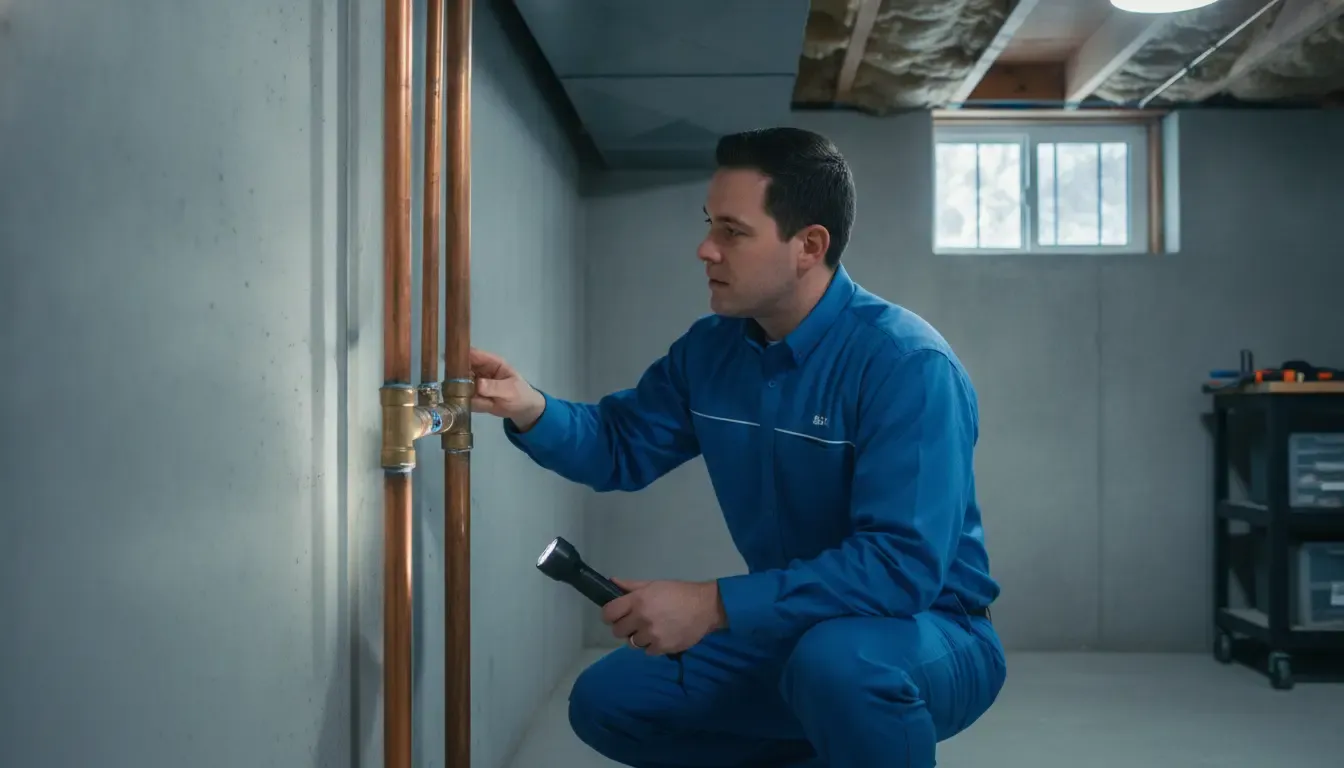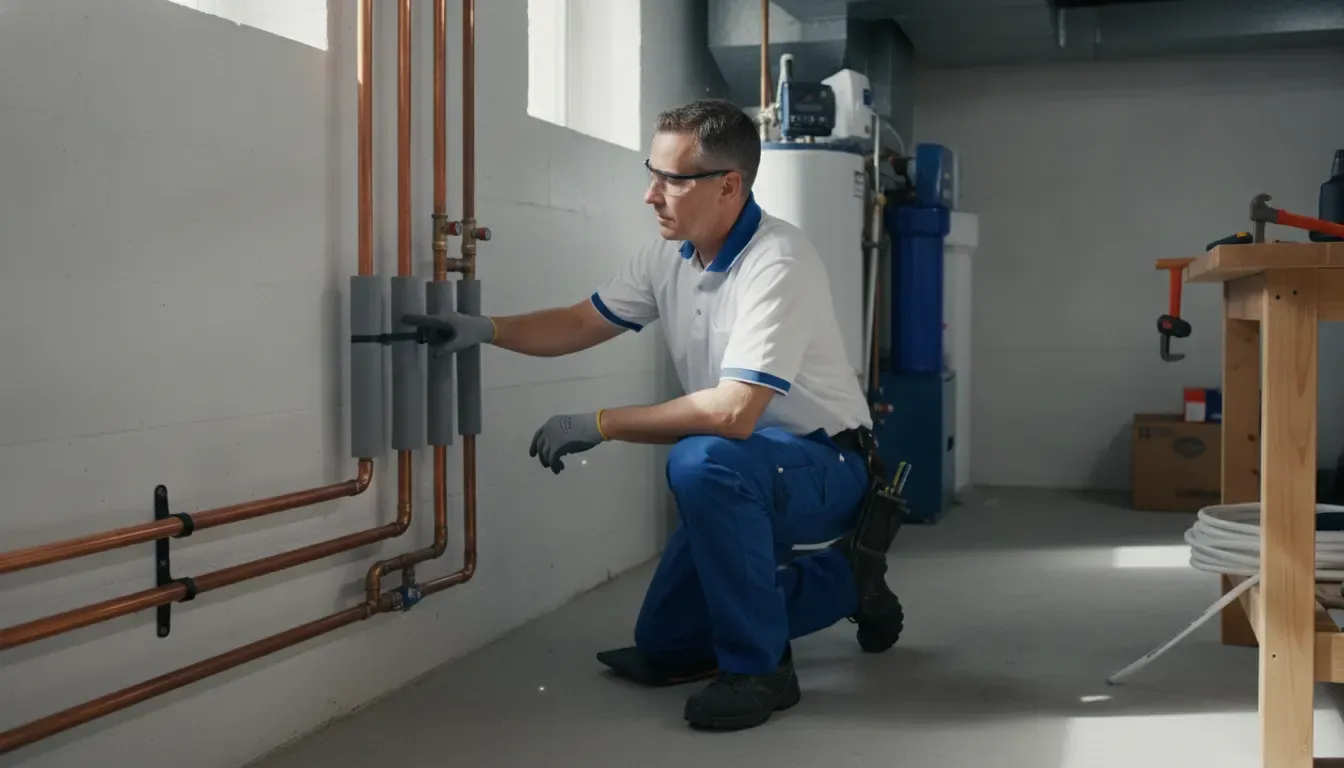

If you are asking what temperature do pipes freeze in Birmingham, the short answer is that exposed plumbing can begin freezing when the pipe and the water inside it reach 32 degrees Fahrenheit. That does not mean every pipe freezes the moment the outdoor thermometer reaches 32 F. The timing depends on how long the cold lasts, whether the line is exposed to drafts, and how well the pipe is protected inside the home.
For Birmingham homeowners, 32 F is best treated as a warning point for vulnerable plumbing. A longer period below freezing, especially overnight, raises the concern. The right response is not panic. It is to identify cold spots, maintain safe indoor heat, and arrange professional help promptly if water flow changes or a line appears damaged.
Contact Mr. Pipey for professional frozen-pipe help in Birmingham.
What temperature do pipes freeze in Birmingham?
Water freezes at 32 F under ordinary conditions, so a water-filled pipe can freeze when the pipe itself reaches that temperature. In a finished, heated room, the plumbing may stay warmer than the outside air. In an attached garage, crawl space, attic, unfinished basement, or wall cavity exposed to a draft, the pipe can lose heat much faster.
That is why there is no single outdoor temperature that guarantees a frozen pipe in every Birmingham home. A pipe near an exterior wall may be at risk while another line in the center of a heated basement remains unaffected. Pipe material, diameter, insulation, air movement, sunlight, water movement, and the home’s heat level all influence the result.
As a practical local guideline, start taking frozen-pipe precautions before the forecast reaches 32 F and be especially attentive when temperatures remain below freezing for several hours. If the forecast is headed toward the teens or a prolonged cold snap is expected, exposed and poorly protected lines deserve prompt professional attention. The number on the forecast is only one part of the assessment.
The City of Portland’s winter water guidance similarly explains that pipes can freeze or break when temperatures are at or below freezing, while the National Weather Service explains how wind affects water pipes. Wind chill does not make a pipe colder than the actual air temperature, but moving air can remove heat more quickly and shorten the time it takes an exposed pipe to reach the outdoor temperature.
Why can Birmingham pipes freeze before the outdoor temperature reaches 32 F?
Outdoor air temperature is not the same as the temperature at every point in a plumbing system. A pipe can be exposed to a cold draft, pressed against a cold exterior surface, or located in an unheated part of the structure. Those conditions allow the pipe to lose heat even while a nearby room or weather station reports a temperature slightly above freezing.
In Birmingham homes, pay particular attention to plumbing in these locations:
- Along exterior walls, especially behind cabinets or in additions where warm household air does not circulate well.
- In unfinished basements, crawl spaces, attics, attached garages, and other areas without consistent heat.
- Near foundation openings, sill plates, vents, windows, doors, and utility penetrations that allow cold air to reach the pipe.
- At outdoor hose connections and the indoor section of the line serving an exterior faucet.
- Near water meters, backflow devices, or other assemblies located outside the home’s heated envelope.
A small opening can matter during a sustained cold spell. The pipe does not need to be visibly outdoors to be affected. A draft can cool a short section until ice begins to form inside it. Once ice develops, it restricts water flow and can create pressure between the ice and a closed fixture. That pressure is one reason a pipe can split even if the visible ice is in only one section.
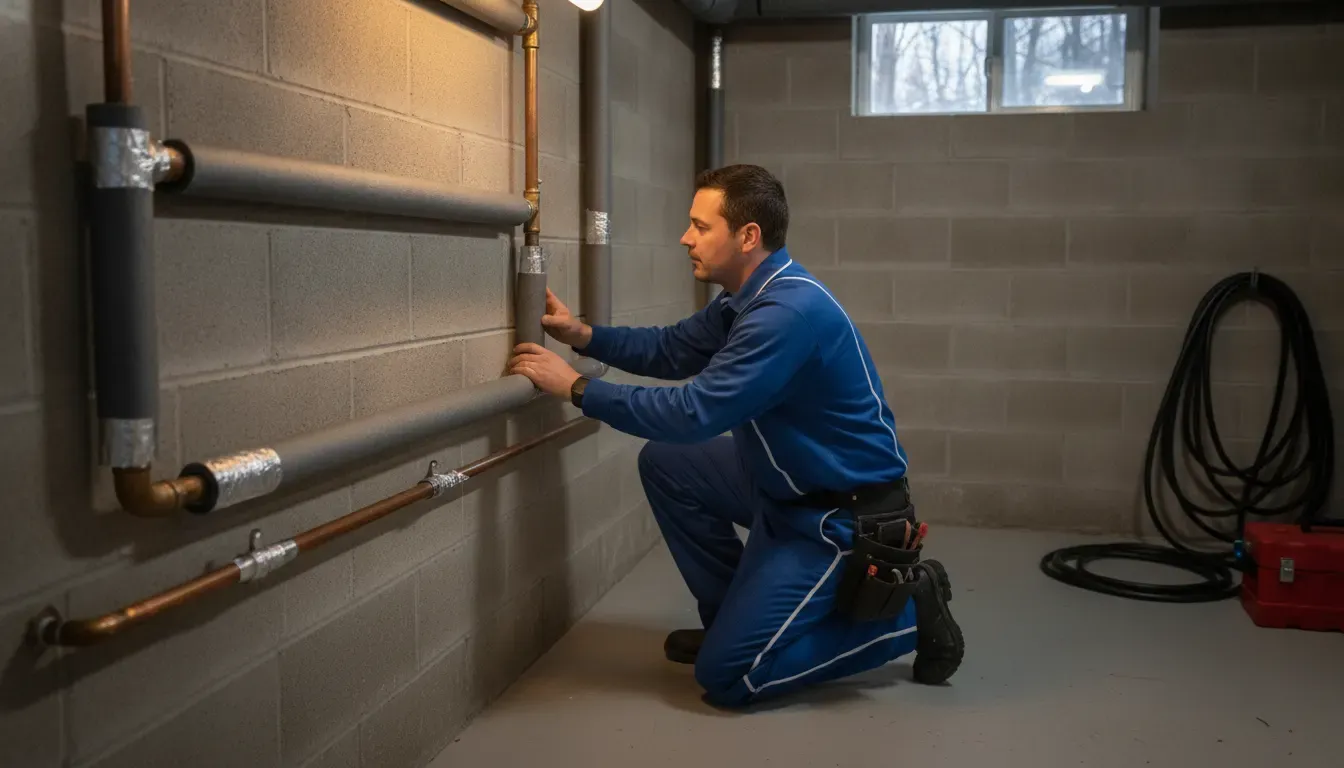
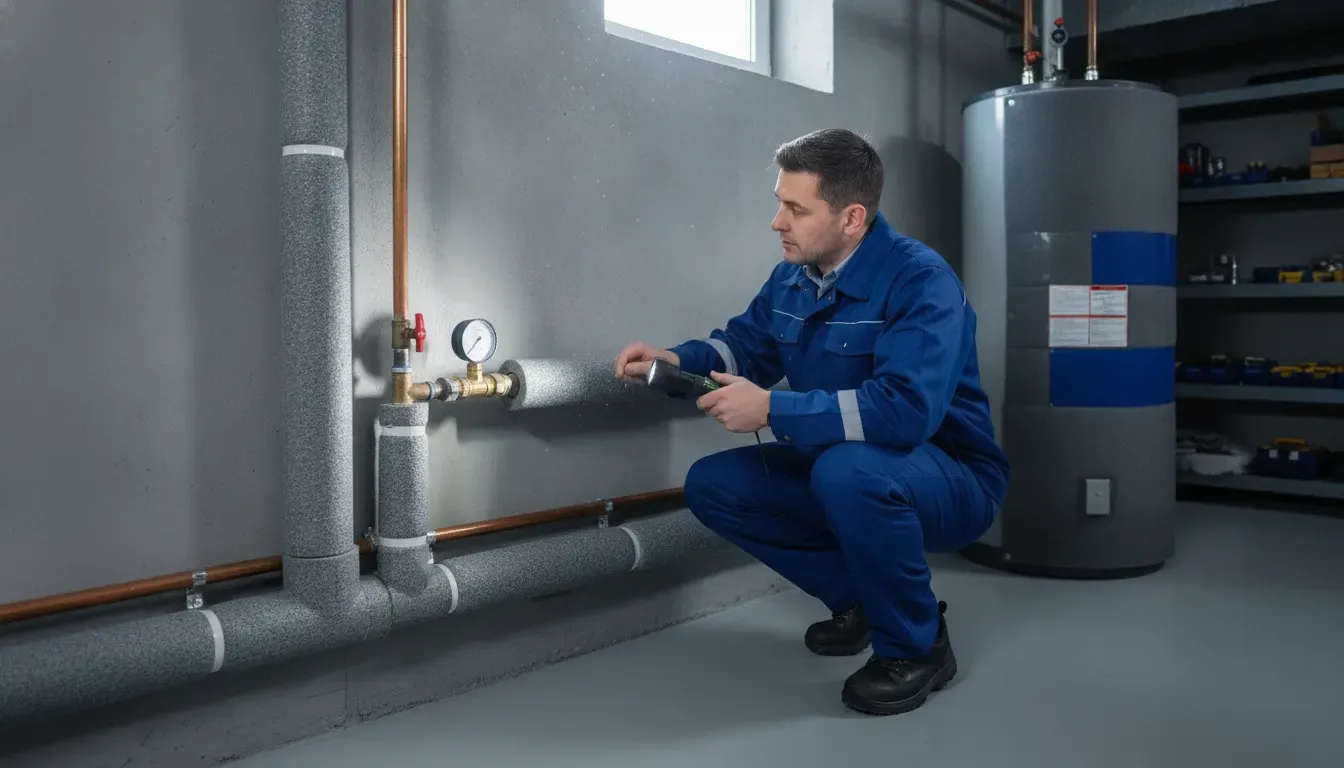
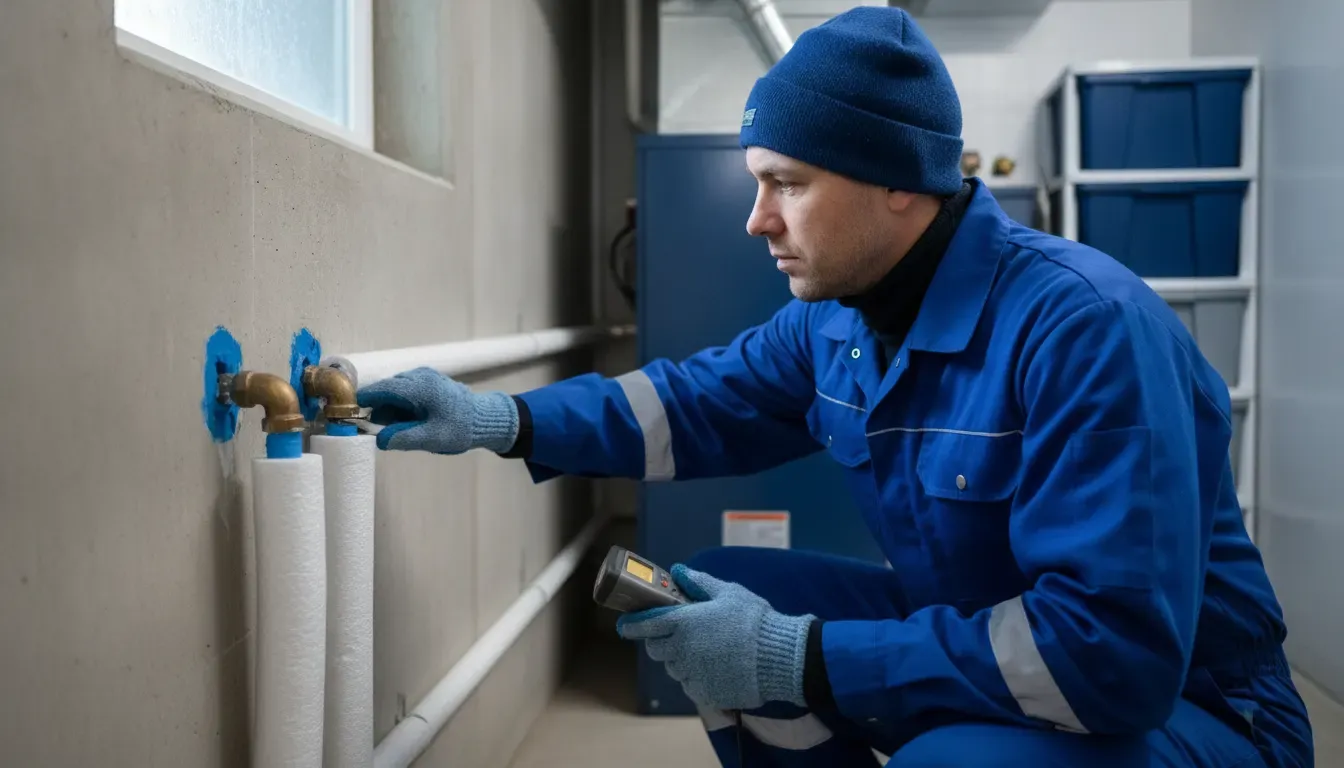
Pipe insulation helps slow heat loss, but it does not replace a sound building envelope or reliable heat. Insulation that is wet, incomplete, compressed, or separated from a fitting may leave the most vulnerable portion unprotected. Professional evaluation can identify those gaps without assuming that every home has the same layout.
Which pipes are most vulnerable during a Birmingham cold snap?
The most vulnerable line is usually the one with the least protection, not necessarily the oldest pipe in the home. A short run through an unheated area can freeze before a longer run that is surrounded by conditioned indoor air. The same principle applies to fixtures. A faucet may work normally while a hidden section of its supply line is already beginning to freeze.
Risk is higher when several conditions occur together:
- Below-freezing air lasts for hours. A brief dip may not cool a protected pipe enough to freeze, while a full overnight cold period gives the line more time to lose heat.
- Cold air reaches the plumbing. Drafts around exterior penetrations, doors, vents, or foundation openings can cool a pipe faster than the surrounding room.
- The line is in an unheated area. Garages, crawl spaces, attics, and unfinished basement areas often have less protection than living spaces.
- Insulation is missing or incomplete. Fittings, valves, elbows, and short exposed sections are easy to overlook and may be the first points to freeze.
- Indoor heat is reduced. A vacant home, heating problem, or thermostat setting that is too low can allow plumbing temperatures to fall for an extended period.
Michigan weather can also change quickly. A mild afternoon does not eliminate the risk of a long, cold night. Before leaving a Birmingham home during winter, make sure the heating system is operating normally and that someone can check the property during an extended absence. The Indiana Office of Utility Consumer Counselor recommends keeping a home at no less than 55 F while away. It also recommends checking the property during extreme cold, while recognizing that each home and heating system has different conditions.
| Condition | Relative risk | Why it matters |
|---|---|---|
| Heated interior room | Lower | Indoor heat slows the pipe’s heat loss. |
| Exterior wall or cabinet | Moderate | Cold surfaces and limited airflow can cool the line. |
| Unheated garage or crawl space | Higher | The pipe has less protection from sustained cold. |
| Draft near a fitting or opening | Higher | Moving cold air removes heat from a small section quickly. |
How can you reduce frozen-pipe risk before a Birmingham freeze?
Prevention starts with the parts of the plumbing system that are easiest to overlook. A professional winterization review can locate exposed runs, incomplete insulation, air leaks, and outdoor connections that need attention. It can also distinguish a simple protection concern from a larger problem involving a damaged line or an unreliable heating area.
Before a forecasted freeze, prioritize these actions:
- Confirm that the home has dependable heat and that cold rooms, basements, garages, and utility areas are not being left without protection.
- Inspect visible plumbing near exterior walls, openings, and unheated areas for missing or damaged insulation.
- Disconnect outdoor hoses and have exterior faucet lines properly winterized when the plumbing layout calls for it.
- Keep the main water shutoff location known and accessible so a suspected burst can be isolated quickly.
- Ask a licensed plumbing professional to evaluate recurring cold spots, a line that has frozen before, or a home with repeated drafts and moisture problems.
Some public utility guides discuss allowing a small, controlled flow at a vulnerable fixture during sustained below-freezing weather. That approach is not identical for every plumbing system and does not correct a frozen line, a burst, a pressure problem, or a home with poor heat. If you are unsure which fixture or line is vulnerable, ask a professional rather than guessing.
Do not use an open flame to thaw a pipe. The Indiana OUCC’s frozen-pipe prevention guidance warns that attempting to thaw a pipe without professional advice can cause serious damage. The safest response depends on whether there is standing water, whether the pipe has split, and where the blockage is located.
Schedule a professional pipe-insulation or frozen-pipe evaluation with Mr. Pipey.
How long does it take for pipes to freeze at 32 F?
There is no universal number of hours. A protected pipe inside a heated home may stay above freezing for a long time, while a small exposed section can become dangerously cold much sooner. Pipe size, material, insulation, air movement, surrounding surfaces, water temperature, and the duration of the cold all change the answer.
The safest way to think about 32 F is as the point at which protection matters, not as a stopwatch. If temperatures are expected to remain below freezing overnight, take action before the cold arrives. A pipe that has not frozen by midnight may still be at risk by early morning because heat loss continues while the home is quiet and exterior temperatures are lowest.
Wind can increase the rate at which an exposed pipe loses heat, but wind chill should not be used as a separate pipe-freezing temperature. The National Weather Service notes that wind chill applies to people and animals. For water pipes, the wind’s role is to move heat away more quickly until the pipe approaches the actual air temperature.
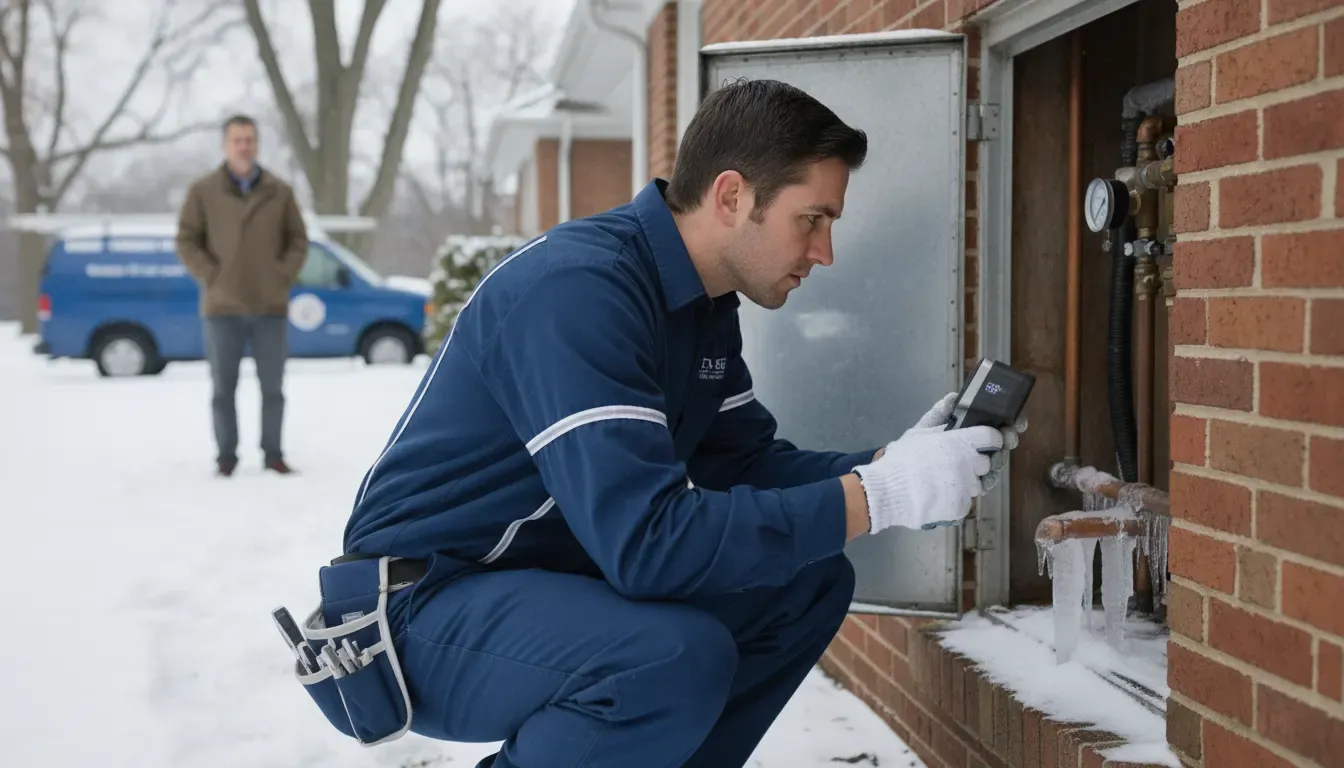
Heavy snow and ice can complicate access to outdoor plumbing and shutoff areas. They may also conceal a damaged hose bib, foundation opening, or meter-area concern. A visual inspection from a safe location can identify obvious trouble, but hidden or inaccessible plumbing should be evaluated by a qualified professional.
What are the first signs that a pipe may be freezing?
Early signs can be subtle. A faucet may produce only a trickle, a toilet tank may refill slowly, or one fixture may lose pressure while the rest of the home works normally. You may also notice frost, condensation, unusual pipe noises, or a cold area near an exterior wall. These signs do not prove that a pipe has frozen, but they are a reason to stop treating the problem as routine low pressure.
Watch for:
- A sudden reduction or loss of water from one fixture.
- Flow that returns and stops repeatedly during a cold period.
- Frost on a visible pipe or fitting.
- A damp ceiling, wall, cabinet, basement area, or garage after temperatures begin to rise.
- Water pressure that changes when a frozen area begins to thaw.
If a pipe has frozen, the most important concern is the condition of the pipe itself. Ice can hide a split until thawing begins. If water appears, if a wall or ceiling becomes wet, or if you hear water moving where it should not, shut off the main water supply if it is safe to do so. Then contact a professional. Do not use an open flame or keep testing the fixture repeatedly.
When should Birmingham homeowners call a plumber?
Call a professional when a fixture loses water during a freeze, a pipe has frozen before, a line is located in an inaccessible or unheated space, or you see any sign of a leak. Prompt service is especially important when the home is vacant, the heating system is not working properly, or the main shutoff is difficult to operate.
A professional frozen-pipe evaluation can include locating the affected section, checking for a split or leak, assessing the condition of nearby fittings, and recommending appropriate insulation or airflow improvements. If the line has burst, service may require controlled shutoff, water removal, repair, replacement, and a review of why that section froze. The goal is not just to restore flow. It is to reduce the chance of a repeat problem.
Mr. Pipey provides frozen pipe repair and insulation for Metro Detroit homes, along with professional pipe insulation and 24/7 emergency plumbing service. Birmingham homeowners can also review the company’s local Birmingham service coverage. The company’s customer materials state that emergency calls do not receive overtime or double-time charges, and the work is backed by a 100% satisfaction guarantee. Contact the team for a situation-specific evaluation rather than relying on a temperature number alone.
Get professional help before a Birmingham pipe freeze becomes a water-damage problem.
Frequently Asked Questions About Frozen Pipes in Birmingham
Can pipes freeze when the temperature is 32 F?
Yes. Water freezes at 32 F, and exposed plumbing can begin freezing when the pipe and water inside it reach that temperature. The outdoor reading does not predict the exact timing for every home because insulation, drafts, pipe location, and the duration of the cold all matter.
Is 20 F the temperature when all pipes freeze?
No. Twenty degrees is sometimes used as a practical warning marker for severe risk, but it is not a universal freezing point. A poorly protected pipe can freeze at a higher outdoor temperature, while a well-protected line can remain above freezing longer.
Does wind chill make pipes freeze at a lower temperature?
Wind chill does not make a pipe colder than the actual air temperature. Wind can remove heat faster from an exposed pipe. That helps it reach the actual outdoor temperature sooner. Drafts around plumbing can therefore increase risk, even though the wind-chill number is not a separate pipe-freezing threshold.
How long can pipes be below freezing before they freeze?
There is no fixed time. A small exposed section may freeze quickly, while protected plumbing may remain safe through a short cold spell. Sustained below-freezing temperatures overnight deserve attention, especially in garages, crawl spaces, attics, unfinished basements, and exterior walls.
What should I do if a Birmingham pipe freezes?
If water is leaking or a burst is suspected, shut off the main water supply when it is safe and contact a professional. Do not use an open flame. Restoring flow does not prove the pipe is undamaged. A professional can check for hidden splits and recommend a lasting repair or protection plan.
Contact Mr. Pipey today for reliable frozen-pipe service in Birmingham.