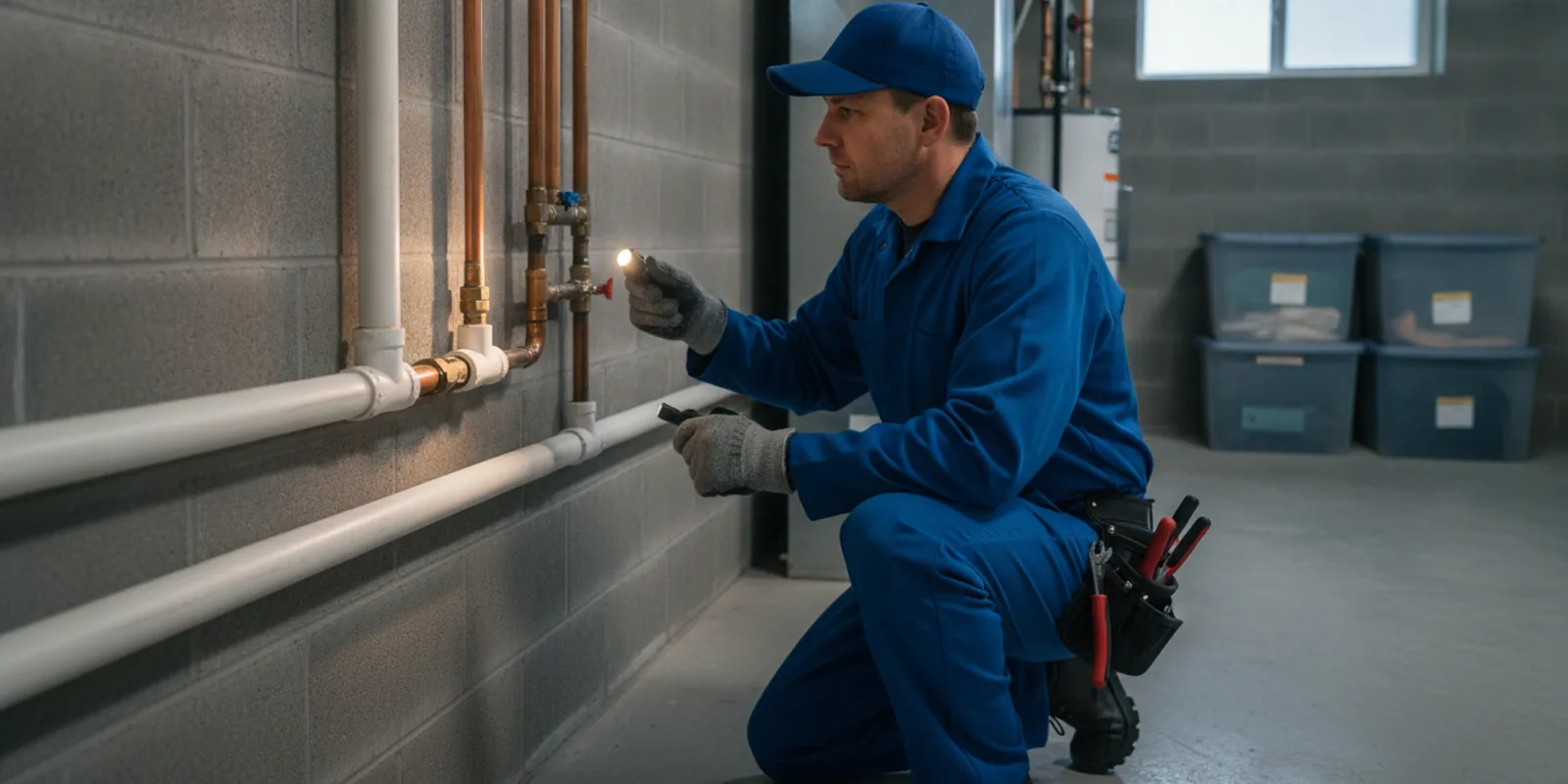
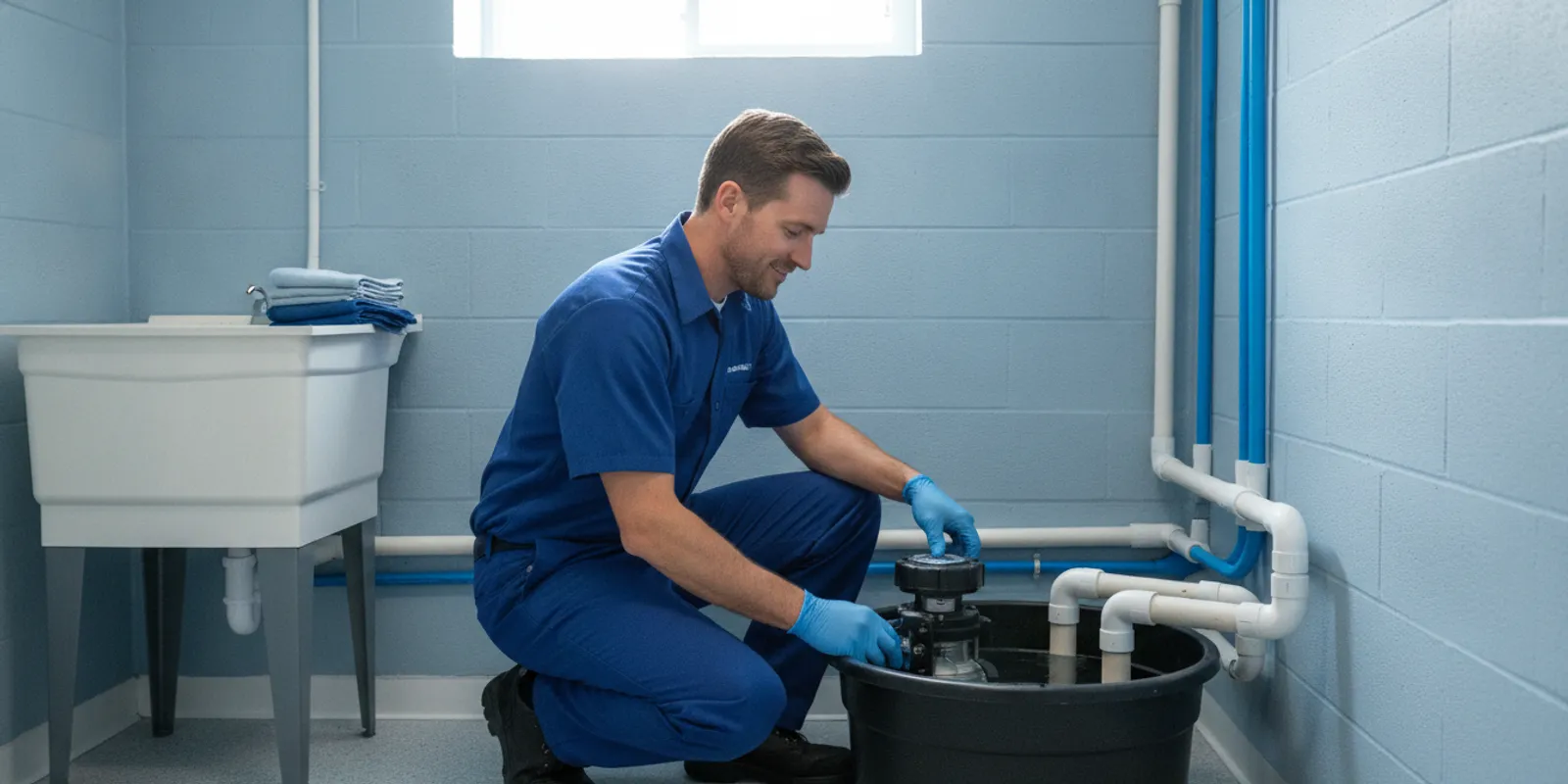
If you are considering a home in Plymouth or have noticed dampness in your basement after wet weather, it is natural to ask what is a sump pump and do i need one in Plymouth? A sump pump is not automatically necessary in every home. The right answer depends on how water reaches the basement, how the foundation and drainage system perform, and whether water has entered the property before.
Request a professional sump pump assessment
What Is a Sump Pump, and What Does It Do?
A sump pump is a pump installed at the lowest collection point of a basement or crawlspace drainage system. That collection point is commonly called a sump basin or pit. When water gathers in the basin, the pump moves it through a discharge pipe away from the building. The goal is to manage collected groundwater before it spreads across the floor or affects stored belongings and finished space.
The pump is only one part of a larger water-management arrangement. Depending on the home, that arrangement may include a basin, drainage channels or perimeter piping, a discharge line, and controls that operate the pump as water rises. Where the discharge ends and how water moves around the foundation also matter. A functioning pump cannot correct every cause of basement moisture, such as a plumbing leak, surface water flowing toward the house, or a sewer issue.
For that reason, it helps to identify what kind of water problem you are trying to solve before deciding whether a pump is appropriate. A plumbing professional can distinguish a sump-system concern from other basement or drainage conditions. Mr. Pipey offers sump pump repair and services in the area, as well as plumbing support for related issues.
Do Plymouth Homes Need a Sump Pump?
Some Plymouth homes can benefit from a sump pump, while others may not need one. A home with a dry basement, no history of water entry, and drainage that carries water away from the foundation may have no clear reason to add a pump. A property with recurring water at a low point, an existing sump basin, or a record of basement seepage deserves a closer evaluation.
Local conditions can vary from one property to the next. The basement’s depth and layout, the grading around the home, the condition of gutters and downspouts, the home’s age and construction, and prior drainage work can all affect where water goes. Two neighboring houses can have different outcomes because water flow follows the specific site and foundation, not a neighborhood-wide rule.
Think of the question as an assessment, not a yes-or-no rule based only on location. If a home has an existing pump, learn whether it is working and what parts of the drainage system it serves. If a home has no pump, look at its history and current signs rather than assuming one should be installed. For broader basement drainage concerns, a plumber may also review basement drain service or investigate a separate plumbing source.
When reviewing a home, ask whether a sump basin or pump is present and whether the owner has records of prior water entry or repairs. A system’s presence is useful context, but it is not proof that the basement currently has a water problem. Likewise, a clean, dry visit during one season cannot establish how the property behaves during heavier rain or thaw. Combining the home’s history with a professional look at visible components gives a more reliable basis for deciding what, if anything, should be done.
What Clues Suggest a Sump Pump May Be Useful?
Repeated patterns are more informative than a single damp spot. Note when moisture appears, where it is located, and whether it follows rain, snowmelt, or plumbing use. Share that history with a professional. These clues do not prove that a sump pump is the solution, but they can help determine what should be inspected:
- Water gathers at a low point. Repeated pooling in the same basement area may indicate that water is collecting below the floor or entering along a predictable path.
- Moisture returns after wet weather. A recurring relationship with rain or seasonal thaw can point toward groundwater or surface drainage conditions worth assessing.
- The property already has a sump basin. A basin suggests a water-management system may have been installed, but it does not confirm that the pump, controls, discharge, or drainage connections are in working order.
- There is a history of basement seepage. Ask about prior water entry, repairs, and pump service when reviewing the home’s history. Past work can help explain current equipment.
- Basement drains or nearby fixtures act unusually. Slow drainage, odors, or water coming from a floor drain can point to a drain or sewer concern rather than a sump issue. A professional can help identify the source.
- You are planning to finish or use the basement more. A change in how the space is used can make it worthwhile to understand existing water-management measures before work begins.
One isolated mark on a wall or a musty smell does not, by itself, establish that a sump pump is needed. Moisture can have more than one cause. A leaking pipe, condensation, a foundation opening, blocked drainage, or water entering from outdoors may require a different response. A clear diagnosis is more useful than adding equipment without understanding the source.
A brief record of what you observe can make an assessment more focused. Write down the approximate date, recent weather, the location of dampness, and whether it is a puddle, a stain, or a musty area. If the same spot changes after rain but stays dry during ordinary household water use, that timing is worth mentioning. If it appears near a supply line, laundry equipment, or a drain, include that detail too. These observations do not diagnose the cause, but they help a plumber compare possible water paths instead of relying on a one-time snapshot.
How Can You Tell a Sump Problem From Another Water Issue?
Where and when water appears provide useful context. Groundwater may collect at the lowest part of a basement, while a plumbing leak may be close to a supply line, fixture, or appliance. Water at a floor drain can involve the drain system. Moisture that is limited to a cold surface may have a different explanation. These are clues, not a substitute for inspection.
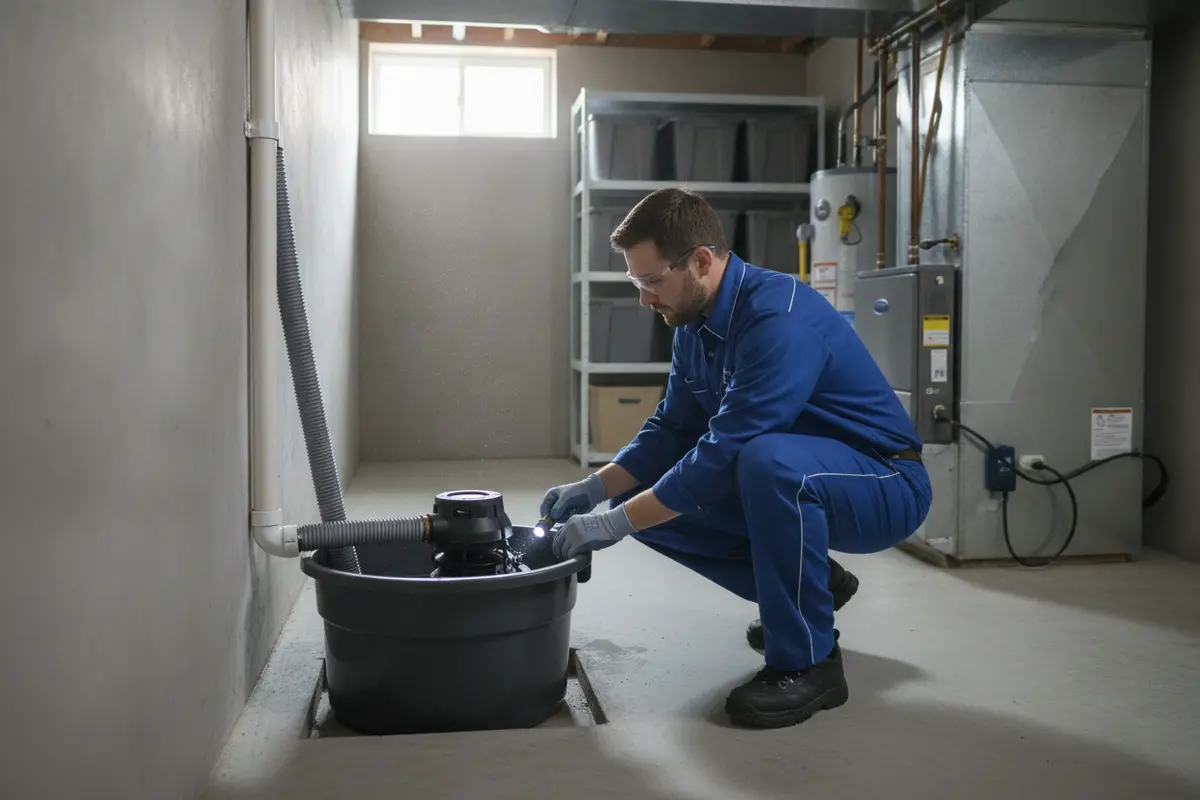
Keep the initial observations simple and safe: record the room or location, whether the area is wet or merely damp, and what was happening when you noticed it. If there is an existing pump, note whether you have observed it run or whether water remains in the basin. Do not reach into a basin or handle electrical equipment in a wet area. Have a qualified professional inspect equipment and determine the source.
A plumber may check the basin and pump, the float or activation controls, the discharge route, and visible signs of drainage problems. They may also ask about the timing of water entry and review nearby plumbing. When the concern appears to involve a drain or sewer, sewer and drain service may be more relevant than sump-pump work. For suspected leaks, a separate plumbing leak evaluation can help narrow down the cause.
The distinction matters because two problems can look similar from across a basement. For example, water near the floor drain after multiple fixtures are used may warrant attention to the drain system, while water that appears at a foundation edge after prolonged wet weather may lead the assessment in another direction. These examples are not rules: drainage, plumbing, and foundation conditions can overlap. A professional can examine the pattern, consider the connected systems, and explain what evidence supports the likely source.
Which Sump Pump Options Should a Homeowner Understand?
There are different pump configurations and backup arrangements. The best fit depends on the basin, expected water conditions, space, electrical setup, and how the system is meant to operate. A homeowner does not need to choose equipment by brand or technical specification before an assessment. Ask the plumber to explain the system in plain language and show how each proposed part addresses the observed condition.
| System or arrangement | What it generally does | What to discuss with a professional |
|---|---|---|
| Primary sump pump | Moves collected water from the basin to a discharge location when activated. | Whether the pump is suited to the basin and drainage needs, and whether the discharge route is appropriate. |
| Submersible pump | Sits in the sump basin while operating. | Available basin space, service access, and the conditions under which it will run. |
| Pedestal-style pump | Uses a motor positioned above the basin with a pump component below. | Whether the configuration fits the space and how it can be inspected and maintained. |
| Backup arrangement | Provides another means of pumping if the primary system cannot operate as intended. | Which interruption or failure conditions it addresses, its limits, and how it is checked. |
| Drainage correction without a new pump | Addresses a water path or plumbing issue that may be separate from groundwater collection. | Whether grading, discharge, a drain, a leak, or another source is driving the moisture. |
This comparison is a starting point for a conversation, not a prescription for every home. A larger or more complex setup is not automatically better. The important questions are whether the proposed system matches the water source, whether collected water can be discharged appropriately, and what routine service the system may need.
A useful proposal should connect each component to a specific job. The primary pump handles water collected in the basin. A backup arrangement may address a separate interruption or equipment concern, but it does not resolve every possible cause of moisture. Drainage correction may be the more relevant work when water is being directed toward the foundation or when the discharge path needs attention. Ask which part of the assessment led to each recommendation and what condition would remain outside its scope.
What Happens During a Professional Sump Pump Assessment?
A useful assessment begins with the property’s history and the reason for the visit. Tell the plumber when water has appeared, whether it is seasonal or recurring, and what parts of the basement are affected. If a pump is already present, mention any recent changes in its operation or service. This context helps guide the inspection instead of treating every wet basement as the same problem.
The professional can examine visible equipment and drainage conditions, then explain whether the issue appears related to the sump system or another source. Depending on what is accessible, the review may include the basin, pump condition, activation controls, discharge line, and nearby drains or plumbing. The plumber should describe what was observed, what remains uncertain, and which options address the actual findings.
Before approving work, ask for a clear scope. Find out what parts or corrections are included, whether the work involves repairing existing equipment or changing the drainage arrangement, and how the discharge will be handled. Ask what follow-up or ongoing maintenance is recommended for that particular system. If more than one cause is possible, ask what additional inspection would help confirm the diagnosis.
For a home purchase or a planned basement renovation, treat the assessment as a way to understand the current arrangement before making other decisions. Ask what the visible system serves, whether there are signs of prior repairs, and whether the proposed work would affect the area being renovated. If the basement is finished, clarify how access to the basin and serviceable components will be maintained. The goal is not to assume that equipment must be added, but to understand how the existing water-management plan fits the space and its intended use.
A few specific questions can make the explanation easier to use later:
- What evidence points to groundwater, a drain issue, a plumbing leak, or another source?
- Does the proposed work repair an existing pump, add equipment, or address how water reaches the basin?
- Where does the discharge go, and are there any conditions that could affect its operation?
- How can I tell that the system needs professional attention, and what service interval is recommended for this installation?
- What is not included in the proposed work, and what should happen if moisture returns?
These questions keep the discussion focused on the home’s actual conditions rather than on equipment alone. A straightforward explanation should connect the observed problem to the recommended work and make clear what result the work is intended to achieve. If the explanation does not identify a water source or describe why a particular correction is appropriate, ask for clarification before making a decision.
Mr. Pipey is a family-owned plumbing company and a licensed and insured Michigan plumbing contractor. If the assessment points to a different plumbing concern, the team also handles services such as water heater repair and replacement and water valve service. Those services are distinct from sump pump work, but a professional can help identify which plumbing system is relevant.
How Can Plymouth Homeowners Plan for Sump Pump Service?
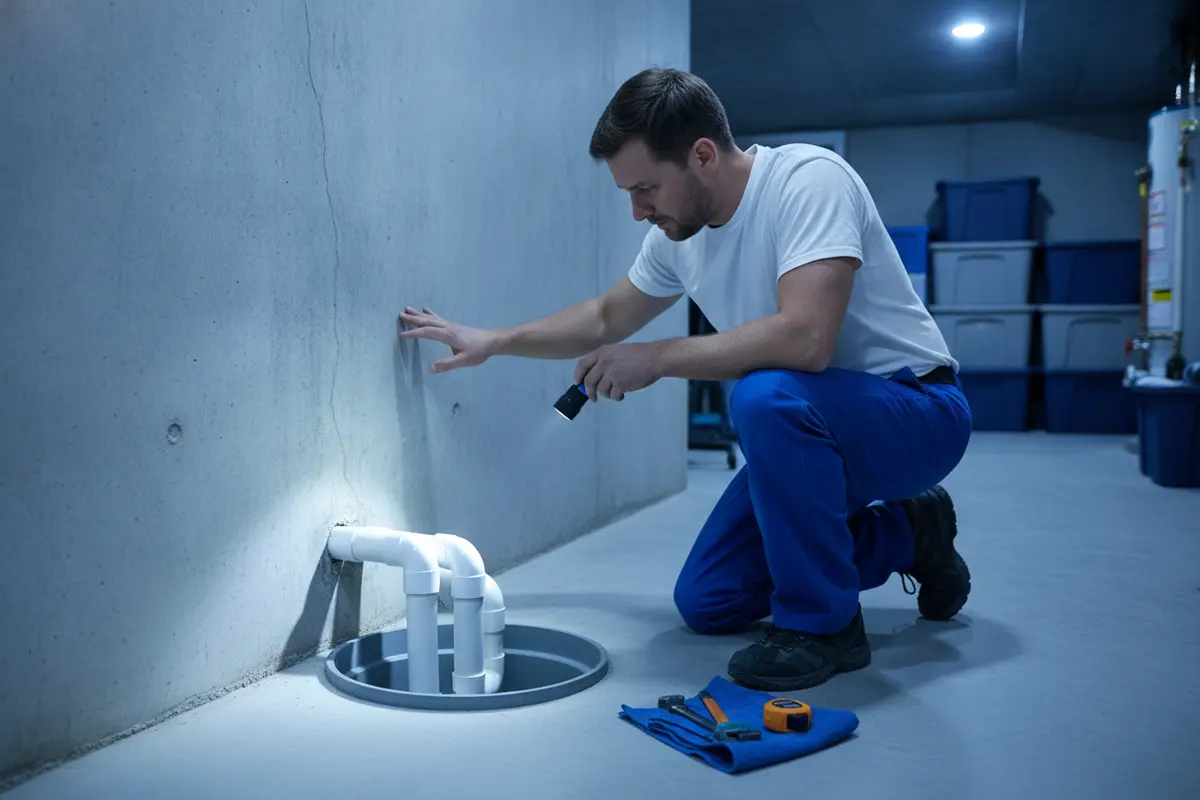
Whether a system is already installed or being considered, planning starts with knowing what the equipment serves. Keep information about past water entry and completed work with the home’s records. If you are buying or renovating a home, ask about any sump basin, pump, drainage work, and prior water issues. A professional assessment can help clarify whether the existing arrangement is operating as intended and whether any maintenance or repair is due.
It is also useful to understand where the discharge goes and what the system’s limitations are. A pump moves collected water; it does not make the property immune to moisture or solve every drainage problem. The path water takes after leaving the pump should be reviewed as part of the whole arrangement. If water continues to appear despite a pump running, the cause may be capacity, a discharge problem, another entry point, or an unrelated plumbing issue.
For existing equipment, ask a professional what inspection schedule is appropriate and what signs should prompt a service visit. The answer depends on the pump and installation, so avoid relying on a generic schedule as a guarantee. If you need urgent plumbing help or see water affecting other fixtures, consult an appropriate professional. Mr. Pipey’s 24/7 emergency plumbing service is available for urgent plumbing situations.
Homeowners in nearby Oakland County communities can also read about sump pump repair considerations in Troy; the specific conditions at each house still determine the right service plan. For a local assessment and clear explanation of options, contact a plumbing professional familiar with the home’s system.
Contact Mr. Pipey to discuss your sump pump concerns
Frequently Asked Questions
Does every Plymouth home need a sump pump?
No. The need depends on the individual home’s water history, basement and foundation conditions, drainage, and existing equipment. A professional can assess those details rather than making a decision based only on the home’s city or neighborhood.
Does a sump pump fix a basement leak?
Not necessarily. A sump pump manages water collected in a basin, but a plumbing leak, sewer issue, surface drainage problem, or other moisture source may need a different repair. Identifying where and when the water appears helps determine the right next step.
What if my house has a sump basin but no pump?
A basin alone does not show whether a pump is currently needed or whether other parts of the system are present. Have a plumber inspect the basin and drainage arrangement and explain what the home’s water history suggests.
Should I add a backup pump?
A backup may be useful in some systems, but the right arrangement depends on the primary pump, the property’s water conditions, and what kind of interruption it is intended to address. Ask a professional to explain its purpose, limitations, and service needs for your installation.
How do I know if the problem is a sump pump or a sewer drain?
The location and timing of water, odors, and drain behavior can help distinguish possible causes, but these clues are not conclusive. A plumber can inspect the relevant systems and determine whether sump, drain, sewer, or plumbing service is appropriate.
When you understand how water behaves around your home, you can make a better-informed decision about whether a sump pump assessment is worthwhile.
For general information about plumbing contractors, visit the Plumbing-Heating-Cooling Contractors Association.