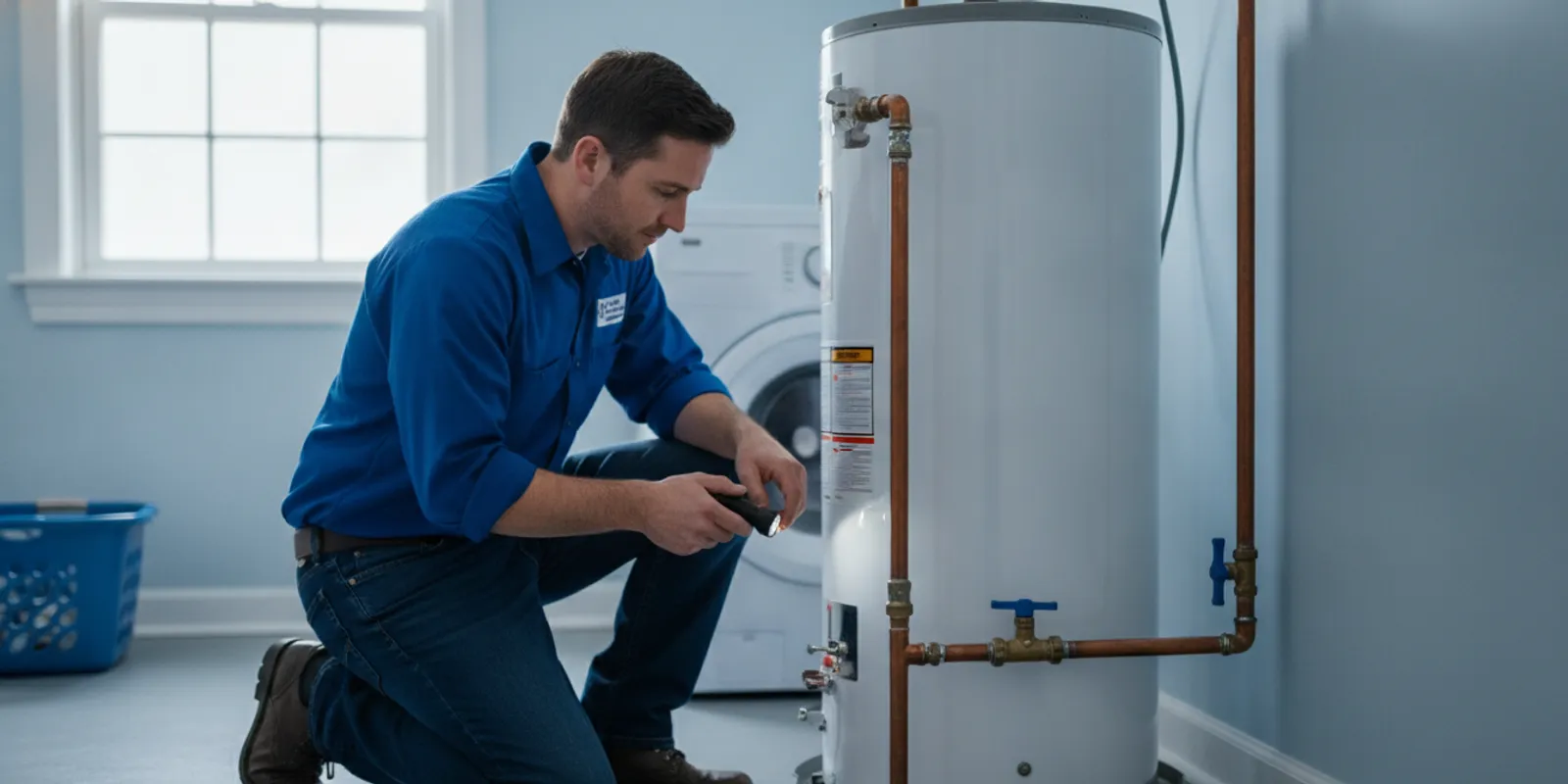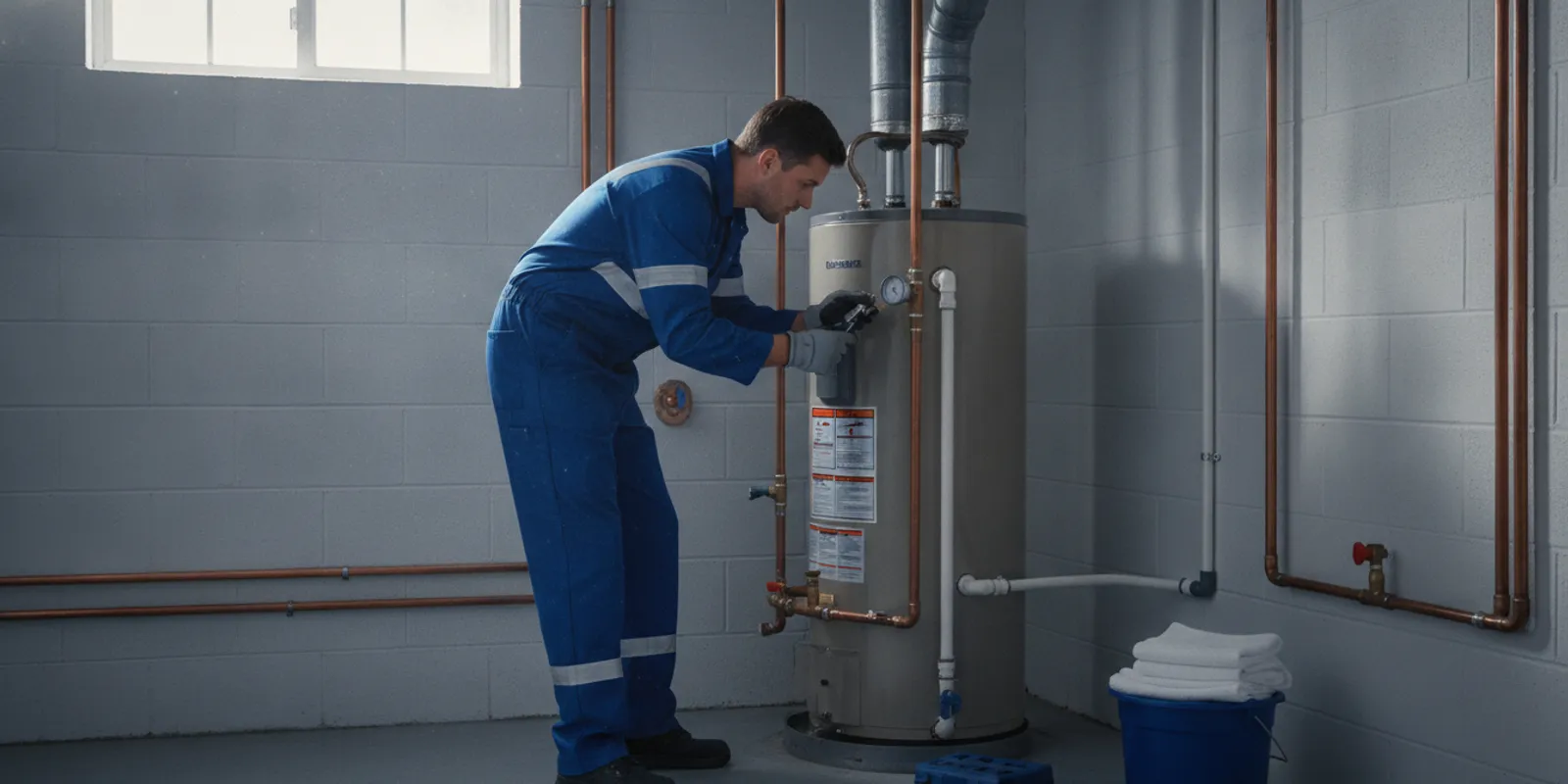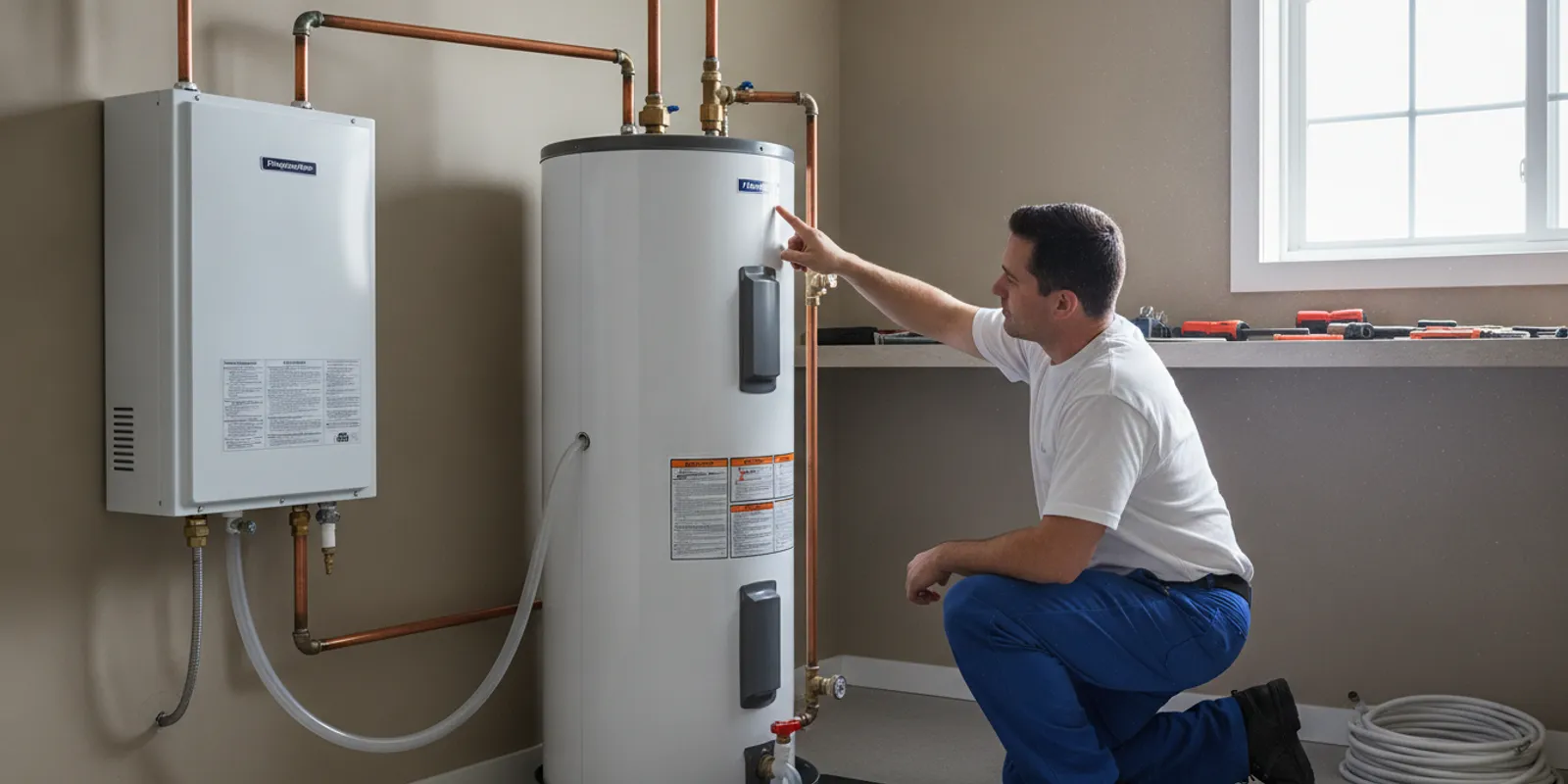
When hot water runs low during a busy morning, or an older heater is due for replacement, Allen Park homeowners often compare a storage tank with a tankless unit. The right choice is not simply the newer technology: it depends on when the household uses hot water, the space and utility connections available, and what the complete installation requires. This guide to tankless vs tank water heater Allen Park residents can use explains how to compare the two systems and what to ask before choosing.
Talk with a plumber about your water heater options
How do tankless and tank water heaters work?
A conventional storage water heater warms a quantity of water and holds it in an insulated tank until a faucet, shower, or appliance calls for hot water. Its storage capacity is measured in gallons. When the household draws water faster than the heater can recover, the available hot supply can diminish until the unit reheats more water. The tank occupies floor space and needs practical access for service, along with an installation that meets the applicable equipment and safety requirements.
A tankless water heater heats water as it moves through the appliance. Since it does not store a large volume ready for use, it is usually more compact than a tank. But its output is limited: it must be able to raise the temperature of the incoming water while delivering the requested flow. Several simultaneous uses can exceed the unit’s capacity, especially when a large temperature rise is needed. Sizing and installation therefore matter as much as the label on the equipment.
Neither system provides unlimited hot water in every circumstance. A storage tank can be depleted during heavy use, while a tankless system can be asked to heat more water at once than its rated output permits. A fair comparison starts with the home’s peak demand and the particular models being considered, not a blanket promise about one design.
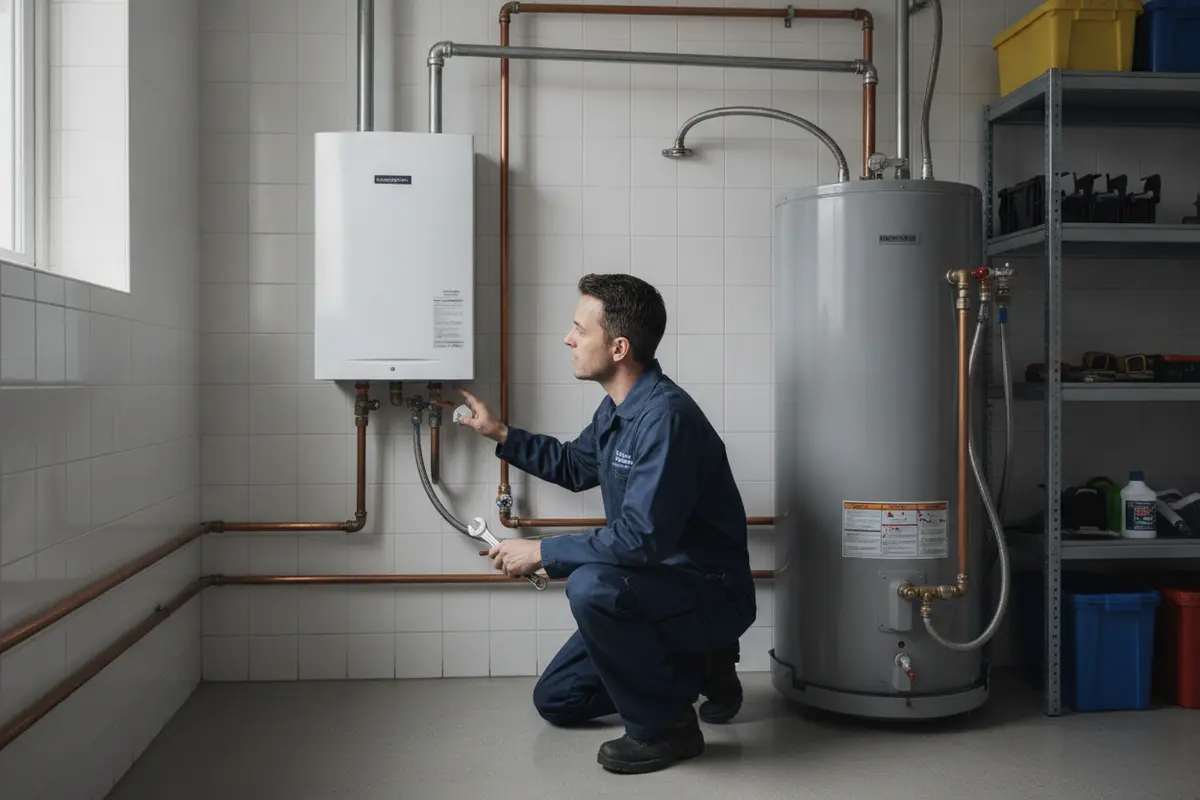
Which system fits an Allen Park household’s peak hot-water use?
Consider the busiest hour in a typical week. A household might have two showers running while someone starts laundry or uses hot water at the kitchen sink. Another home may use one shower at a time, with laundry and dishwashing scheduled separately. Those patterns affect the capacity question differently. Make a short, factual note of what is usually happening when hot water feels insufficient: which fixtures are running, how long the demand lasts, and whether the issue happens every day or only occasionally.
For a tank system, the discussion should include both the stored volume and the heater’s recovery performance. A gallon rating by itself does not tell the whole story. A home with concentrated morning demand may need a different capacity profile than a home with the same number of residents but more spread-out use. The plumber can compare likely peak draws with the specific equipment’s performance information and explain where the system may need recovery time.
For a tankless system, ask how the model is sized for simultaneous flow and the temperature rise required at the home. The unit’s rated output is not a promise that every combination of showers and taps can run at full flow together. If demand commonly overlaps, the proposed capacity should account for that rather than assume that use can always be staggered. A professional can explain what the selected model is designed to handle and where limits may be noticeable.
Household size can be a useful starting point, but it is not a complete sizing method. Two people with overlapping showers and frequent hot-water appliance use may have a different peak pattern from a larger household that spreads those activities throughout the day. Explain real routines to the installer instead of relying on a generic household-size chart or a single headline specification.
- Describe the peak: Identify the fixtures and appliances that commonly run together, such as morning showers with a kitchen draw.
- Separate regular use from an unusual event: Note whether the shortage is part of the normal routine or tied to an occasional gathering or change in schedule.
- Explain the symptom: Say whether water turns cool after a period of use, fluctuates at one fixture, or fails to heat at all. These experiences can point to different assessment questions.
- Ask for the capacity basis: Have the plumber explain how the recommended model relates to the household’s actual demand.
This information can help distinguish an undersized system from a performance problem that may call for repair. Mr. Pipey’s water heater repair and replacement information describes the relevant service, while an on-site assessment determines which option fits the home.
How do tank and tankless options compare?
The table is a practical starting point rather than a guarantee for every model. A plumber should confirm the particular equipment, fuel, site conditions, and manufacturer requirements before recommending a configuration.
| Consideration | Storage tank | Tankless |
|---|---|---|
| How hot water is supplied | Stores heated water; available volume can run down during sustained demand | Heats water as it flows; output is limited by flow and required temperature rise |
| Peak use | Compare tank capacity and recovery characteristics with the home’s busiest period | Compare rated output with simultaneous fixtures and incoming water temperature |
| Space | Needs room for the tank plus appropriate service access | Typically smaller, but still requires suitable placement and clearances |
| Energy use | Uses energy to heat stored water and maintain its temperature | Heats on demand; actual use depends on the model and household pattern |
| Installation review | Check location, connections, venting where applicable, and safe installation | Review fuel supply, venting, plumbing, electrical needs, and condensate needs where applicable |
| Maintenance | Follow the product’s maintenance and inspection instructions | Follow the model’s service guidance; needs vary with equipment and water conditions |
Space can influence the decision, particularly where a utility area is crowded or storage is limited. A wall-mounted tankless unit may reduce the appliance footprint, but compact size does not remove the need for correct clearances, access, venting, and connections. A tank may occupy more floor area but could fit an existing installation without the same degree of system changes. These are site-specific questions, not assumptions to make from photographs or product dimensions alone.
Think about how service access will work after installation. A heater should be placed so a qualified technician can inspect and service it as needed. The surrounding pipes, vent path, and other equipment can affect that access. During an assessment, ask the plumber to show how the proposed location supports both installation and future maintenance, and whether any nearby items or layout constraints affect the plan.
What can installation involve when changing heater types?
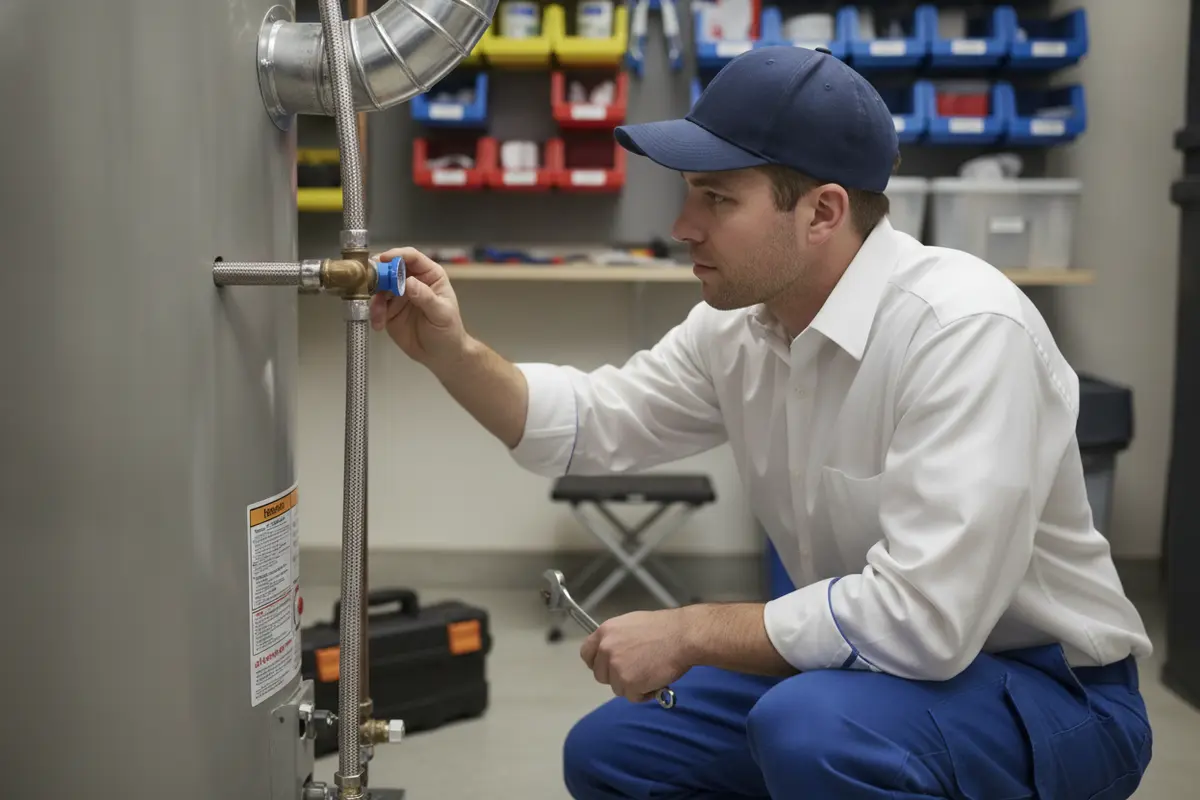
Replacing a tank with another compatible tank may appear more straightforward, but the existing setup still needs to be checked. The heater’s age and condition, fuel, water connections, venting, location, and applicable code requirements all affect the work. A like-for-like replacement should not be treated as approved until the installer verifies the actual equipment and site.
A change to tankless can involve a broader review because the new appliance may have different capacity, fuel, venting, electrical, or condensate requirements. Not every home needs every type of modification; the requirements depend on the specific model and existing installation. The important point is to understand the complete scope before deciding. A tankless model should not be selected on the assumption it can simply connect to the same arrangements as the old tank.
Ask the plumber to explain which parts of the proposal are equipment, removal, connection work, and any required updates to support the selected system. If a modification is conditional, ask what condition makes it necessary. A written estimate that distinguishes the planned work from assumptions makes it easier to compare two options fairly. Avoid comparing the price of an appliance alone with the price of a complete installed system.
For background on service scope and project variables, see Mr. Pipey’s guide to water heater installation cost factors. A general guide can help organize questions, but it cannot confirm what a specific Allen Park home needs. The estimate and site assessment should address that home’s actual equipment and layout.
A useful appointment also accounts for the condition of the current heater. If it is leaking, inconsistent, or no longer providing adequate hot water, the cause should be assessed rather than presumed. A repair may be appropriate in some cases; in others, replacement planning makes more sense. Mr. Pipey’s tankless water heater service details can provide context if that system type is under consideration, but suitability still depends on the home.
Does tankless mean lower energy use or lower cost?
Not automatically. A tankless system heats water as it is drawn, while a storage system maintains a supply at temperature. The effect on energy use depends on the equipment, household habits, fuel, and operating conditions. A household’s result cannot be promised from the system category alone. The U.S. Department of Energy’s overview discusses tankless water heater performance and energy considerations; it is useful context, not a prediction of savings for an individual home: U.S. Department of Energy: Tankless Water Heaters.
Upfront project cost and ongoing operation are separate parts of the comparison. A system with a higher installed cost does not automatically pay for itself within a particular period, and a lower initial estimate may not include every change required for installation. Ask the plumber to set out the equipment and full work scope for each suitable option. If a projected operating difference is discussed, ask which model data and household assumptions support it. Treat a general claim about savings as a starting question rather than a guarantee.
Maintenance belongs in the comparison too. Follow the selected product’s instructions and ask what professional service is recommended for the model and conditions at the property. Needs can differ by equipment and water conditions, so neither category should be described as maintenance-free. If service requirements are a deciding factor, ask for a plain-language explanation of what to expect over time, rather than relying on a broad label such as “low maintenance.”
For homeowners comparing replacement planning, Mr. Pipey’s water heater replacement guide offers additional context. The practical comparison is the complete installed option and its expected use in the household, not an isolated efficiency claim or the appliance price alone.
How should you compare options for different household routines?
Consider two example routines. In the first, a household regularly runs more than one shower during the same morning window, with a kitchen draw overlapping. That pattern calls for close attention to the tank’s usable stored supply and recovery, or the tankless unit’s output at the required temperature rise. A recommendation should explain how the chosen model handles the overlap. If neither proposed option can support all simultaneous use at the preferred flow, the homeowner should understand the trade-off before work is approved.
In a second home, hot-water use is modest and spread across the day. A tank sized appropriately for the home may provide a familiar replacement path; a tankless unit may still be considered if space or other priorities justify it and the installation can support it. The lower-demand routine does not, by itself, prove that one type costs less or will perform better. Compare the installation scope, maintenance guidance, and capacity against what the household values.
A third common situation is that hot water seems to run out even though household routines have not changed. Before using this symptom to choose a different technology, have the current equipment evaluated. The issue may involve a repairable fault, a change in equipment performance, or a capacity mismatch. Replacing a tank with a tankless model without identifying the cause could leave the central question unanswered if the new unit is not sized to the actual demand.
These examples show why a recommendation should connect the home’s use pattern with a specific model and installation plan. A helpful answer does not stop at “tankless is more modern” or “a tank is simpler.” It explains the likely peak demand, what the system can deliver, what the home needs to support, and which trade-offs remain. Ask the professional to identify the key assumptions behind the recommendation so you can correct them if your routine or priorities differ.
What should an Allen Park water heater assessment cover?
A useful assessment combines the household’s experience with the existing installation. Expect the plumber to review the current heater and its connections, ask about usage and symptoms, and consider access and location. If replacement is being discussed, the professional should explain how the proposed capacity relates to peak use and what installation requirements apply to the selected model. The goal is to compare suitable choices before committing to equipment or work.
- Current system: Confirm the type, condition, fuel, and any performance concerns.
- Demand: Discuss which fixtures overlap and when the home is most likely to need hot water.
- Compatibility: Review fuel capacity, venting, plumbing, electrical needs, and other model-specific installation requirements.
- Location: Check space, clearances, access for service, and practical routing for connections.
- Scope: Ask what is included in the estimate and what work depends on conditions found at the property.
- Ownership: Review the manufacturer’s maintenance instructions and the service expectations for the proposed equipment.
Bring straightforward information rather than trying to diagnose the heater yourself: when the problem occurs, how often, and what else is using hot water at that time. If the shortage started after a change in household size or routine, mention that as well. Those details can make the assessment more relevant without assuming that a particular symptom points to a particular product.
Mr. Pipey provides plumbing services in Metro Detroit, including water heater repair and replacement. For a concern that needs prompt plumbing attention, the company’s emergency plumbing information explains its service path. The best next step depends on the condition of the equipment and the urgency of the situation; this comparison is not a diagnosis of a specific heater.
Before approving work, make sure you can explain the recommendation in your own words: which system is proposed, why its capacity suits your household, what installation work is needed, and what limitations or maintenance considerations you should understand. If more than one design is viable, comparing those points side by side is more useful than choosing based on a single feature.
Request a water heater assessment for your home
Frequently asked questions
Is a tankless water heater always better for a small Allen Park home?
No. A smaller footprint can be useful, but capacity, fuel, venting, installation location, and household demand still matter. A correctly sized tank may also fit the home’s needs. Compare the complete installation and usage pattern rather than choosing by the size of the appliance alone.
Can a tankless heater run out of hot water?
It does not store a tankful that can be depleted, but it has a maximum heating output and flow rate. If simultaneous demand exceeds that capacity, delivery or temperature can be affected. Proper sizing is important.
Can a tank water heater run out of hot water?
Yes. The stored supply can be drawn down during sustained or overlapping use. The heater then needs time to recover. Tank capacity and recovery characteristics should be compared with the home’s busiest use period.
Will a tank-to-tankless replacement be a direct swap?
Not necessarily. The proposed unit may have different fuel, venting, electrical, condensate, or connection requirements. A plumber should assess the existing installation and confirm the work required for the specific model.
Which type needs less maintenance?
Maintenance varies by model and site conditions. Follow the manufacturer’s instructions and ask a professional what service is recommended for the selected equipment. Neither system should be assumed to be maintenance-free.
What is the best way to decide between tankless and tank?
Compare peak hot-water demand, available space, existing utility connections, installation scope, operating considerations, and manufacturer maintenance guidance. A professional assessment can connect those details to appropriate models without assuming one design suits every home.
Choosing between tankless and tank water heaters comes down to the household’s hot-water pattern and the installation the home can support. A clear assessment helps Allen Park homeowners compare capacity, scope, and ongoing considerations before making a replacement decision.