
When a Warren home has slower hot-water recovery or popping sounds from the tank, it is reasonable to ask how to flush a water heater in Warren. The same question comes up when maintenance history is uncertain. Flushing removes loose sediment from a storage tank. The safe approach depends on the heater type, fuel source, drain valve, and the utility area’s discharge controls.
This guide explains what a flush is designed to accomplish, how a licensed plumber approaches the service, and when a homeowner should request an evaluation. The goal is dependable hot water and an informed service decision. It is not a one-size-fits-all procedure that overlooks gas, electrical, pressure, or tank-condition concerns.
Schedule professional water heater maintenance with Mr. Pipey in Warren.
Can You Explain How to Flush a Water Heater in Warren Safely?
Flushing is a preventive maintenance service that moves loose sediment and mineral material out of a storage tank before buildup interferes with heat transfer or water delivery. It cannot repair a corroded tank or guarantee that an aging heater will keep operating, so a professional evaluates the whole system rather than treating draining as a stand-alone fix.
Water entering a home carries dissolved minerals and fine particles. Some settle at the bottom of a tank as sediment. When that layer becomes substantial, it can separate the heat source from the water. A gas burner may have to heat through the deposit. An electric element can also operate against material collected around the bottom of the tank. The result may be slower recovery, extra operating noise, or inconsistent performance.
Warren homeowners should also separate public-water information from the condition of an individual heater. The City of Warren 2025 Water Quality Report describes the city’s treated water supply and Great Lakes Water Authority source. It does not determine how quickly sediment accumulates in every home. Heater age, water use, pipe condition, temperature setting, previous maintenance, and the tank’s internal condition all matter.
That is why Mr. Pipey treats flushing as part of a water-heater maintenance visit. A technician can observe the discharge, check whether the drain path is working, assess connected valves and controls, and explain whether routine maintenance is appropriate or whether repair planning makes more sense.
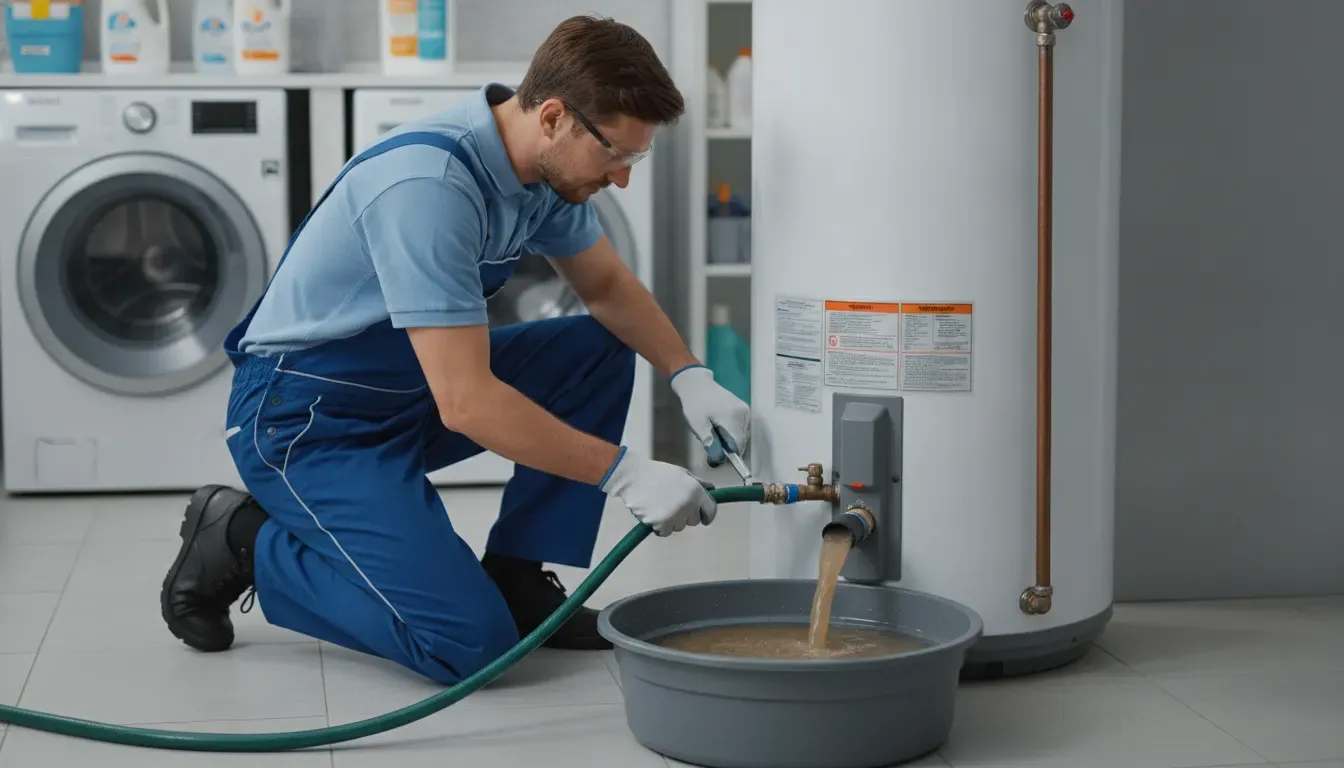
What Does a Professional Water Heater Flush Include?
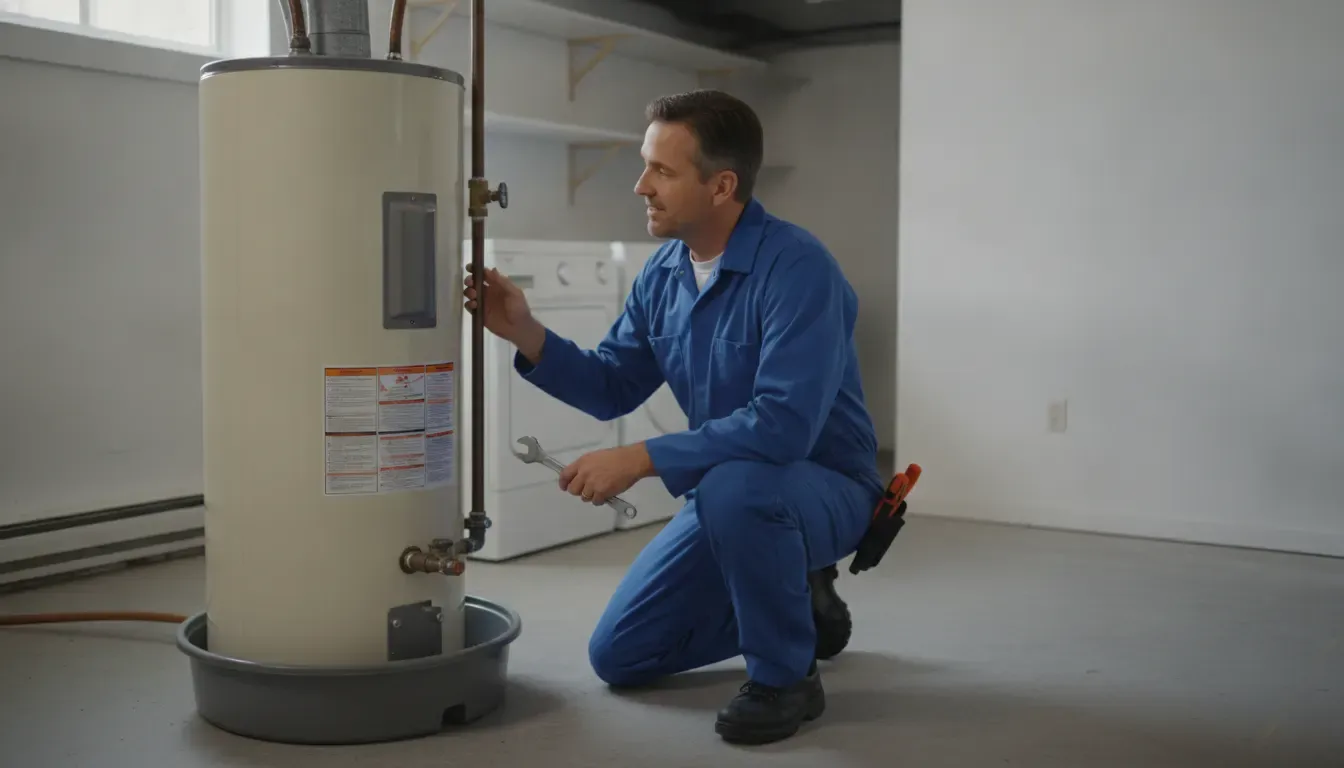
A professional flush begins with identification and safety checks, continues with controlled draining and sediment removal, and ends with a careful refill and restart. The exact sequence changes for gas, electric, and tankless equipment. A licensed plumber follows the equipment instructions and confirms the heater is operating normally before leaving the system in service.
- Identify the heater and review its condition. The technician confirms whether the home has a storage-tank heater or a tankless unit. For a tank model, the review covers fuel type, approximate age, visible condition, leakage, corrosion, venting, wiring, and the drain valve. A structural leak or heavy scale may require repair planning instead of routine flushing.
- Isolate heat and water safely. The heat source and water supply are handled in the correct order for the equipment. Gas controls, electric elements, and manufacturer instructions require different considerations. A professional also reviews nearby fixtures and the home’s plumbing layout.
- Control the drain and inspect the discharge. The service hose is routed to an appropriate drain or controlled container. The technician observes discoloration, sediment, and flow rate. Weak flow can indicate a restricted valve, compacted sediment, or another condition that needs attention. A. O. Smith guidance describes flushing as more than simply emptying the tank.
- Rinse the tank and confirm clear flow. Controlled water flow loosens and carries out remaining sediment. The process may need more than one rinse cycle. The technician avoids forcing a valve or connection that shows signs of failure and explains when heavy deposits limit the value of routine flushing.
- Refill, restore heat, and check operation. The system is refilled and checked for leaks before the heat source is restored. The technician confirms that the tank is full, controls respond, and hot-water delivery returns without unusual noise or visible discharge. Mr. Pipey then explains whether continued maintenance, repair, or replacement planning is appropriate.
Can You Flush a Tankless Water Heater the Same Way?
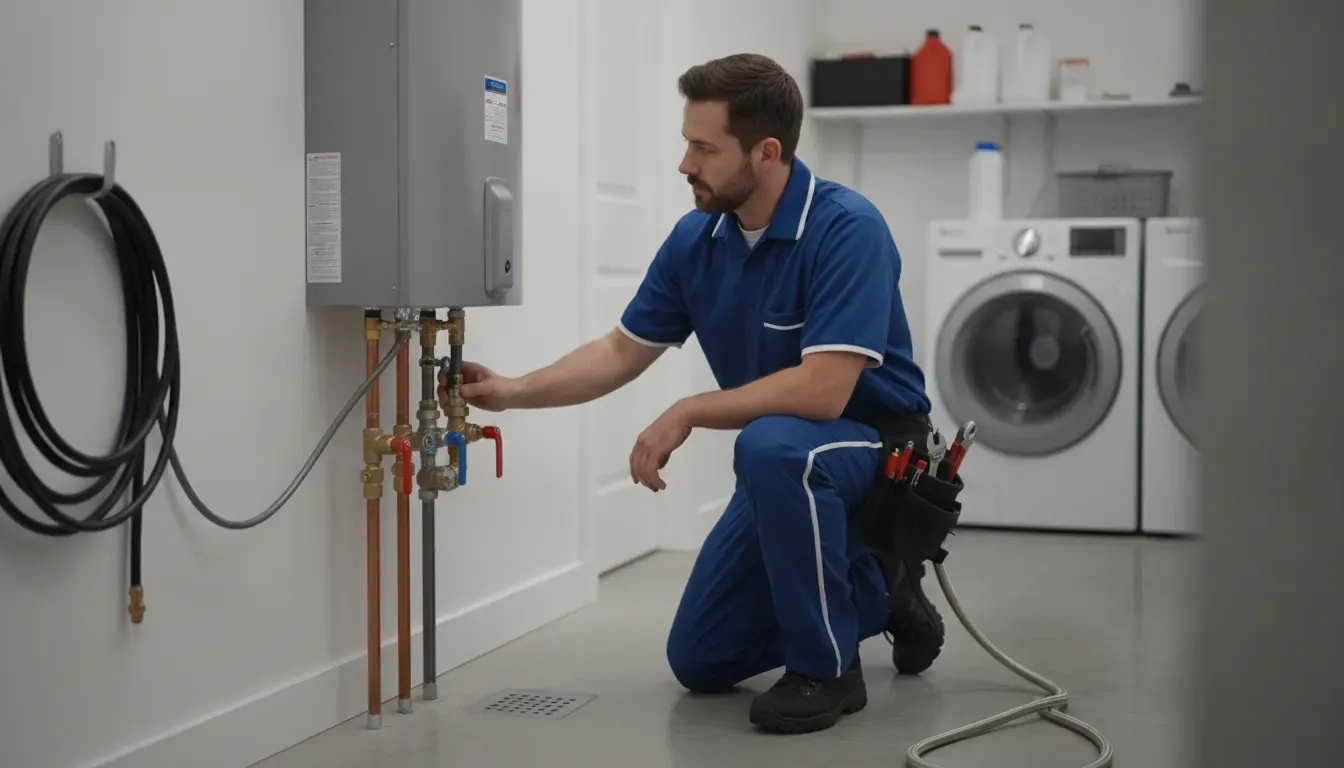
No. A tankless water heater does not store a large volume of hot water in a tank, so its maintenance service uses isolation valves, service ports, hoses, and a manufacturer-specific cleaning sequence. Tankless flushing is best handled by a qualified professional when the installation, valves, or instructions are unfamiliar.
Tankless equipment can collect mineral scale inside the heat exchanger. The procedure may circulate an approved cleaning solution through the isolated unit and then rinse the system thoroughly. The exact solution, flow direction, circulation time, filter care, and restart steps vary by manufacturer and model. A tankless flush should never be improvised from a conventional tank-water-heater checklist.
For example, Rinnai’s tankless flushing guidance calls for following the product manual and using the unit’s valves and purge ports correctly. Rheem and other manufacturers publish their own instructions. The equipment manual is the authority for the specific heater, while a licensed plumber can confirm whether the installation has the required service valves and whether the job can be completed safely.
| System type | What maintenance focuses on | Why the method differs |
|---|---|---|
| Conventional gas tank | Sediment removal, drain flow, burner and venting observations, leak checks | The tank stores hot water and uses combustion. Heat and refill sequencing matter. |
| Conventional electric tank | Sediment removal, element-area condition, drain flow, leak checks | Electrical heating elements must not be energized before the tank is full. |
| Tankless heater | Heat-exchanger scale removal, isolation valves, service filters, full rinse | The unit requires model-specific service ports, flow direction, and restart steps. |
How Often Should a Warren Home Have Its Water Heater Flushed?
There is no single interval that fits every Warren home. Maintenance timing depends on the heater type, age, usage, water conditions, manufacturer guidance, and previous service history. An annual review is a practical starting point for many households, but a licensed plumber should adjust the recommendation after seeing the equipment and the sediment condition.
A home with several occupants and high hot-water demand may place more use on the heater than a lightly occupied home. A system with a history of popping sounds, slow recovery, or visible sediment may need evaluation sooner than a newer heater that has been maintained consistently. If the manufacturer sets a specific service interval, that guidance should be part of the maintenance plan.
Calendar timing is less useful than observable system information. Keep the heater model and service history available, note changes in hot-water performance, and ask the technician what was found during the last visit. Mr. Pipey can help a Warren homeowner turn that information into a reasonable maintenance schedule without promising that flushing alone will prevent every future repair.
What Signs Mean a Water Heater Needs Professional Attention?
A water heater deserves professional evaluation when performance changes are persistent, water appears around the tank, the unit makes repeated popping or rumbling sounds, or the drain and safety components do not behave as expected. These signs do not identify one guaranteed cause, but they help determine whether routine maintenance is still appropriate.
- Slow hot-water recovery: The heater takes longer than usual to provide usable hot water after normal household use.
- Repeated popping or rumbling: Sediment may be affecting heat transfer, although other conditions can also create noise.
- Rust-colored or cloudy discharge: Sediment, corrosion, or connected plumbing conditions may need inspection.
- Water around the tank: A leak can involve a connection, valve, drain, or the tank itself, and the source should be identified before flushing.
- Unstable temperature: Inconsistent hot water can point to a control, element, burner, mixing, or flow problem.
- A drain valve that will not flow or close: Restricted flow and a valve that continues to drip can turn a routine service into a repair decision.
- A tankless error or reduced flow: Scale, filter restriction, sensor issues, or another model-specific condition may be involved.
Mr. Pipey recommends prompt service for heaters connected to gas, heaters with damaged wiring, active leakage, or installations without a controlled drain. These situations need evaluation. They are not opportunities to force a valve or experiment with a heating control.
What Can Mr. Pipey Check During Water Heater Service?
Mr. Pipey approaches water-heater maintenance as a service and diagnosis visit, not simply a tank-draining appointment. The technician can review the heater type, visible connections, drain behavior, hot-water performance, and signs that a related plumbing issue is affecting the customer’s experience.
Depending on the equipment and observed condition, the visit may include:
- Confirming the heater type, approximate age, and manufacturer instructions.
- Reviewing reported symptoms such as noise, slow recovery, temperature changes, or visible water.
- Checking accessible supply, discharge, drain, and shutoff connections.
- Performing a controlled flush or explaining why the tank needs a different repair decision.
- Assessing whether tankless isolation valves and filters are suitable for model-specific service.
- Restoring service and checking for leaks and normal hot-water operation.
- Explaining maintenance, repair, or replacement options in plain language.
When a broader plumbing concern is present, Mr. Pipey can also help diagnose related issues through its water heater repair and replacement service. A water heater problem should not be redirected into a drain or pipe repair without evidence, but connected leaks, supply issues, and emergency conditions can be evaluated when the symptoms point beyond routine sediment.
How Does Warren Water Context Affect Maintenance Decisions?
Warren’s public water system and Great Lakes source provide useful local context, but the maintenance need at one address is determined by the home’s equipment and plumbing history. A professional looks at the heater’s actual condition rather than assuming that every Warren home has the same sediment rate, hardness exposure, or service interval.
The city’s annual report is helpful for understanding the public supply and water-quality reporting process. It should not be used to diagnose an individual water heater or to promise that one maintenance step will solve every hot-water complaint. Household plumbing materials, fixtures, temperature settings, usage, and the age of the heater all influence what a technician sees during service.
This local, evidence-based approach helps homeowners avoid two mistakes. One is ignoring a heater because a flush sounds routine when the tank is leaking or near the end of its service life. The other is assuming that a generalized hard-water claim explains every symptom. Mr. Pipey can inspect the system and recommend the next practical step. Warren homeowners can also review the company’s local Warren plumbing service information before scheduling.
Schedule a professional Warren water heater flush with Mr. Pipey.
Frequently Asked Questions About Flushing a Water Heater in Warren
How long does a professional water heater flush take?
The time depends on heater size, sediment volume, drain flow, equipment type, and whether the technician finds a valve or leak concern. A conventional tank service may be straightforward, while a restricted drain or tankless heat-exchanger service requires additional evaluation and rinse time.
Does flushing guarantee that a water heater will last longer?
No. Flushing can remove loose sediment and support maintenance, but it cannot reverse corrosion, repair a failing control, or restore a tank with structural damage. A plumber should evaluate the heater’s condition and explain whether continued maintenance, repair, or replacement planning is appropriate.
Is water heater flushing different for gas and electric units?
Yes. Both systems require safe isolation, controlled draining, rinsing, refill, and leak checks, but gas controls and electric heating elements have different service considerations. The heat source should be restored only after the system is ready and the equipment instructions have been followed.
What if a tankless water heater has no service valves?
A tankless heater without the appropriate service-valve setup may not be a candidate for a routine flush through the installed connections. A professional can inspect the installation, confirm the manufacturer requirements, and explain whether service-valve work or another maintenance approach is needed.
Can Mr. Pipey service water heaters in Warren?
Mr. Pipey serves Warren and other Metro Detroit communities with professional plumbing services. The team supports water-heater repair, replacement, and maintenance. Contact the team to discuss the heater type and symptoms before choosing a service.
Contact Mr. Pipey for professional water heater service in Warren.