
When hot water becomes unreliable, Ann Arbor homeowners often want a clear answer about replacement cost before choosing a system. The total depends on more than the heater: capacity, fuel, venting, connections, access, removal, and any required updates can change the work involved. This guide explains how much water heater replacement cost in Ann Arbor can vary and how to compare estimates based on the actual installation rather than a generic price range.
Request a water heater assessment
What affects water heater replacement cost in Ann Arbor?
A replacement proposal typically combines the equipment with labor and materials needed to remove the existing unit, install its replacement, and verify operation. Two homes choosing similar heaters can receive different estimates if one is a straightforward swap and the other needs layout, venting, or utility work. The useful question is not only what the unit costs, but what the quoted installation includes.
- System type: A conventional tank and a tankless model have different equipment and installation requirements. A change in system type can involve more than disconnecting one unit and connecting another.
- Capacity and demand: Sizing should reflect how much hot water the household uses and when uses overlap. A plumber can discuss showers, laundry, dishwashing, and the home’s peak demand rather than relying on household size alone.
- Fuel and supply: Existing gas or electrical service, water piping, and venting influence compatibility. A conversion or change in equipment may call for updates that should be described clearly in the proposal.
- Location and access: A unit in a tight closet, finished space, or difficult basement route may take more labor to remove and position than one with open access.
- Removal and disposal: Confirm whether draining, removal, hauling away the old heater, and cleanup are included.
- Permits and installation conditions: Applicable local requirements and the observed setup may call for additional work. Ask the provider to identify permit and inspection responsibilities instead of assuming they are included.
Mr. Pipey’s water heater repair and replacement service can be a starting point for discussing the existing system and the installation scope. A site-specific review is more useful than treating an online range as a final quote.
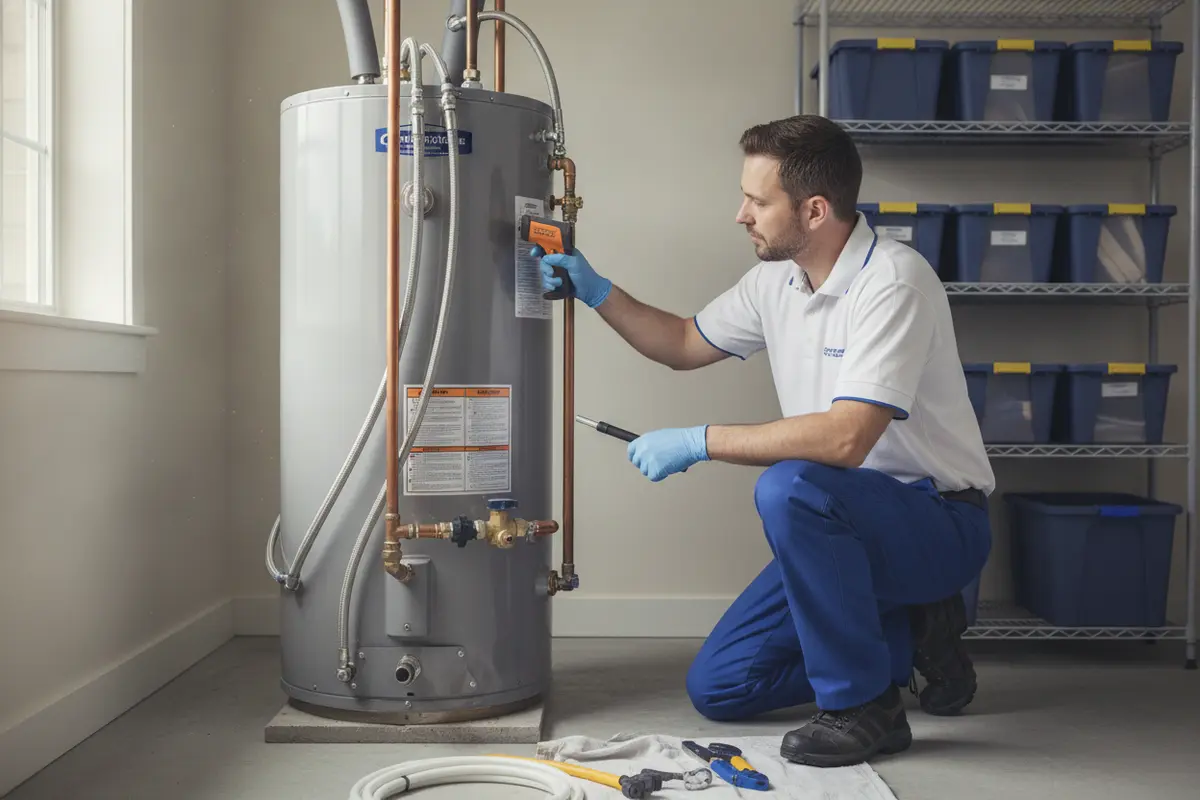
Access is worth discussing before the appointment, too. A technician may need to see the heater label, nearby shutoffs, fuel or electrical connections, vent route, and the path used to bring equipment in and out. If the unit is behind stored items or in a locked room, making the area accessible can help the assessment cover the full scope. Do not move equipment or disconnect plumbing to prepare; simply mention access limitations when booking.
How do common replacement scenarios compare?
The comparison below is a planning tool, not a price list. It shows why scope matters and which questions help distinguish one proposal from another.
| Scenario | Work that may be involved | Questions to ask |
|---|---|---|
| Similar tank replacement | Remove old unit, install comparable equipment, reconnect and test | What capacity and parts are included? Is disposal included? |
| Change in tank capacity or fuel | Equipment change and review of supply, vent, or electrical compatibility | Are connection updates included or listed separately? |
| Tank-to-tankless conversion | New sizing and layout, with possible venting or utility modifications | What conversion work is required? What maintenance applies? |
| Restricted access or existing condition issue | Additional removal or installation labor and possible correction work | What condition was found, why does it matter, and what is the separate cost? |
Request that significant items be itemized. If an estimate uses an allowance or says “as needed,” ask what could change the amount and how the contractor will get approval before proceeding. This gives you a fair basis for comparing proposals and avoids treating different scopes as equivalent.
Consider two sample proposals without assuming either total is automatically better. One might describe a comparable tank, standard removal, reconnection, and operating checks, while leaving disposal or permit handling unclear. A second may list a higher total but specify those items and include a connection update. Put both scopes into the same categories, then ask the first provider to clarify the missing details and the second to explain why the update is needed. Only after that can you compare like with like.
Should you choose a like-for-like water heater replacement?
Replacing a tank with a similar type can be a sensible starting point when the current arrangement serves the household well and the connections remain suitable. It may keep the scope comparatively familiar. But reproducing the old setup is not automatically the right answer. Household routines may have changed, and an older installation may not match current needs or preferences.
Before settling on an option, ask the plumber to consider:
- How much hot water does the household use during its busiest period?
- Does the proposed capacity and recovery performance suit that pattern?
- Can the existing fuel supply, venting, and connections support the proposed unit?
- Are there visible installation or condition issues to address during the work?
- What is included, excluded, or subject to confirmation after removal?
For example, a household whose morning showers overlap with laundry may have a different peak-use profile from a household that spreads those activities through the day. The assessment should connect that routine to the recommended equipment rather than assuming that matching the old label is sufficient. Ask for the reason behind a size recommendation and how it affects both household use and the installation scope.
It is also useful to separate desired upgrades from required corrections. A proposal may include work that improves the layout or changes the system, as well as work needed to make the installation compatible. Ask which items are essential to the chosen equipment, which are optional preferences, and whether there are alternate compliant configurations. Clear distinctions make the decision more manageable.
What can make a tankless conversion different?
A tankless heater warms water as it is needed instead of storing a tank of heated water. The installation is not necessarily a simple substitute for a tank. System sizing, fuel demand, venting, and the route for water connections all need to fit the house and the selected equipment. The purchase price alone cannot show whether a conversion is a good comparison.
Ask for the conversion scope in plain language. A complete explanation should identify the equipment being proposed, its sizing basis, any changes to venting or utilities, removal of the old unit, and work related to the new layout. Ask what routine care the manufacturer calls for and whether the proposal includes the steps needed to commission and test the system. These details help compare total installed cost and future obligations, not just the unit.
Compare tankless water heater service with the conventional water heater replacement option in terms of household demand, installation scope, and care. A professional assessment can explain which requirements apply to the particular home; the best fit depends on the equipment and site, not a general claim that one type is always less expensive.
How can you compare water heater estimates fairly?
Collecting proposals is most useful when each provider is asked to address the same points. A lower starting amount may leave out disposal or connection work that another estimate includes. A higher proposal may specify a different system or more complete scope. Use a consistent checklist and ask for unclear terms to be explained before choosing.
- Equipment type, manufacturer, model, fuel, and capacity.
- Removal, disposal, and cleanup of the existing heater.
- Labor and materials, including water, gas, electrical, or vent changes if applicable.
- Permit and inspection responsibilities, if applicable.
- Startup, testing, and an explanation of normal operation.
- Equipment warranty and any workmanship coverage stated in the proposal.
- Exclusions, provisional items, and conditions that could change the scope.
- Expected schedule, access needs, and any preparations requested of the homeowner.
For a practical comparison, place the proposals side by side and mark each line as included, excluded, or unclear. Then ask the provider to resolve unclear items in writing. If one estimate lists a new vent and another does not mention venting, do not assume the proposals cover the same work. Ask whether the difference reflects the equipment, a site condition, or a different assumption.
Likewise, ask how changes are handled if an unexpected condition appears after the existing unit is removed. The contractor should explain the finding, the proposed response, and any price impact before additional work is authorized. This is especially important where the visible setup does not reveal the full condition of a connection or route.
A simple comparison worksheet can make a phone or follow-up conversation more efficient. Put the proposed system and capacity at the top. List removal, disposal, connection work, permits, testing, warranty details, exclusions, and timing down the side. For each provider, write “included,” “not included,” or the exact question that remains. Do not leave a blank cell to mean included. A blank is an unanswered question, not a promise.
Which installation requirements should you verify?
Hot-water equipment is connected to a home’s fuel or electrical supply, water piping, and, depending on the system, venting. The installation must suit the selected appliance and applicable requirements. Rather than trying to infer compliance from a product description, ask the contractor how the proposed setup will be assessed and what permits or inspections apply to the work.
The U.S. Department of Energy is a government source for energy information; its official website is a starting point for broader energy topics. Use reliable general information to frame questions about system choices, not as a substitute for a site assessment or local code review. For the installation itself, ask who will confirm applicable requirements and whether permit and inspection steps are included in the written scope.
Useful questions include whether the existing supply can serve the proposed equipment, whether venting or electrical work is anticipated, and what start-up checks will be completed. If the answer depends on opening or removing existing components, ask how that uncertainty will be handled and when you will receive a revised scope for approval. A reliable proposal should distinguish confirmed work from items that need verification.
Make sure the final proposal identifies who is responsible for coordinating any required permit or inspection. Do not assume the homeowner or contractor is handling it based on a verbal conversation. If a permit is not expected, ask the provider to explain that assumption for the proposed work. The goal is not to interpret code independently; it is to make sure responsibilities and steps are clear before the installation date.
How should you prepare for a water heater assessment?
A focused assessment connects the home’s hot-water needs to installation conditions. Before the appointment, note any recurring issue, such as inconsistent hot water, long waits, or a change in household use. You do not need to diagnose the equipment; a clear description of what happens and when helps the plumber evaluate the situation.
Make the area accessible if practical, and be ready to explain how many fixtures are commonly used at once. Mention whether the household expects changes, such as an additional bathroom or a different occupancy pattern. Share any previous repair or replacement information you have, but let the professional verify the equipment and connections rather than relying on memory alone.
During the review, ask the technician to explain the current system, options under consideration, and any constraints that affect placement or installation. A useful proposal should identify the recommended system and capacity, the work included, exclusions, and any questions that remain unresolved. If replacement is not the only appropriate option, ask how repair compares in scope and what each path addresses. Mr. Pipey’s water heater service information describes the service category for that conversation.
Before the visit, gather only the information already available to you: the age or model if known, a previous invoice, and a description of when the issue occurs. If you do not know the model or age, that is fine; the technician can inspect the equipment. You can also prepare a short list of questions, such as whether the estimate includes old-unit removal, what assumptions depend on post-removal inspection, and what operating instructions will be provided after installation.
After the assessment, read the written estimate once for the recommended equipment and again for what is excluded. If the proposal has alternatives, ask for a concise explanation of the tradeoff in equipment, installation work, and future care. Confirm the estimate is for the home’s observed setup and not only a preliminary range based on a brief description. These steps make the conversation useful without requiring you to diagnose or select the equipment yourself.
What does a water heater replacement quote need to show?
A clear quote lets you understand the equipment, the work, and the assumptions behind the amount. Look for a description of the proposed heater, the reason it suits the home, and a line-by-line scope for removal and installation. If a price is presented as a package, ask for a written explanation of what it covers and what is outside it.
It can help to sort the estimate into four groups:
- Equipment: system type, model or specification, capacity, and included components.
- Standard installation: disconnection, removal, placement, reconnection, and operating checks.
- Site-specific work: any changes to venting, supply, piping, access, or location.
- Administrative and follow-up items: permit responsibilities, inspection coordination, warranty documentation, and maintenance information.
Not every quote will use those exact labels, but the categories make omissions easier to spot. Ask whether taxes, disposal, and cleanup are included if those details are not stated. Confirm that the proposed system matches the discussion about capacity and household demand. If a contractor recommends a different configuration from another provider, compare the reasoning and the work needed to support it, not just the total.
Keep a copy of the written proposal and any revisions. Before work begins, confirm the final equipment and scope, the expected schedule, who will handle permits where applicable, and how additional work will be approved. Clear documentation makes it easier to understand both the price and the responsibilities involved.
It is reasonable to ask for unfamiliar terms to be explained in plain language. “Allowance,” “standard installation,” and “subject to site conditions” can mean different things in different proposals. Ask what is covered by each term, what would cause the scope to change, and whether the provider will pause for approval before proceeding with extra work. The written response can prevent a misunderstanding later.
Keep the final version of the estimate with any written clarifications. If the selected model changes or a site condition changes the work, request an updated scope before authorizing the revision. A good record includes the agreed equipment, amount, inclusions, exclusions, and next steps. This is a practical way to make the cost understandable even when no generic online figure can accurately represent the home.
Schedule a water heater consultation
Frequently asked questions
How much does water heater replacement cost in Ann Arbor?
There is no single reliable amount for every home. Equipment type and capacity, access, connections, venting, removal, and any necessary updates affect the scope. A site-specific assessment is needed for a meaningful estimate.
Does tankless replacement always cost less?
No. A tankless conversion may involve different sizing, venting, or utility work than a similar tank replacement. Compare complete installed proposals and the work each includes.
Can a contractor give a quote without seeing the installation?
A preliminary conversation can narrow down options, but final scope may depend on connections, access, and existing conditions. Ask whether a written amount is preliminary or confirmed after an in-person review.
What should I confirm before approving the job?
Confirm equipment and capacity, removal and disposal, included labor and materials, anticipated connection work, permits where applicable, warranty details, exclusions, and the approval process for added work.
Should I repair or replace my water heater?
The answer depends on the unit’s condition, the issue, household needs, and the scope and cost of available options. A plumber can assess the system and explain how repair compares with replacement.
For a useful replacement estimate, start with an assessment of the existing system and a written scope that separates equipment, installation, and any additional work.