When hot water becomes less dependable, Farmington Hills homeowners often want to know whether the heater is nearing the end of its service life or simply needs attention. The answer depends on the unit type, condition, installation, water use, and maintenance history. If you are asking how long does a water heater last in Farmington Hills, start by identifying whether you have a storage-tank or tankless model, then compare its age with its current performance.
Contact Mr. Pipey to schedule a water heater evaluation
As a broad planning estimate, many conventional tank water heaters serve for roughly 8 to 12 years, while tankless models often have a longer expected service life, commonly around 15 to 20 years. These are ranges, not expiration dates or guarantees. A well-maintained unit may operate beyond a typical range, while an individual heater can need repair or replacement sooner. The model, installation, and actual condition matter more than age alone.
This guide explains what those ranges mean, which conditions influence service life, and how to make a considered repair-or-replacement decision. A licensed plumber can inspect the system and explain its condition and options without relying on age as the only factor.
How long does a water heater last in Farmington Hills?
For a conventional storage-tank heater, the common planning range is about 8 to 12 years. A tankless heater may often last about 15 to 20 years, though service needs and component life vary by model. Use these ranges to plan questions and budgeting, not as a promise about a specific unit.
To estimate your heater’s age, check its documentation or model information and ask a plumbing professional to help identify the unit if the label is unclear. The installation date may be on a service record or receipt. A manufacture date can help, but it does not always match the date the unit was installed. If records are missing, a technician may be able to identify a likely age range from the model information, while making clear what is and is not known.
Age becomes more useful when considered with performance and condition. A ten-year-old tank heater with reliable hot water and no signs of leakage may merit a different recommendation from a younger unit with corrosion, repeated faults, or inconsistent output. Likewise, a tankless heater’s longer planning range does not mean it will never need service. Components, venting, controls, and the installation all affect the evaluation.
| Heater type | Typical planning range | What to keep in mind |
|---|---|---|
| Conventional storage tank | About 8–12 years | Tank condition, age, installation, and maintenance history are important. |
| Tankless | About 15–20 years | Longer expected service life does not remove the need to assess components and maintenance. |
These ranges describe common expectations rather than a specific guarantee. Warranty terms, the manufacturer’s instructions, and an in-person inspection can help establish what applies to your unit. For general information about water-heating systems and energy use, see the U.S. Department of Energy.
What affects a water heater’s service life?
Two heaters of the same age can be in very different condition. Service life depends on how a unit was selected and installed, how much hot water the household uses, the condition of the water and plumbing, and whether recommended maintenance has been performed. A professional evaluation can bring these factors together rather than treating the date on the label as the full answer.
- Heater type and design: Tank and tankless systems have different components and maintenance needs. A tankless system’s longer typical range does not make it a direct replacement choice for every home.
- Household demand: The frequency and volume of hot-water use can affect wear and whether a system can keep up with household needs. A growing household or changed routine can expose capacity limitations without proving the heater is at the end of its life.
- Installation quality: Correct sizing, connections, venting where applicable, and adherence to manufacturer instructions affect safe, dependable operation. Concerns about past installation are worth raising during an inspection.
- Water and plumbing conditions: Mineral content and other water characteristics can contribute to deposits or affect components. Conditions vary between properties, so an evaluation should account for the specific system rather than assume every home has the same issue.
- Maintenance history: Following the maintenance guidance for the particular unit can help identify developing issues and support reliable operation. The appropriate service differs by model; a plumbing professional can explain what applies.
- Prior repairs: A clear record of repairs, parts replaced, and recurring symptoms helps show whether the system has had an isolated problem or a pattern that changes the repair-versus-replacement discussion.
These considerations are related. For example, a unit that struggles to serve a busy household could be undersized, experiencing a repairable issue, or aging. The symptoms alone may not distinguish among those explanations. Inspection and a clear description of when the issue occurs help narrow the possibilities. Keep model information, installation documents, and repair records together when available; they help a plumber assess the history and explain what can be established.
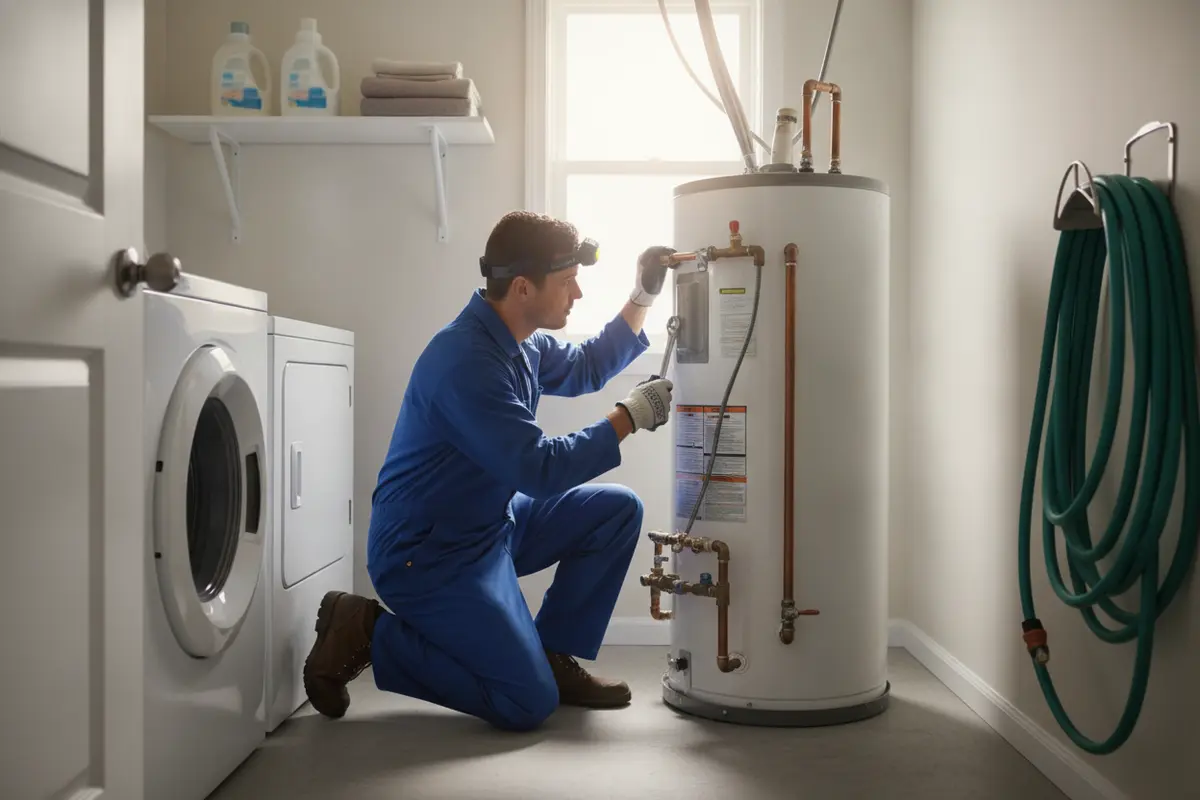
Which signs suggest a water heater needs attention?
A change in performance is a reason to pay attention, but it does not automatically mean the heater must be replaced. Note what has changed, how often it occurs, and whether it affects one fixture or the whole home. Share these observations with a licensed plumber so the cause can be assessed.
- Hot water runs out sooner: A shorter supply can relate to household demand, settings, a component problem, or the heater’s capacity. A professional can check which explanation fits the equipment.
- Temperature varies: Water that fluctuates or does not reach the expected temperature may point to a control, heating, or system issue. The pattern and model help guide diagnosis.
- Unusual sounds: New or persistent noises from a tank can be worth having checked. A sound by itself does not determine the cause or mean replacement is necessary.
- Visible moisture or corrosion: Dampness around the unit, a connection, or nearby piping should be assessed to locate its source. Moisture at the heater does not always mean the tank itself has failed.
- Discolored hot water: A change in appearance should be evaluated in context. Note whether it occurs at multiple fixtures and whether cold water looks different. See our overview of why hot water may look discolored.
- Recurring service calls: Repeated issues or repairs on the same system may change the value of another repair. A history of what was diagnosed and corrected is useful during the next assessment.
If there is active leaking, an electrical concern, or another condition that appears unsafe, keep people away from the affected area and seek qualified help promptly. Do not rely on appearance alone to diagnose the system or attempt a repair beyond your expertise. When water flow or a suspected plumbing leak is part of the concern, professional leak detection and plumbing leak service may be relevant.
How should you monitor an aging water heater?
Monitoring does not mean trying to predict an exact failure date. It means keeping enough information to recognize a pattern and discuss it clearly with a professional. The most useful record is simple: note the date, the symptom, how long it lasted, and whether it returned. For example, “hot water was inconsistent at the upstairs bath twice this week” is more helpful than a general note that the heater is acting strangely.
Keep any service findings with the unit’s model information. If a component was repaired, record what work was completed and whether the original symptom stopped. When a similar issue returns, those details can help distinguish a recurring concern from a separate event. They also make it easier to evaluate whether the recommended next step addresses the known problem or whether more assessment is needed.
For a household planning a replacement in the future, the record can help organize a timely conversation before the unit becomes an urgent decision. An older heater that continues to work reliably may simply call for periodic professional review and a budget discussion. A newer unit with a significant change still deserves diagnosis. The goal is a measured plan based on condition and household needs, not replacement based on a calendar date alone.
Maintenance should follow the manufacturer’s instructions and the needs of the specific equipment. Do not assume that a procedure appropriate for one model applies to another. Ask the plumber what maintenance is recommended, how often it is appropriate, and whether the service history suggests a specific concern. This gives you a practical baseline for future comparisons without substituting guesswork for an inspection.
How do tank and tankless water heaters differ over time?
The expected service-life difference is one part of the comparison, but it should not be the only one. A tank heater stores heated water. A tankless system heats water as it is needed. Their space requirements, installation needs, service considerations, and fit with a household differ. The best choice depends on the property and goals, not just the longer typical lifespan associated with one type.
When comparing systems, ask a plumber to explain the condition of the current unit, whether it can be repaired, and what a replacement would require in your home. A conversion from one type to another may involve additional planning; it is not simply a like-for-like swap in every installation. Discuss household hot-water demand, current connections, venting or electrical requirements as applicable, and the manufacturer’s maintenance recommendations.
If your home already has a tankless system, a longer expected service life should not delay evaluation of persistent faults or performance changes. A licensed professional can assess the system and explain whether service, repair, or replacement is appropriate. Learn more about tankless water heater service when that system type applies.
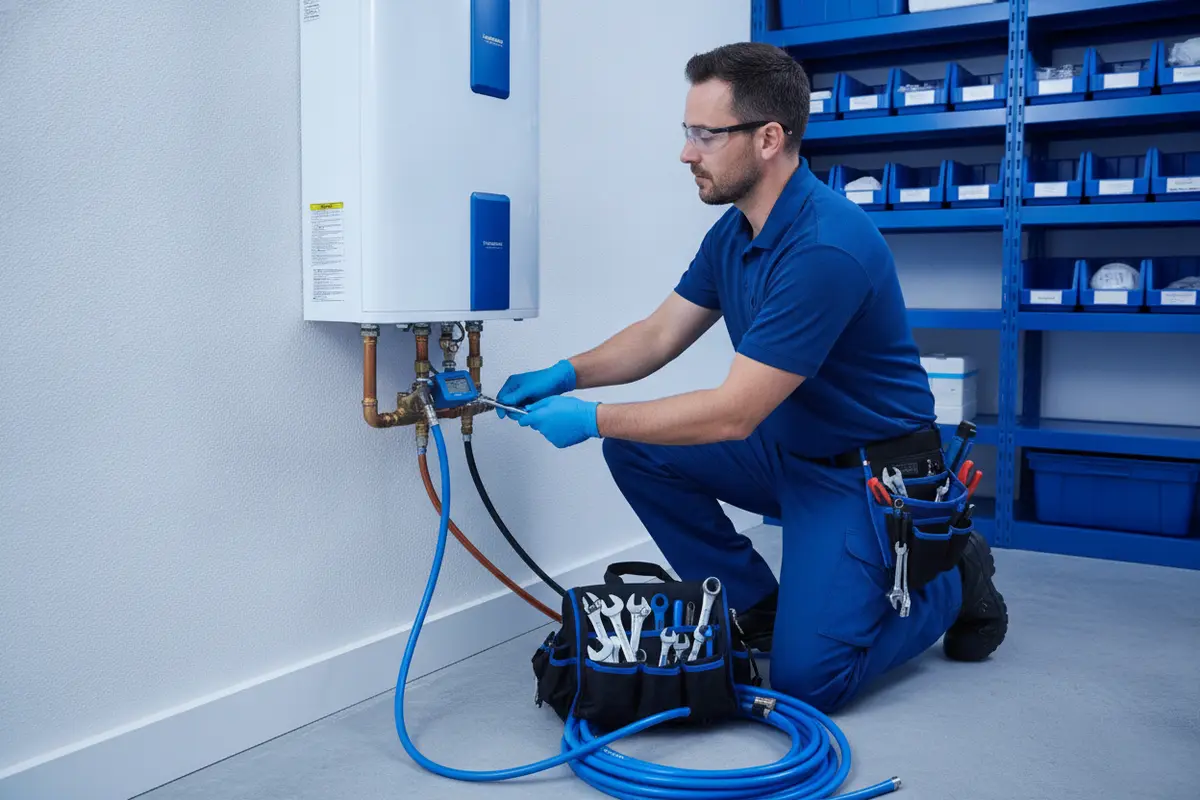
Should you repair or replace an aging water heater?
There is no single age at which every water heater should be replaced. The decision usually balances the unit’s condition, expected reliability, repair scope, available replacement options, and the homeowner’s plans. A professional inspection can clarify what is known before you choose a path.
Repair may be worth discussing when the issue is clearly identified, the rest of the system is in sound condition, and the proposed work is appropriate for the unit. Replacement may deserve closer consideration when the tank is leaking, the unit has recurring faults, repairs are becoming frequent, or the heater no longer meets household needs. These are factors to discuss, not automatic rules: the source and extent of a problem must be confirmed.
Ask the plumber to explain the diagnosis in plain terms and compare the practical options. Helpful questions include:
- What part or condition is causing the current symptom?
- Is the tank or heat exchanger itself affected, or is the issue limited to a serviceable component or connection?
- What repair is recommended, and what should I expect it to address?
- Given the unit’s age and history, are there other conditions that could lead to service needs?
- If replacement is appropriate, which system types fit the home and why?
- What work is included in the estimate, and what conditions could change the scope?
- What maintenance does the manufacturer recommend for the proposed system?
Clear estimates help compare options fairly. Consider the stated work and system fit, not just an isolated price or a generalized lifespan figure. A replacement that does not match household demand or the property’s installation conditions may not address the reason the current system is unsatisfactory. Ask which findings support each option, what the work includes, and whether additional installation requirements are expected. A written explanation gives you a useful basis for comparing recommendations.
Which situations can change the replacement timeline?
Two homeowners with heaters of the same age can reasonably make different plans. A household that is remodeling, changing occupancy, or adding a new hot-water demand may need to review system capacity even if the existing heater still operates. That is a fit question, not necessarily evidence that the unit has failed. A professional can help separate the question of current condition from the question of whether the system meets future needs.
Likewise, a homeowner who expects to stay in the property for many years may prefer to compare replacement options before a major issue forces a quick decision. Someone preparing for a near-term move may weigh the same findings differently. Neither circumstance changes the heater’s physical condition, but both can inform the timing and scope of a practical plan.
A repair history also changes the discussion. One clearly diagnosed, resolved issue is different from multiple recurring problems with uncertain causes. Ask whether a recommendation responds to the present symptom only or addresses an established pattern. If the heater is still functioning and no immediate concern is identified, an agreed monitoring plan may be reasonable; if the evaluation finds a condition that needs prompt attention, follow the professional guidance specific to that finding.
How can Farmington Hills homeowners plan for water heater service?
A simple record makes it easier to plan. Keep the model information and installation paperwork if available, note the date of repairs, and record recurring performance changes. If you do not know the unit’s age, say so; a technician can help identify what the available information establishes.
- Identify the system: Note whether it is a storage tank or tankless model and gather any service or installation documents.
- Describe the change: Record when the symptom began, how often it happens, and whether it affects the whole home or particular fixtures.
- Request an evaluation: Ask for the diagnosis, the condition of the unit, and repair and replacement options when both are relevant.
- Compare the scope: Review what each option addresses, any installation considerations, and the recommended maintenance for the system.
- Keep the service record: Save the written findings and completed work details to make future decisions more informed.
When the concern includes a plumbing leak or a shutoff issue, explain where water is visible and whether it is ongoing. Mr. Pipey also provides water valve service; the appropriate service depends on what the evaluation finds. If the issue is urgent, review the company’s emergency plumbing service information.
Homeowners comparing a unit repair with replacement can also review water heater repair and replacement service. A service page is a starting point for understanding the available help; a plumber still needs to assess the actual equipment and installation.
What should you expect during a professional evaluation?
A useful assessment begins with your account of the problem and the heater’s history. The plumber can identify the model and type, check relevant components and connections, and evaluate the reported symptoms. The exact inspection depends on the system and concern; ask the technician to explain any limitations or additional checks that may be needed.
At the end, you should understand the findings, the recommended next step, and the alternatives that apply. If repair is offered, ask what it addresses and whether there are known concerns elsewhere in the system. If replacement is discussed, ask how the proposed unit fits your household and property. For water heater repair or replacement in a specific home, an on-site review is more informative than relying on a broad lifespan estimate.
Mr. Pipey is a family-owned and operated plumbing company serving Metro Detroit. Its plumbing professionals can explain the condition they observe and the options that fit the situation. No assessment can guarantee the exact remaining service life of a heater, but a clear inspection can help you make a better-informed plan.
Request a professional water heater assessment
Frequently Asked Questions
Can a water heater last longer than its typical range?
Yes. A typical service-life range is a planning guide, not a fixed deadline. Some units operate longer, while others need service or replacement sooner. Condition, maintenance, installation, water use, and system type all matter.
Does a water heater have to be replaced when it reaches ten years old?
No. Age alone does not establish that replacement is necessary. Have the unit’s condition, performance, repair history, and household needs assessed before deciding.
Does a tankless water heater always last longer?
Tankless systems commonly have a longer expected service-life range than conventional tank heaters, but no individual unit is guaranteed to reach a particular age. Model, installation, maintenance, and operating conditions affect actual service life.
What if I do not know when my water heater was installed?
Check available receipts or service records and share the model information with a plumber. A manufacture date may not be the installation date, so the exact age may remain uncertain. The system’s current condition can still be evaluated.
Is rusty or discolored hot water proof that the heater needs replacement?
No. Discoloration is a symptom to investigate, not a diagnosis. Note whether it occurs at one or several fixtures and whether cold water is affected, then ask a plumbing professional to assess the likely source.
In Farmington Hills, a water heater’s age is a useful planning detail, but its condition and performance are what guide the next step. When hot water changes or a unit approaches a typical service-life range, a professional evaluation can clarify whether repair, replacement, or continued monitoring makes sense.