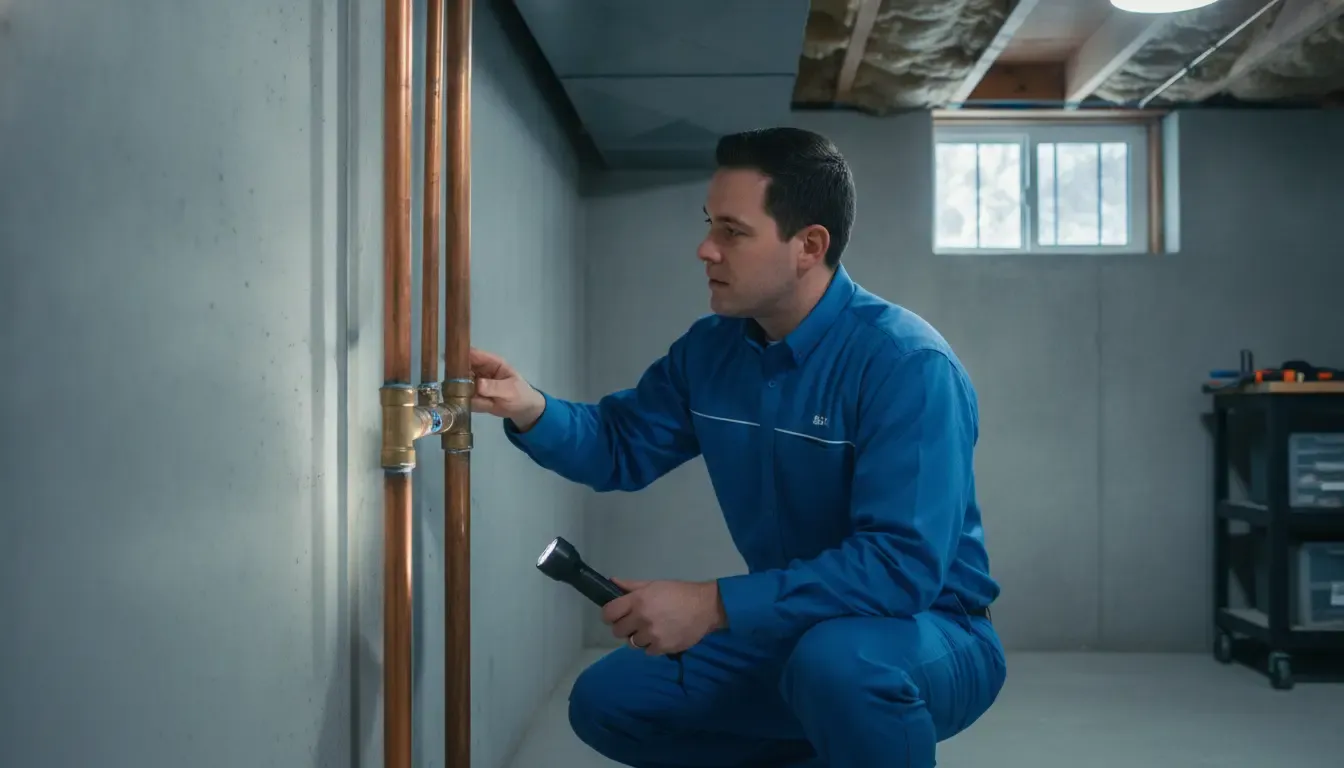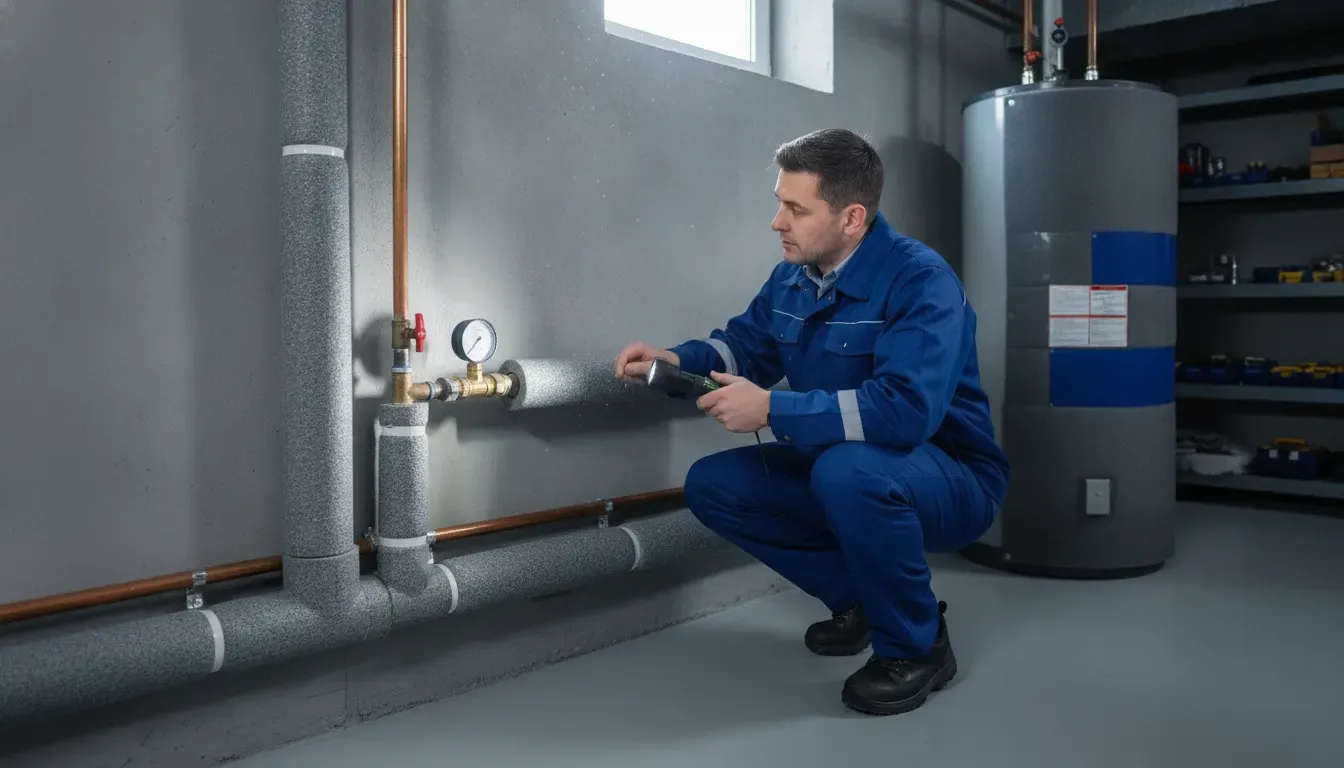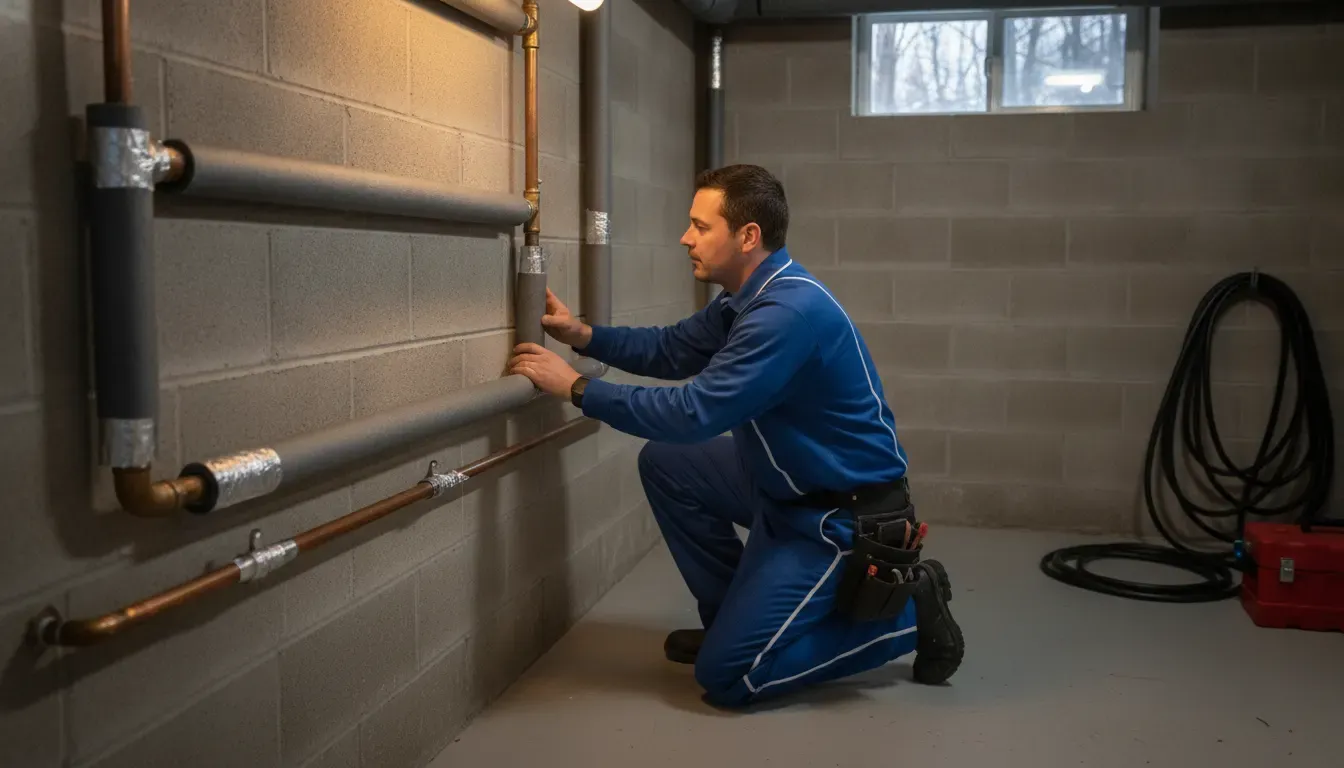

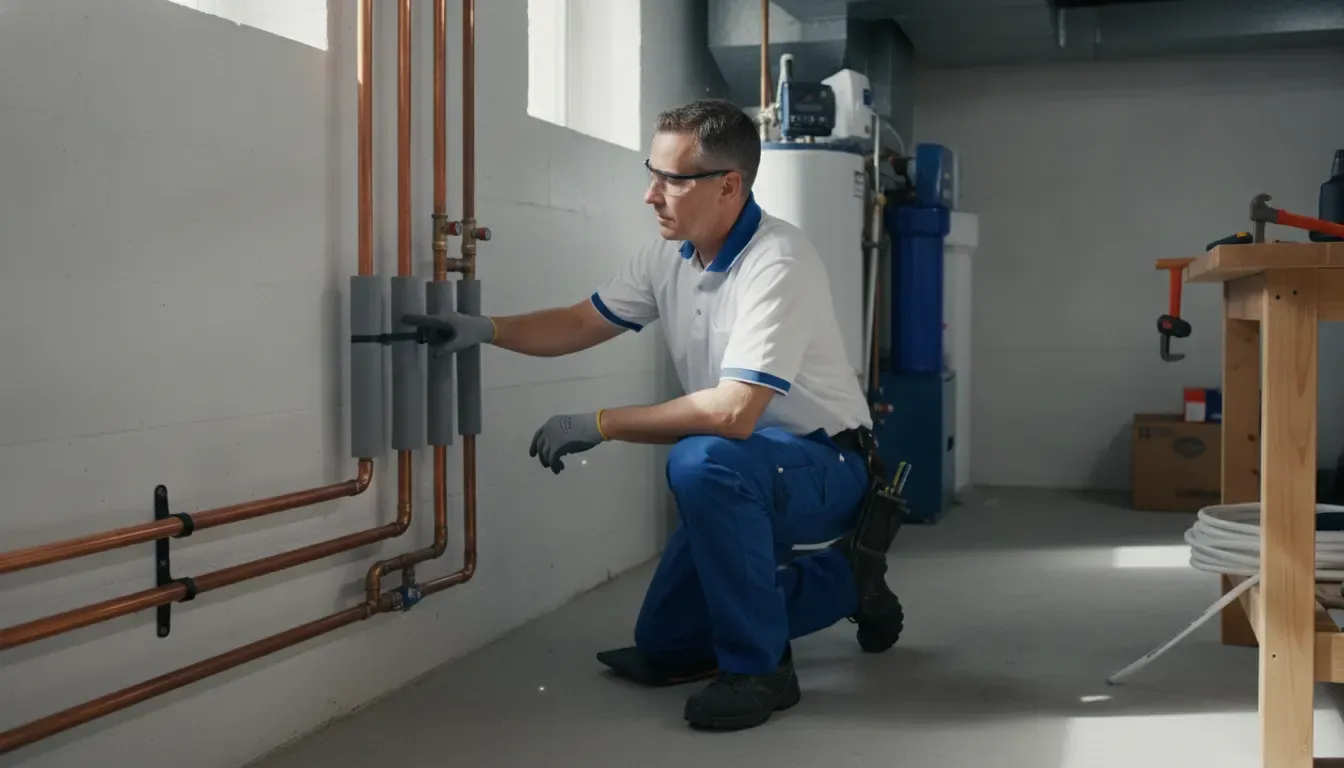
If you are asking, do I need pipe insulation in Ann Arbor, you may be looking at a cold basement, an attached garage, or an exterior wall. You may also have a water line that seems too close to outside air. Ann Arbor homes experience repeated periods of freezing weather, but every plumbing system responds differently. A heated interior line does not have the same exposure as a pipe in an unconditioned crawlspace or a drafty utility area.
The practical answer is that insulation is most valuable on water pipes exposed to sustained cold, drafts, or heat loss. It can slow heat transfer, help protect vulnerable supply lines, and reduce heat loss from hot-water piping. It is not a universal substitute for reliable heat, air sealing, pipe repair, or professional winterization. The right decision depends on the location and condition of the plumbing in your home.
Contact Mr. Pipey for a professional pipe insulation assessment in Ann Arbor.
Do I Need Pipe Insulation in Ann Arbor?
Many Ann Arbor homes benefit from pipe insulation, but the strongest case is for plumbing that passes through areas where indoor heat is limited. That includes unheated garages, crawlspaces, attics, unfinished basements, exterior wall cavities, and utility spaces exposed to drafts. Pipes serving outdoor faucets also deserve attention because part of the line can remain close to the exterior even when the fixture is inside the home.
Insulation is less urgent for a water line that is fully inside a consistently heated area and already has adequate protection. Even then, a professional review may identify a short unprotected section at an elbow, valve, foundation penetration, or connection. A small gap can matter when the rest of the pipe is protected and the coldest point becomes the weak link.
This is why a blanket recommendation is less useful than a location-based assessment. The goal is not to cover every visible pipe without considering the surrounding conditions. The goal is to find the sections most likely to lose heat, confirm that the plumbing is sound, and choose a protection approach that fits the space.
Mr. Pipey’s pipe insulation service is the relevant next step when you want the exposed sections of your home’s plumbing reviewed by a professional.
Why Does Pipe Insulation Help Protect Ann Arbor Plumbing?
Water inside a pipe gradually exchanges heat with the surrounding air, framing, masonry, and other surfaces. In a warm interior room, that exchange may not create a problem. In a cold garage, crawlspace, attic, or exterior wall, the surrounding environment can draw heat away more quickly. Pipe insulation adds a layer of resistance that slows this transfer.
Slowing heat loss gives the water in a vulnerable line more time to remain above freezing during a cold period. It does not create heat and it does not guarantee that a pipe cannot freeze. If the surrounding space stays cold long enough, or if a strong draft reaches the line, insulation alone may not provide enough protection. It works best as part of a complete evaluation that considers heat, air movement, building conditions, and pipe location.
Insulation can also serve a different purpose on hot-water pipes. By reducing heat loss between the water heater and the fixture, it can help preserve water temperature in the distribution system. Cold-water lines may benefit where condensation is a concern, especially when a cold surface could contribute to moisture around the pipe. The appropriate material and coverage depend on the pipe, the environment, and the intended function.
Which Plumbing Locations Should Ann Arbor Homeowners Prioritize?
The pipe itself is only part of the assessment. The surrounding space often determines how quickly the line loses heat. A professional should pay particular attention to these locations:
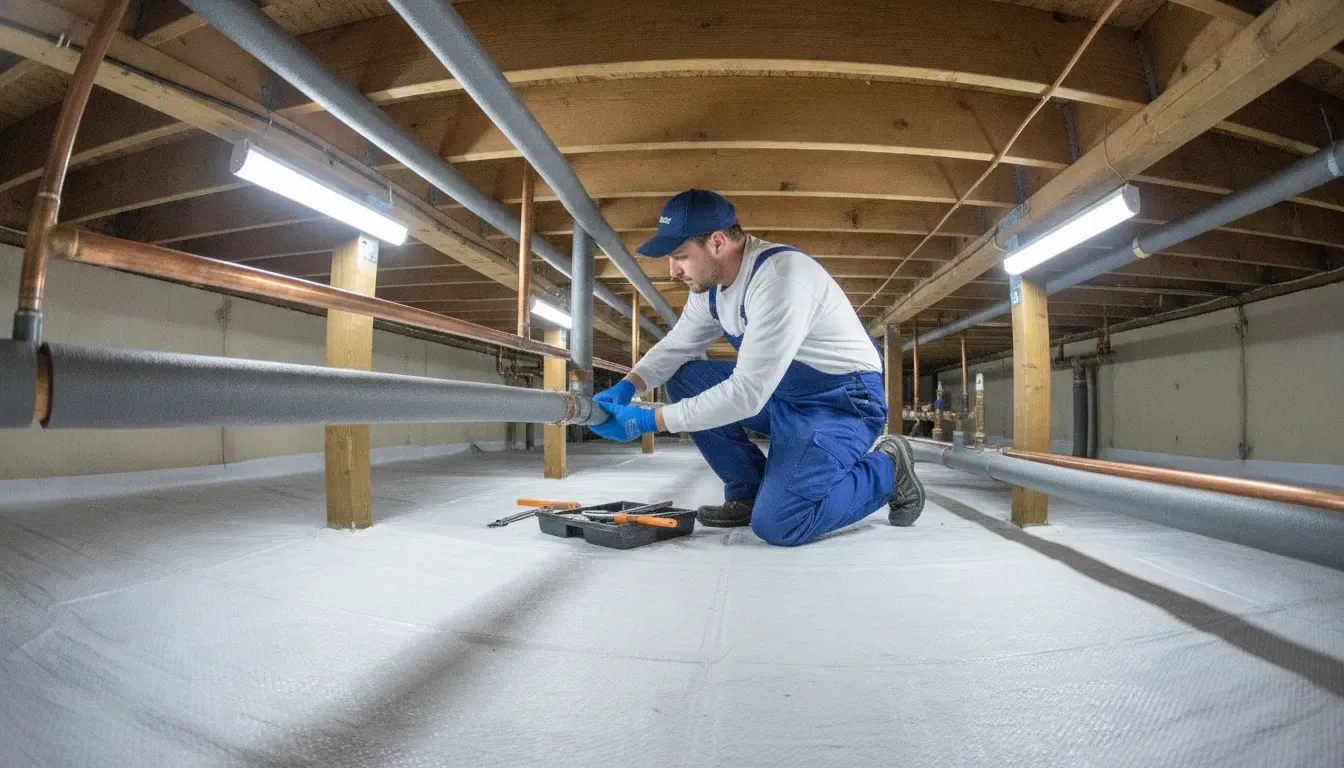
- Unheated crawlspaces: Long supply runs may sit below the heated living area, where cold air and limited insulation can affect the pipe for hours.
- Attached garages: Water lines serving a laundry area, sink, bathroom, or outdoor fixture may pass through a space that is not maintained at indoor living temperatures.
- Exterior walls: Plumbing near an outside wall can be affected by cold surfaces, incomplete wall insulation, and limited circulation behind cabinets.
- Unfinished basements: Pipes near rim joists, foundation openings, windows, and vents may be exposed to drafts or colder surfaces.
- Attics and additions: Plumbing in areas separated from the main heated envelope can require a closer review before the coldest part of winter.
- Outdoor faucet supply lines: The interior section leading to an exterior connection can be vulnerable if it is not properly isolated from winter conditions.
- Valves, elbows, and penetrations: Short fittings and openings are easy to overlook when insulation does not continue across the complete vulnerable run.
The American Red Cross guidance on frozen pipes identifies unheated basements, crawlspaces, attics, garages, cabinets, and exterior walls as common areas of concern. Those locations are useful starting points, but a home-specific inspection still matters because construction, heating, and plumbing layouts vary.
Does Ann Arbor Weather Make Pipe Insulation More Important?
Ann Arbor weather can move from mild conditions to a sustained freeze, so a pipe that seems fine during a daytime check may face a very different environment overnight. The length of the cold period, wind moving through a crawlspace or garage, and the amount of heat reaching the pipe all influence the outcome. Outdoor temperature is useful context, but it is not a complete measurement of the temperature at the pipe.
The State of Michigan recommends insulating pipes in crawlspaces and attics, sealing openings that allow cold air to reach plumbing, and protecting lines connected to outdoor faucets. Its frozen-pipe prevention guidance also emphasizes that both copper and plastic pipes can be damaged by freezing conditions. For service-specific help, review Mr. Pipey’s frozen-pipe service information.
For Ann Arbor homeowners, the most useful question is not whether every pipe needs the same treatment. It is whether a specific section sits in a space that can become cold enough, long enough, to threaten the plumbing. A basement supply line surrounded by stable indoor heat may have a different need from a line routed through an attached garage or near an exterior foundation opening.
Homes that have experienced a frozen line before deserve extra attention. So do homes with a heating interruption, a recurring draft, a new addition, a poorly insulated crawlspace, or a pipe route that has never been reviewed. These conditions do not prove that a pipe will freeze, but they make a professional evaluation more useful than relying on a general rule.
Can Pipe Insulation Reduce Hot-Water Heat Loss?
Freeze protection is the reason many homeowners first consider insulation, but hot-water efficiency is another legitimate use. The U.S. Department of Energy’s Building Science Education resource explains that heat loss from uninsulated hot-water distribution piping can be significant. In its cited building research, distribution heat loss ranged from 16% to 23% depending on climate, and adding three-quarter-inch pipe insulation reduced overall water-heating energy use by 4% to 5% annually.
Those figures describe modeled and research conditions, not a promise for every Ann Arbor home. Actual results depend on pipe length, water use, the water heater, temperature settings, circulation, the surrounding space, and the quality and continuity of the installation. The point is that insulation can address both winter protection and unwanted heat transfer when it is applied to the right lines. Learn more about Mr. Pipey’s pipe insulation service before scheduling an assessment.
The same resource explains that hot-water supply pipes should be insulated and that cold-water pipes may also need insulation where condensation is a factor. Read the Department of Energy guidance on pipes in exterior walls for the building-science context. A plumbing professional can determine whether the priority in your home is freeze protection, heat retention, condensation control, or a combination.
Insulation should also be compatible with the environment. Damp locations, exposed fittings, cramped access, and areas near heat-producing equipment all affect the recommendation. A material that works well in one part of a home may not be the appropriate choice in another. That is one reason a professional service focuses on the complete pipe run rather than a single visible section.
When Is Pipe Insulation Not Enough?
Insulation is a protection layer, not a repair for an existing plumbing defect. If a line is leaking, corroded, cracked, poorly supported, or already damaged by freezing, the condition of the pipe should be addressed before protection is treated as the solution. Covering a damaged line can make future inspection more difficult and may leave the underlying problem unresolved.
Insulation may also be insufficient when cold air is entering through a foundation opening, wall cavity, vent, door, or other gap. In that situation, the surrounding conditions can continue to remove heat from the plumbing. A complete review may need to consider air movement, nearby building insulation, access to the space, and the reliability of the home’s heat.
Some highly exposed locations may need more than insulation during severe weather. The appropriate approach depends on the plumbing design and the manufacturer’s requirements for any supplemental protective system. Homeowners should not improvise around electrical, combustion, or heat-producing equipment. A professional can identify the safer path and explain which work is appropriate for the property.
If water flow changes during a freeze, a faucet stops supplying water, or moisture appears near a pipe, treat the situation as a plumbing concern rather than assuming the line only needs a covering. The American Red Cross recommends professional help when a frozen pipe is suspected and warns against unsafe thawing methods. Prompt diagnosis can distinguish a restriction from a split pipe or another source of water damage.
What Should a Professional Pipe Insulation Assessment Check?
A useful assessment should answer more than whether insulation is visible. It should connect the plumbing layout to the conditions around it. A licensed plumbing professional may review:
- Pipe location: The assessment identifies supply lines in crawlspaces, attics, garages, exterior walls, unfinished basements, and other areas outside consistent heated space.
- Exposure and airflow: Drafts, openings, vents, doors, foundation penetrations, and cold surfaces are considered because they can increase heat loss.
- Continuity of protection: The review checks whether insulation covers the vulnerable run and addresses fittings, valves, elbows, and connections rather than stopping at the easiest visible point.
- Pipe condition: Leaks, corrosion, damaged sections, unsupported runs, and prior freeze damage should be identified before an insulation recommendation is finalized.
- Purpose of the insulation: Freeze protection, hot-water heat retention, condensation control, and contact protection can require different considerations.
- Access and safety: Tight crawlspaces, damp areas, heat sources, electrical equipment, and other site conditions affect what can be completed safely.
This process gives the homeowner a more useful answer than a generic statement that all plumbing should be insulated. It also helps prioritize the sections where professional work can provide the most practical value.
Ask Mr. Pipey which pipe insulation approach fits your Ann Arbor home.
How Does Professional Pipe Insulation Differ From a Quick Wrap?
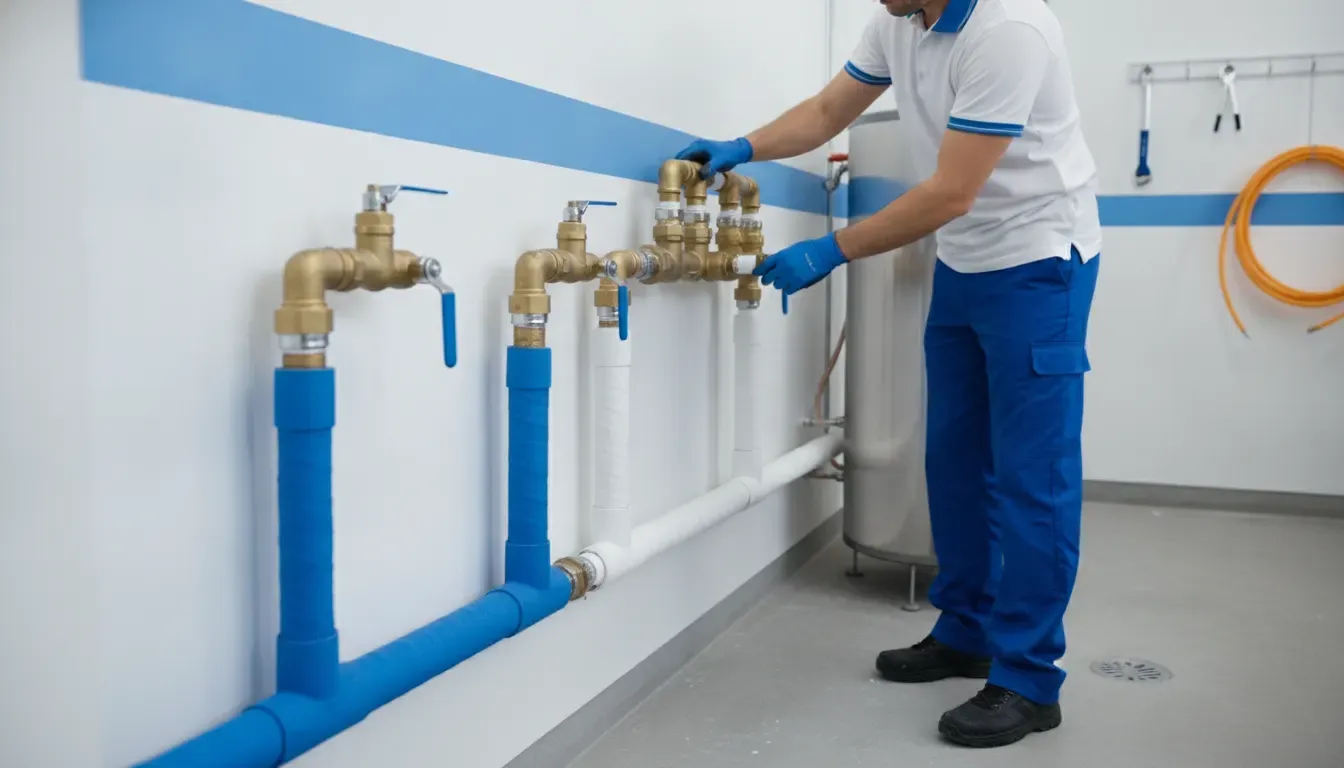
A quick wrap may cover the most accessible part of a pipe while leaving the actual exposure point untouched. Professional pipe insulation service starts with the location and condition of the plumbing. The technician can trace where a line travels, identify the colder sections, and determine whether nearby gaps or building conditions affect the recommendation.
Professional work also accounts for continuity. A protected straight section does not fully address a vulnerable elbow, valve, connection, or penetration if those points remain exposed. The correct material, fit, thickness, moisture resistance, and placement depend on the pipe and environment. Coverage should support access for future service instead of concealing important components without a plan.
Safety is another difference. Some insulation materials and supplemental products have installation limits near heat-producing equipment, electrical components, damp areas, or combustible materials. A trained professional can work within those constraints and avoid treating a product label or a general online instruction as a substitute for an inspection.
For homeowners, the benefit is a system-level recommendation. You can learn which sections need attention, whether repair or air sealing should come first, and how insulation fits into the broader winter plan. That is more dependable than choosing a material based only on a visible pipe diameter or a single cold day.
Is Pipe Insulation Worth It for Your Ann Arbor Home?
Pipe insulation is often worthwhile when it addresses a clearly exposed or inefficient part of the plumbing system. The decision becomes easier when the conditions are organized by exposure and purpose:
| Home condition | Why insulation may help | Best next step |
|---|---|---|
| Supply lines in an unheated crawlspace | Cold air can draw heat from the pipe during a prolonged freeze. | Arrange a professional exposure and continuity assessment. |
| Plumbing along an exterior wall | Cold surfaces, limited circulation, and gaps can increase heat loss. | Review the pipe, wall conditions, and nearby penetrations together. |
| Hot-water lines with long distribution runs | Insulation may reduce unwanted heat loss before water reaches fixtures. | Ask a professional to evaluate the distribution layout and condition. |
| Visible insulation that is damaged or incomplete | Gaps around fittings or short exposed sections can remain vulnerable. | Have the full run checked instead of covering only the visible gap. |
| Fully heated, well-protected interior plumbing | The benefit may be limited if the line has no meaningful cold or heat-loss exposure. | Confirm the surrounding conditions before investing in additional work. |
| Prior freezing, recurring drafts, or a heating interruption | Past or ongoing exposure suggests the system deserves closer review. | Schedule an assessment before the next severe cold period. |
The table is a decision framework, not a substitute for seeing the plumbing in place. Two homes on the same street can have different pipe routes, additions, crawlspace conditions, and heating patterns. A professional assessment keeps the recommendation tied to the actual home.
When Should You Schedule Pipe Insulation in Ann Arbor?
The best time to evaluate vulnerable plumbing is before the most severe cold arrives. Scheduling early gives a professional time to inspect difficult areas, identify repair needs, and address gaps before a prolonged freeze puts stress on the system. Waiting until water flow changes can turn a preventive question into an urgent service call.
Consider arranging an assessment before winter if your home has an unheated garage, crawlspace, attic plumbing, exterior-wall supply lines, a recent addition, a history of frozen pipes, or noticeable drafts near plumbing. It is also reasonable to request a review when you are buying an older home, renovating a room, or changing how a utility area is heated.
During an active cold period, pay attention to unusual changes in water flow, damp areas, unexplained moisture, or a fixture that stops working normally. Do not use an open flame to thaw a line. If you suspect a frozen or burst pipe, a licensed plumber can determine the safest response and whether the line needs repair before insulation is added.
Schedule a professional pipe insulation evaluation for your Ann Arbor home.
Frequently Asked Questions About Pipe Insulation in Ann Arbor
Does every water pipe in an Ann Arbor home need insulation?
No. The strongest need is usually on lines exposed to unheated spaces, drafts, exterior walls, or significant heat loss. A professional can identify which sections need protection and which already have adequate surrounding conditions.
Can pipe insulation prevent a pipe from freezing?
It can slow heat loss and extend the time before a vulnerable pipe reaches freezing conditions, but it cannot guarantee protection during every cold event. Reliable heat, sound plumbing, and control of drafts also matter.
Should hot-water pipes be insulated too?
They may be. Insulation can reduce heat loss from hot-water distribution piping, while cold-water insulation may be useful where condensation is a concern. The right recommendation depends on the pipe and its environment.
What if a pipe has already frozen?
Do not assume that thawing solves the problem. A professional should check for a split, leak, pressure damage, or another plumbing issue and explain the safest next step for the home.
Is pipe insulation the same as frozen-pipe repair?
No. Insulation is preventive protection. Frozen-pipe repair addresses an existing restriction, split, leak, or related plumbing failure. Mr. Pipey can help.
Contact Mr. Pipey to protect your Ann Arbor plumbing before winter weather arrives.