

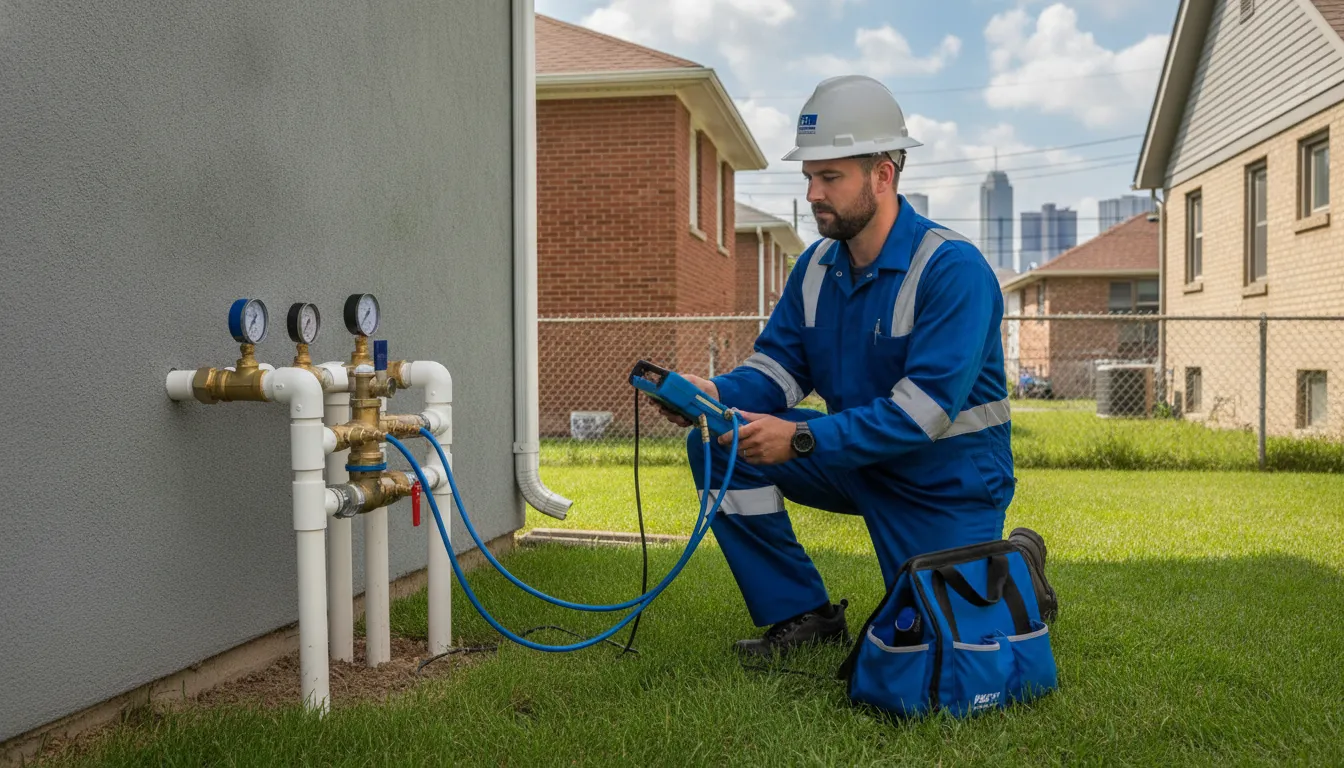
Detroit homeowners must test their plumbing systems every year to keep wastewater out of the fresh supply. This check prevents dirty water from flowing backward into your faucets and showers.
Backflow preventer testing is a yearly task that keeps your home water supply safe from waste and germs by checking the one-way valves in your pipes. These devices stop dirty water from irrigation lines or pools from flowing back into your drinking water pipes when city water pressure levels suddenly drop.
According to the Environmental Protection Agency, about 5% of homes have a backflow event of one gallon or more each year due to pressure issues. Expert testing shows that the inner parts and ports seal tight under pressure to find small flaws before they let bacteria reach your kitchen sink faucet.
These regular checks are the only way to protect your family from toxins that can enter your clean water supply through a faulty plumbing cross-connection.
Protecting your family starts with knowing how your plumbing system works. You may need professional backflow preventer testing services to ensure your water stays clean. Understanding What Is Backflow and Why Does It Matter? is the best way to stay safe. The path begins with
What Is Backflow and Why Does It Matter?
Backflow is a term that describes water flowing the wrong way through your pipes. In a good plumbing system, water should only move from the city main into your home. But when pressure changes, water can reverse its path. This reversal pulls dirty liquids, like waste or lawn chemicals, back into your clean drinking water supply. The Environmental Protection Agency (EPA) notes that backflow is a serious health risk that can harm an entire area.
How cross-connections cause flow reversal
The main cause of this issue is a cross-connection. This is any spot where your clean water pipes touch a source of dirty water. Common spots include your garden hose, lawn sprinklers, or a boiler. If the city water pressure drops, it creates a suction effect. This pulls dirty water from these tools back into your kitchen and bathroom sinks. Knowing these risks is why most people use professional backflow preventer testing services to check that their safety tools work well.
Common causes of pressure drops
Pressure changes in the main water line can happen fast and without warning. A fire hydrant in use or a water main break can cause the pressure to fall. When the pressure in the public system is lower than the pressure in your home, the water flow flips. This simple physics problem turns a safe plumbing setup into a threat. To stop this, your home uses a tool that acts as a one-way gate to block the reverse flow of water.
Why backflow is a real risk for homes
Many homeowners think backflow only happens at big plants or car washes. But research shows it is common in houses too. One study found that 5% of homes have a backflow event of at least one gallon each year. Because these events are often small, you might not see that the water is bad until someone gets sick. Yearly tests are the best way to make sure your plumbing is safe from these hidden risks.
Detroit Backflow Preventer Testing Requirements
Safe water in Detroit depends on more than just the treatment plant. Every home and business must keep their pipes safe from cross-connections. The Detroit Water and Sewerage Department (DWSD) runs a program to find and fix these risks. They work to stop dirty water from flowing back into the city main. Under Michigan law and the local plumbing code, most property owners must install and maintain backflow assemblies. These devices keep your drinking water pure by stopping the reverse flow of waste or chemicals.
DWSD cross connection program
The city takes water safety very seriously. DWSD often uses a group called HydroCorp to help with their cross-connection program. HydroCorp conducts free inspections for homeowners to check for high-risk areas like lawn sprinklers or pool fillers. If you have questions about an inspection notice, you can call them at 313-343-1768. These experts look at both the inside and outside of your home. They want to ensure that any device meant to protect your water is in good shape and works the right way.
Annual testing and code compliance
If your home has a backflow preventer assembly, you usually need an annual test. This is a rule for most municipal water systems in Michigan to stay in line with state health codes. These tests prove that the internal valves are still holding tight against back pressure. A failing device could let contaminants into your home or the public supply. At Mr. Pipey, we help local owners meet these Detroit requirements. Our team knows the local codes and handles all the paperwork for you. We also offer Detroit commercial backflow testing for business owners who need to meet strict industrial standards.
Why regular inspections matter
A backflow preventer is a mechanical device with moving parts. Over time, seals can wear out and springs can lose their strength. This is why regular backflow preventer testing is so important for every property. One small leak in a check valve can put an entire neighborhood at risk if the city water pressure drops. A quick annual check by a pro keeps your family safe and keeps your home in good standing with the city. We make the process simple so you never have to worry about water safety or city fines.
Who Needs Backflow Preventer Testing?
Annual backflow preventer testing is a legal rule for many property owners in Detroit. Most local towns require these tests to keep public water safe from dirt. If you own a building with a high risk of cross-connections, you must ensure your device works. According to the EPA, all public water systems should have plans to stop these risks.
Requirements for Detroit homeowners
Many homeowners think they do not need testing, but some features make it a must. If you have a lawn sprinkler system, you likely have a backflow tool that needs a yearly check. These systems can pull plant food or poisons back into your home pipes if water pressure drops. Backflow preventer testing ensures the valves seal tight and block these items.
Homeowners with swimming pools or outdoor ponds also need regular testing. These water features often have direct lines to the main water supply. Even a garden hose left in a bucket of soapy water can create a risk. A Water Research Foundation study found that 5% of homes have a backflow event each year. This is why Mr. Pipey provides professional backflow preventer testing services to families in Metro Detroit.
Commercial and industrial properties
Businesses face strict rules for backflow prevention. Commercial buildings often use fire sprinkler systems that hold old water. Without a working device, this water could flow back into the city lines. Large boilers and industrial lines also present big risks. Our team helps local shops and plants stay in line with the plumbing code.
Property managers should keep clear records of their annual tests. Most cities in Wayne and Oakland counties track these results through third-party sites. Failing to file a passing test can lead to fines or water shut-offs. If your business needs a check, our Detroit commercial backflow testing guide offers more tips on local rules.
Properties with high-risk fixtures
You may also need testing if your property has special plumbing tools. This includes medical offices with dental chairs or labs with sink sprayers. These tools use chemicals that cannot mix with drinking water. Tall buildings with water pumps are another common case. These pumps can change pressure and cause water to flow the wrong way.
Reduced Pressure Zone vs Double Check Valve Assemblies
Two main types of backflow preventers are used in Metro Detroit properties. Each serves a different risk level and follows its own testing protocol. Knowing which type you have helps you understand the testing requirements and costs involved.
| Feature | Reduced Pressure Zone (RPZ) | Double Check Valve Assembly (DCVA) |
|---|---|---|
| Best for | High hazard applications (chemicals, sewage). | Low hazard applications (water only). |
| Tests required | Both check valves plus a pressure relief valve. | Both check valves only. |
| Common locations | Commercial kitchens, hospitals, and labs. | Lawn irrigation and residential fire sprinklers. |
At Mr. Pipey, we treat every customer like family. We provide clear pricing with no extra charges for our visits. Whether you have a small home system or a large commercial setup, we ensure your water stays clean and safe. Our certified team is ready to help you meet all local safety standards today.
How Professional Backflow Preventer Testing Works
A backflow test is a quick and precise way to keep your home safe. It stops dirty water from flowing back into your clean water lines. In Detroit, most testing takes about 30 to 60 minutes to finish. A trained pro will use a test kit to check your device and make sure it works right.
You need a pro who knows how to use these tools. Most experts in our area carry ASSE 5110 or ASSE 5130 certificates. These papers show they have the skills to test and fix backflow devices. Working with a certified pro helps you meet local rules and keeps your family safe from water pollution.
What to expect during the site visit
The pro starts by looking at the backflow device and the pipes near it. They look for leaks, rust, or worn parts that could cause a fail. This part of the backflow testing cheat sheet process is very important. It lets the plumber find small problems before they turn into big leaks.
After the visual check, the pro will turn off your main water valve for a few minutes. This lets them isolate the device for the pressure test. You should plan for a short time without water while the pro works. They will always tell you before they shut the water off so you are ready.
How the tester checks your assembly
The core of the work happens once the water is off. The pro connects a special test kit to the ports on your device. This kit has a gauge that shows the pressure levels inside the valves. They check each part to see if it holds tight and stops water from moving the wrong way.
- Visual check: The pro looks for cracks, rust, or old seals on the device.
- Water shut-off: They close the valves to isolate the device from your home plumbing.
- Kit hookup: The tester attaches hoses from a pressure gauge to the test ports.
- Check valve test: They test each of the two check valves one at a time.
- Records and filing: The pro fills out a form with the test results for the city.
Testing these valves one by one is key. It ensures that if one valve fails, the second one is there to protect your water. This double layer of safety is why backflow devices are so good at stopping pollution.
The final report and city filing
Once the test is done, the pro turns the water back on and checks for leaks. They will give you a copy of the test results for your own files. The Environmental Protection Agency says that regular tests are the only way to keep water systems safe. If you live in a city like Detroit, your pro will also file the report with the local water office for you.
If your device fails the test, do not worry. A pro with the right training can usually fix the seals or springs on the same day. Most fails happen because of small bits of dirt or old rubber parts. Quick repairs keep you in line with city rules and ensure your water stays clean and clear.
Common Backflow Preventer Failure Modes and Repairs
These tools work hard to keep your water clean, but they can fail over time. Parts wear out and dirt can get stuck inside. Knowing these common issues can help you find a problem before it leads to a water crisis in your home.
Why check valves fail
Check valves are the heart of your unit. They must seal tight to stop dirty water from flowing back into your pipes. One common issue is dirt from the main water line. Sand or small rocks can get caught in the valve seat. When this happens, the valve cannot close all the way. This lets water leak through and ruins the seal.
Hard water also plays a big role in these fails. Over time, minerals like lime build up on the internal parts. This scale can make the valves stick or stop a good seal from forming. The EPA states that backflow can happen when pressure drops. A stuck valve is a major risk at these times. If a valve is just dirty, a pro can often clean it to fix the issue.
Seals, springs, and freeze damage
The inside parts of your unit include rubber seals and metal springs. Rubber gets old and dry over the years. A cracked seal will leak even if the valve is clean. Springs can also lose their strength or snap after a long time. If a spring fails, it cannot hold the valve shut against back pressure.
In the Detroit area, cold weather is a big threat to these pipes. If you do not drain the water before the first freeze, the water inside will grow. This often cracks the metal or plastic body of the tool. A cracked shell cannot be fixed and needs a new unit. Good winter care is the best way to avoid this high cost and keep your water safe.
When to fix or replace
Most small fails found during professional backflow preventer testing services are easy to fix. A pro can usually swap out old seals or clean out dirt in one visit. Companies like LJ Rolls make repair kits for their units to make this work fast and keep costs low. A fix is the best choice if the main body is still in good shape.
But some problems need a full new unit to keep you safe. If both check valves fail at once, it often shows the tool is too old to trust. A cracked outer shell or a very rusty inside also means it is time for a new one. A failed test is a big deal that needs quick work. You must act fast to get your unit back in line with local health rules.
Why Certified Backflow Preventer Testing Matters
Hiring a pro for backflow preventer testing ensures your water stays safe. This test checks the tools that stop dirty water from flowing back into your pipes. Certified testers have the right training to find small leaks or weak valves. They use tools to check that your device meets the safety rules of your local city.
Compliance With Local Rules
Most cities near Detroit need you to test your backflow device every year. This rule helps keep the whole public water system clean. If you do not test, you might face fines from the water board. Some cities may even shut off your water if you miss a test. A certified tester can fill out the right forms for you to show the city you are in line with the law.
Proper Skills and Training
Testing a backflow device is not a DIY task for a homeowner. Professional testers must hold special proof of their skills. Many hold ASSE 5110 or 5130 certifications. These certifications show they know how to use a calibrated gauge to measure water pressure. The Environmental Protection Agency notes that proper testing is key to stop health risks. Only a pro has the right tools to find if a check valve has failed.
Legal Help and Peace of Mind
A certified test helps protect you if something goes wrong. If a device fails and dirty water gets into the main lines, the owner might be at fault. Having a pro test your device shows you took the right steps to stay safe. Mr. Pipey has certified testers to handle your backflow preventer testing. This gives you peace of mind that your home and your city are safe from bad water.
Frequently Asked Questions
How much does backflow preventer testing cost in Detroit?
The cost for expert backflow preventer testing in Detroit often ranges from $100 to $250 for local homes. This price covers the labor of a certified plumber and the use of special testing tools. If your device fails the test and needs parts or a full repair, the cost will increase. Mr. Pipey offers clear, upfront pricing with no overtime charges to help you plan your home budget.
Can I perform my own backflow preventer testing?
No, you cannot test your own backflow preventer because state and city codes require a certified plumber. According to Mr. Pipey, these devices must be checked by a pro who has the proper state license. The test requires special tools that measure small changes in water pressure. A homeowner does not have the training to fill out the legal forms needed by the local water department.
What happens if my backflow preventer fails the annual test?
If your backflow preventer fails the test, you must have it repaired or replaced by a plumber right away. According to the Mr. Pipey knowledge base, a faulty device cannot protect your drinking water from pollution. If you do not fix the issue, you could face fines from the city or have your water service shut off. Our team can often perform repairs on the same day to keep you safe and legal.
Do residential homes in Detroit always need a backflow preventer?
Not every house needs one, but they are required if you have systems like lawn sprinklers or a swimming pool. These setups create a high risk for dirty water to flow back into your home. The EPA warns that backflow is a serious health risk that can lead to water illness. If your home has a potential cross-connection, you must install an approved device to stay safe and follow the law.
How often should I schedule backflow preventer testing for my home?
Homeowners in the Detroit area must schedule backflow preventer testing once every year to stay in compliance with state law. Annual tests are vital because the internal seals and springs can wear out over time without any warning signs. According to the EPA, regular maintenance is the only way to ensure your water supply remains safe from harmful contaminants. Setting a yearly reminder for your inspection helps you avoid fines and protects your family health.
Ready to schedule your backflow testing in Detroit?
Ignoring your yearly backflow test can lead to big health risks and city fines. When water pressure drops, dirty water from your lawn or pool can flow back into your clean pipes. This hidden danger puts your family at risk of getting sick from bad germs. You should act now to ensure your home meets local safety codes and stays safe. Our trained plumbers provide fast testing to give you peace of mind and keep your water clean. Setting up a visit today helps you avoid costly repairs and keeps your plumbing in top shape. We handle all the forms for the city so you do not have to worry about it.
Ready to protect your home? Call (313) 900-0700 to schedule your professional backflow preventer testing in Detroit.