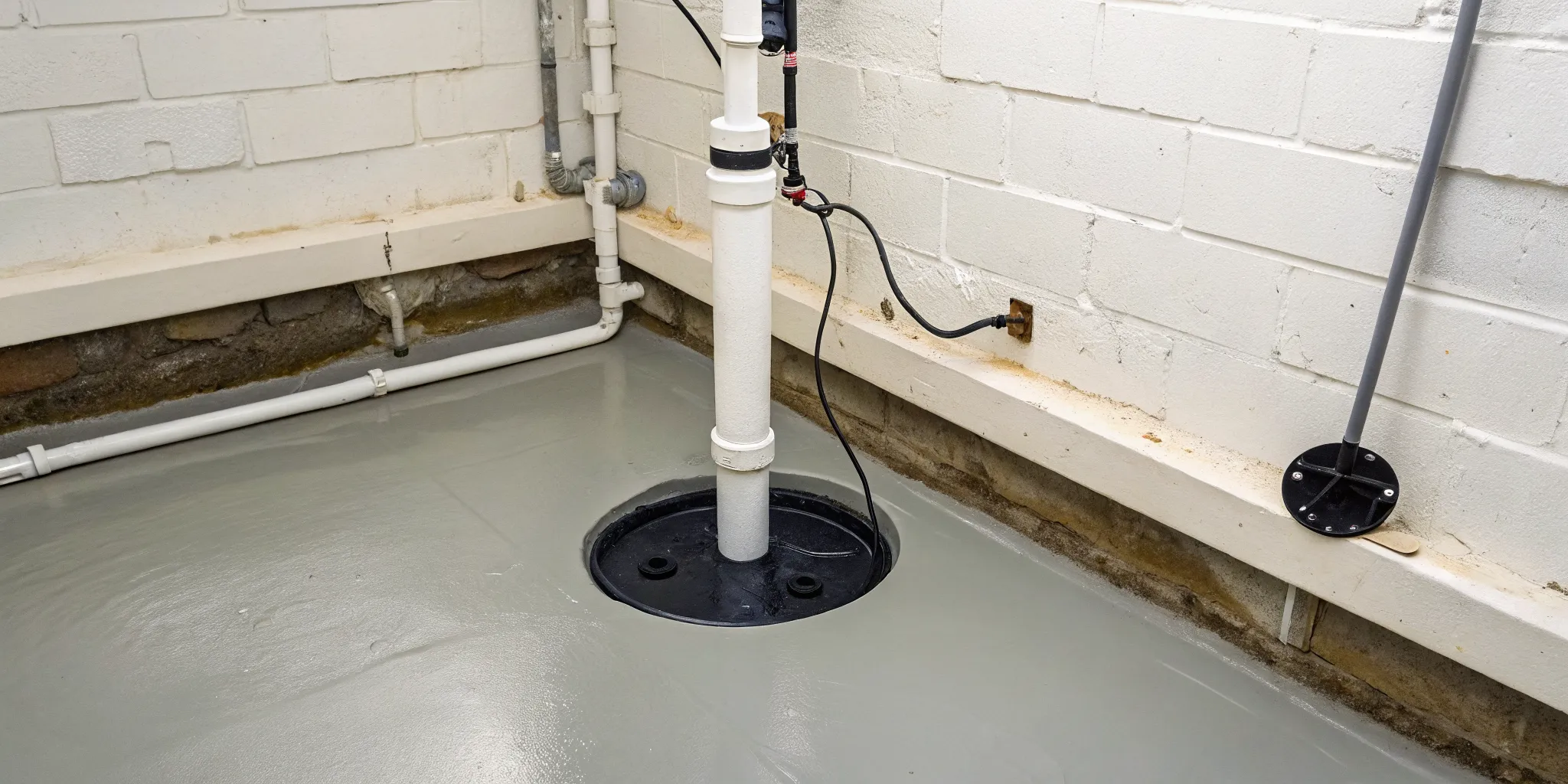


Does your Rochester Hills basement have a persistent damp feeling, even on dry days? Have you noticed chalky white lines on the concrete walls or seen small puddles appear after a storm? These are telltale signs that groundwater is pushing against your home’s foundation. Ignoring them can lead to costly structural damage and unhealthy mold growth. The good news is that there’s a straightforward solution. A sump pump system is designed to solve this exact problem by collecting and redirecting water away from your home. We’ll explore the signs you need a pump and explain how a proper sump pump installation Rochester Hills MI can turn your damp, vulnerable basement into a dry, usable space for your family.
Key Takeaways
- A Sump Pump and Battery Backup are Essential: Rochester Hills weather makes a sump pump a necessity for basement protection. Adding a battery backup system is just as important, as it keeps your pump working and your basement dry during power outages caused by heavy storms.
- Leave Installation to the Professionals: A correct installation is critical for your sump pump to work effectively. Hiring a professional ensures the right pump is selected, it’s installed to meet local codes, and you avoid common DIY mistakes that can lead to flooding.
- Perform Regular Maintenance Checks: Your sump pump needs simple, routine care to stay reliable. Spending a few minutes each month to clean the pit, test the system, and check the power source is the best way to prevent a pump failure before a storm hits.
Do I Need a Sump Pump in Rochester Hills?
If you own a home in Rochester Hills, especially one with a basement, the question of needing a sump pump is less of an “if” and more of a “when.” Our local weather patterns and soil conditions create a perfect storm for basement water issues. But how do you know for sure if your home is at risk? Let’s look at the key factors that can help you decide.
Local Weather and Basement Flood Risk
Here in Michigan, we get our fair share of heavy rain and snow. All that water has to go somewhere, and for many homes in Rochester Hills, it heads straight for the basement. Melting snow in the spring and intense summer thunderstorms can easily overwhelm the ground’s ability to absorb moisture, leading to hydrostatic pressure against your foundation. A quality sump pump is your first line of defense, actively collecting and pumping this water away from your home. It’s not just about preventing a flooded basement; it’s about protecting your foundation from cracks and stopping the growth of unhealthy mold and mildew before it starts.
The Short-Cycling Problem in Our Area
Have you ever heard of a sump pump “short-cycling”? It’s a common issue in our area that causes pumps to fail prematurely. It happens when the sump basin (the pit where the pump sits) is too small for the amount of water it receives. The pump turns on, quickly empties the few gallons of water, and shuts off, only to repeat the process moments later. This constant on-and-off action wears out the pump’s switch, which is the cause of most sump pump failures. A professional can assess your home’s specific needs and ensure you have a properly sized system to prevent this costly problem.
Telltale Signs You Need a Sump Pump
Your senses are often the best tool for detecting a water problem. If you notice a persistent musty or damp smell in your basement, that’s a major red flag. Other clear signs include visible water stains on the walls or floor, chalky white residue on concrete (efflorescence), or peeling paint. You might also feel damp, humid air or see mold and mildew growing in corners. Even small cracks in your foundation can be a sign that water pressure is building up outside. If you notice any of these issues, it’s time to contact a professional to see if a sump pump is the right solution for your home.
Submersible vs. Pedestal: Choosing Your Sump Pump
Once you know you need a sump pump, the next step is picking the right type for your home. The two main players on the field are submersible and pedestal pumps. While both are designed to keep your basement dry, they work differently and each comes with its own set of pros and cons. Your choice will likely come down to your basement’s layout, your budget, and how much noise you’re willing to tolerate.
Making the right decision now can save you a lot of headaches later, so it’s worth taking a moment to understand what sets these two pumps apart. Let’s look at how each one operates so you can feel confident in your choice.
How Submersible Pumps Work
A submersible sump pump is designed to be placed directly inside the sump pit, where it sits fully underwater. Because the motor is submerged, it’s cooled by the surrounding water, which can help extend its lifespan. The biggest advantage here is that they are incredibly quiet. If your basement is finished or used as a living space, a submersible pump is a great option because you’ll barely hear it running.
They are also tucked away and out of sight, which keeps your basement looking tidy. The main drawback is that since the pump is underwater, accessing it for maintenance or repairs can be a bit more challenging. Still, for many homeowners, the quiet operation of a submersible pump makes it the clear winner for their sump pump services.
How Pedestal Pumps Work
A pedestal sump pump works a little differently. The motor sits on top of a tall column, or pedestal, keeping it out of the water. Only an intake pipe extends down into the sump pit to draw water out. The most significant benefit of this design is accessibility. Since the motor is out in the open, it’s much easier to inspect and service. Pedestal pumps also tend to be less expensive than their submersible counterparts.
The trade-off is that they are noticeably louder and take up more floor space in your basement. If your basement is unfinished and used primarily for storage, a pedestal pump can be a very practical and budget-friendly choice. Our team can help you weigh the pros and cons of all our plumbing solutions to find the perfect fit.
Key Features to Look For
Beyond the basic type, there are a few key features to consider when selecting a sump pump. One of the most important is a battery backup system. Heavy storms that cause flooding are often the same ones that knock out your power. A battery backup ensures your sump pump keeps running even when the electricity is out, providing a critical line of defense against water damage.
You can also find combination pumps that integrate both a primary pump and a battery backup into one unit for a seamless solution. Having a reliable system in place can be the difference between a dry basement and a costly emergency plumbing situation. Investing in a backup system is one of the smartest moves a homeowner can make.
Reliable Sump Pump Brands to Consider
When you’re investing in something as important as a sump pump, you want to choose a brand known for quality and durability. While there are many options on the market, focusing on brands with a proven track record for high-performance submersible and pedestal models is always a good idea. A pump from a reputable manufacturer is more likely to stand up to the demands of our Michigan weather.
The best way to find a reliable pump is to ask a professional. With years of hands-on experience, we know which brands consistently deliver and which ones to avoid. When you’re ready to make a choice, feel free to contact us. We can recommend the perfect sump pump for your home’s specific needs and ensure it’s installed correctly.
What Does Sump Pump Installation Cost in Rochester Hills?
Thinking about a new sump pump is a smart move for any Rochester Hills homeowner, but the first question on everyone’s mind is usually, “How much will this cost?” The truth is, the price can vary quite a bit. It’s helpful to understand what goes into the total cost so you can budget accordingly and know you’re getting a fair price for a job that protects your home from water damage. Let’s break down the numbers and what you can expect.
Average Installation Costs
For a new sump pump installation in the Rochester Hills area, you can generally expect the cost to fall between $500 and $3,000. That’s a wide range, I know, but it reflects how different each home’s needs are. This price typically includes the pump itself, the labor to install it, and the basic parts needed to get it running. A straightforward replacement of an existing pump will be on the lower end of that scale. A brand-new installation in a basement that’s never had one, which requires digging a new pit, will be on the higher end.
What Affects the Final Price?
Several key factors influence your final sump pump installation cost. The biggest one is the pump itself, which can range from $150 for a basic model to over $1,500 for a high-performance unit with a battery backup. Labor costs, typically between $300 and $800, depend on the complexity of the job. If we’re just swapping out an old pump, it’s a quicker job. But if we need to dig a new sump pit, run new pipes, or work in a cramped crawlspace, the job becomes more involved. Getting a personalized quote is the best way to understand the exact cost for your home’s sump pump services.
What a Professional Installation Includes
When you hire a professional for your sump pump installation, you’re paying for more than just the physical labor. You’re investing in peace of mind. A professional service starts with an expert assessment to make sure you get the right size and type of pump for your home’s specific needs. We handle the entire installation correctly, ensuring it meets all local Rochester Hills building codes. After installation, we test the entire system thoroughly to confirm it’s working perfectly. As a family-owned company, we believe in doing the job right, so you can rest easy knowing your basement is protected from flooding.
DIY vs. Professional Sump Pump Installation
When you’re faced with a plumbing project, the first question is often, “Can I do this myself?” While I love a good DIY challenge, installing a sump pump is one of those jobs where the risks of getting it wrong are just too high. A small mistake can lead to a very big, very wet problem. Think of professional installation not as an expense, but as an insurance policy for a dry, protected basement. Let’s walk through why this is a task best left to the experts.
Why It’s a Job Best Left to the Pros
Installing a sump pump correctly is a surprisingly complex job. It’s more than just dropping a pump in a hole; it involves excavation, electrical wiring, and precise plumbing connections. A professional plumber ensures the sump pit is the right size and in the right location, the pump is properly calibrated, and the discharge lines are routed correctly to prevent water from flowing back in. Entrusting your installation to a professional team means you can be confident the job is done right the first time, protecting your home from water damage and giving you total peace of mind. It’s a complex task that requires the kind of expertise that comes with years of experience providing sump pump services.
Common DIY Mistakes That Cause Major Damage
It’s easy to make a critical error during a DIY sump pump installation. One of the most common mistakes is choosing the wrong size or type of pump for your home’s specific needs. A pump that’s too small won’t keep up during a heavy storm, while one that’s too large can short-cycle and burn out prematurely. Another frequent issue is an improperly installed discharge line. If it’s not angled correctly or becomes clogged with debris, the water your pump just worked so hard to remove can come right back into your basement. A professional installer avoids these pitfalls, ensuring every component of your system works together flawlessly.
Rochester Hills Codes and Permit Requirements
Did you know that Rochester Hills has specific rules for sump pump installation? Local regulations are in place to protect the municipal water systems and the environment. For example, the Rochester Hills Code of Ordinances requires that all sump pump discharge must be directed into a storm sewer or another approved drainage facility, not the sanitary sewer. A licensed plumber who works in the area will be familiar with all local codes and permit requirements. This ensures your installation is fully compliant, saving you from potential fines and the headache of having to redo the work later.
How to Choose a Sump Pump Installer in Rochester Hills
When you’re ready to hire a professional, look for a company with a proven track record in the Rochester Hills area. You want a team that is not only experienced but also committed to customer satisfaction. Check for great reviews, ask if they offer guarantees on their work, and choose a company that is transparent about their process and pricing. As a family-owned business, we believe in treating every client like a neighbor. Our mission is to provide reliable, long-lasting plumbing solutions that you can depend on for years to come, keeping your home and family safe and dry.
Should I Get a Battery Backup Sump Pump?
Investing in a primary sump pump is a great first step, but what happens when the power goes out during a heavy Michigan storm? This is a scenario many homeowners in Rochester Hills don’t consider until it’s too late. A battery backup sump pump isn’t a luxury; it’s a critical second line of defense for your basement. It provides peace of mind by ensuring your home stays dry even when the main power supply is down. Let’s walk through why this simple addition is one of the smartest investments you can make for your home.
Why Power Outages Put Your Basement at Risk
Your primary sump pump runs on electricity, which creates a serious vulnerability. The very storms that saturate the ground and cause your sump pump to work overtime are often the same ones that knock out the power. When this happens, your main pump is rendered useless, leaving your basement completely unprotected against rising groundwater. A power outage is one of the most common causes of sump pump failure, turning a preventable issue into a major flood. It’s a perfect storm for water damage, leaving you with a stressful and expensive mess to clean up.
How a Backup System Keeps Your Basement Dry
A battery backup sump pump is your insurance policy against a power outage. This secondary system is equipped with a powerful battery and sits right next to your primary pump. It constantly monitors the power supply, and the moment an outage is detected, it kicks on automatically to take over pumping duties. These backup systems ensure your basement remains protected without you having to lift a finger. With a reliable backup in place, you won’t have to worry about waking up to a flooded basement after a storm. It’s a simple solution that provides uninterrupted protection when you need it most.
The Long-Term Savings of a Backup Pump
The upfront cost of a battery backup might cause some hesitation, but it’s a small price to pay compared to the cost of a flooded basement. Cleaning up after a flood can easily run into thousands of dollars, involving water extraction, replacing drywall and flooring, and salvaging personal belongings. Plus, you have to consider the potential for mold growth, which brings its own health risks and removal costs. By installing a backup pump, you are making a smart investment that protects your home’s value and helps you avoid costly emergency repairs. It’s a proactive step that saves you money, stress, and time in the long run.
How to Maintain Your Sump Pump
Think of your sump pump as your basement’s silent guardian. It works behind the scenes to protect you from water damage, but it needs a little attention to stay in fighting shape. One of the most common mistakes homeowners make is forgetting about routine maintenance until it’s too late. A few simple checks can mean the difference between a dry, comfortable basement and a stressful, expensive cleanup. By spending just a few minutes on maintenance every so often, you can ensure your pump is ready to handle whatever Mother Nature throws its way. It’s a small investment of time that protects your home and gives you peace of mind, especially when you hear the rain start to fall. Here’s how you can keep your sump pump working reliably year after year.
Your Monthly Maintenance Checklist
Setting aside a few minutes each month for a quick check-up can save you a lot of trouble. Start by heading down to your basement and simply listening. Is the pump making any strange noises? Next, make sure the pump is plugged into a working ground fault circuit interrupter (GFCI) outlet. You can test the outlet by pressing the “Test” and “Reset” buttons. Also, check that the pump is sitting upright in the sump pit. Sometimes vibrations can cause it to tilt, which can jam the float switch. These small steps are your first line of defense in keeping your system running smoothly and are a core part of our recommended sump pump services.
How to Clean the Sump Pit
Over time, dirt, gravel, and other debris can collect in the sump pit and clog your pump’s intake. To clean it, first unplug the pump from its power source. You can then remove the pump and use a wet/dry vacuum or a small shovel to clear out any gunk from the bottom of the pit. While you’re at it, inspect the discharge line to ensure it’s free of debris, dirt, or ice, which can be a real problem during our Michigan winters. A clear pit and discharge pipe allow water to flow freely, preventing backups and ensuring your pump can do its job without obstruction. If you notice signs of freezing, it’s best to call a professional for pipe insulation to prevent future issues.
Test Your Pump Before the Rainy Season
Before the spring showers arrive, it’s a great idea to test your sump pump to make sure it’s ready for action. It’s easier than you think. Just pour a five-gallon bucket of water into the sump pit. The water should raise the float switch, which will turn the pump on. Watch to see if the water flows out of the discharge line at a steady speed and that the pump automatically shuts off once the water level drops. If it works as expected, you can rest easy. If it doesn’t turn on or struggles to drain the water, you’ve caught a problem before it could lead to a flood.
When to Call a Plumber for Repairs
While basic maintenance is manageable, some issues require an expert touch. If your sump pump is making a lot of noise, like grinding or rattling, there may be mechanical problems that need to be fixed. Other red flags include the pump running constantly even when there’s no water, or if it fails to turn on during your bucket test. These are signs that it’s time to call in a professional. Trying to fix complex mechanical or electrical issues yourself can often lead to bigger problems. Our team at Mr. Pipey is always ready to help with any emergency plumbing needs and can diagnose and repair your sump pump quickly and reliably.
Related Articles
- Sump Pump and Installation Cost: What to Expect
- Cost to Replace Sump Pump: A 2026 Price Guide
- Sump Pump Installation: Your Guide to a Dry Basement
- Step-by-Step Sump Pump Installation in Crawl Space
Frequently Asked Questions
How long does a sump pump typically last? A quality, well-maintained sump pump can last for about 10 years. However, its lifespan really depends on how often it runs, the quality of the pump itself, and whether it receives regular maintenance. If your pump is nearing the decade mark or you have no idea how old it is, it’s a good idea to have a professional inspect it to make sure it’s still in good working order before the next big storm hits.
My sump pump runs constantly, even when it’s not raining. Is that a problem? Yes, a pump that runs all the time is a sign that something is wrong. It could be a simple issue, like a stuck float switch, or a more serious problem, like a broken check valve that allows water to flow back into the pit. It might also mean your pump is too small for the amount of groundwater your home deals with, causing it to work overtime. This constant use will wear out the motor quickly, so it’s best to have it looked at by a professional.
My basement seems dry. Do I still need to worry about getting a sump pump? A dry basement is great, but it doesn’t mean you’re immune to future water issues. A sump pump is a proactive measure. Heavy spring thaws or a single severe thunderstorm can change your groundwater situation overnight. Installing a sump pump is about protecting your home’s foundation and your property value from what could happen, not just what has happened in the past.
What’s the difference between a battery backup and a combination pump? A battery backup is a completely separate, secondary pump that you add to your system. It has its own battery and float switch and only turns on when the power goes out. A combination pump is an all-in-one unit that packages a primary electric pump and a battery backup pump together. They are designed to work together seamlessly and can make for a slightly more compact installation.
Can I just run the discharge hose out a window when I need it? This is a common shortcut, but it’s not a good long-term solution. A temporary hose can easily kink or get blocked, and it usually deposits water too close to your foundation. This allows the water to seep right back into the ground and into your sump pit, forcing your pump to work in a continuous, useless loop. A professional installation ensures the discharge pipe is rigid, properly sloped, and directs water far away from your home as required by local codes.