
For Detroit-area homeowners, a sump pit can stay quiet for months and then become essential during a stretch of heavy rain. When groundwater reaches the basin, the pump needs to move that water away from the foundation without sending it right back into the pit.
A sump pump check valve is a one-way gate on the pump’s outlet pipe. It lets water flow out when the pump runs, then closes when the pump stops so water does not return to the basin. That helps limit repeated cycling and unnecessary wear on most residential sump pump systems.
A valve that is missing, stuck, or wearing out may show itself through frequent cycling, backflow, or a sharp banging sound in the discharge line. Understanding the valve’s normal job makes those signs easier to recognize and gives you a clearer starting point for professional inspection.
Contact Mr. Pipey to inspect your sump pump check valve today.
What Does a Sump Pump Check Valve Do?
A sump pump check valve is a one-way gate installed on the pump’s discharge pipe. It allows water to move out of the sump pit when the pump is running, then closes when the pump shuts off. That simple action prevents the water already lifted into the discharge line from flowing back into the pit.
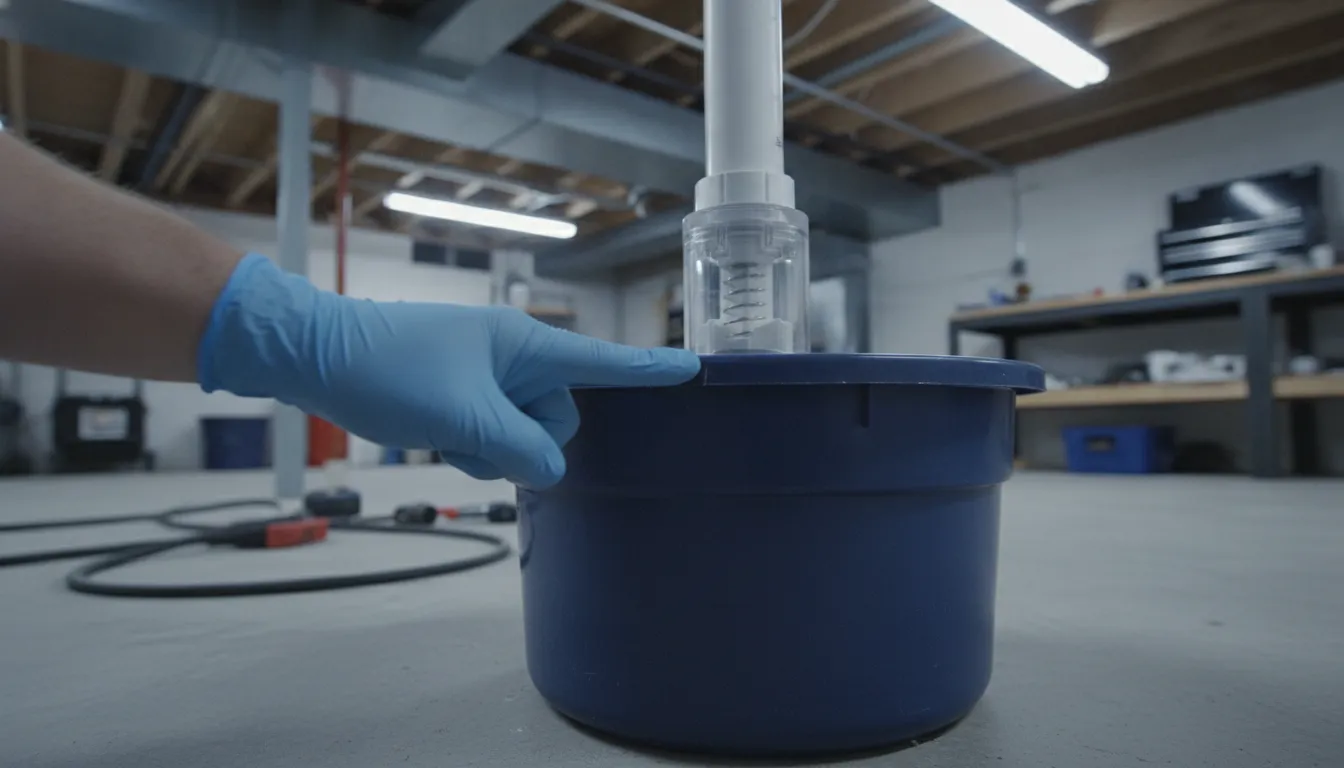
For a Detroit-area homeowner, this matters most when heavy rain saturates the soil around the foundation and groundwater enters the basement through the sump pit. The pump moves that water away from the home. While the check valve keeps the discharge line from sending the same water back into the basin after each cycle. Without that separation, the system may have to handle water it has already pumped out.
Where is the valve installed?
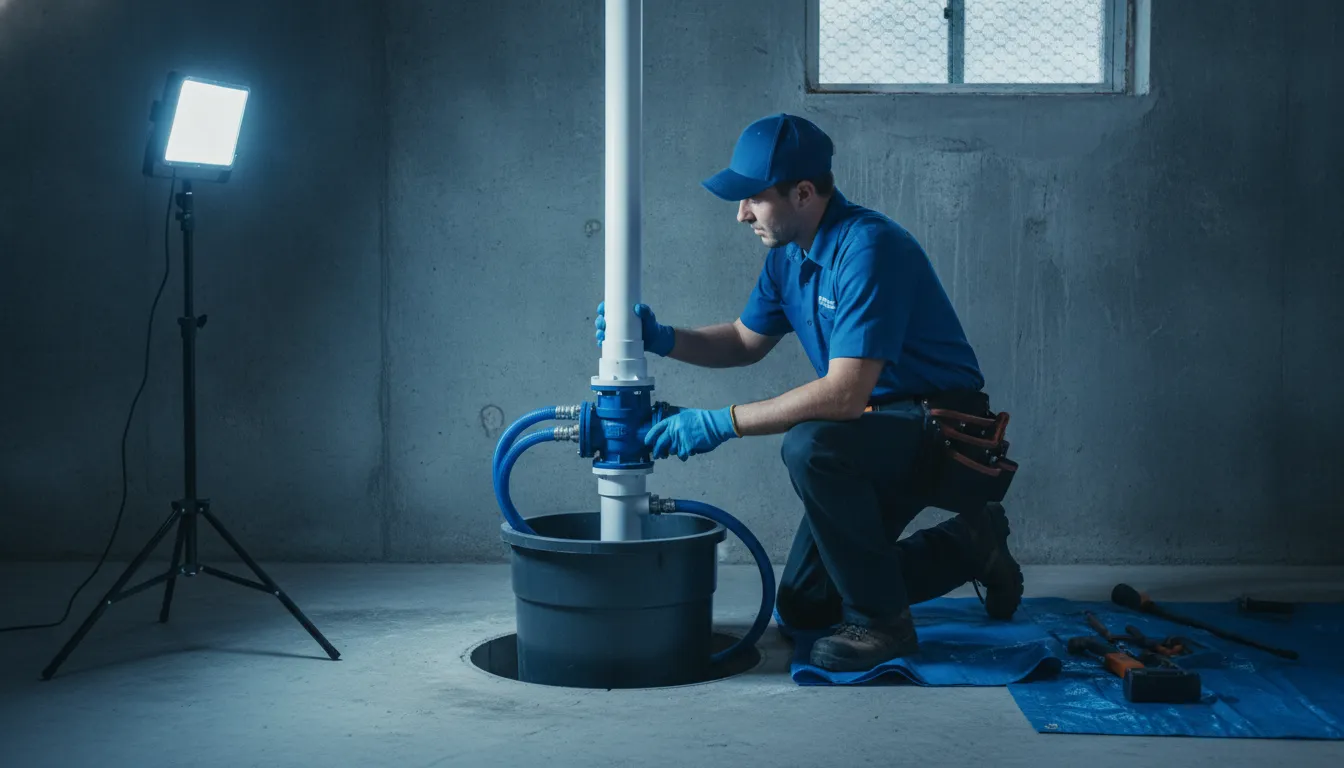
You will typically find the valve in the vertical or angled section of pipe leaving the sump basin. Its arrow should point in the direction of discharge, away from the pump and the home. The exact layout depends on the piping and pump installation, so a plumbing technician should evaluate the configuration rather than relying on appearance alone.
The component is important for both common sump pump designs. Pedestal pumps sit above the pit, while submersible pumps rest at the bottom and operate underwater. According to North Dakota State University guidance, either type should have a check valve on the water outlet pipe to prevent water from returning to the sump when the pump turns off. For most residential systems, it is an essential part of controlling discharge and protecting normal pump operation, and it is typically fitted as part of a complete sump pump installation.
Why does this one-way action matter?
When the valve closes correctly, the pump can complete a cycle without immediately lifting the same column of water again. If the valve is missing, installed incorrectly, or no longer sealing, backflow can contribute to more frequent on-and-off cycling. That extra work can reduce the pump’s service life, as the same NDSU guidance explains. A check valve does not replace proper pipe sizing, a clear discharge route, or routine maintenance, but it helps the overall system operate as intended.
What Happens When a Sump Pump Check Valve Is Missing?
When a sump pump check valve is missing. Water that has already traveled up the discharge pipe can flow back into the sump basin as soon as the pump stops. The basin then refills with water the pump has already moved, rather than only receiving new groundwater entering through the drainage system.
That backflow can create a repeating cycle. The pump turns on, pushes water toward the discharge point, shuts off, and then receives much of that water back. As the water level rises again, the pump starts another cycle. This is known as short-cycling, meaning the motor switches on and off more often than normal.
Frequent cycling makes the pump work harder without providing additional drainage. Each start places demand on the motor and its electrical components. Over time, that unnecessary workload can contribute to extra wear and reduce the pump’s useful lifespan. North Dakota State University explains that water flowing back and forth can make a sump pump operate more frequently than necessary, decreasing the life of the pump. Read the maintenance guidance.
A missing valve is not the only possible cause of short-cycling. A failed valve, an incorrect installation, a restricted discharge line, or a float problem can produce similar symptoms. The pattern matters most: if the pump repeatedly starts soon after shutting off, especially during or after rain, the system deserves a professional inspection.
A plumbing technician can check whether the valve is present, oriented correctly, and sealing when the pump stops. They can also assess the discharge piping and pump condition together, since replacing one component without addressing the underlying cycling may leave the system operating inefficiently.
How Do I Know if My Sump Pump Check Valve Is Working?
A simple annual test can show whether your sump pump starts, moves water through the discharge line, and stops without allowing that water to return to the basin. This matters in Detroit-area homes because heavy rain can saturate the soil and send groundwater toward the sump pit. A functioning system should direct that water away from the home so the pump can keep the basement dry. The test below is useful for observing performance, but it does not replace a professional inspection of the valve itself.
- Add water to the sump pit. Pour a bucket of water into the pit, as recommended by FEMA’s sump pump testing guidance. The rising water should activate the pump. If the pump does not turn on, stop the test and arrange professional service rather than continuing to add water.
- Watch the discharge. As the pump runs, observe the discharge pipe and its outlet if it is safely visible. Water should leave the system steadily. The pipe should not be frozen or plugged, and it should direct water well away from the foundation, consistent with guidance from North Dakota State University.
- Confirm the cycle ends. When the water level falls, the pump should shut off. Listen for a normal stop rather than repeated starts and stops. Frequent cycling during a test or during rain can indicate a check valve problem, a float issue, or another condition that needs diagnosis.
- Check for backflow. After the pump shuts off, watch the water level for a short period. A small amount of water may remain in the pipe, but water should not visibly rush or continuously dribble back into the basin. The check valve is designed to prevent water from flowing back into the sump after shutdown. Noticeable backflow can make the pump repeat the same cycle unnecessarily.
- Know when to call a professional. Contact a plumbing technician if the pump will not start, the discharge is weak or blocked, the water returns to the pit, or the pump cycles repeatedly. Before any hands-on servicing or removal, power must be disconnected. A professional can inspect the valve, connections, float, pump, and discharge route together, then correct the underlying issue safely.
Record what you observe during the test and repeat it as part of annual sump pump maintenance. A quiet, complete cycle with no visible backflow is a reassuring result, while unusual noise or water movement deserves attention before the next major storm.
Signs Your Sump Pump Check Valve Is Failing
A check valve that no longer closes properly can make a sump pump behave differently, especially when rain increases the water entering the basin. The symptoms can overlap with float, discharge-line, or pump problems, so treat them as reasons for a professional inspection rather than a diagnosis. Watch for these patterns:
- The pump turns on and off repeatedly during rain. Frequent cycling, sometimes called short-cycling, may mean water is flowing back into the basin after each cycle. FEMA identifies repeated power-on and power-off behavior during rainy weather as a reason to assess the sump pump and check valve. A failing float or another discharge problem can create a similar pattern, so the complete system should be evaluated. FEMA’s sump pump guidance recommends annual assessment.
- You hear loud banging from the discharge line. A sharp bang when the pump stops can indicate water hammer or a check valve that is closing improperly. The sound may come from movement in the discharge line as water changes direction. The valve, its connections, and the pipe support all deserve attention instead of assuming the noise is normal.
- Water visibly re-enters the basin after the pump stops. The valve’s job is to prevent discharged water from flowing back into the sump pit. If the water level rises soon after a completed cycle, backflow is a strong possibility. Repeated backflow can make the pump move the same water more often than necessary and contribute to premature wear, according to North Dakota State University’s sump pump guidance.
- The pump strains or runs longer than expected. Backflow can send water back through the system, requiring the pump to lift it again. A longer-than-usual run time, a change in operating sound, or visible vibration can point to a valve or discharge issue. Although a blocked outlet or a pump problem can produce similar signs.
- The pump rarely or never runs when water is present. A silent pump does not prove that the check valve has failed, but it should not be ignored. FEMA notes that a sump pump that never runs may need replacement. Power, the float, the pump, and the discharge path all need to be checked before assigning the cause to the valve.
These signs are useful observations, not a substitute for testing. A plumbing technician should verify whether the valve is worn, obstructed, installed correctly, or securely connected, and then determine whether another component is contributing to the behavior.
Swing vs. Spring Check Valve: Which Better Fits Your System?
Both valve styles serve the same basic purpose: they allow pumped water to move toward the discharge point and close when flow stops. The better choice for a residential sump pump depends on the pump design, discharge-line layout, available space, and the way the valve needs to respond after each cycle. A licensed plumbing technician can evaluate those conditions and install the correct sump pump check valve for the line.
A swing valve, sometimes called a flapper valve, uses the force of flowing water to lift a hinged disc. When the pump stops, the flapper swings back into place. A spring-loaded valve uses a spring to press the valve closed as flow decreases. Some spring designs are marketed as quiet valves because their closing action can reduce the banging sound associated with abrupt shutoff.
| Consideration | Swing or flapper valve | Spring-loaded or quiet valve |
|---|---|---|
| How it closes | A hinged flapper closes as water flow slows or stops. | A spring helps return the valve to the closed position. |
| Noise level | May produce a noticeable click or knock when the flapper closes, depending on the installation. | Quiet-style designs are intended to reduce closing noise and water hammer. |
| Handling solids | For solid or semi-solid waste, the valve must be installed horizontally or at an angle up to 45 degrees. | The same solids-handling placement requirement may apply, based on the specific valve and system. |
| Typical material | ABS plastic is common in residential applications. | ABS plastic and other approved materials may be used for residential systems. |
| Horizontal or priming requirement | Orientation must match the valve design and discharge-line layout. It relies on water flow to open fully. | Spring tension supports closure, but the technician still verifies orientation, flow direction, and pump performance. Neither style should be selected by priming needs alone. |
For a typical clear-water sump, material and noise are only part of the decision. The technician checks pipe diameter, flow direction, clearance, and whether the valve closes cleanly without restricting discharge. If the system has unusual solids, repeated cycling, or persistent banging, professional inspection can identify whether valve type, placement, or condition is contributing.
When Should a Professional Replace Your Sump Pump Check Valve?
A professional inspection is appropriate at least once a year, even when the sump pump appears to be working normally. Annual maintenance gives a licensed plumbing technician an opportunity to assess the pump, float, discharge line, and sump pump check valve as one connected system. FEMA recommends assessing a sump pump annually, which is especially useful before periods of heavy rain when groundwater can place more demand on the system (FEMA guidance).
Replacement becomes more likely when the valve shows visible wear, feels stiff, or has cracks around its body or connections. A valve that does not open and close smoothly may allow water to return to the pit after the pump shuts off. That backflow can contribute to frequent cycling and unnecessary pump wear. Persistent short-cycling during rain should not automatically be blamed on the valve, however. The float, pump capacity, discharge pipe, and electrical operation can create similar symptoms, so a technician should diagnose the complete system before selecting a replacement.
Loud banging in the discharge line is another reason to schedule an inspection. Noise can occur when a valve closes abruptly or when water movement and air in the discharge system are not behaving as they should. If the sound continues after a valve has been replaced, further evaluation is warranted rather than another immediate part swap.
The valve should also be inspected whenever the pump is removed or serviced. Safe service begins by disconnecting the pump from power. During the inspection, the technician can remove the valve, clean away debris, check its operation, and securely reconnect it when the pump is returned to the pit. FEMA includes removing and reconnecting the valve in its sump pump maintenance guidance (review the maintenance steps).
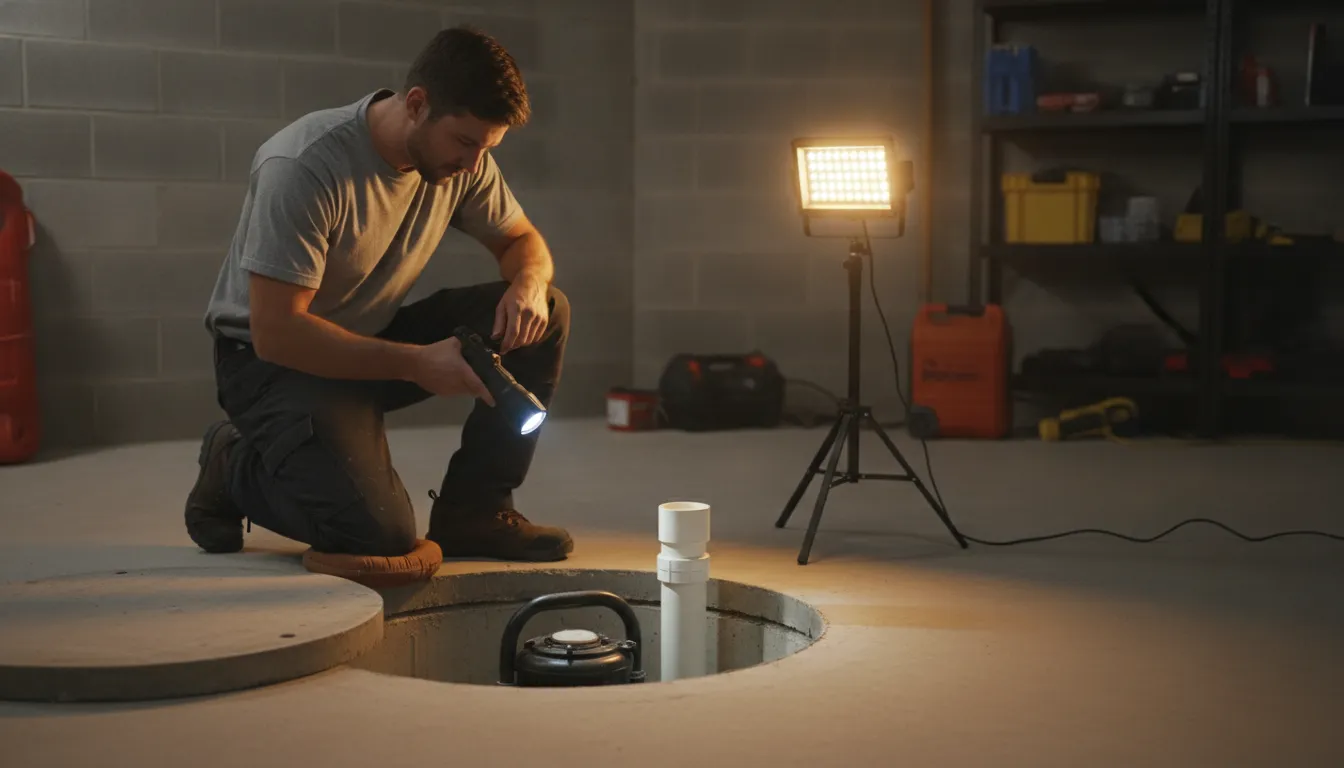
Because a valve problem may overlap with float or pump trouble, replacement is best handled by a licensed plumbing technician. Professional sump pump service can address the underlying cause and confirm that the system is ready for the next Detroit-area storm. Homeowners who want to understand the full system can also review sump pump repair guidance for Farmington Hills to see how valve work fits into broader pump upkeep.
Schedule a sump pump check valve inspection or replacement with Mr. Pipey.
For a broader overview of the equipment this component supports, read what a sump pump does and when a Rochester Hills home may need one.
Frequently Asked Questions
Do I really need a check valve on my sump pump?
Yes. A check valve helps stop water from flowing back into the sump pit after the pump shuts off. Without that one-way control, the pump may cycle more often as the same water returns, creating unnecessary wear. Both pedestal and submersible sump pumps generally need a properly functioning valve on the outlet pipe. North Dakota State University explains this outlet-pipe requirement.
Why is my sump pump check valve making a loud banging noise?
A loud bang in the discharge line can occur when the valve closes abruptly as pumping stops, a condition often called water hammer. It can also indicate a valve or discharge-line issue that needs inspection. A plumbing technician can determine whether the valve is closing correctly and whether the system needs a quieter replacement design.
How do I tell if my sump pump check valve is working correctly?
During an annual system check, add a bucket of water to the sump pit and confirm that the pump activates. Water exits through the discharge pipe, and water does not visibly return to the pit when the pump stops. FEMA recommends this bucket test as part of sump pump maintenance. FEMA’s sump pump guidance also recommends checking the discharge route.
When should a professional replace a sump pump check valve?
Arrange professional service when the pump repeatedly cycles during rain, water flows back into the pit, or the discharge line bangs loudly. Replacement may also be appropriate when inspection finds debris, a damaged sealing component, or an improperly secured connection. Power should be disconnected before servicing, and the valve must be reconnected securely after inspection. FEMA recommends assessing the sump pump annually, making routine professional maintenance a practical safeguard.
Ready to Schedule Your Sump Pump Check Valve Service?
A professional inspection can confirm that your sump pump check valve is functioning properly and help identify whether replacement is appropriate for your system. Mr. Pipey provides a 100% satisfaction guarantee and honest flat pricing, with no overtime or double-time charges for after-hours service. Contact Mr. Pipey to schedule a sump pump check valve inspection or replacement.
For a broader overview of the equipment this component supports, read what a sump pump does and when a Rochester Hills home may need one.