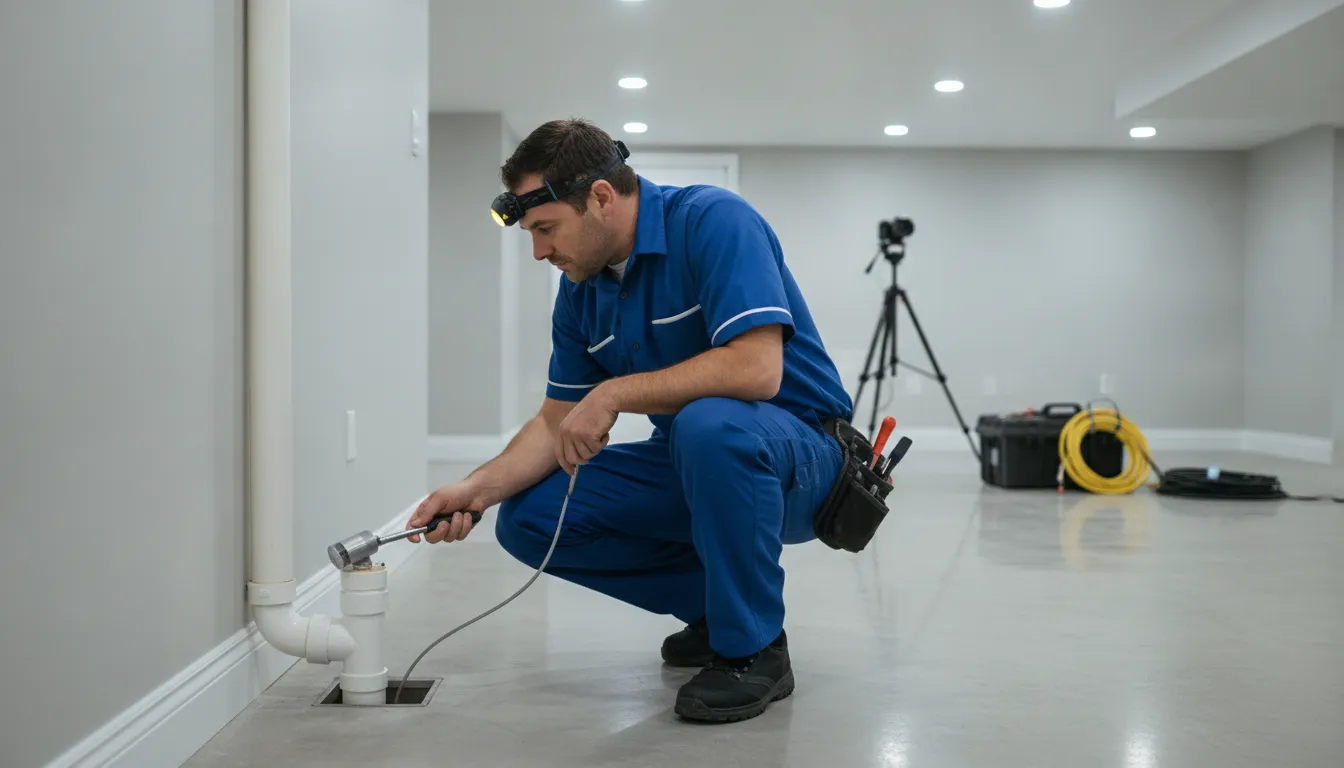


Detroit-area homeowners may notice a warm patch beneath their feet, hear water moving when every fixture is off, or see an unexplained rise in usage. These details can point to a pressurized supply line leaking beneath the concrete foundation. Because the pipe is hidden from view, identifying the source accurately matters before choosing how to repair it.
Professional slab leak detection detroit services use specialized acoustic, electronic, and thermal methods to locate an underground supply-line leak without immediately opening the slab. Once the location and condition of the piping are confirmed, a licensed plumber can recommend a focused repair, reroute, or broader repiping solution.
Schedule professional slab leak detection
The right next step is understanding what separates a slab leak from other plumbing problems and why certain Detroit homes may be more susceptible. That distinction provides a clearer foundation for recognizing the causes and evaluating the repair path.
What Is a Slab Leak and Why Does It Happen Under Detroit Homes?
A slab leak is a crack or pinhole failure in a pressurized water supply line beneath a home’s concrete slab foundation. It is different from an under-slab drain or sewer leak. Supply lines carry treated water under pressure, commonly about 50 to 80 psi. So a failure can release water into the soil below the living area while the plumbing fixture itself appears normal. Because these pipes are enclosed in concrete and often lack an access hatch or isolation valve, locating the failure requires professional slab leak detection rather than guesswork.
The pipe material and the home’s age are important clues. Copper supply lines installed in homes from roughly 1960 through 1995 can develop pinhole corrosion, particularly where hard water affects the inside of the pipe. Many under-slab plumbing installations are now 30 to 65 years old, which places them in an age range where material fatigue and corrosion deserve closer attention. Homes built in Metro Detroit from the 1940s through the 1970s may also have older copper supply systems, and repeated freeze-thaw conditions can add stress to the surrounding foundation and plumbing environment.
Hot-water lines are especially susceptible. Heated water can accelerate internal copper corrosion, and repeated heating and cooling creates additional thermal stress along the hot-water side. That is why a failure may first appear as a warm area on the floor, although not every slab leak produces an obvious temperature change. The underlying causes and diagnostic considerations are summarized in this slab leak repair guide.
Why professional detection matters
Finding the source is not the same as noticing moisture. A trained plumber uses specialized acoustic, electronic, or thermal equipment to narrow the leak location before recommending a repair. Opening concrete without confirming the failure can create unnecessary disruption and still miss the damaged line. Homeowners should not attempt to access, pressure-test, or repair an under-slab supply line themselves. A professional evaluation can distinguish a slab leak from another plumbing issue and identify the least disruptive repair path.
What Are the Warning Signs of a Slab Leak?
Slab leaks can remain out of sight because the supply piping is encased in concrete, without an access hatch or inspection sleeve. Instead of waiting for obvious water damage, pay attention to changes in temperature, water use, and sound around the home. These signs do not confirm a slab leak on their own, but they can help identify when a professional plumbing evaluation is appropriate.
- A warm spot on the floor: A section of floor that feels unusually warm, especially when nearby surfaces are cool, can indicate a leak on a hot-water line. Escaping heated water may warm the concrete above the pipe, making this one of the more recognizable early clues.
- An unexplained increase in the water bill: A large, unexpected spike in water use can indicate a hidden plumbing leak. Compare the change with occupancy, seasonal conditions, and known uses such as filling a pool or running irrigation. A steady increase without a clear explanation deserves attention.
- A persistent sound of running water: If you hear water moving or spraying while faucets, appliances, and other fixtures are off, the sound may be coming from a pressurized supply line. A professional can determine whether the source is under the slab or elsewhere in the plumbing system.
- Cracking or lifting flooring: New cracks, raised flooring, or changes in the surface near a bathroom, kitchen, or utility area can accompany moisture below the slab. These changes have several possible causes, so they should be evaluated rather than assumed to be a slab leak.
How can water-usage monitoring help?
Utility usage data can provide a useful second check. Review the daily or hourly usage chart for a recent day when the home was unoccupied and irrigation was not operating. Any registered use on that day may point to a leak or another water-consuming system that was left on. A spike is an indicator, not a diagnosis, because toilets and other household fixtures are also common sources of wasted water. The San Francisco Public Utilities Commission recommends using available usage reports to identify possible leaks quickly: review its leak guidance for the monitoring approach.
For more context, see these hidden water leak warning signs. When several clues appear together, document what you notice and arrange professional slab leak detection. A licensed plumber can separate a concealed under-slab issue from a fixture leak or another plumbing concern without relying on guesswork.
How Does Professional Slab Leak Detection Work in Detroit?
When a water line beneath a concrete slab begins to leak, the most important first step is locating the failure accurately. Because these supply lines are enclosed below the foundation, opening the floor before the leak location is confirmed can create unnecessary disruption. Professional slab leak detection in Detroit uses specialized, non-destructive equipment to narrow the search and confirm where repair work is needed.
Acoustic listening identifies the sound of escaping water
Acoustic detection equipment amplifies the sound created as pressurized water escapes from a damaged supply line. A trained technician listens at carefully selected points across the floor and nearby plumbing connections, comparing sound patterns and intensity to identify the most likely location. The process is designed for controlled diagnosis rather than guesswork. It can help distinguish an active pressurized leak from ordinary household plumbing sounds.
Electronic tracing follows the line beneath the slab
Electronic line tracing and ground microphones add another layer of precision. The technician maps the likely path of the buried water line, then uses ground-level readings to refine the location of the failure. This matters in homes where the supply pipe is encased in concrete without an access hatch, inspection sleeve, or convenient isolation valve. Specialized tools are often necessary to verify the location without opening multiple areas of the slab.

Thermal imaging can reveal warm areas above a hot-water leak
Thermal imaging helps identify temperature differences across the floor. A hot-water leak may warm the surrounding concrete and create a localized warm spot, giving the technician another useful diagnostic signal. Thermal readings work best as part of a broader inspection, alongside acoustic and electronic testing, rather than as a stand-alone answer.
These methods help reduce unnecessary jackhammering and limit avoidable damage to flooring, concrete, and finished living spaces. Once the leak location is verified, a plumber can explain the appropriate repair path, whether that involves a carefully targeted access point, a reroute, or another long-term solution. The equipment does not replace professional judgment, but it makes that judgment more precise. For Detroit homeowners, accurate detection is the foundation of a measured repair plan. Learn more about slab leak diagnostics and repair options.
Spot Repair vs Repiping: Which Slab Leak Fix Fits Your Home?
Once professional testing confirms the leak location, the next decision is how to restore reliable water service without creating unnecessary disruption. Precision detection comes first because it can identify the failed section before any concrete is opened. That helps avoid needless demolition and gives the plumber a clearer view of the piping system’s overall condition.
| Option | How it works | Typical cost range | Best for |
|---|---|---|---|
| Spot repair | The concrete slab is opened at the confirmed leak location, and the failed pipe section is replaced. | $800-$2,500 | One isolated failure in otherwise sound piping |
| Reroute | A new water line is routed through accessible wall or attic spaces, bypassing the failed under-slab section. | $1,500-$4,500 | A failed line where avoiding additional slab demolition is beneficial |
| Full repipe | The home’s affected supply piping is replaced as a coordinated system rather than repairing one failure at a time. | $4,500-$15,000 | Multiple failures or plumbing materials with poor remaining integrity |
These ranges are planning figures, not a substitute for an inspection. A spot repair may be appropriate when there is one clearly defined failure and the remaining pipe has good integrity. It usually involves localized concrete work, followed by restoration of the opened area. When the under-slab route is difficult to access or the piping has shown more than one problem. A reroute can bypass the failed line without disturbing the slab again.

Full repiping is the most extensive option, but it can be the more durable choice when multiple leaks have surfaced or the remaining system is substantially deteriorated. The recommendation should account for the number of failures, pipe material, age, access, and the condition of sections that have not yet failed. A professional evaluation helps balance immediate repair needs with the likelihood of repeated service.
For a documented overview of these repair approaches and their typical cost ranges, see this slab leak repair guide. A qualified Detroit-area plumber can explain which option fits the home’s layout and piping condition before work begins, and Mr. Pipey offers leaking pipe repair services for homeowners across the area.
Will Homeowners Insurance Cover a Slab Leak?
Homeowners insurance may cover damage caused by a slab leak, but coverage usually depends on how and when the leak occurred, what damage resulted, and the specific terms of your policy. A sudden, accidental failure, such as a burst supply line that releases water into the home, may be treated differently from a gradual leak caused by corrosion, deterioration, or normal wear and tear.
Insurance may also distinguish between the resulting water damage and the plumbing repair itself. For example, a policy might help cover certain damage to flooring, walls, or belongings after a covered event, while excluding the cost of replacing an aging or deteriorated pipe. Deductibles, exclusions, limits, and endorsements can change the outcome. Allstate recommends reviewing the policy and discussing the circumstances with the insurer when a slab leak is suspected: learn more about slab leak insurance considerations.
This is why it is best not to assume that a claim will be approved or denied based only on the word “slab leak.” Document what you observe, including unusual water use, damp areas, flooring changes, or a warm spot, and contact your insurer promptly if damage has occurred. Ask whether the policy covers the resulting water damage, the access and removal work needed to investigate, and the failed pipe or supply line itself. Your insurer can explain the claims process and may recommend steps to prevent additional damage.
A licensed plumber can then locate the leak and explain the repair options without making promises about insurance reimbursement. Professional plumbing leaks repair can help clarify the source and extent of the problem, giving you useful documentation to share with your insurance company while keeping the coverage decision with the policy provider.
Schedule your slab leak evaluation with Mr. Pipey today
Frequently Asked Questions
How can I detect a water leak in my slab?
Watch for a warm area on the floor, unexplained water-use increases, or continued usage when the home is unoccupied. A utility usage chart can help identify a possible leak, although irrigation or another household fixture may produce similar readings. Because the pipe is concealed beneath concrete, a professional inspection using acoustic, electronic, or thermal detection is needed to confirm the location. San Francisco Public Utilities Commission guidance recommends reviewing usage patterns when investigating possible leaks.
Will homeowners insurance cover a leak under a slab?
Coverage depends on the policy and the circumstances. A policy may cover sudden water damage caused by a slab leak, while the failed pipe, gradual deterioration, or related maintenance may be treated differently. Contact your insurer promptly, document visible damage, and review the policy’s water-damage and plumbing exclusions before assuming what will be covered. The Allstate slab leak guide recommends verifying coverage directly with the insurer.
Can you have a slab leak and not know it?
Yes. A supply line can leak beneath the concrete without producing an obvious puddle or visible pipe damage. The first clues may be a persistent water-use increase, a warm floor area, damp flooring, or changes in water pressure. Since the line has no convenient access hatch, professional non-destructive testing can help distinguish a slab leak from a toilet, irrigation system, drain issue, or another plumbing leak.
How long can a slab leak go undetected?
There is no reliable time limit. A small leak may remain unnoticed for an extended period when it is concealed below the slab, while a larger failure can create noticeable symptoms quickly. Older under-slab plumbing deserves closer attention because many installations are now more than 30 years old and entering a higher-failure period. Prompt evaluation of unusual water use or warm flooring helps define the problem before repair options become more disruptive.
Schedule a Professional Slab Leak Evaluation
A professional evaluation can help confirm whether a hidden supply-line leak is present and identify the most appropriate repair approach for your Detroit-area home. Schedule your slab leak detection and repair evaluation with Mr. Pipey by contacting our team online. You can also call (313) 900-0700 for assistance arranging the next step.