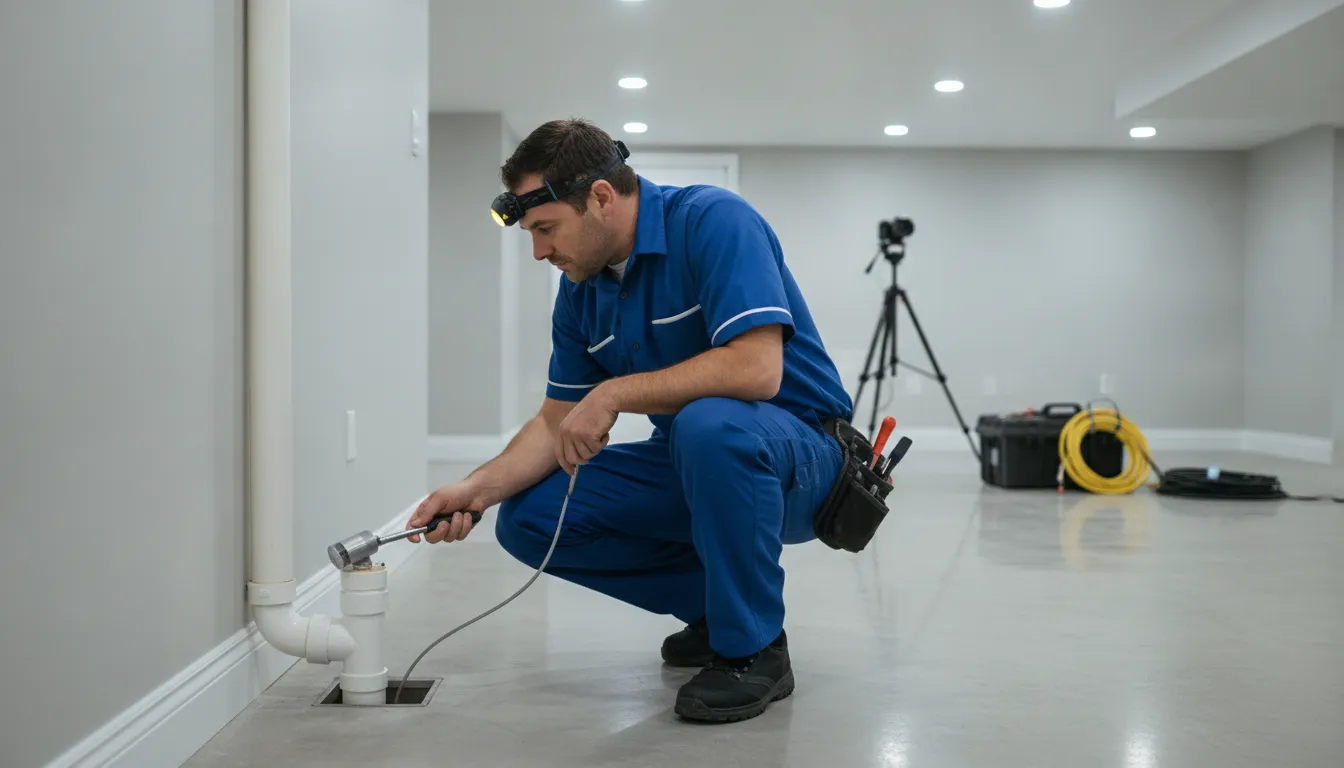


Recurring backups, slow drains, or a sewer odor can leave a Detroit homeowner wondering whether another repair will hold. When a private sewer lateral has repeated defects, major offsetting, root intrusion, or a collapsed section, the right answer may be a complete replacement rather than another temporary clearing.
Sewer line replacement detroit projects are usually recommended when inspection shows the line cannot reliably carry wastewater, and the lasting solution depends on the pipe’s condition, depth, length, access, and restoration needs. A licensed professional can confirm the problem with a camera inspection and explain whether trenchless replacement or traditional excavation fits the property.
Detroit homeowners are generally responsible for the private line from the house to its connection with the city sewer, according to the Detroit Water and Sewerage Department. Understanding the warning signs makes it easier to distinguish a recurring drain issue from a line that needs a comprehensive replacement plan.
Schedule a free sewer line inspection in Detroit today.
When Does a Detroit Homeowner Need a Full Sewer Line Replacement?
A sewer line problem does not always require replacing the entire lateral. A camera inspection can show whether a localized crack, blockage, or joint can receive a targeted repair. Replacement becomes more likely when damage is widespread, the pipe has collapsed, or the same symptoms return after prior repairs. That distinction matters for homeowners evaluating sewer line replacement detroit services, because the right solution depends on the pipe’s condition rather than one symptom alone.
Detroit’s sewer connections face several conditions that can worsen over time. The Detroit Water and Sewerage Department identifies aging infrastructure, shifting soil, intruding tree roots, and a lack of regular maintenance as causes of private lines becoming offset or disconnected. It estimates that almost one in three residential connections in Detroit is clogged, offset, or disconnected. You can review more main sewer line damage signs while considering how your symptoms fit together.
- Recurring backups: Repeated basement or floor-drain backups suggest an ongoing restriction or damaged connection, especially when professional clearing only provides temporary relief. A single isolated clog may be repairable, but recurring backups warrant a broader evaluation.
- Multiple slow-draining fixtures: When sinks, tubs, toilets, or floor drains throughout the home begin draining slowly, the issue may be farther along the main line instead of at one fixture. Widespread symptoms support inspecting the full lateral.
- Gurgling pipes: Gurgling after a toilet flush or while another fixture drains can indicate trapped air caused by restricted flow. When this sound accompanies backups or slow drainage, it deserves prompt professional assessment.
- Foul odors near drains: Persistent sewage odors can point to a damaged, disconnected, or poorly flowing line. Odors alone do not prove replacement is necessary, but they become more significant when paired with other warning signs.
- Soggy or sinking patches of yard: Unusual wet areas, settlement, or a depression along the sewer route can indicate leaking wastewater, soil movement, or a collapsed section. Surface changes are especially important when indoor drainage problems appear at the same time.
- Tree root intrusion or a collapse found by camera: Roots may enter through joints and cracks, while a collapsed or severely offset pipe can prevent reliable flow. A camera finding that shows damage across multiple sections generally points toward replacement rather than another isolated patch.
Full replacement is usually considered when the line has several defects, cannot maintain flow after repair, or has lost structural integrity. A localized defect may still suit a focused repair. The practical next step is a documented inspection that identifies the affected length and connection points.
How Much Does Sewer Line Replacement Cost in Detroit?
A full sewer line replacement is a major project, but the final price depends on the property and the condition of the existing line. A reliable estimate starts with a camera inspection and a review of where the private lateral runs from the home to the city connection.
What factors affect the replacement price?
Several site-specific factors shape the scope of work and the quote:
- Pipe depth: A deeper lateral generally requires more excavation, shoring, labor, and backfill.
- Line length: Replacing a short connection costs less than replacing a long run that extends beneath a yard, alley, or other surfaces.
- Pipe material: The selected replacement material must suit the home’s connection, local requirements, soil conditions, and expected service life. Material choice also affects labor and installation requirements.
- Repair method: Traditional excavation exposes the line directly and may be appropriate when the pipe has collapsed or access is limited. Trenchless methods can reduce surface disruption when the site and pipe condition are suitable.
- Surface restoration: Landscaping, concrete, asphalt, driveways, sidewalks, and other finished surfaces may require separate restoration after the line is replaced.
Because these variables differ so much, a general Metro Detroit range should be treated as an orientation rather than a promise. A shallow line with simple restoration can need far less work than one requiring deep excavation beneath a driveway or sidewalk. The scope, includes, and restoration plan should be clear before work begins.
Can Detroit programs help with some sewer connections?
Some Detroit homeowners may qualify for public assistance connected to private sewer repairs. DWSD’s Alley Sewer Repair Program uses $175 million in CDBG-DR grant funding to address approximately 8,000 to 9,000 private sewer connections and reestablish flow from homes to the city sewer. Eligibility, scheduling, and the work covered depend on the program and property.
Public programs do not replace the need for a property-specific assessment. They also may not cover every lateral, repair condition, or restoration item. Confirm the current program requirements directly with DWSD before making financial decisions.
How can you avoid surprises in the estimate?
Request a free, up-front quote that explains the inspection findings, replacement length, proposed material, excavation or trenchless approach, permits, and restoration responsibilities. Ask what is included if the line extends beneath a driveway, sidewalk, or landscaped area.
Sewer Line Replacement in Detroit: The Licensed Plumber’s Step-by-Step Process
A professional replacement should follow a clear process from diagnosis through final verification. The goal is to confirm the damaged section, select the appropriate access method, protect your property, and restore dependable flow. In Detroit, the private sewer lateral is generally the homeowner’s responsibility up to the City sewer connection.
- Inspect the line with a sewer camera. A licensed plumber begins with a video inspection to identify cracks, offsets, root intrusion, separations, or a collapsed section. The camera also helps locate the damage and estimate the line’s depth and route. This evidence supports a focused recommendation instead of replacing pipe based only on symptoms. Review the sewer camera inspection process to see why visual confirmation matters.
- Plan the work and provide a clear quote. The plumber reviews the inspection findings, access points, pipe length, depth, surface conditions, and connection requirements. The plan identifies whether traditional excavation or a trenchless method is suitable. Any permissions, utility locates, inspections, or coordination involving the city connection should be addressed before work begins. A written quote should explain the expected scope, restoration needs, and pricing.
- Open the line through excavation or trenchless access. Traditional replacement requires careful excavation to expose the damaged pipe. Where site conditions and pipe layout allow, trenchless methods can provide access through smaller entry points. These approaches are less invasive and can avoid major excavation across a lawn, driveway, or sidewalk. Read about trenchless sewer line repair options for more detail on the approach.
- Remove the failed pipe and install the new line. The damaged section is removed or replaced using the approved method. The new sewer line is aligned to maintain proper flow and connected securely at the house and city-side connection points. Licensed workmanship is especially important here because the installation must account for grade, joints, access, and local requirements.
- Backfill, compact, and restore the surface. After the installation is confirmed, suitable material is placed around the pipe and compacted in controlled stages. The work area is then restored according to the agreed scope, which may include soil, concrete, asphalt, or landscaping. Proper compaction helps limit settlement and leaves the property ready for normal use.
- Verify the completed line with a final camera inspection. The plumber runs a camera through the finished line to confirm that connections are open, the pipe is properly aligned, and no construction debris remains. This final review documents the result and gives the homeowner confidence that the replacement is complete.
Trenchless vs. Traditional Sewer Line Replacement: Which Is Right for Your Home?
Homeowners in Metro Detroit often have two broad replacement paths: trenchless installation or traditional excavation. The right choice depends on the pipe’s condition, location, depth, and the surfaces above it. A sewer camera inspection should come first. It shows whether the existing line can accommodate a trenchless method and identifies connections, offsets, collapses, or other conditions that may require open access.
Trenchless work is generally less invasive because it uses limited access points instead of a continuous trench. Pipe bursting replaces the old line while pulling a new pipe through its route. Cured-in-place pipe, or CIPP, forms a new pipe inside the existing line when the structure and diameter are suitable. Traditional excavation exposes the full line, allowing the plumbing team to remove and replace it directly.
| Consideration | Trenchless replacement | Traditional excavation |
|---|---|---|
| Digging and disruption | Uses targeted access points and avoids a major continuous trench in many suitable installations. | Requires excavation along much or all of the pipe route, creating more surface disruption during the work. |
| Lawn, sidewalk, and driveway impact | Can reduce disturbance to landscaping, pavement, and other finished surfaces because less soil is opened. | May require removal and restoration of lawn, concrete, asphalt, or other surfaces above the line. |
| Typical timeline | Often supports a more streamlined installation when the route, access points, and existing pipe are suitable. | May take longer when deeper digging, difficult access, utility coordination, or extensive restoration is involved. |
| When it fits best | Useful when the existing route is workable and the pipe condition supports pipe bursting or CIPP. | Often the better option when the pipe has collapsed, the route needs correction, connections require direct access, or trenchless equipment is not suitable. |
Cost is not determined by the method alone. Depth, total length, access, the condition of the existing pipe, and the amount of surface restoration all affect the project. A trenchless approach can reduce restoration work, but it is not automatically the lower-cost choice for every property. Traditional excavation can provide the most direct access when the line has severe structural damage or requires changes beyond a straightforward replacement.
For homeowners comparing trenchless sewer line repair options, the key question is which method provides a dependable replacement for the actual conditions beneath the property. A professional camera inspection and written scope let the plumber explain the tradeoffs before work begins.
Why Do Sewer Lines Fail in Metro Detroit?
Metro Detroit homes often have private sewer laterals that have served the property for many decades. As these lines age, several local conditions can affect their alignment, strength, and ability to carry wastewater reliably. The result is not always a sudden collapse. More often, a line develops recurring restrictions, offsets, or small separations that gradually affect drainage.
Age is one of the most common factors. Older homes may still have clay, cast iron, or Orangeburg pipe materials. These materials can deteriorate over time, especially when joints loosen or the pipe becomes brittle. Original lines may also have been installed before current materials and connection standards were common. Detroit Water and Sewerage Department guidance identifies age, shifting soil, tree roots, and insufficient maintenance as causes of private sewer lines becoming offset or disconnected from the public sewer. Detroit’s sewer repair guidance provides additional context for local property owners.
Metro Detroit’s clay-heavy ground can also shift with changes in moisture and seasonal conditions. That movement may place stress on pipe joints or gradually change the slope of a lateral. When a pipe loses its intended grade, wastewater moves less efficiently and sediment can accumulate.
Mature trees add another consideration. Large maples, elms, and other established trees can send roots toward the moisture around sewer joints. Root intrusion does not necessarily mean the entire line needs replacement, but repeated intrusion can damage joints and create restrictions that return after temporary repairs.
Regular maintenance helps identify these conditions before they become major service interruptions. Professional drain maintenance can clear developing obstructions, while scheduled camera inspections can show whether the underlying pipe is cracked, offset, or structurally sound. This distinction matters because a recurring backup may require maintenance, a targeted repair, or full replacement.
For older Metro Detroit properties, a documented inspection and maintenance schedule is the practical prevention path. It extends the useful life of a sewer line and reduces the chance of an unexpected failure while giving homeowners clearer information when planning future sewer work.
Request a free, up-front quote for your sewer line replacement.
Frequently Asked Questions
How much does it cost to replace a sewer line in Michigan?
There is no single statewide price. A professional estimate depends on the line’s length and depth, pipe condition, replacement method, access, and the cost of restoring landscaping, concrete, or other surfaces. Trenchless work may reduce surface disruption, while traditional excavation may be the better fit for a severely damaged or inaccessible line. Ask for a written scope that separates the sewer work from restoration costs.
How deep does a sewer line need to be in Michigan?
Required depth varies by the home’s layout, connection point, local requirements, and site conditions. The line may run beneath a basement or crawl space before reaching the city connection. A licensed plumber can confirm the existing depth during inspection and coordinate required permits or utility checks before replacement. Do not assume a standard depth applies to every Detroit-area property.
Is a 3 inch sewer line okay?
A 3-inch line may be suitable for some residential systems, but size alone does not determine whether replacement is appropriate. The plumber should evaluate the home’s fixture load, existing connection, slope, material, and local requirements. Reusing or changing the diameter should be part of the design review, not a decision based only on the visible pipe size.
How long does sewer line replacement take?
The schedule depends on the line’s length, depth, access, replacement method, permitting, and surface restoration. Trenchless replacement can limit excavation, while traditional replacement may require more restoration work. After a camera inspection, the plumber can explain the expected work sequence and provide a more reliable timeline for your property.
Ready to Plan Your Sewer Line Replacement?
A professional inspection can clarify whether full replacement is the right next step and help you understand the work ahead. Mr. Pipey is a licensed, family-owned local expert serving Detroit-area homeowners, with free quotes, no overtime charges, and a 100% satisfaction guarantee.
Schedule a free sewer line inspection and up-front quote.
Call (313) 900-0700 to discuss your sewer line concerns with the Mr. Pipey team.