
When a sewer concern appears at a Metro Detroit home, it can be difficult to understand where the issue sits or what a repair might involve. A sewer camera with locator gives a plumber two useful kinds of information: a view inside the accessible pipe and an estimate of where the camera head is underground. Together, these details can make the next conversation more specific without treating an estimate as a guarantee.
Request a sewer inspection consultation
What does a sewer camera with locator show?
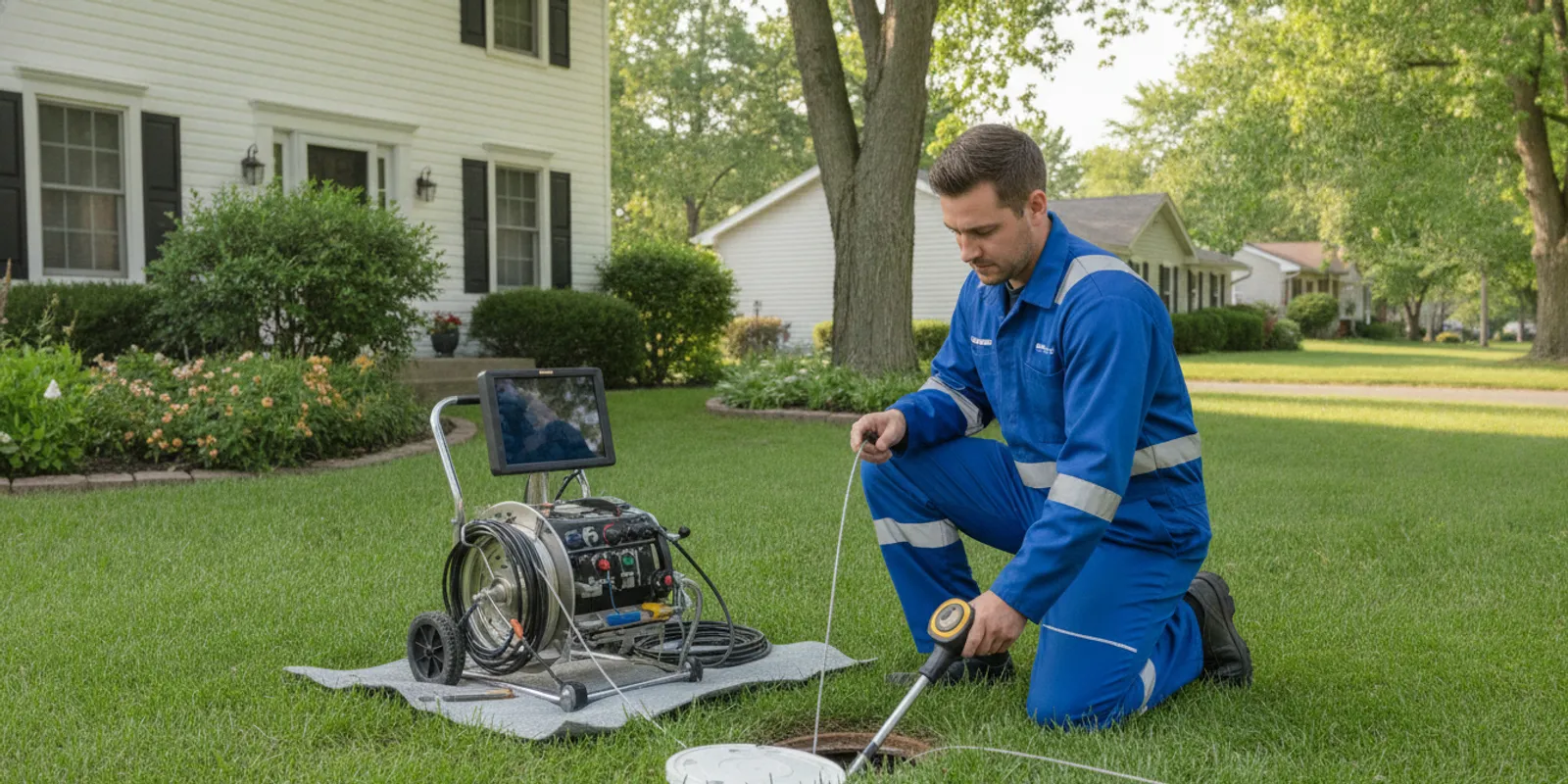
A camera inspection sends a small camera through an accessible drain or sewer line. The technician watches the live image as the camera advances. A transmitter near the camera head works with a receiver above ground, allowing the technician to estimate the head’s position and depth at a particular moment.
These two tools answer different questions. The video may show an obstruction, roots entering through a joint, a crack, standing water, or a change in the pipe interior. The locator helps relate the camera’s progress to the surface layout. Neither provides a complete picture on its own: video cannot reveal sections the camera did not reach, and a locator does not diagnose the pipe’s condition.
Access, bends, debris, water, pipe material, and signal conditions can affect the view or the reading. The professional interprets what is visible in context and explains what remains uncertain. Mr. Pipey offers a separate sewer camera inspection using waterproof cameras on flexible tubing. The published service does not say those cameras include a locator. Treat locator details in this article as general information, not as a company capability.
How does a locator help pinpoint a sewer line concern?
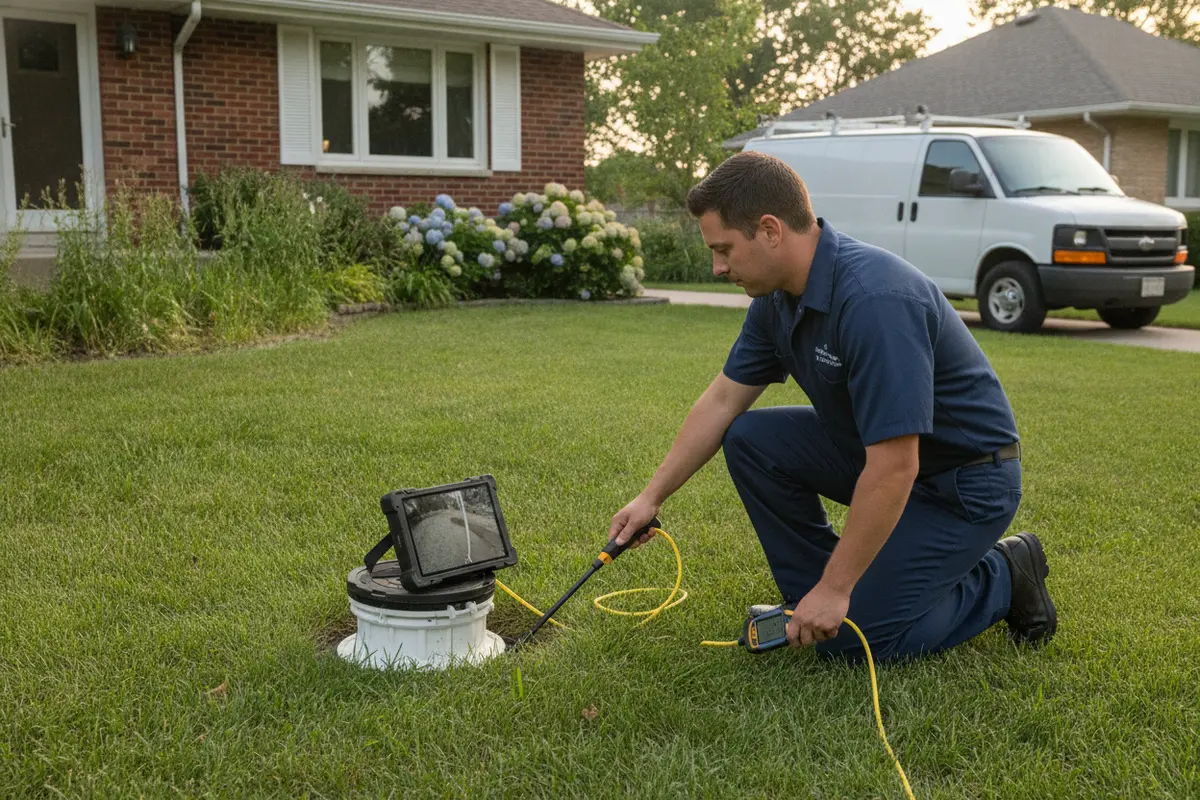
When the camera reaches a relevant area, a technician can pause and use the receiver over the ground to trace the transmitter. The reading estimates where the camera head is at that time. Readings at several points can help clarify the route and identify reference locations for discussion.
For example, a video image may show a joint change or obstruction but not indicate whether it is near a paved walkway or farther along the yard. A locator reading helps connect that image to the property layout. It can support a more focused conversation about the affected segment, access, and potential repair scope.
The reading should not be mistaken for a guaranteed excavation point. Depth and position are estimates, and interference, access, and the technician’s ability to trace the signal may affect them. A mark on the ground is a reference, not permission to dig or a complete repair diagnosis. Confirm the findings and applicable requirements with a qualified professional before work is planned.
What can the camera and locator identify?
Each inspection depends on the condition of the line and how far the camera can travel. A professional may look for:
- Material or an obstruction affecting flow.
- Roots or other material entering at a joint or damaged area.
- Cracks, breaks, separated joints, or visible deformation.
- Low areas where water or sediment remains.
- Changes in direction that help explain the camera’s route.
Suppose a recurring backup is reported and the camera reaches a section with visible roots. The video supplies the interior observation; the locator helps estimate where that point lies outside. The inspection may support discussion of next steps, but the image alone may not show the full extent of damage or establish why the roots entered. A plumber should distinguish direct observations from conclusions.
In another case, the camera may stop at a blockage. The locator can identify the camera’s position, but it cannot describe the pipe beyond the obstruction. If the camera view is cloudy because water or debris is present, that limitation also matters. Ask which sections were visible and whether further evaluation is warranted rather than assuming the entire line was inspected.
A professional interpretation considers symptoms, access, pipe route and material where known, and the limits of the inspection. A low area visible on screen may be consistent with standing water, but other context is needed. The purpose is not to turn every image into a definitive conclusion; it is to make the evidence and its boundaries understandable.
How does a locator-assisted inspection proceed?
Methods vary with the plumbing layout and the concern. A typical assessment may include these stages:
- Discuss symptoms and history. The technician asks which fixtures are affected, when the problem occurs, whether it recurs, and whether prior work is known. These details help focus the assessment.
- Review access and line conditions. The plumber identifies a suitable entry point and considers whether the camera can move through the line. A blockage, tight turn, or other condition may restrict progress.
- Advance the camera while viewing the feed. The technician observes changes along the accessible route, noting where visibility or movement is limited rather than relying on a single frame.
- Use the locator where appropriate. At an area of interest, the receiver can estimate the camera head’s position and depth. The technician may take readings at more than one point to clarify the route.
- Review findings and options. The plumber explains what the video shows, how location was estimated, what remains unknown, and what professional next steps may fit.
Before the visit, it can help to note the affected fixtures, when symptoms began, and whether they occur together. Share any known prior repairs or access limitations. This is not a substitute for inspection; it gives the professional useful context and can help distinguish a single-fixture concern from a broader line issue.
Afterward, ask whether footage can be reviewed, how locator results are communicated, and where the inspection ended. A clear explanation should state whether the camera reached the expected endpoint and whether water, debris, or access limited visibility. These details help you understand the evidence without assuming that every line can be inspected fully.
How does locator information affect repair planning?
A location estimate can help frame the scale and position of a possible repair. If an issue appears confined to a segment, the discussion can focus on that finding instead of treating the whole line as a known failure. If the camera could not pass or the signal could not be traced clearly, that uncertainty should be part of the plan.
Repair selection depends on more than a locator mark. A plumber considers the observed condition, symptoms, pipe material and route where known, access, and applicable requirements. Clearing an obstruction, addressing a damaged segment, and replacing a longer section are different scopes. The inspection informs that evaluation but does not automatically dictate a particular option.
For a persistent blockage, a professional may discuss sewer and drain services or drain jetting when appropriate. If structural damage is visible, ask what evidence supports the proposed repair and whether the location can be confirmed further. A trenchless sewer repair evaluation may be relevant in some circumstances, but suitability depends on the pipe and site.
For general background, the U.S. Environmental Protection Agency describes municipal wastewater systems in its municipal wastewater information. This is not a diagnosis of a private residential line. Property-specific findings should come from an inspection of that line.
What should you compare when reviewing inspection findings?
Compare what was observed, how confidently the location was estimated, and what the proposed work is intended to address. The elements below contribute different kinds of information and have different limits.
| Element | What it contributes | What it cannot establish alone |
|---|---|---|
| Camera video | Visual evidence along the accessible path. | The condition of unseen pipe or its exact surface position. |
| Locator receiver | Estimated surface position and depth of the camera head. | A complete diagnosis or exact excavation boundary. |
| Technician assessment | Context for symptoms, access, footage, and possible options. | Certainty beyond what the inspection evidence supports. |
| Written proposal | The scope and location of work being offered. | Proof that uninspected sections have the same condition. |
When reviewing a proposal, ask how the stated work corresponds to the footage and locator findings. Clarify whether the quoted scope addresses one visible concern or a longer segment, what additional conditions could change the plan, and whether other sections were inspected. The answers should connect the recommendation to evidence you can understand.
A useful comparison is not simply “camera versus locator.” The camera gives an interior view; the receiver contributes a location estimate; the professional combines these with symptoms and access. If two possible approaches are discussed, ask what each addresses, what evidence supports it, and what remains uncertain. This helps keep the decision focused on the actual finding rather than assumptions about unseen pipe.
When is a sewer camera with locator useful?
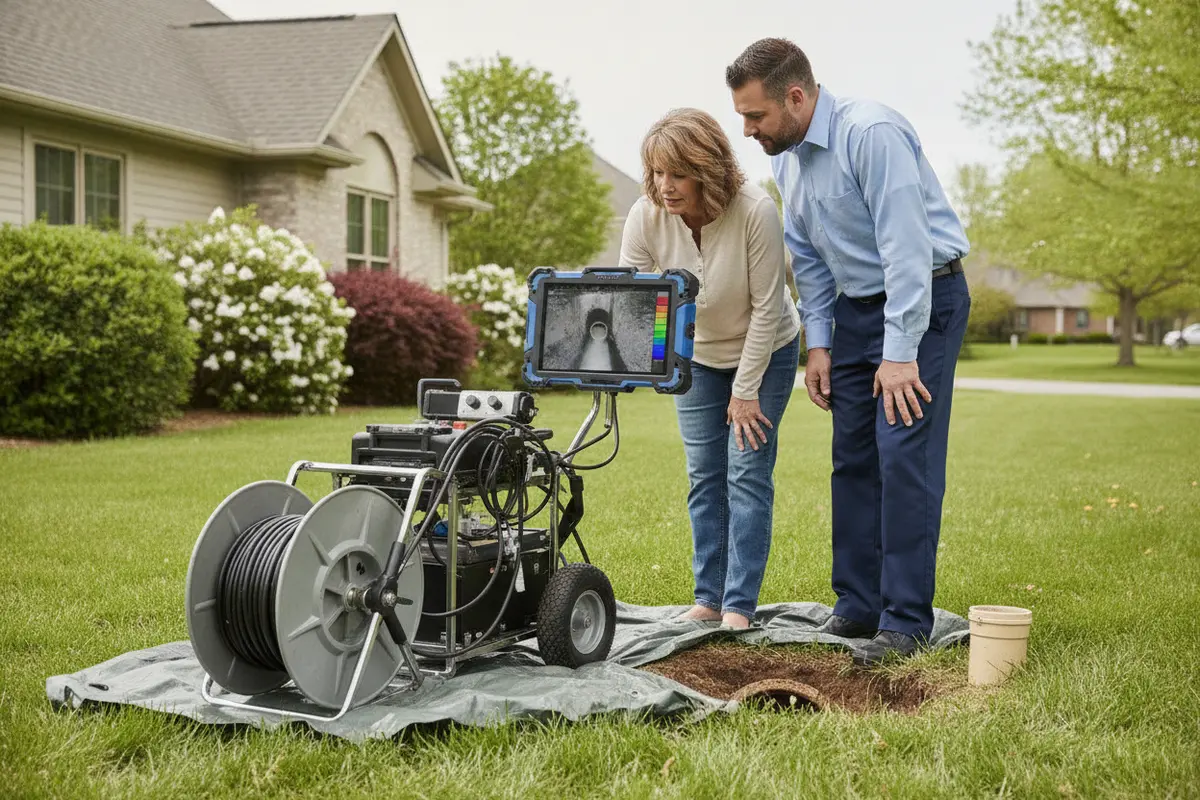
The combined approach may be useful when a recurring drain issue needs more than a surface description. It can also help when a concern appears to be underground, or when the location of a visible change could affect repair planning. It can also help communicate where the camera reached if an obstruction stopped further progress.
It is not automatically necessary for every slow drain. If symptoms are limited to one fixture, the professional may first consider whether the concern is local to that fixture or branch. If several fixtures are affected, or a problem keeps returning, the line’s layout and accessible points may make a camera inspection relevant. The proper evaluation depends on the facts at the property.
Consider two examples. A single slow sink with no other symptoms may call for a different assessment than several fixtures draining poorly at the same time. Conversely, a repeated concern after prior clearing may make it useful to see whether an underlying condition is present. These examples are not diagnoses; they illustrate why the symptom pattern and inspection evidence should guide the next step.
Homeowners across Oakland County can discuss sewer concerns with a Metro Detroit plumbing professional. That includes Troy, Southfield, Farmington Hills, Novi, Birmingham, Pontiac, Rochester Hills, Royal Oak, West Bloomfield, Ferndale, Madison Heights, Oak Park, and Northville. Share which fixtures are affected, whether the issue recurs, and any known prior work. Mr. Pipey’s drain repair service information can also help explain related professional services.
What questions should you ask after an inspection?
Specific questions can make the findings easier to evaluate:
- Where did the camera encounter the concern, and how was that position estimated?
- What does the video show directly, and what is an interpretation?
- How much of the line was inspected, and where did access or visibility end?
- What options address the documented finding, and how do their scopes differ?
- Is another assessment needed before work begins?
You can also ask whether the footage is available for review and how the locator readings were recorded or marked. If a repair is proposed, request an explanation of how its location and scope relate to what the camera actually showed. A careful professional should be able to discuss both useful findings and limitations plainly.
For example, if a proposal refers to a damaged segment, ask whether the camera showed that damage directly. Also ask whether the locator reading was taken at the same point, and whether the endpoints of the proposed work were inspected. If the camera did not pass an obstruction, ask what additional information would be needed to evaluate the section beyond it. These are practical questions, not a challenge to the technician; they help everyone work from the same account of the inspection.
Call (313) 900-0700 to discuss a sewer concern
Frequently Asked Questions
Does a sewer camera with locator find the exact spot?
It estimates the camera head’s position and depth above ground. Signal conditions and access can affect accuracy, so treat the reading as a useful reference rather than a guaranteed exact point.
Can the camera inspect the entire sewer line?
Not always. A blockage, bend, water, or limited access may prevent the camera from reaching or clearly viewing every section. The technician should explain how far the camera traveled.
Does a locator determine what repair is needed?
No. It helps estimate where the camera head is. A plumber considers the video, symptoms, system context, and other findings when discussing options.
Should every slow drain receive a camera inspection?
Not necessarily. The appropriate assessment depends on which fixture is affected, the symptom pattern, and the plumbing layout. A professional can determine whether a camera is relevant.
Call (313) 900-0700 or request a consultation if you want a plumber to review the concern.
A camera and locator bring together an interior view and an estimate of where the camera is underground, helping support a clear, evidence-based discussion about next steps.