

That humming sound from under your sink, the puddle on the cabinet floor, or the complete silence when you flip the switch—these are all clues. When your garbage disposal is not working and leaking, it’s sending you a clear signal that something is wrong. The trick is learning how to read those signals. A leak from the top of the unit points to a different problem than a drip from the bottom, just as a jam requires a different solution than a motor that won’t turn on at all. This guide is your roadmap to becoming a plumbing detective. We’ll break down the common causes and show you how to pinpoint the exact issue with your disposal.
Key Takeaways
- Start with Safety First: Before you investigate, always cut the power at the breaker. Remember to use tools like pliers to clear jams, not your hands, and steer clear of chemical drain cleaners which can cause more harm than good.
- Follow the Drip to Find the Cause: The leak’s location is your biggest clue. Water at the top often points to a bad sink flange seal, drips from the side suggest a loose hose, and a leak from the bottom casing usually means the unit has an internal crack.
- Know When to Repair or Replace: Many issues, like loose connections or a bad flange seal, are simple repairs. However, if the unit is old, constantly jamming, or leaking from the bottom, a full replacement is the smarter long-term solution.
What’s Causing the Problem? Common Reasons for Leaks and Failures
When your garbage disposal starts acting up, it’s usually due to one of a handful of common issues. Finding the source of the problem is the first step toward getting your kitchen sink back in working order. Leaks and failures can stem from something as simple as a loose connection or something more serious, like an internal part giving out after years of use.
Before you can find a solution, you need to play detective and figure out what’s gone wrong. Is water dripping from the side? Is it pooling underneath the unit? Or has the disposal just stopped working altogether? Each symptom points to a different potential cause. Below, we’ll walk through the most frequent reasons for garbage disposal leaks and failures, so you can identify the culprit and decide on your next move.
Worn-Out Internal Seals
If you notice water dripping from the very bottom of your garbage disposal, the problem is likely worn-out internal seals. Inside your disposal, several seals keep water contained within the grinding chamber. Over time, these seals can degrade, crack, and fail. A leak coming directly from the reset button is a classic sign that the main seal has given out. Unfortunately, these internal seals are not designed to be replaced. This kind of leak usually means the unit has reached the end of its life and you’ll need to install a new one.
Loose Drain Connections
A leak coming from the side of the disposal often points to a loose drain connection. Your disposal has two pipes connected to its side: a larger one that goes to your sink’s main drain and a smaller one that connects to your dishwasher. The constant vibration from running the disposal can sometimes loosen the screws holding these pipes in place, allowing water to seep out. The fix can be as simple as tightening the metal clamps around these connections. If that doesn’t stop the drip, the rubber gasket inside the connection might be old and need replacing.
A Cracked or Corroded Body
The inside of a garbage disposal is a tough environment. Years of grinding food waste in water can eventually cause the unit’s metal or plastic body to corrode and crack. You might see rust forming on the outside of the unit or notice a visible split in the housing. A crack, no matter how small, compromises the entire unit and isn’t something you can patch up reliably. Just like with failed internal seals, a cracked body is a clear signal that it’s time for a replacement. If you’re unsure, our team can help diagnose any of your plumbing problems.
Jams, Clogs, or Foreign Objects
Sometimes, the problem isn’t a leak but a jam that stops the disposal from working at all. This happens when something gets lodged in the grinding chamber that the blades can’t process, like fibrous vegetables, bones, or a stray bottle cap. A jam will cause the motor to hum without spinning, and if water is running, it can back up into the sink. It’s crucial that you never put your hands down the drain to clear it. Instead, use tongs or pliers to pull out the object. A serious clog might require professional help, especially if it feels like an emergency plumbing situation.
An Electrical or Motor Failure
If your disposal makes no sound when you flip the switch, or if it just hums, you could be looking at an electrical issue or a seized motor. First, try pressing the reset button on the bottom of the unit. If that doesn’t work, the motor itself may have failed. This is common in units that are more than five to ten years old. A motor failure is often linked to internal corrosion, especially if you also see water leaking from the bottom of the housing. In most cases, replacing the entire disposal is more practical and cost-effective than trying to repair the motor.
Your Safety Checklist: Before You Begin
Before you roll up your sleeves and start investigating your garbage disposal, we need to talk about safety. These steps aren’t just suggestions; they’re essential for protecting you and your home from accidents. Working with appliances that combine electricity and water requires your full attention. Taking a few minutes to go through this checklist will ensure you can tackle the problem safely. If at any point you feel unsure or discover a more serious issue like a frayed electrical cord, it’s always best to stop and call a professional. Your safety is the top priority.
Turn Off the Power at the Breaker
This is the most important first step. Before you do anything else, you must cut the electricity to the garbage disposal. Go to your home’s breaker panel and flip the switch that controls the disposal. If your breakers aren’t labeled, you can test it by turning the disposal on and flipping breakers one by one until it shuts off. This prevents any chance of the unit accidentally turning on while you’re working, protecting you from serious injury. If you’re dealing with a major water leak and are hesitant to touch the breaker box, it’s time to call for emergency plumbing assistance.
Keep Your Hands Out of the Disposal
This might seem obvious, but it’s worth repeating: never, ever stick your hands or fingers down into the garbage disposal chamber. Even with the power off, the blades are sharp and can cause severe cuts. If you need to retrieve a foreign object like a dropped spoon or a bottle cap, use pliers or tongs. Keeping your hands out of the unit is a simple rule that prevents a very common and avoidable injury. Always use tools to reach into the disposal, no matter how simple the task seems.
Avoid Using Chemical Drain Cleaners
When you have a clog, reaching for a bottle of chemical drain cleaner can be tempting, but please don’t. These harsh chemicals are bad news for your garbage disposal. They can corrode the metal and plastic components, leading to more leaks and permanent damage. Even worse, the corrosive substances can splash back and cause serious burns to your skin and eyes. A much safer approach is to use natural methods or manual tools. If you have a stubborn clog, it’s better to rely on professional plumbing solutions than risk damaging your appliance and yourself.
Inspect the Power Cord and Outlet
While you’re under the sink, take a moment to inspect the disposal’s power cord and the outlet it’s plugged into. Look for any signs of wear and tear, such as fraying, cracking, or exposed wires. Pay close attention to where the cord enters the disposal unit; it should be protected by a rubber or plastic grommet to prevent the metal housing from cutting into the cord. If you see any damage to the cord or signs of scorching around the outlet, stop immediately. This is an electrical hazard that needs professional attention, so please contact us to handle it safely.
How to Find Where the Leak Is Coming From
Finding a puddle under your kitchen sink is a frustrating discovery, but don’t worry. Locating the source of a garbage disposal leak is a straightforward process of elimination. With a little patience, you can trace the water back to its origin and figure out your next steps. Before you do anything else, grab a flashlight and some dry paper towels. We’ll walk through this investigation together, one step at a time, to find out exactly what’s going on with your disposal.
Step 1: Start With a Visual Inspection
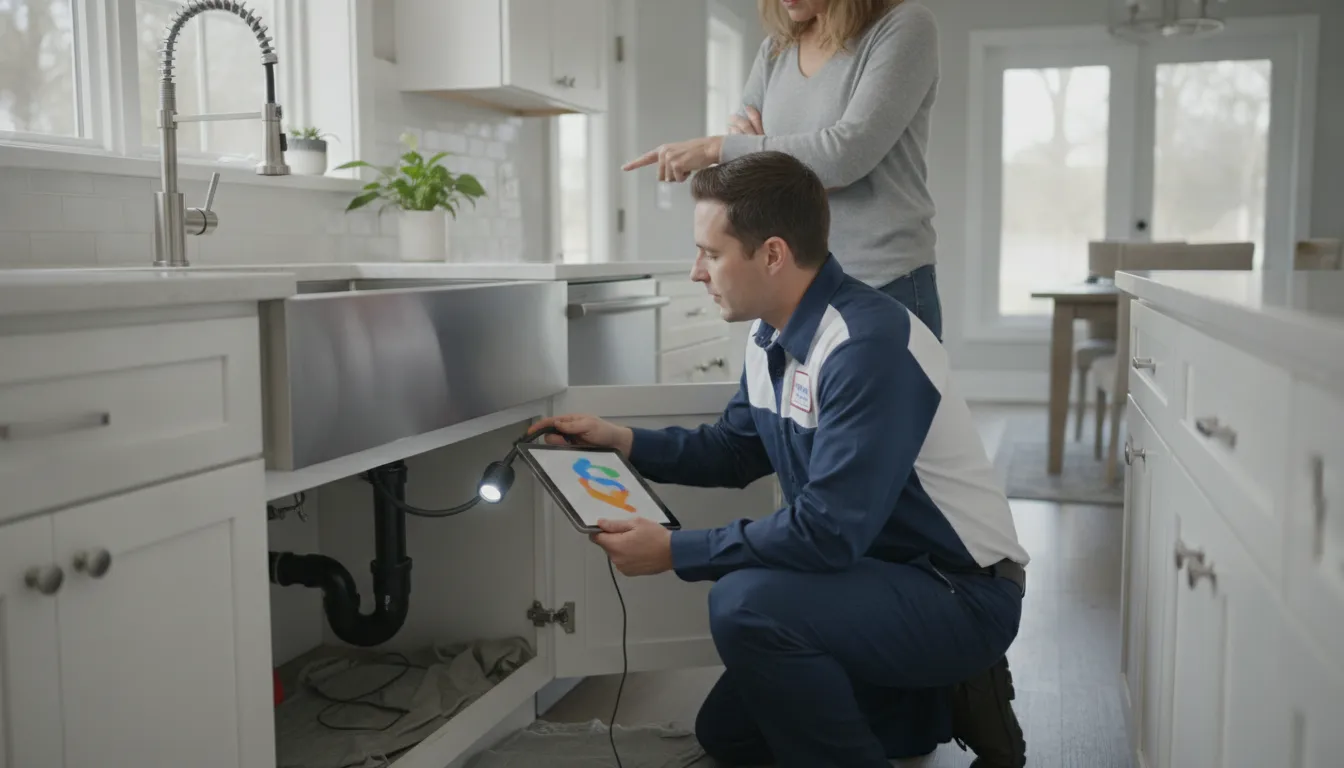
First, clear everything out from under your sink to give yourself a clean, well-lit workspace. Use your flashlight to get a good look at the garbage disposal unit, the pipes, and the hoses connected to it. You’re looking for obvious signs of water, like active drips, moisture, or puddles on the cabinet floor. Also, pay attention to more subtle clues like water stains, rust, peeling paint, or white, crusty mineral deposits on the unit or pipes. These are tell-tale signs of a slow, persistent leak. Even if you don’t see water right now, evidence of old leaks can help you zero in on the problem area.
Step 2: Run Water to Spot the Drip
Once you’ve done a quick visual check, it’s time to make the leak reveal itself. Make sure the area under the disposal is completely dry, and place a large, shallow bowl or a layer of paper towels directly underneath it. This will make it easy to see exactly where new drips are coming from. Next, put the stopper in your sink and fill the basin with a few inches of water. For extra visibility, add a few drops of dark food coloring to the water. Then, pull the stopper and let the water drain. Keep your eyes on the disposal unit and watch closely to see where the colored water appears.
Step 3: Check the Top Seal at the Sink Flange
One of the most common culprits for a garbage disposal leak is the sink flange. This is the metal ring that connects the disposal unit to the bottom of your sink. If the leak is coming from the very top of the disposal, the flange is likely the problem. This can happen if the mounting bolts holding the unit to the sink have vibrated loose over time, or if the plumber’s putty that creates the seal has dried out and failed. Shine your flashlight on the connection point between the sink and the disposal while water is running through it. If you see drips forming here, you’ve found your source.
Step 4: Inspect the Drain Hoses on the Side
If the top of your unit is dry, move your inspection to the side. Your garbage disposal has one or two drain lines connected to it. The smaller hose typically comes from the dishwasher, while the larger one directs wastewater into your home’s main drain pipe. These connections are secured with metal clamps and can sometimes loosen, causing leaks. While water is draining, feel around the points where these hoses connect to the disposal. If you find moisture, try tightening the metal clamp with a screwdriver. If that doesn’t work, the rubber gasket inside the connection may be worn out and need replacing.
Step 5: Look for Cracks at the Bottom of the Unit
A leak coming from the bottom of the garbage disposal unit itself is unfortunately a sign of a fatal flaw. You might see water dripping from the casing or from the reset button at the very bottom. This usually means an internal seal has failed, allowing water to corrode the unit from the inside out. In these cases, the housing itself may have developed cracks. This is not a problem that can be repaired. It indicates that the disposal has reached the end of its lifespan, and the entire unit needs to be replaced. If you’ve found a crack, it’s time to contact a professional for a replacement.
Common Fixes for Your Leaking Garbage Disposal
Once you’ve pinpointed where the water is coming from, you can roll up your sleeves and try a few common fixes. Many garbage disposal issues are surprisingly straightforward and don’t require a lot of specialized tools. Remember to always put safety first: before you start any repair, make sure you’ve turned off the power to the disposal at your circuit breaker. This simple step prevents the unit from accidentally turning on while you work.
While these DIY solutions can solve many problems, some leaks or motor failures point to a bigger issue. If a fix seems too complicated or the problem persists after your best efforts, don’t hesitate to get professional help. A persistent leak can lead to water damage and mold, so it’s better to address it properly. For those moments when a quick fix isn’t enough, our team is always ready to provide expert emergency plumbing services.
Reseal the Sink Flange
If you’ve traced the leak to the very top of the disposal, right where it meets the sink drain, the culprit is likely old or failed plumber’s putty. Over time, this seal can dry out and crack, allowing water to seep through. Resealing the flange is a common fix that just requires a little patience. You’ll need to detach the disposal from the sink, clean off the old putty from the flange, and apply a fresh, generous ring of new plumber’s putty. Once you press the flange back into place and reattach the disposal, the new seal should stop the leak for good.
Tighten or Replace the Drain Lines
A leak dripping from the side of your disposal often points to a loose connection with one of the two drain lines. One line brings water from your dishwasher, and the other carries waste to your main drain pipe. Check the metal clamps that hold these hoses in place. Sometimes, all you need is a screwdriver to tighten them up and stop the drip. If tightening the screws doesn’t solve it, the rubber gasket inside the connection might be worn out. You can usually find a replacement gasket at a hardware store to create a fresh, watertight seal.
Install New Seals or Gaskets
When you find water dripping from the bottom of the unit itself, it often means the internal seals have worn out. These rubber gaskets are located inside the disposal and protect the motor from water. While replacing them is possible, it’s a more involved repair that requires taking the entire unit apart. If you’re comfortable with a more technical project, you can find replacement kits for your specific model. However, if the thought of disassembling your disposal feels overwhelming, this is a perfect time to call in a professional. Our team handles these kinds of plumbing repairs all the time.
Press the Reset Button
If your disposal isn’t leaking but has stopped working entirely, the first thing to check is the reset button. This small button, usually red or black, is located on the bottom of the unit. It’s a safety feature that trips when the motor overheats, often due to a jam. After turning off the disposal switch, press this button firmly. If it clicks, you’ve successfully reset it. Turn on the cold water and try the switch again. If the disposal hums but doesn’t spin, or if the reset button keeps tripping, you likely have a jam that needs to be cleared.
Clear a Jam with a Hex Wrench
When your disposal hums but the blades won’t turn, something is probably stuck inside. Before you do anything else, turn off the power at the breaker. Never put your hands inside the disposal. Instead, look for a small hexagonal hole at the very bottom center of the unit. Insert a ¼-inch hex wrench (also called an Allen wrench) and turn it back and forth. This manually moves the blades, which can dislodge whatever is causing the jam. Once it moves freely, use tongs or pliers to safely remove the obstruction from inside the drain.
Repair or Replace? How to Decide
Once you’ve found the source of the leak, you’re faced with a big question: is this something you can fix, or is it time for a whole new unit? Making the right call can save you time, money, and a lot of frustration. Some issues are simple fixes you can handle in an afternoon, while others are clear signs that your disposal has reached the end of its life. Let’s walk through how to figure out your next step.
Signs You Need a New Disposal
Sometimes, a garbage disposal simply can’t be saved. The most definite sign is a leak coming from the very bottom of the unit. If you see water dripping from the main housing, it means the internal seals have failed and the body is likely cracked or corroded from the inside. Unfortunately, this isn’t a repairable problem, and the only solution is a replacement. Another factor to consider is age. Most garbage disposals have a lifespan of about 5 to 10 years. If yours is getting up there in age and constantly getting jammed or making strange noises, investing in a new one is often more cost-effective than paying for repeated repairs.
When a Simple Repair Makes Sense
On the other hand, many leaks are relatively easy to fix. If you’ve traced the leak to the top of the unit, right where it meets the sink drain (the sink flange), the plumber’s putty has likely worn out and just needs to be replaced. Similarly, if the leak is coming from the side hoses connected to the dishwasher or the main drain pipe, the fix could be as simple as tightening a loose connection. You might also need to replace a worn-out rubber gasket inside one of the pipe connections. These are all manageable repairs that don’t require you to buy a whole new appliance.
When It’s Time to Call a Plumber
If you’ve tried tightening the connections and resealing the flange but the leak persists, it’s time to call in a professional. There’s no need to spend your entire weekend under the sink feeling frustrated. A persistent leak could signal a more complex issue, and continuing to experiment might lead to water damage in your cabinet. If you’re not comfortable performing the repairs yourself or if the problem seems bigger than a loose connection, getting an expert opinion is the safest bet. A professional plumber can provide expert plumbing solutions to diagnose the issue correctly and get your kitchen back in working order, fast.
Related Articles
- DIY Garbage Disposal Repair: A Step-by-Step Guide
- Garbage Disposal Not Working? 5 Easy Fixes to Try
- Fix a Garbage Disposal Jam in 6 Easy Steps
Frequently Asked Questions
My disposal just hums but doesn’t spin. What does that mean? A humming sound usually means the motor is getting power but the blades are stuck. Most often, this is caused by a simple jam from something like a fruit pit or a piece of bone. After turning off the power at the breaker, you can often clear it by using a hex wrench on the bottom of the unit to manually turn the blades. If that doesn’t work, it could point to a more serious motor failure.
Is it really that bad to use a chemical drain cleaner in my garbage disposal? Yes, it’s a really bad idea. Those harsh chemicals can corrode the metal and plastic parts inside your disposal, causing permanent damage and creating new leaks. More importantly, they pose a serious safety risk. The chemicals can easily splash back onto your skin or into your eyes. It’s much safer to clear clogs manually or call a professional for help.
How do I know if I should repair my disposal or just get a new one? A good rule of thumb is to consider the location of the leak and the age of the unit. Leaks from the top flange or side drain hoses are often simple, inexpensive repairs. However, if your disposal is leaking from the bottom of its main body, is more than ten years old, or needs frequent repairs, replacing it is usually the more practical and cost-effective choice.
Water is dripping from the very bottom of the unit. Is that an easy fix? Unfortunately, a leak coming from the bottom of the disposal casing is not an easy fix. This is a clear sign that the internal seals have failed and water is getting into the motor housing, which often leads to corrosion and cracks. This type of failure means the unit has reached the end of its life, and the only solution is to have a new one installed.
I’ve tried the simple fixes, but it’s still leaking. What’s my next step? If you’ve already tried tightening the connections and checking the seals but the leak continues, it’s time to call a plumber. There’s no sense in getting frustrated or risking water damage to your cabinets. A persistent leak might signal a more complex problem that requires an expert eye. A professional can diagnose the issue correctly and ensure the repair is done right.