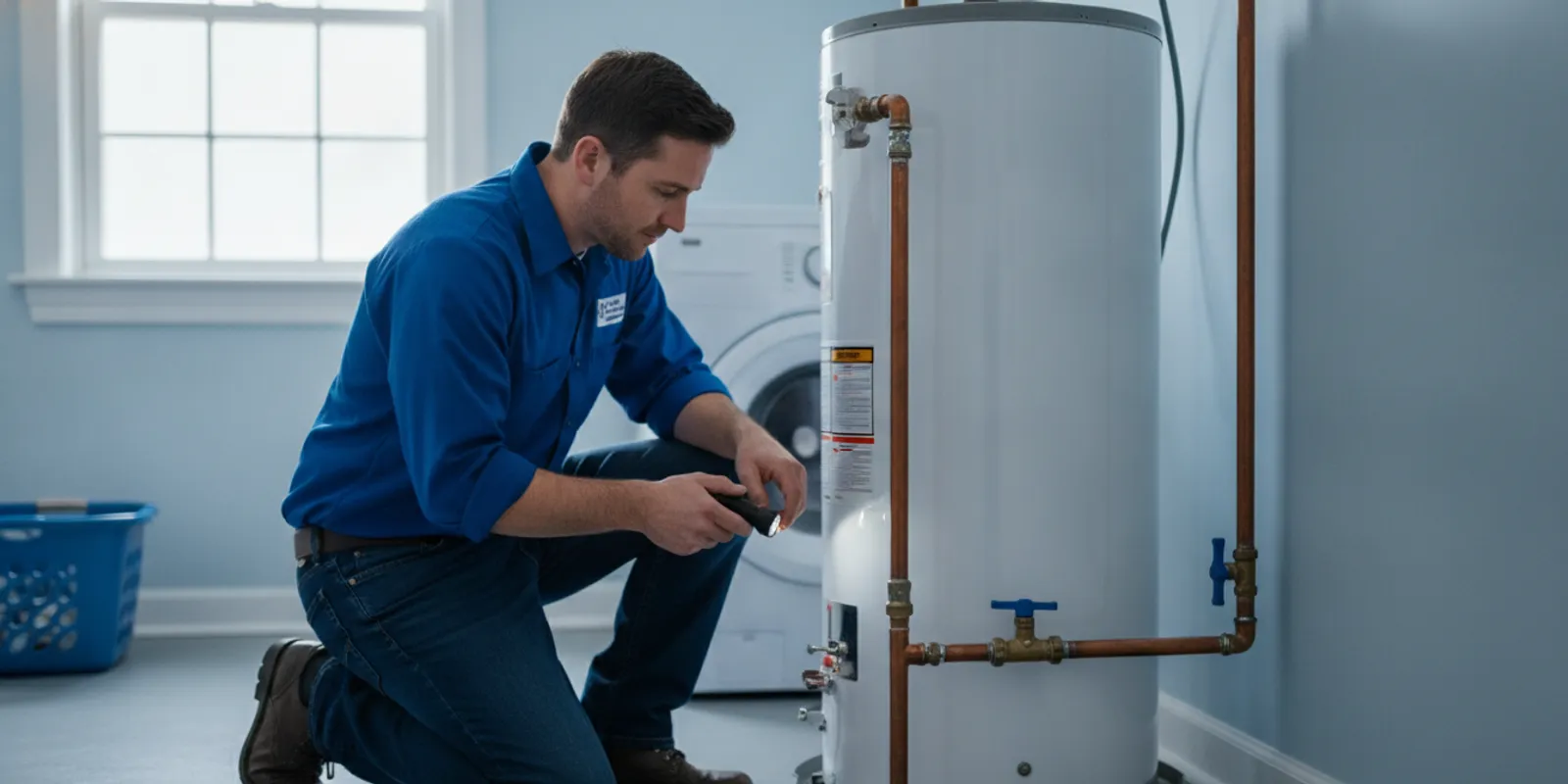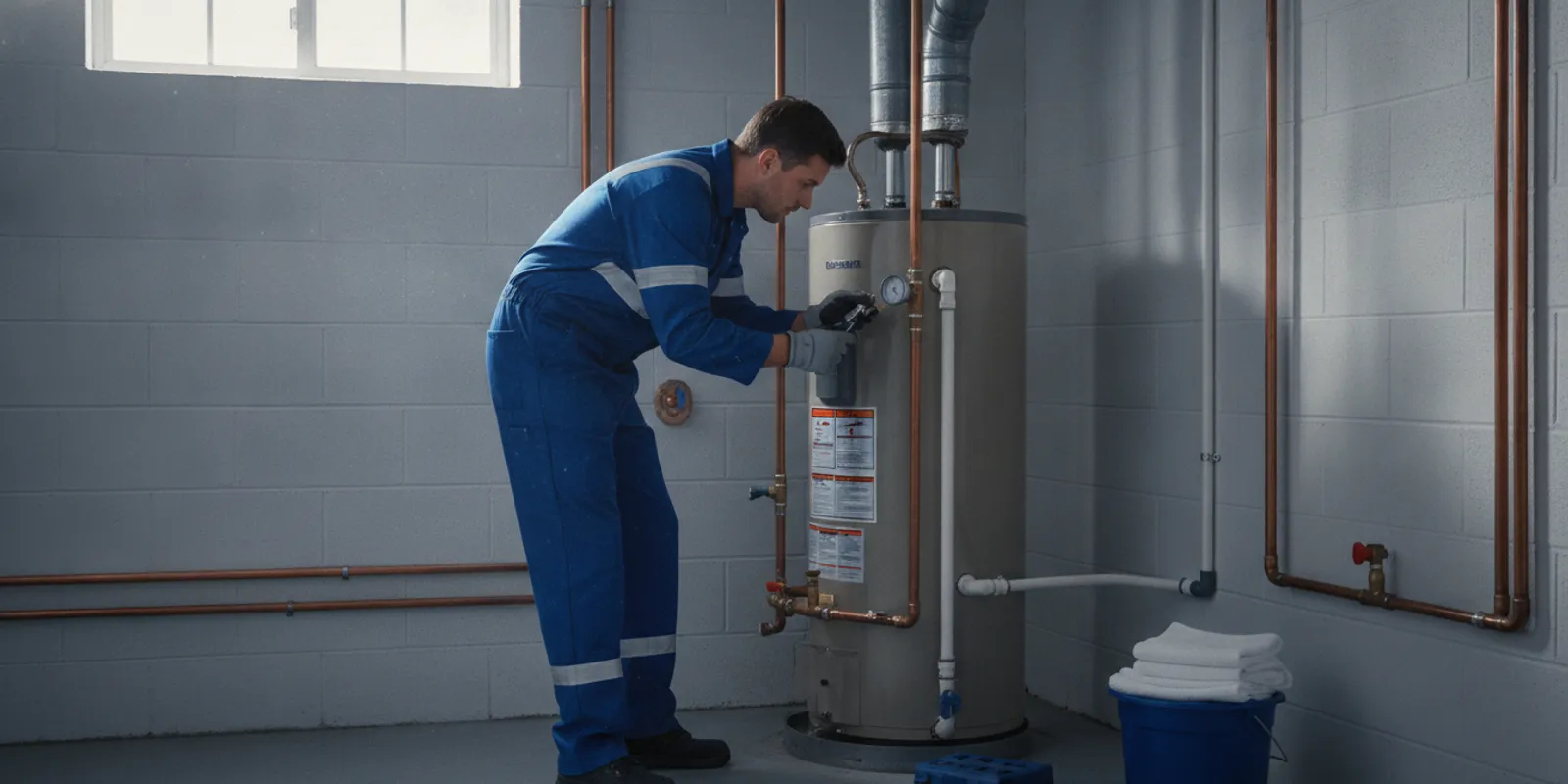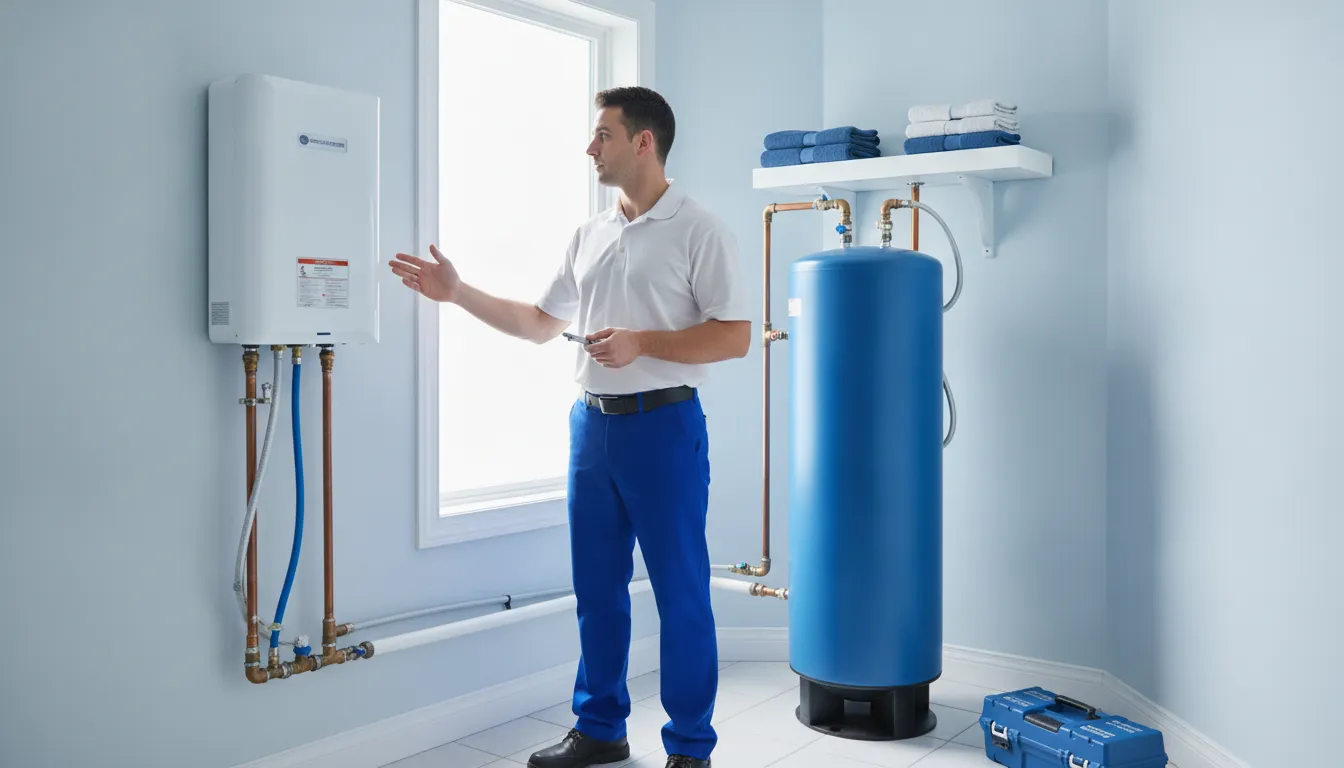


A water heater installation can look like a confusing puzzle of pipes, valves, and wires. Before you can put it all together, you need to understand what each piece does. Knowing the role of the T&P valve or why dielectric connectors are essential is the first step toward a safe and successful installation. This guide demystifies the entire process, explaining the function of every component. We’ll use a detailed 40 gallon electric water heater installation diagram as our reference, showing you exactly how everything fits together. Whether you plan to do the work yourself or just want to understand what your plumber is doing, this breakdown will give you clarity and confidence.
Key Takeaways
- Look beyond the price tag for long-term value: When choosing a water heater, prioritize a high Uniform Energy Factor (UEF) for monthly savings, a first hour rating that matches your household’s hot water usage, and a 6-year warranty for protection.
- A safe installation follows critical steps: Installing a water heater involves both plumbing and electrical work, so safety is paramount. Key actions include using dielectric connectors to stop corrosion and filling the tank completely before turning on the power to prevent burning out the heating elements.
- Simple maintenance extends your heater’s lifespan: To get the most out of your investment, flush the tank annually to clear sediment, check the anode rod every few years to prevent rust, and test the T&P safety valve periodically to ensure it works correctly.
Choosing Your 40-Gallon Electric Water Heater
Picking a new water heater can feel like a big decision, and it is. This appliance works hard behind the scenes every day, so choosing the right one affects your daily comfort and your monthly utility bills. While many 40-gallon electric models look similar on the outside, their performance, efficiency, and lifespan can vary quite a bit. It’s not just about getting hot water; it’s about getting it reliably and affordably for years to come.
Before you make a purchase, it helps to understand a few key terms and features. Knowing what to look for in energy ratings, performance metrics, and warranty coverage will help you select a water heater that’s a perfect fit for your home and family. Let’s walk through the most important factors so you can feel confident in your choice. After all, a little research now can save you from cold showers and high energy costs later.
What Do Energy Efficiency Ratings Mean?
When you see an energy efficiency rating on a water heater, it’s telling you how much of the electricity it uses is actually turned into hot water. The key metric here is the Uniform Energy Factor (UEF). A higher UEF number means the unit is more efficient, which translates directly to savings on your energy bills. For example, a model with a 0.95 UEF is considered very efficient. Choosing a water heater with a high UEF is a smart investment that pays for itself over time through lower operating costs.
Understanding First Hour and Recovery Rates
The first hour rating (FHR) tells you how much hot water the heater can produce in a single hour when it’s full. This is the number to pay attention to if you have a family that takes back-to-back showers in the morning. A solid model can deliver around 54 gallons of hot water in the first hour, powered by a capable 4,500-watt heating element. This recovery rate ensures you won’t be the one left with a lukewarm shower, even during peak usage times in your household.
Key Warranty and Safety Features to Look For
A good warranty is a clear sign that the manufacturer stands behind its product. When you’re comparing models, look for a 6-year limited warranty that covers both the tank and the parts. This gives you peace of mind that your investment is protected against defects. Safety is also non-negotiable. Modern water heaters come with built-in safety features, but it’s always a good idea to confirm the model you’re considering meets current safety standards before you buy.
How to Find a Reliable Model
You can start your search at large home improvement stores, as retailers like Lowe’s carry a wide selection of water heaters from various manufacturers. This makes it easy to compare different models, features, and price points all in one place. While browsing is a great first step, remember that the best water heater is one that’s installed correctly. If you have questions or want to ensure your new unit is set up for optimal performance and safety, our team at Mr. Pipey is always here to help with our expert plumbing solutions.
What Does a 40-Gallon Electric Water Heater Cost?
Figuring out the budget for a new water heater is a big first step. The total cost isn’t just the price tag on the unit; it also includes installation and can be influenced by the features you choose. Let’s break down what you can expect to pay for a 40-gallon electric water heater so you can plan your purchase with confidence. This size is a popular choice for many households, balancing capacity with energy use. Understanding the full financial picture helps you avoid surprises and make a decision that works for your family and your wallet.
Breaking Down the Unit Price
When you start shopping, you’ll find that the price for a 40-gallon electric water heater unit can vary quite a bit. Generally, you can expect the unit itself to cost anywhere from about $400 to over $900. This range depends on factors like the brand, warranty length, and energy efficiency ratings. A model with a higher efficiency rating or a longer warranty might cost more upfront, but it can lead to savings on your energy bills and future repairs. It’s a good idea to compare a few different models to see which features are most important for your home and budget.
Factoring in Professional Installation
The price of the water heater is just one piece of the puzzle. You also need to account for professional installation, which is key for safety and making sure your new unit runs correctly. Installation costs can add several hundred dollars to your total, depending on the complexity of the job and local labor rates. This service typically includes removing and disposing of your old heater, making all the necessary plumbing and electrical connections, and ensuring everything is up to code. Hiring a professional for your plumbing services ensures the job is done right the first time, protecting your home and your investment.
Smart Ways to Save on Your Purchase
While a new water heater is a significant expense, there are ways to be smart about your spending. Look for models with an ENERGY STAR certification, as they are designed to be more energy-efficient and can lower your monthly utility bills. You can also check for manufacturer rebates or local utility incentives that might be available for high-efficiency units. Most importantly, investing in a quality installation from a trusted, family-owned company prevents costly errors and future headaches. A proper setup ensures your water heater runs efficiently for years, giving you the best long-term value and peace of mind.
Anatomy of a Water Heater Installation
A water heater installation might seem like a tangled mess of pipes and wires, but every part has a specific and important job. When you understand the anatomy of the installation, the whole process becomes much less intimidating. It helps you see how the system works together to deliver hot water safely and efficiently to your faucets and appliances. More importantly, knowing the key components allows you to spot when something isn’t right and understand the value of a professional installation. From the water lines that feed the tank to the safety valves that protect your home from potential disasters, each component is a crucial piece of the puzzle. Think of it like a car engine; you don’t need to be a mechanic to know that the oil, battery, and brakes are all essential. Let’s walk through the key parts of a standard electric water heater setup so you know exactly what to expect during a professional installation and can feel confident in the work being done in your home.
Connecting the Cold Water Inlet and Hot Water Outlet
First things first: water has to get in and out. The cold water inlet pipe connects your home’s main water supply to the heater. A licensed plumber will always install an in-line shut-off valve on this line, which is essential for turning off the water for future maintenance or repairs. The hot water outlet pipe does the opposite, carrying the heated water from the tank to all the faucets and appliances in your home. Proper connections here are key to ensuring you have consistent water pressure and flow where you need it. These connections are the foundation of your entire hot water system.
Using Dielectric Connectors to Prevent Corrosion
Have you ever heard that oil and water don’t mix? Well, in plumbing, certain metals don’t play nicely together either. Your home’s plumbing is likely copper, while the water heater tank is steel. When these two different metals are connected directly, a chemical reaction called galvanic corrosion occurs, which can eat away at the pipes and tank. To prevent this, we use dielectric connectors. These special fittings act as a barrier between the two metals, stopping the corrosive reaction before it starts and significantly extending the life of your water heater. It’s a small part that makes a huge difference.
The Role of the Temperature and Pressure (T&P) Valve
The T&P valve is your water heater’s most important safety feature. This small brass valve, usually located on the top or side of the tank, is designed to automatically open and release water if the temperature or pressure inside gets dangerously high. This prevents the tank from rupturing. A proper installation includes a discharge pipe connected to the valve that runs down toward the floor, ending about six inches above a drain. This setup ensures that if the valve ever activates, the hot water is directed away safely, preventing a plumbing emergency.
Wiring the Electrical Junction Box
For an electric water heater, the electrical connection is just as important as the plumbing. This is a job that absolutely requires a professional. The heater connects to your home’s electrical system at the junction box, which is typically found behind a small plate on the top or side of the unit. This connection requires a dedicated 240-volt circuit, which is much more powerful than a standard outlet. A plumber or electrician will run a heavy-duty 10-gauge wire from a 30-amp double-pole breaker in your main electrical panel to ensure the heater has the power it needs to operate safely.
Key Parts: The Drain Valve, Anode Rod, and Drain Pan
A few other parts are vital for your water heater’s long-term health. At the bottom of the tank, you’ll find a drain valve, which looks like a small spigot. This is used to flush sediment out of the tank annually. Inside the tank is a long metal pole called an anode rod. This “sacrificial” rod is designed to corrode instead of your tank, protecting it from rust. Finally, a drain pan should be placed under the heater, especially if it’s located anywhere that a leak could cause water damage. It’s simple, inexpensive insurance against a major headache.
Do You Need an Expansion Tank?
If your home has a “closed-loop” plumbing system, which is common in newer houses, an expansion tank is a must. When water heats up, it expands. In a closed system, that extra volume has nowhere to go, causing a rapid pressure spike. An expansion tank is a small, secondary tank that installs on the cold water line. It contains an air bladder that absorbs the excess pressure, acting as a shock absorber for your plumbing. This protects not just the water heater but your entire plumbing system from stress, leaks, and damage.
How to Install a 40-Gallon Electric Water Heater
Installing a new water heater is a significant project that involves both plumbing and electrical work. While it’s a task some experienced DIYers can handle, it requires careful planning, the right tools, and a strong focus on safety. This guide will walk you through the essential steps, from preparing your space to firing up your new unit. Remember, this is a complex job, and there’s no shame in calling for backup. For a safe, leak-free installation that meets all local codes, a professional plumber is your best bet.
Gather Your Tools and Materials
Before you start, make sure you have everything you need. A mid-project run to the hardware store is no fun, especially with your water turned off. You’ll likely need a couple of pipe wrenches, channel-lock pliers, a tube cutter, wire strippers, a voltage tester, and a level. For materials, you’ll have your new 40-gallon electric water heater, of course, along with Teflon tape for sealing threads, flexible water supply lines, and dielectric connectors to prevent corrosion. It’s also wise to have a drain pan ready to catch any potential leaks, especially if your heater is located indoors.
Check for Permits and Local Codes First
This step is easy to overlook but incredibly important. Before you buy or install anything, check with your local building department in the Metro Detroit area for any permit requirements. Plumbing codes can vary by city and may mandate specific components, like a thermal expansion tank to manage pressure fluctuations or seismic straps for stability. Following these regulations ensures your installation is not only safe but also compliant, preventing any headaches down the road. A quick call can save you from having to redo your work or pay a fine.
Step 1: Shut Off the Power and Water
Safety first, always. Before you touch the old water heater, you need to cut off its power supply completely. Head to your home’s circuit breaker box and flip the breaker that controls the water heater. I always recommend using a voltage tester on the wires at the heater itself to be absolutely sure the power is off. Next, find the shut-off valve on the cold water pipe leading into the tank and turn it clockwise until it’s fully closed. To help the tank drain, go to a sink and turn on a hot water faucet.
Step 2: Drain and Remove the Old Heater
Now it’s time to empty the old tank. Connect a garden hose to the drain valve located near the bottom of the heater and run the other end to a floor drain or outside. Open the drain valve, and to speed things up, open the pressure relief valve to let air into the tank. A 40-gallon tank holds a lot of water, so be patient. Once it’s empty, you can disconnect the plumbing and electrical lines. Remember, even when empty, the unit is heavy and bulky, so grab a friend to help you move it out of the way.
Step 3: Position Your New Water Heater
With the old unit gone, take a moment to clean the area. If you’re using a drain pan, place it down first. Carefully move your new 40-gallon electric water heater into position, using a level to make sure it’s sitting flat and stable. Check the manufacturer’s instructions for clearance requirements; you’ll want to leave enough space around the unit for air circulation and any future plumbing services or maintenance. Getting the placement right from the start makes the rest of the installation much smoother.
Step 4: Connect the Plumbing Lines
Now for the plumbing. Start by wrapping the threaded connections on the water heater’s inlet and outlet with Teflon tape to create a watertight seal. Attach dielectric connectors to these ports to prevent galvanic corrosion, which happens when different metals (like the copper in your pipes and the steel of the tank) are connected. Next, connect your cold water supply line to the cold water inlet and the hot water line to the outlet. Finally, install the new temperature and pressure (T&P) relief valve and its discharge pipe, making sure it points down toward the floor.
Step 5: Complete the Electrical Wiring
This is the part of the job that requires the most caution. If you feel even slightly unsure about handling electrical wires, please call a professional. First, double-check that the power is off with your voltage tester. Then, remove the cover plate for the electrical junction box on your new heater. You’ll connect the wires from your home’s power supply to the heater’s wires, matching the colors: black to black, white to white. The bare copper or green wire is the ground, which attaches to the green ground screw. Secure the connections with wire nuts and replace the cover.
Step 6: Fill the Tank Before Turning on the Power
This is a critical step. Never turn on the power to an electric water heater before it is completely full of water. Doing so will instantly burn out the heating elements, a mistake we call “dry firing.” Make sure the drain valve is closed, then open the cold water supply valve to start filling the tank. Keep that hot water faucet open at your sink. Once water flows steadily from the faucet, the tank is full and the air has been purged from the system. Let it run for a minute, then turn it off and carefully check all your new connections for leaks.
Essential Safety Precautions to Follow
Let’s quickly recap the most important safety rules. Always turn off the power at the breaker and verify with a voltage tester before doing any work. The T&P valve is a crucial safety device that prevents the tank from over-pressurizing, so make sure it’s installed correctly. Once your heater is running, set the thermostat to 120°F. This temperature is hot enough for your needs but helps prevent accidental scalding and is more energy-efficient. A safe installation is a successful installation.
Common Installation Mistakes to Avoid
A few common slip-ups can turn a DIY project into a disaster. The biggest one is dry firing the unit by turning on the power before the tank is full. Another is forgetting to use Teflon tape on threaded connections, which leads to slow, frustrating leaks. Skipping the dielectric connectors can also cause corrosion that shortens the life of your heater. Finally, ignoring local codes, like failing to install a required expansion tank, can cause serious problems and may even void your warranty. Taking your time and double-checking your work helps you avoid these pitfalls.
When Is It Time to Call a Professional?
If you’ve read this far and feel overwhelmed, that’s perfectly okay. Installing a water heater is a tough job. It’s time to call a professional if you’re not 100% confident with both plumbing and electrical work, if you don’t have the necessary tools, or if the installation requires rerouting pipes or updating wiring. For peace of mind and a guarantee that the job is done right, our team at Mr. Pipey is always here to help. We handle everything from frozen pipe repair to new installations, ensuring your home’s plumbing is safe and reliable.
How to Maintain Your Electric Water Heater
Once your new water heater is installed, a little routine maintenance will go a long way in keeping it running efficiently for years to come. Taking care of your water heater helps prevent surprise breakdowns, extends its lifespan, and keeps your energy bills in check. These simple steps are the key to getting the most out of your investment. While some tasks are straightforward, never hesitate to contact a professional if you feel unsure. Your safety is always the top priority, and we’re here to help with any plumbing needs you have.
Flush the Tank Annually
Over time, sediment and mineral deposits from your water supply can settle at the bottom of your water heater’s tank. This buildup forces the heating elements to work harder, which wastes energy and can eventually cause them to fail. Flushing the tank once a year is the best way to clear out this gunk. The process involves turning off the power and water, connecting a hose to the drain valve, and letting the water run until it’s clear. This simple task helps maintain your heater’s performance and can significantly prolong its life.
Inspect and Replace the Anode Rod
Think of the anode rod as a bodyguard for your water heater tank. This metal rod is made of aluminum or magnesium and is designed to corrode so your steel tank doesn’t. It sacrifices itself to prevent rust from eating through the inside of your heater. We recommend having it inspected every couple of years. If the rod is mostly eaten away or covered in calcium, it’s time for a replacement. This is a crucial step in preventing leaks and is one of the most effective ways to extend the life of your water heater.
Test the T&P Valve Periodically
The temperature and pressure (T&P) relief valve is a critical safety device. If the temperature or pressure inside the tank gets too high, this valve automatically opens to release the excess and prevent a potential explosion. To make sure it’s working correctly, you should test it once a year. Simply lift the lever for a few seconds to let a burst of hot water out, then let it snap back into place. If the valve leaks afterward or doesn’t release any water, it needs to be replaced immediately. A faulty T&P valve is a serious safety hazard, so if you notice any issues, call for emergency plumbing service right away.
Set Your Thermostat to a Safe, Efficient Temperature
Most manufacturers set water heater thermostats to 140°F, but for most households, that’s unnecessarily high. A setting of 120°F is the sweet spot for both safety and efficiency. It’s hot enough for all your household needs but significantly reduces the risk of accidental scalding, especially if you have young children or elderly family members. Lowering the temperature also slows mineral buildup and corrosion in your tank and pipes. Plus, for every 10 degrees you lower the temperature, you can save up to 5% on your water heating costs.
How to Troubleshoot Common Problems
Even with perfect maintenance, you might eventually run into issues like lukewarm water, popping sounds from the tank, or a small puddle on the floor. While it can be tempting to try and fix it yourself, water heaters involve high-voltage electricity and scalding water, making DIY repairs risky. If you notice anything unusual, the safest first step is to shut off the power to the unit at your circuit breaker. From there, it’s best to call a professional plumber to diagnose the problem. We have the tools and expertise to handle all types of plumbing services safely and get your hot water running again.
Related Articles
- Water Heater Installation: A Step-by-Step Guide
- How to DIY a Tankless Water Heater Installation
- Water Heater Cost and Installation: A Complete Guide
- Labor Cost to Install Water Heater: A Full Breakdown
Frequently Asked Questions
How do I know if a 40-gallon water heater is the right size for my family? A 40-gallon electric water heater is a solid choice for many households, typically serving two to four people quite well. The key is to think about your family’s peak water usage. If you often have multiple showers running back-to-back while also doing laundry, you might want to pay close attention to the First Hour Rating (FHR). This number tells you how much hot water the unit can deliver in an hour, which is a great indicator of whether it can keep up with your family’s demand.
Is it really worth paying more for a high-efficiency water heater? Yes, it almost always is. While a model with a high Uniform Energy Factor (UEF) rating might have a bigger price tag, it’s an investment that pays you back over time. A more efficient unit uses less electricity to heat the same amount of water, which directly translates to lower monthly energy bills. Think of it as paying a little more upfront to guarantee savings for the entire 8 to 12-year lifespan of the appliance.
If I only do one maintenance task, what should it be? This is a tough one, but if you’re only going to do one thing, I’d say flush the tank annually. Clearing out the sediment that builds up at the bottom keeps your heating elements from working overtime, which saves energy and prevents them from burning out prematurely. That said, checking the anode rod every few years is a very close second, as it’s the single best thing you can do to prevent the tank itself from rusting through.
Can I really install a water heater myself, or should I hire a plumber? While it’s technically possible for a homeowner with advanced plumbing and electrical skills, I strongly recommend hiring a professional. This job involves working with a 240-volt circuit and making watertight plumbing connections, so the risks are high. A small mistake can lead to leaks, water damage, or a dangerous electrical situation. A licensed plumber ensures the installation is safe, efficient, and up to all local codes, giving you complete peace of mind.
How long should my new electric water heater last? You can generally expect a new 40-gallon electric water heater to last somewhere between 8 and 12 years. The biggest factor influencing its lifespan is maintenance. A heater that is flushed annually and has its anode rod checked and replaced as needed is far more likely to reach or even exceed that 12-year mark. Neglecting these simple tasks can unfortunately shorten its life by several years.