
Your home’s main water line is like the main highway for all water entering your property. It’s the primary route that delivers fresh, clean water from the city supply right to your doorstep. But once that water arrives, it needs to go to different destinations. This is where homeowners often ask, “does main water line go to water heater?” It does, by taking a designated exit ramp. A portion of the water is diverted off the main “highway” and sent to your water heater for heating, while the rest continues on as your cold water supply. This efficient system ensures every fixture gets the right temperature of water, all starting from one single source.
Key Takeaways
- Understand your main line’s function: This single pipe is the starting point for all water in your home, splitting to supply both cold water directly to fixtures and water to your heater for your hot water supply.
- Prioritize water heater safety and efficiency: Key components like the thermostat, which should be set to 120°F, and the temperature and pressure relief valve are essential for safe, efficient operation.
- Perform regular maintenance to prevent problems: Simple tasks like checking for leaks, flushing your water heater once a year, and insulating pipes in cold areas can extend the life of your plumbing and help you avoid costly repairs.
How Your Main Water Line Works
Ever wonder how water magically appears when you turn on a faucet? It’s not magic, but a well-designed system starting with your main water line. Think of this line as the primary artery for your home’s entire plumbing system. It’s the single pipe responsible for bringing fresh, clean water from the municipal supply directly to your house. Understanding how it works is the first step to spotting problems and keeping your water flowing smoothly.
From this one line, all the water for your showers, toilets, washing machine, and sinks begins its journey. If this line gets damaged, it can disrupt your entire home, which is why knowing the basics is so helpful for any homeowner. It’s the unsung hero of your daily routine, working silently behind the scenes (or under the ground) to deliver the water you rely on.
What Your Main Water Line Does
The main water line has one crucial job: to carry water from the city’s main into your home. Once inside, its path immediately splits in two. One path continues as the cold water line, feeding directly to your faucets, toilets, and other fixtures that use cold water. This ensures you have immediate access to cold water whenever you need it.
The second path diverts a portion of that incoming water and sends it straight to your water heater. This is the beginning of your home’s hot water supply. By splitting the water flow right at the start, your plumbing system efficiently separates the cold and hot water supplies, making sure each is ready for use throughout your house.
Where to Find Your Main Water Line
Your home’s main water line connects to the city’s water main, which is usually located under the street. The city’s system uses powerful pumps to create pressure, pushing water from the main into your home’s dedicated line. This line typically enters your property underground before popping up inside your house, often in a basement, crawl space, or utility closet.
Because it’s exposed to the elements underground, this pipe can be vulnerable to freezing temperatures in the winter or damage from shifting soil. A problem with this line can affect your whole house, so knowing its location is key. If you ever face a major leak, you’ll need to find the main shut-off valve, which is located where the line enters your home. Any issues with this critical pipe may require emergency plumbing to prevent widespread damage.
Key Parts of Your Main Water Line
After entering your home and passing through the main shut-off valve and water meter, the main line gets to work. As we mentioned, it splits to provide cold water and to supply your water heater. The water heater then does its job, heating the water to a set temperature before sending it out through a separate system of hot water pipes.
These hot and cold pipes run parallel to each other, branching off to every fixture and appliance that needs water. Your kitchen sink, shower, and washing machine all have both hot and cold connections. Your toilet, on the other hand, only needs a cold water connection. This network of pipes ensures that the right temperature of water is delivered exactly where you need it, all starting from that single main line. Protecting these pipes with proper pipe insulation is a great way to improve efficiency and prevent freezing.
Does the Main Water Line Go to the Water Heater?
Yes, it does! But it’s not quite a direct, one-way trip. Think of your main water line as the main highway for all water entering your home. A portion of that traffic needs to be diverted to your water heater to become hot water. So, while the main line is the source, it strategically splits to supply both your cold water taps and your water heater. This clever design is what makes modern plumbing so convenient.
This setup is the foundation of your home’s entire plumbing system, ensuring you have both hot and cold water ready whenever you turn a handle. After the water enters your home from the municipal supply, it travels to a point where the line splits. One path continues on to supply cold water to your toilets, outdoor spigots, and the cold side of your faucets. The other path directs water into your water heater to be heated. Understanding this flow is helpful, especially if you ever run into issues like a sudden loss of hot water or problems with pressure. If you suspect a problem with your main line, it’s often best to call for emergency plumbing services to prevent further damage and get your water running again.
How Your Main Line Splits for Hot and Cold Water
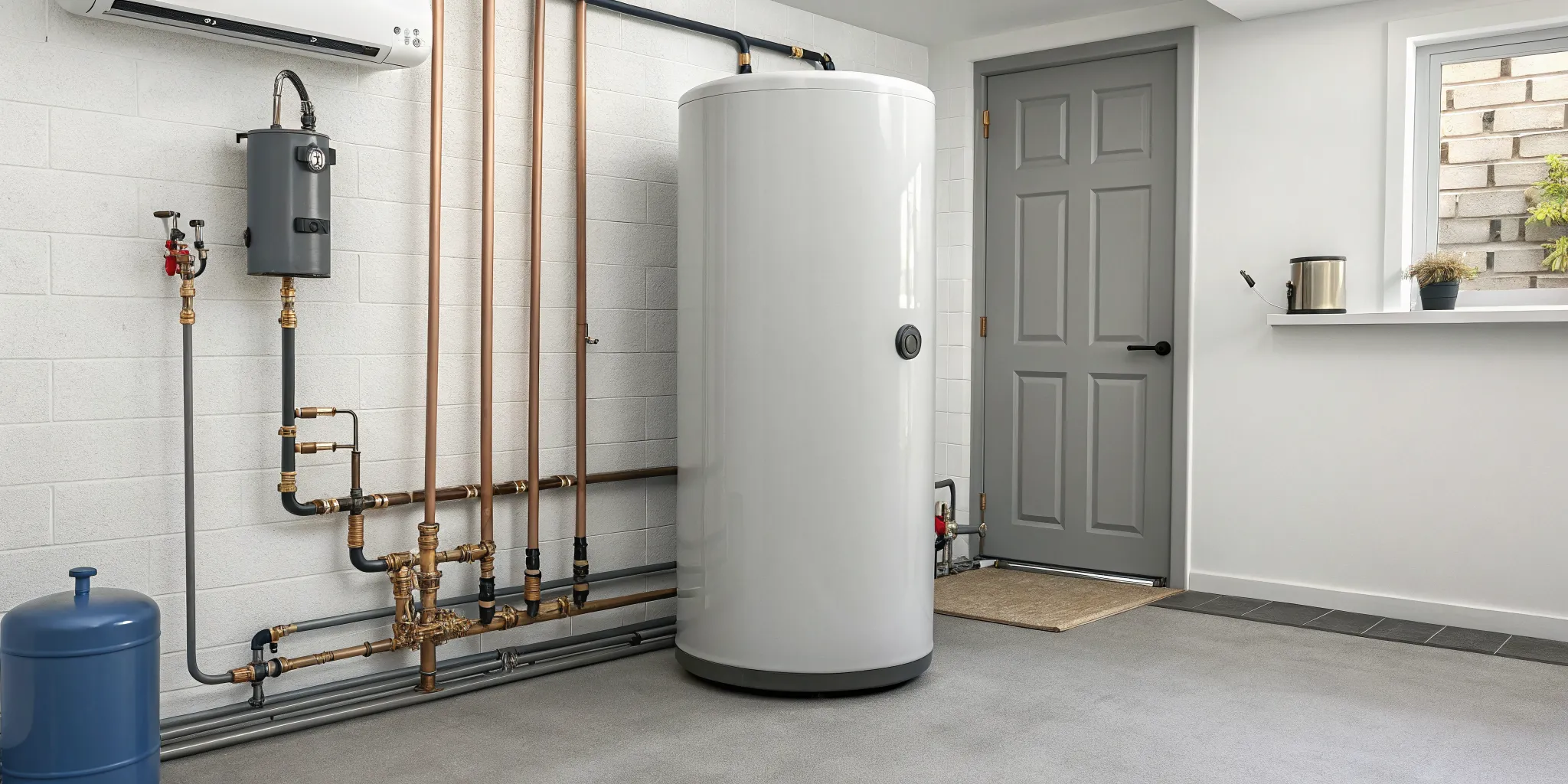
So, how does one pipe become two? Just before the main line reaches your water heater, it typically connects to a T-shaped fitting. This is the critical junction that splits the water flow. One branch of the “T” directs water into the cold water inlet of your water heater. The other branch becomes the main cold water line for the rest of your house.
This cold water line then branches out further, running to every fixture that needs cold water, like your kitchen sink, washing machine, and toilets. Without this split, every tap in your house would only produce hot water, which isn’t very practical. Protecting these pipes, especially in a chilly Detroit winter, is key to keeping your water flowing. Proper pipe insulation can prevent both hot and cold lines from freezing.
Cold Water In, Hot Water Out
Once the designated cold water pipe reaches your water heater, its job is to fill the tank. This pipe, called the cold water inlet, usually has a dip tube that sends the cold water down to the bottom of the tank. This is where the heating elements or gas burner get to work, warming the water.
As the water heats up, it naturally rises to the top of the tank. A separate pipe, the hot water outlet, is positioned at the top to carry this newly heated water out to all the hot water taps in your home. This continuous cycle of cold water in, hot water out is what provides that steamy shower or hot water for washing dishes. Meanwhile, the separate cold water line is what supplies your toilet repair needs, as toilets only require a cold water connection.
Why Every Home’s Plumbing is Different
While the basic principle of splitting the main line is the same everywhere, the actual layout of the pipes can look very different from one house to the next. The specific configuration of your plumbing depends on your home’s age, its architectural style, and where the main water line enters the property. For example, a home with a basement will have a different plumbing setup than a home built on a concrete slab.
This variation is why there’s no single answer for where to find every pipe. It takes a trained eye to trace the lines and understand the unique plumbing map of a home. At Mr. Pipey, we know that every home is unique, and we pride ourselves on figuring out the specific needs of each system. Our family-owned business has seen just about every plumbing layout Metro Detroit has to offer, so we know how to find the source of a problem quickly and efficiently.
How Your Home Gets Hot and Cold Water
Ever wonder about the journey water takes before it comes out of your faucet? It’s a surprisingly organized system. Once the main water line enters your home, it splits to deliver both hot and cold water exactly where you need it. Think of it as a fork in the road, where one path heads straight to your fixtures and the other takes a detour through your water heater first. This simple split is the key to how your entire home gets both hot and cold water on demand.
Where the Cold Water Goes
Just before your main water line reaches the water heater, it divides. One pipe branches off to become your cold water supply line. This line is a direct route, sending cold water straight to all the fixtures and appliances that need it. This includes your toilets, the cold side of your sinks and showers, your washing machine for cold rinses, and your outdoor spigots. Because this water doesn’t pass through the heater, it stays at the same cool temperature it was when it entered your home. If you ever have issues with a toilet, it’s a problem with this cold water line, which might require a professional toilet repair.
Where the Hot Water Goes
The water that doesn’t go down the cold water path flows directly into your water heater. Inside the tank, a sensor activates a heating element or gas burner to warm the water to your desired temperature. Once heated, this water exits the tank through a hot water line. This network of pipes runs parallel to the cold water lines, traveling throughout your house to supply hot water to your sinks, shower, dishwasher, and washing machine. The two systems remain separate until you turn a faucet handle, mixing them to get the perfect temperature. A leak in a hot water line can cause significant damage, often requiring emergency plumbing services.
The Role of Water Pressure
So, what pushes all this water through your pipes? It’s all about pressure. Your city’s water supply is pressurized, and that force is what moves water from the municipal main into your home’s main water line. This pressure is what allows water to flow upstairs and reach every faucet. If you live far from the city’s pumping stations, you might experience lower water pressure. On the other hand, pressure that’s too high can strain your pipes and fixtures. Maintaining balanced pressure is key to a healthy plumbing system and is one of the many things a professional can check during a routine inspection of your home’s plumbing services.
What Parts Make Up Your Water Heater?
Your water heater might just look like a big, quiet tank sitting in your basement or utility closet, but it’s actually a complex appliance with several key parts working in sync. Getting to know these components can help you understand how your home gets hot water and spot potential problems before they turn into major headaches. From the parts that do the heating to the crucial safety features that protect your home, each piece has an important job. Let’s take a look inside and see what makes your water heater tick.
The Heart of the Heater: Elements and Burners
The core job of your water heater is, of course, to heat water. How it does this depends on whether you have a gas or electric model. A gas water heater has a burner and a pilot light at the base of the tank, which heats the water from the bottom up. An electric water heater uses one or two heating elements located inside the tank itself. These elements are submerged in the water and heat it directly. If your hot water suddenly goes cold, a problem with these heating components is often the culprit, and it might be time to call for emergency plumbing services.
Safety First: Shut-Off and Relief Valves
Two of the most important parts of your water heater are its safety valves. First, there’s the cold water shut-off valve. This is usually a lever or wheel-style handle on the pipe that brings cold water into the tank. It allows you to stop the water supply to the heater, which is essential for maintenance or in an emergency. The second is the temperature and pressure (T&P) relief valve. This critical safety device automatically opens to release pressure if it builds up too much inside the tank, preventing a dangerous situation. It’s a small part that does a huge job in keeping your home and family safe.
Set a Safe Temperature (And Why It Matters)
Your water heater’s thermostat is the brain of the operation. It constantly monitors the water temperature inside the tank and tells the burner or heating elements when to turn on and off. Most manufacturers recommend a setting of 120°F. This temperature is hot enough to prevent harmful bacteria from growing in the tank, but it’s also low enough to reduce the risk of scalding and save you money on energy bills. Setting the temperature too high is a safety hazard, especially for homes with children or elderly family members, and it makes your heater work harder than it needs to.
Tank vs. Tankless: How They Differ
Water heaters generally come in two main types: tank and tankless. A traditional tank water heater holds and keeps a large supply of water (usually 40 to 50 gallons) hot and ready for you to use. When you hear people talk about “running out of hot water,” it’s because they’ve used up all the water stored in the tank. A tankless water heater, on the other hand, heats water on demand as it flows through the unit. It doesn’t store any water, so you get a continuous supply of hot water. Both have their pros and cons, and our team can help with any plumbing services you need for either type.
How to Maintain Your Water Line and Heater
A little proactive care for your home’s plumbing can save you from major headaches and expensive repairs. Your main water line and water heater work hard every day, and regular maintenance keeps them running efficiently and safely. Think of it as a simple check-up to prevent a future emergency. By following a few key steps, you can extend the life of your equipment, conserve energy, and ensure you always have clean, hot water when you need it. Here’s a straightforward guide to maintaining these essential systems.
Inspect for Leaks Regularly
One of the simplest yet most important habits is to regularly check for leaks. Water can escape from loose connections, rusted pipes, or worn-out fittings, often in places you don’t look every day. Take a peek under your sinks, behind the toilet, and around the base of your water heater. Look for drips, water stains, or small puddles. A hidden leak not only wastes water and drives up your bill but can also cause significant water damage over time. If you spot a leak, it’s best to address it right away before it becomes a bigger problem requiring emergency plumbing services.
Flush Your Water Heater Annually
Over time, sediment like minerals and sand settles at the bottom of your water heater tank. This buildup forces your heater to work harder to warm the water, reducing its efficiency and shortening its lifespan. Flushing your water heater once a year removes this sediment. The process involves draining the tank through the valve at the bottom. While some homeowners feel comfortable doing this themselves, it can be a bit tricky. If you’re unsure, having a professional handle the flush ensures it’s done correctly and gives them a chance to inspect the unit for any other potential issues.
Check and Replace the Anode Rod
Inside your water heater tank is a hidden hero: the anode rod. This metal rod is designed to corrode so your tank doesn’t. It essentially sacrifices itself to prevent the steel tank from rusting out from the inside. Anode rods typically last for a few years, but you should have a professional check it during your annual maintenance. If the rod is mostly eaten away, replacing it is a small, inexpensive fix that can dramatically extend the life of your water heater. It’s one of the most effective ways to protect your investment.
Manage Your Water Pressure
Water pressure is a delicate balance. Too low, and your showers are disappointing. Too high, and you risk damaging your entire plumbing system. High pressure puts constant strain on your pipes, joints, and appliances like your dishwasher and washing machine, which can lead to leaks and premature failure. A plumber can easily test your home’s water pressure. If it’s too high, they can install a pressure-reducing valve to protect your system. Consistent, balanced pressure is key to a happy and healthy plumbing network, and our team can provide a range of plumbing solutions to help.
Insulate Your Pipes
Here in Metro Detroit, we know how cold winters can get. Insulating your pipes is a simple step that offers two big benefits. First, it helps your hot water pipes retain heat, so you waste less energy (and water) waiting for it to warm up at the tap. Second, and more importantly, it helps prevent your pipes from freezing and bursting during a cold snap. Focus on pipes in unheated or poorly insulated areas like basements, crawl spaces, and garages. Proper pipe insulation is one of the best preventative measures you can take against a winter plumbing disaster.
Test the Pressure Relief Valve
Your water heater’s temperature and pressure (T&P) relief valve is a critical safety device. If the pressure or temperature inside the tank gets dangerously high, this valve automatically opens to release it, preventing a potential explosion. You should test it once a year to make sure it’s working. To do this, place a bucket under the discharge pipe and briefly lift the valve’s lever. A burst of hot water should come out. If only a trickle comes out or it keeps leaking after the test, it needs to be replaced immediately by a professional.
Know the Warning Signs of Damage
Your plumbing often gives you clues when something is wrong. Pay attention to them. For your water heater, warning signs include lukewarm or rusty-colored water, popping or rumbling sounds coming from the tank, or any signs of water leaking around the base. For your main water line, a sudden drop in water pressure, an unexplained spike in your water bill, or damp, soggy spots in your yard can all signal a problem. Catching these issues early can often mean a simpler and less costly fix, like a straightforward toilet repair instead of a full replacement.
When to Call a Plumber
While some of these maintenance tasks are manageable for a handy homeowner, many are best left to a professional. You should always call a plumber if you suspect a leak in your main water line, if your T&P valve isn’t working correctly, or if you notice any of the major warning signs of damage. Tasks like replacing an anode rod or flushing the tank can also be complex. If you ever feel unsure or uncomfortable, it’s always the safer choice to get professional help. Our team at Mr. Pipey is always ready to assist, so don’t hesitate to contact us for any of your plumbing needs.
Related Articles
- How to DIY a Tankless Water Heater Installation
- Water Heater Installation: A Step-by-Step Guide
- When to Call a Plumber for Water Heater Repair
- Repair a Copper Pipe Leak: A Step-by-Step Guide
- How to Repair an Instant Water Heater: A DIY Guide
Frequently Asked Questions
What are the most common signs of a main water line problem? A problem with your main water line often shows up outside your home first. You might notice unusually green or soggy patches in your lawn when it hasn’t been raining, or a sudden, significant drop in water pressure throughout your entire house. Another key indicator is an unexplained spike in your water bill, which can signal a hidden leak somewhere between the street and your home. Because this single line supplies all your water, these symptoms tend to affect every faucet and fixture.
Why is my water heater making strange noises? If you hear popping, rumbling, or crackling sounds from your water heater tank, it’s most likely due to sediment buildup. Over time, minerals from the water settle at the bottom of the tank. When the heating element or burner kicks on, it has to heat the water through this layer of mineral gunk, which causes those noises. This not only makes your heater less efficient but can also lead to damage over time, which is why an annual flush is so important.
Is it safe to set my water heater temperature higher than 120°F? While you can set it higher, it’s generally not recommended. The factory setting of 120°F is the sweet spot for safety and efficiency. Anything hotter significantly increases the risk of scalding, which is a serious concern in homes with children or elderly family members. A higher temperature also forces your heater to work harder and use more energy, leading to higher utility bills without much added benefit for your daily needs.
How do I shut off the water to my entire house in an emergency? Every homeowner should know where their main water shut-off valve is before an emergency happens. Look for it where the main water line enters your house, which is typically in the basement, a crawl space, or a utility closet near the front of your home. The valve will be located on the pipe before the water meter. It usually has a wheel-style handle (which you turn clockwise to close) or a lever-style handle (which you turn a quarter-turn).
Can I do all this maintenance myself, or do I need a plumber? Some tasks are great for homeowners to handle. For instance, you can easily do regular visual inspections for leaks under sinks and test your water heater’s pressure relief valve. However, for more involved tasks like flushing the water heater tank, replacing the anode rod, or adjusting your home’s water pressure, it’s often best to call a professional. If you ever suspect a leak in your main water line, you should always contact a plumber right away to prevent serious damage.